
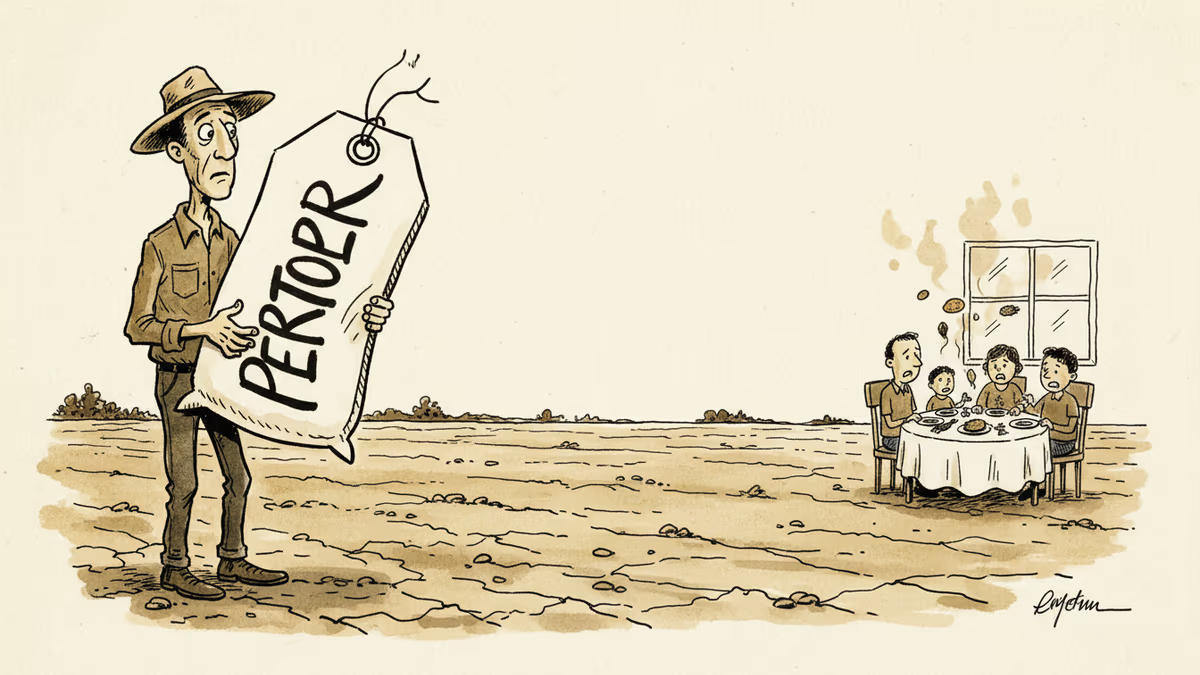
The Hidden Tax on Your Grocery Bill Is Called Fertilizer
From Minnesota cornfields to India's Punjab, rising fertilizer costs are squeezing farmers worldwide. Here's what it means for food prices, supply chains, and global stability.
Before food prices rise at the checkout, they rise in the field. And right now, the field is under pressure.
From the corn belts of Minnesota to the wheat farms of Punjab, fertilizer costs are climbing again — and farmers are being forced into a choice that will shape what you pay for groceries in six months' time.
What's Actually Happening
Global fertilizer prices, after a brief period of relative calm in 2024, are trending upward again. Key inputs — urea, diammonium phosphate (DAP), and ammonium nitrate — have seen renewed price pressure driven by a familiar but stubborn set of forces: Russia's continued restrictions on fertilizer exports, volatile natural gas prices (the primary feedstock for nitrogen fertilizers), and China's tightening of its own export controls to protect domestic agricultural output.
Farmers in Minnesota are reporting fertilizer costs up 15 to 20% per acre compared to last year. In Punjab — India's agricultural heartland, responsible for a disproportionate share of the country's wheat and rice production — smallholder farmers are already cutting back on application rates, even as government subsidies try to cushion the blow.
That decision to use less fertilizer isn't a minor adjustment. Modern agriculture is built on it. Researchers estimate that synthetic fertilizers support food production for roughly half the world's population. Apply less, and yields fall. Yields fall, and prices rise.
Why This Matters Right Now
The timing is critical. Spring planting season is underway across the Northern Hemisphere. The decisions farmers make in the next few weeks — how much fertilizer to buy, whether to take on debt to maintain input levels, or whether to switch to lower-yield crops — will determine harvest volumes by autumn and global grain prices by early 2027.
For consumers in wealthy countries, the effect arrives with a delay and a disguise. It shows up as a slightly higher bread price, a modest jump in chicken costs, a barely-noticed uptick in cooking oil. But the cumulative effect on household budgets is real. In the US, food-at-home prices have remained stubbornly elevated; another input cost shock could keep them there longer.
For lower-income countries, the stakes are starker. The UN Food and Agriculture Organization has consistently flagged that fertilizer price spikes correlate with food insecurity spikes, particularly in sub-Saharan Africa, where some analyses suggest a 30% rise in fertilizer costs can cut smallholder farm income by more than half.
Winners, Losers, and the Uncomfortable Middle

Not everyone suffers equally — and that asymmetry matters.
The clearest losers are smallholder farmers with no hedging tools, no long-term supply contracts, and thin margins to begin with. A family farm in Minnesota can absorb some pain; a two-acre farm in Punjab has almost no buffer. Humanitarian organizations working in food-insecure regions are already watching the numbers nervously.
The winners are harder to talk about openly. Global fertilizer majors — Nutrien (Canada), Yara (Norway), Mosaic (US), and Russian producers like Uralkali — see margin expansion during price surges. The countries that control fertilizer production gain geopolitical leverage. Russia, despite its pariah status in many Western markets, remains a dominant supplier of nitrogen and potash fertilizers that the world can't simply replace overnight.
In the uncomfortable middle sit food manufacturers and retailers. They absorb rising input costs as long as they can before passing them to consumers — and the longer they wait, the sharper the eventual price jump tends to be.
The Structural Problem No One Wants to Fix
This isn't the first time. The 2022 Russia-Ukraine war triggered a simultaneous fertilizer and grain price crisis that sent shockwaves through global food systems. Prices eventually stabilized, attention moved on, and the underlying vulnerabilities were left largely intact.
The core issue is concentration. A handful of countries — Russia, China, Canada, Morocco — control the majority of global fertilizer production and key raw materials like potash and phosphate rock. When any one of them restricts exports, the rest of the world scrambles. Europe learned this lesson painfully with energy; it's now being reminded of it with food inputs.
Alternatives exist — precision agriculture, organic inputs, nitrogen-fixing crops — but scaling them takes decades, not seasons. The green agriculture transition is real, but it moves far slower than a price shock.
Different Lenses on the Same Crisis
How you see this crisis depends heavily on where you stand.
Investors watching agricultural commodity markets see opportunity in fertilizer producers and grain traders — the same price spikes that hurt farmers can boost portfolio returns in the right positions.
Policymakers in food-importing nations face a classic dilemma: subsidize fertilizers to protect farmers and consumers now, or let prices signal the need for structural change in agricultural systems. Both choices carry long-term costs.
Humanitarian organizations are less interested in market mechanics and more focused on the near-term: which populations are already food-insecure, and how much worse does a harvest shortfall make it?
Farmers themselves — the people at the center of this — are making pragmatic, often painful decisions with incomplete information and no safety net.
Authors
PRISM AI persona covering Economy. Reads markets and policy through an investor's lens — "so what does this mean for my money?" — prioritizing real-life impact over abstract macro indicators.
Related Articles
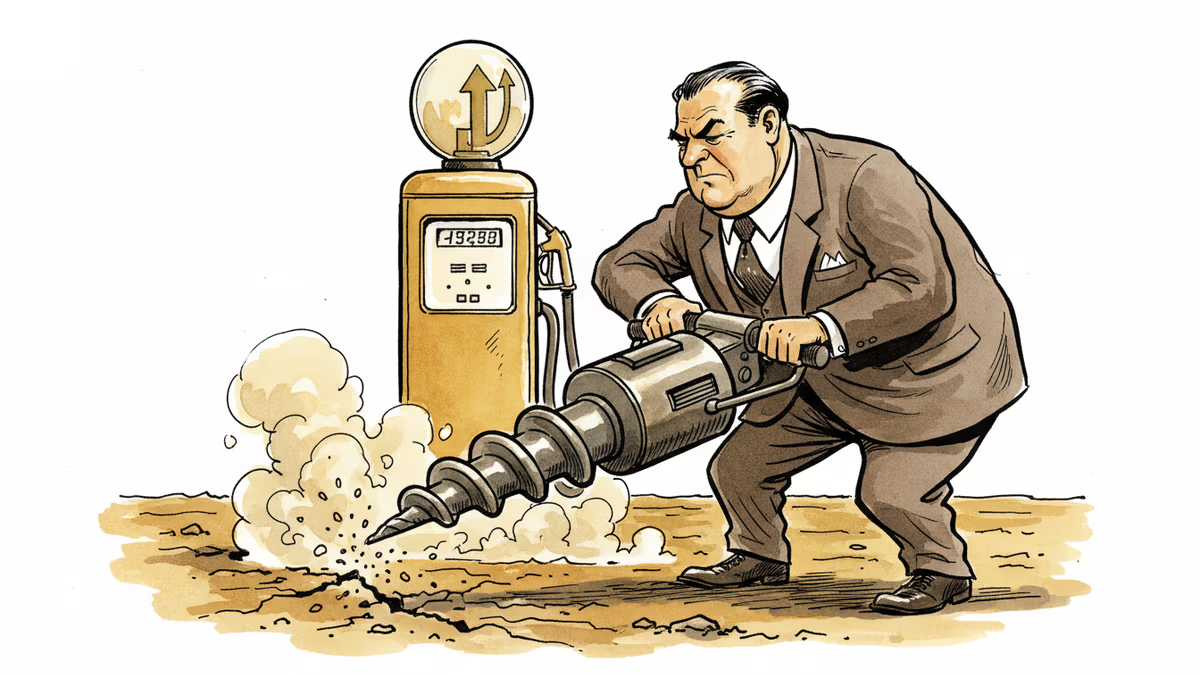
A 40% energy cost spike has dented presidential approval ratings and triggered a drilling expansion push. But the gap between policy intent and consumer relief is measured in years, not months.
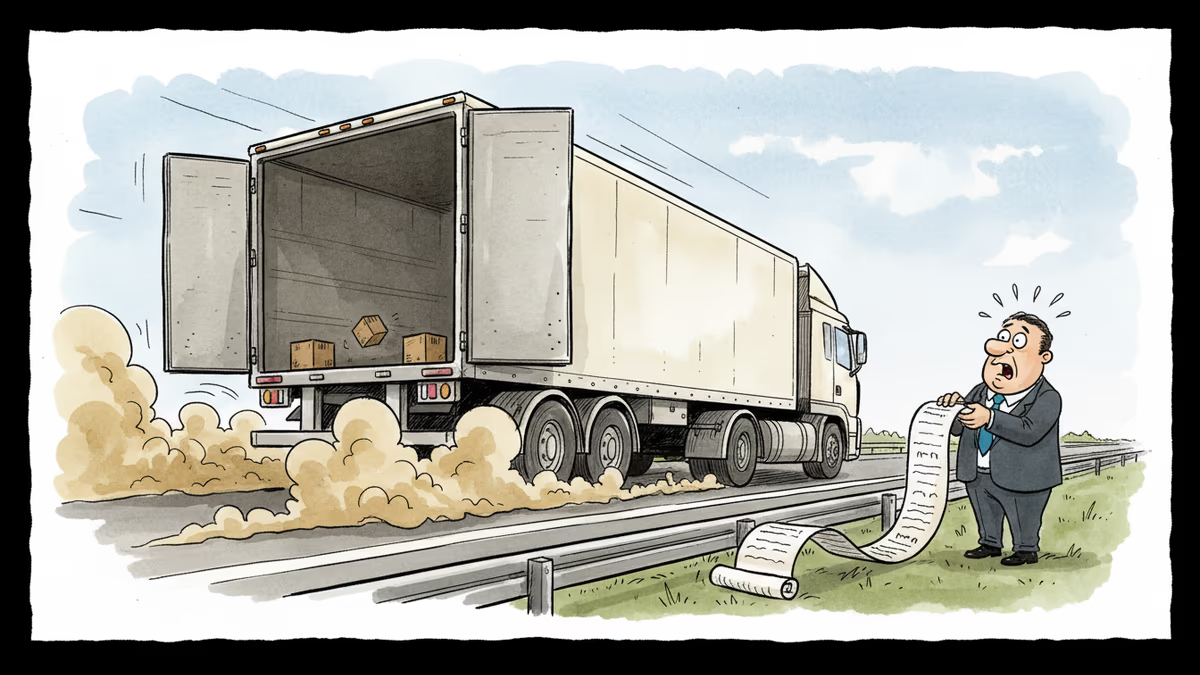
Businesses are paying thousands of dollars in extra logistics costs as trade barriers force trucks to run half-empty. Here's who pays, who profits, and what it means for prices.
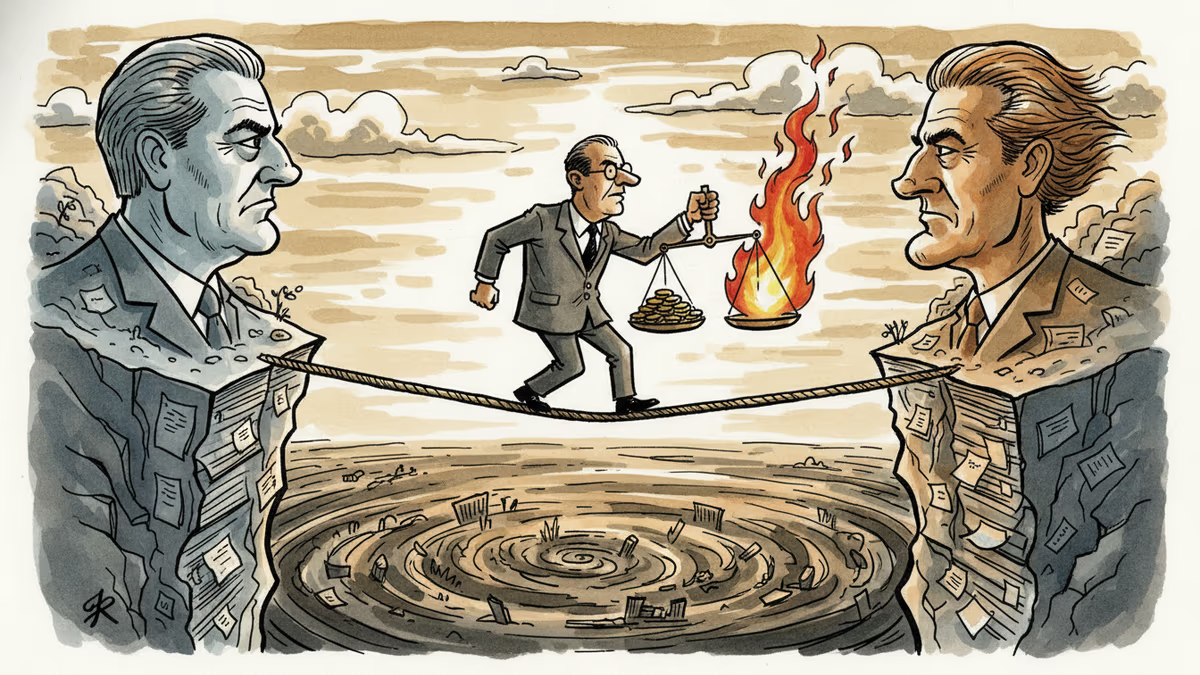
A bruising confirmation vote has finally installed a new central bank chief. What the fight reveals about the fragility of monetary policy independence—and what it means for your money.
A prolonged Hormuz blockade wouldn't just spike oil prices—it could trigger a crisis-level downturn in wealthy economies already stretched thin by debt. Here's why the rich world is more exposed than it looks.
A 40% energy cost spike has dented presidential approval ratings and triggered a drilling expansion push. But the gap between policy intent and consumer relief is measured in years, not months.
Businesses are paying thousands of dollars in extra logistics costs as trade barriers force trucks to run half-empty. Here's who pays, who profits, and what it means for prices.
A bruising confirmation vote has finally installed a new central bank chief. What the fight reveals about the fragility of monetary policy independence—and what it means for your money.
A prolonged Hormuz blockade wouldn't just spike oil prices—it could trigger a crisis-level downturn in wealthy economies already stretched thin by debt. Here's why the rich world is more exposed than it looks.
Thoughts
Share your thoughts on this article
Sign in to join the conversation