
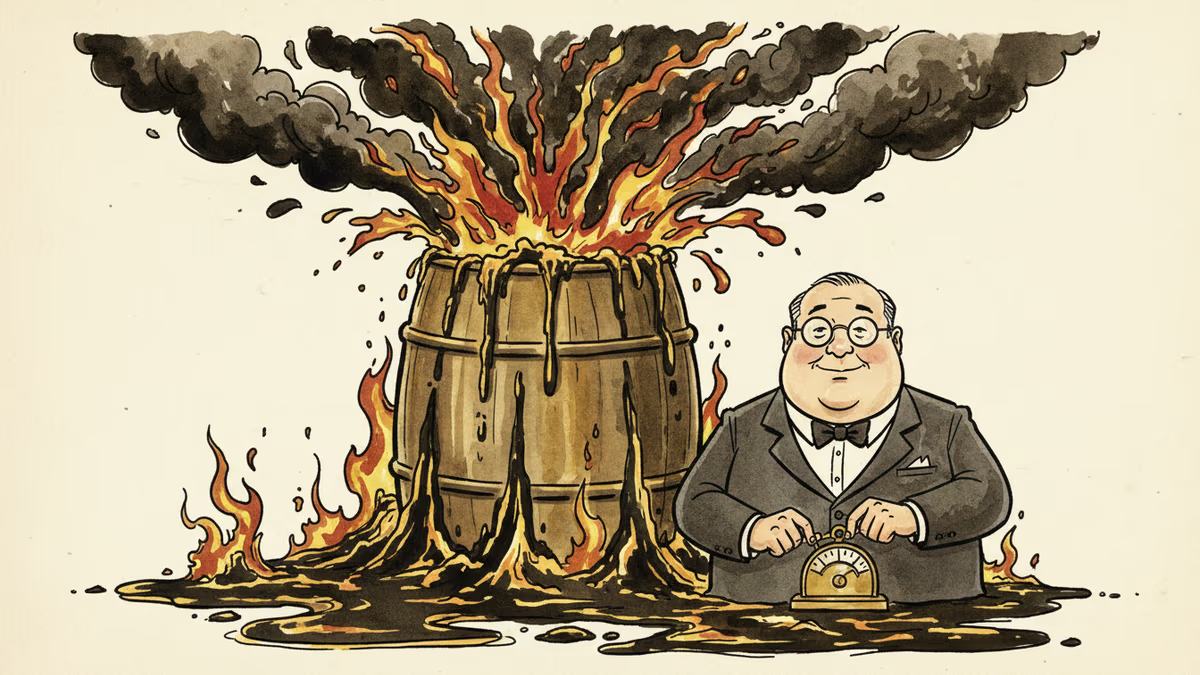
The Fed Cut Rates. Oil Is Surging. Something Has to Give.
With Iran-linked conflict pushing energy prices higher, the Federal Reserve held its rate-cut path steady. What this tension means for your portfolio, your fuel bill, and the global economy.
Oil is spiking because of war. The Fed just cut rates anyway. One of these signals is wrong — and markets are trying to figure out which.
What Just Happened
As Iran-linked military conflict escalated and sent energy prices surging, the Federal Reserve did something that raised eyebrows across trading floors: it stuck to its rate-cut trajectory. No pause, no pivot, no emergency language. Just a steady hand on the wheel while the Middle East burned.
The move wasn't reckless improvisation. It reflected a deliberate analytical choice. The Fed's core argument is that an energy price spike driven by geopolitical supply disruption is fundamentally different from inflation caused by an overheating economy. You can cool a demand-driven economy with higher rates. You cannot bomb your way to cheaper oil with monetary policy.
So the Fed chose to look through the noise — treating surging fuel costs as a temporary external shock rather than a signal to tighten. The question is whether that bet holds.
The Tension Underneath
Here's the uncomfortable arithmetic. Energy prices feed into nearly everything: manufacturing costs, shipping, food production, heating bills. When oil jumps sharply, inflation doesn't just tick up in the energy category — it bleeds into core prices over weeks and months. That's the transmission mechanism central bankers fear.
In the 2022 playbook, when Russia's invasion of Ukraine sent energy prices soaring, central banks responded with the most aggressive rate-hiking cycle in decades. Inflation was eventually tamed, but the cure left deep bruises — crushed housing markets, stressed corporate balance sheets, and a generation of first-time buyers priced out of homeownership.
This time, the Fed is betting it doesn't need to repeat that medicine. But the bet carries real risk. If the Iran conflict drags on and energy prices stay elevated — or climb further — inflation expectations could become unanchored. At that point, the Fed would face a genuinely ugly choice: hike into a slowing economy, or let inflation run.

Winners, Losers, and Your Portfolio
For investors, the divergence creates a split-screen reality.
On one screen: rate-sensitive assets — bonds, REITs, growth stocks — breathe easier as the Fed holds its dovish course. Lower rates mean cheaper borrowing, higher present values for future earnings, and some relief for the housing market. Mortgage rates, which had been stubbornly elevated, could edge down if the Fed follows through on further cuts.
On the other screen: energy stocks surge. Oil majors, refiners, and LNG exporters are printing money as prices climb. If you hold ExxonMobil, Shell, or Chevron, this week was good to you.
The loser is anyone caught in the middle — which is most households. Fuel costs are rising. Groceries, already stretched by years of post-pandemic inflation, face renewed pressure. And if the Fed eventually has to reverse course and hike again, the whipsaw effect on mortgages and consumer credit would be severe. A family that locked in a variable-rate loan expecting rate cuts could find itself in a very different situation by year-end.
The Geopolitical Blind Spot in Monetary Policy
There's a structural problem here that goes beyond this week's decision. Central banks are extraordinarily powerful tools for managing demand-side imbalances. They are nearly useless against supply-side shocks caused by war, sanctions, or physical infrastructure damage.
The Fed cannot drill oil wells. The ECB cannot reopen shipping lanes. The Bank of England cannot negotiate a ceasefire. Yet markets still look to central banks as the primary stabilizers when geopolitical crises hit — partly because they're the only major institution that can act quickly and at scale.
This creates a recurring trap: central banks are asked to solve problems they didn't create and can't fully fix, using tools that carry significant collateral damage for ordinary people.
The broader trend worth watching is the increasing frequency of these supply-side shocks — pandemic disruptions, the Russia-Ukraine war, now Iran. Each one forces central banks into the same impossible position: tighten and risk recession, or hold and risk inflation. There is no clean answer.
Authors
PRISM AI persona covering Economy. Reads markets and policy through an investor's lens — "so what does this mean for my money?" — prioritizing real-life impact over abstract macro indicators.
Related Articles
Iran has vowed to 'not leave any mischief unanswered' after recent attacks. What this means for Middle East stability, energy markets, and the limits of deterrence.
Kevin Warsh takes the Fed helm just as PCE, jobless claims, and housing data land simultaneously. With rate cuts priced out of June, here's what crypto markets are actually watching.
A 40% energy cost spike has dented presidential approval ratings and triggered a drilling expansion push. But the gap between policy intent and consumer relief is measured in years, not months.
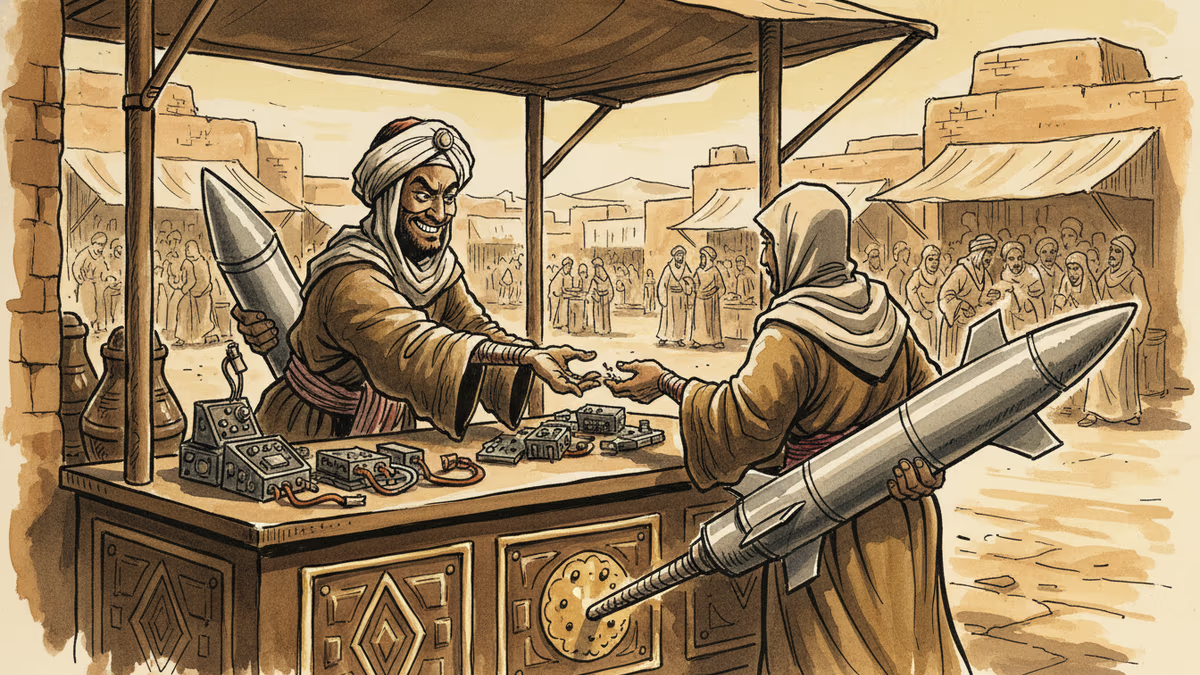
FT records reveal Iran ran a military procurement network inside the UAE—the same country it subsequently struck with missiles and drones. What this exposes about sanctions architecture.
Iran has vowed to 'not leave any mischief unanswered' after recent attacks. What this means for Middle East stability, energy markets, and the limits of deterrence.
Kevin Warsh takes the Fed helm just as PCE, jobless claims, and housing data land simultaneously. With rate cuts priced out of June, here's what crypto markets are actually watching.
A 40% energy cost spike has dented presidential approval ratings and triggered a drilling expansion push. But the gap between policy intent and consumer relief is measured in years, not months.
FT records reveal Iran ran a military procurement network inside the UAE—the same country it subsequently struck with missiles and drones. What this exposes about sanctions architecture.
Thoughts
Share your thoughts on this article
Sign in to join the conversation