
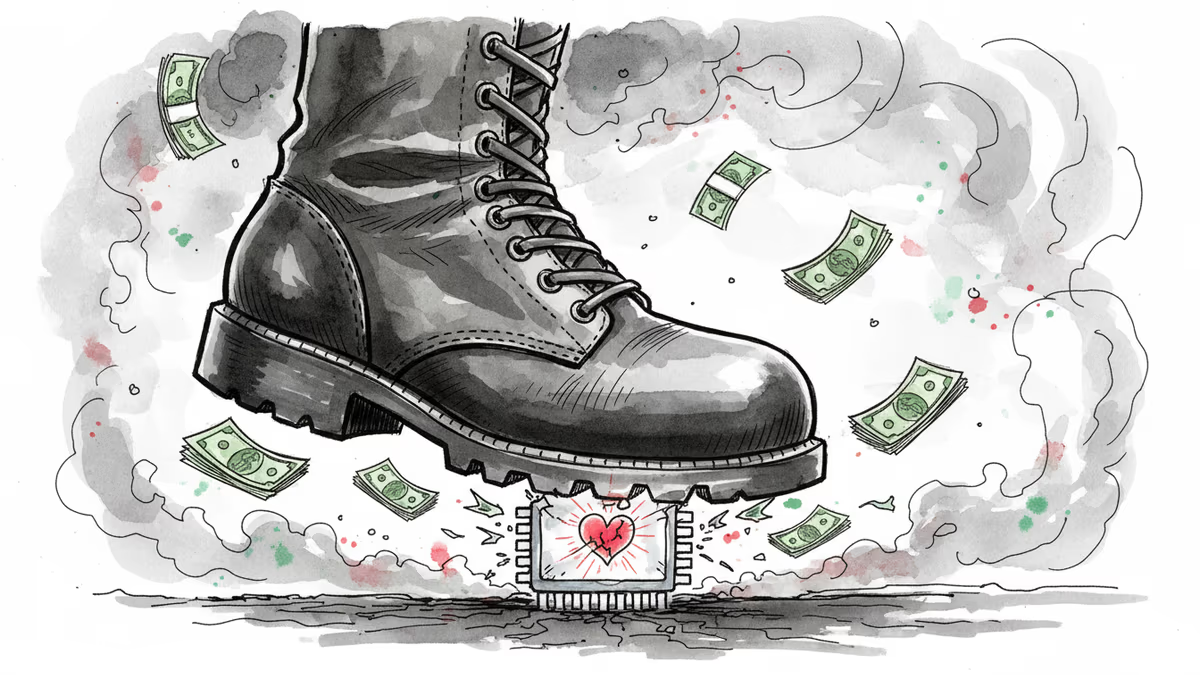
When AI Ethics Meets Pentagon Pressure: Anthropic's $200M Dilemma
Anthropic faces ultimatum from Defense Secretary Pete Hegseth to remove all restrictions on AI use or lose $200M contract. A defining moment for tech-government relations.
Friday Deadline: $200M on the Line
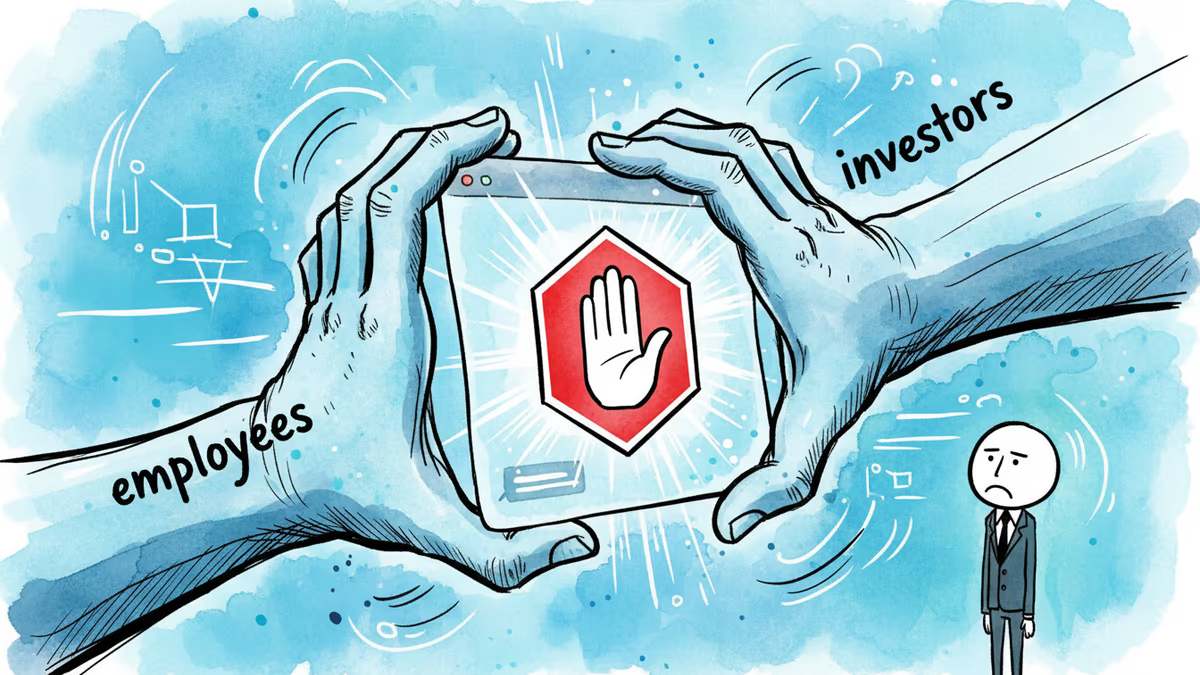
The clock is ticking. Defense Secretary Pete Hegseth has given Anthropic CEO Dario Amodei until Friday to make a choice: remove all restrictions on how the Pentagon uses their AI technology, or watch a $200 million contract disappear.
At the heart of this standoff lies a fundamental question about AI governance. Anthropic has built safeguards preventing their technology from being used for fully autonomous weapons or domestic surveillance. The Pentagon wants those guardrails gone. Is asking machines not to pull triggers by themselves really such a radical position?
Hegseth's message was crystal clear: "Department of War AI will not be woke. It will work for us." This isn't just about one contract—it's about setting precedent for how the government will interact with AI companies going forward.
The Brand vs. Business Dilemma
Anthropic finds itself in a uniquely uncomfortable position. The company has built its entire brand around being the "responsible AI" alternative to OpenAI. Their marketing pitch? "We're different. We're more ethical."
But government contracts represent stable revenue streams that AI companies desperately need. While Anthropic wrestles with this decision, xAI has already signed a deal with the Pentagon—no ethical strings attached. The competitive landscape is shifting rapidly.

Sources at OpenAI tell me they're watching this unfold with barely concealed glee. They're tired of Anthropic's holier-than-thou positioning and ready to pounce if their rival stumbles.
The Defense Production Act Threat
Perhaps most striking is the Pentagon's suggestion they might invoke the Defense Production Act—typically reserved for wartime emergencies. This law was used during COVID to force companies to manufacture masks and ventilators. Now it's being brandished to make an AI company remove ethical constraints.
The precedent is chilling. If the government can force private companies to modify their AI systems under threat of emergency powers, what happens to the principle of corporate autonomy? We're not talking about physical goods here—we're talking about lines of code that could determine life and death.
Silicon Valley's New Litmus Test
This confrontation reveals something deeper about the current moment in tech. Companies are increasingly being forced to choose sides in America's broader culture wars. The "anti-woke" rhetoric isn't just political theater—it's becoming actual contract language.
Other major tech players are watching carefully. Microsoft, Google, and Amazon all have significant government contracts. If Anthropic caves, it signals that ethical positioning is negotiable when enough money is on the table. If they hold firm, it might inspire others to draw similar lines.
The timing is particularly interesting. Just this week, a researcher demonstrated that GPT models can be prompted to provide detailed instructions for building weapons. The ethical guardrails that seem so restrictive to the Pentagon might be the only thing standing between AI and genuine catastrophe.
Authors
Related Articles
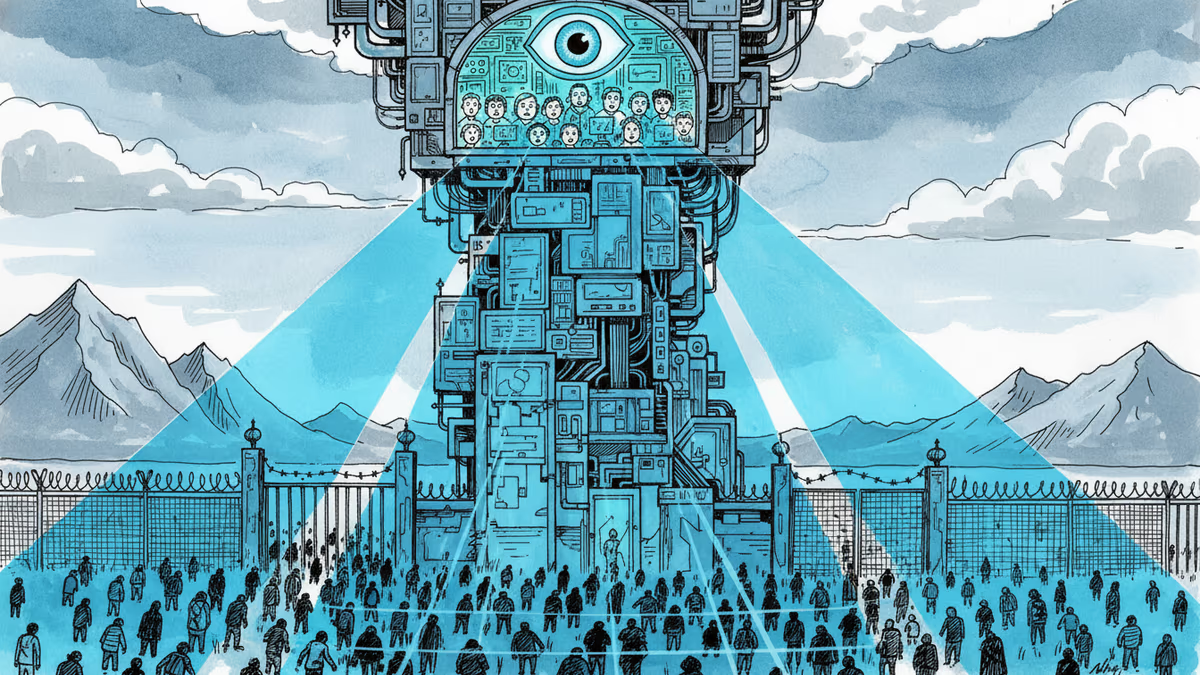
Palantir has become the tech backbone of Trump's immigration enforcement. Former employees are calling it a 'descent into fascism.' What happens when the people who build surveillance tools start asking uncomfortable questions?
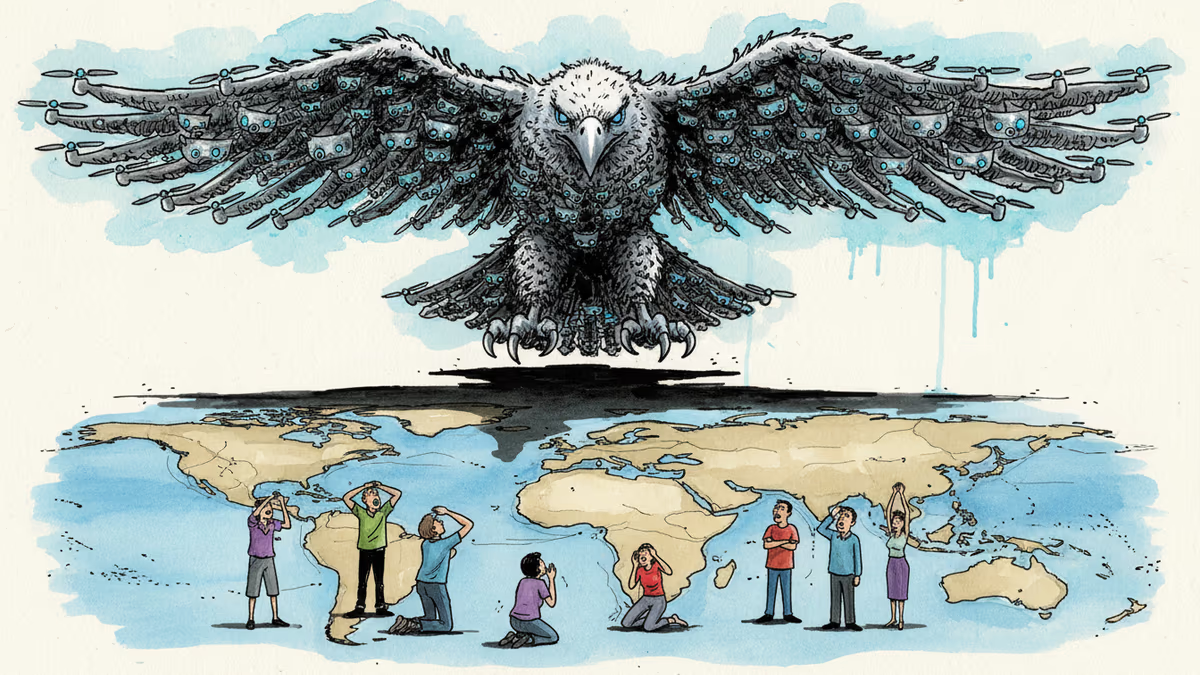
The US defense budget request for FY2027 includes $53.6 billion for drone and autonomous warfare—more than most nations spend on their entire military. What does this mean for global security and the future of war?
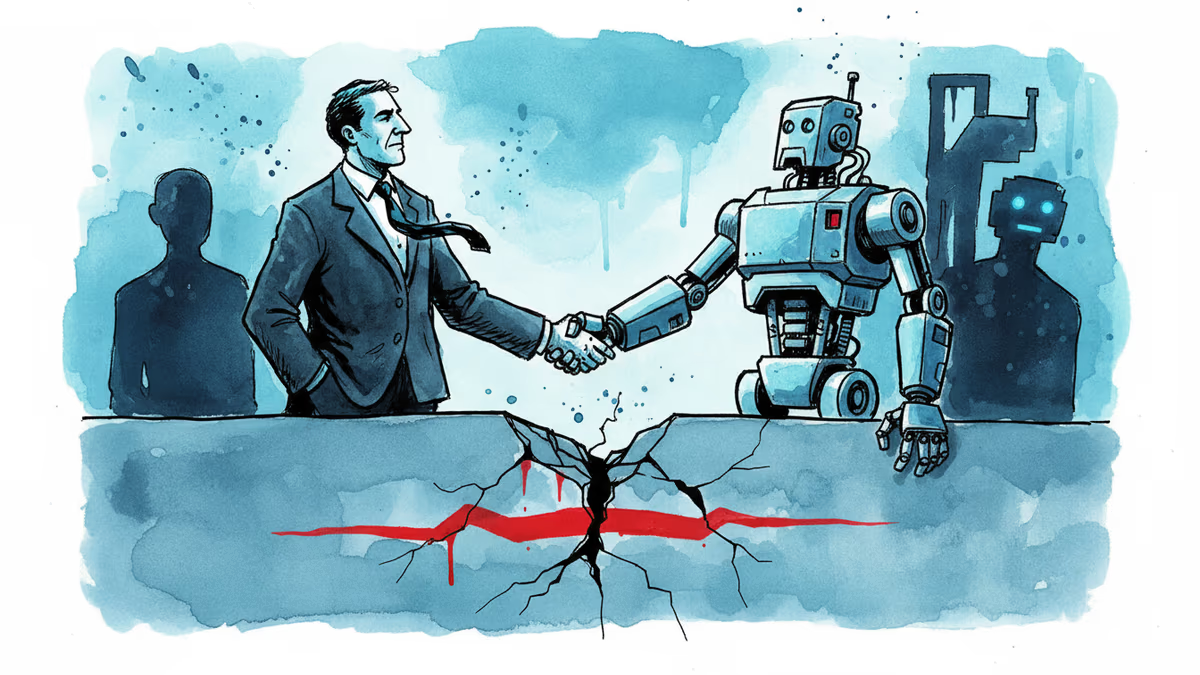
After two months of bitter conflict, Anthropic and the Trump administration may be thawing—thanks to a new cybersecurity AI model. What does it mean when principle meets political pressure?
OpenAI has shelved its erotic ChatGPT feature indefinitely. The real story isn't about adult content—it's about who gets to decide what AI will and won't do.
Palantir has become the tech backbone of Trump's immigration enforcement. Former employees are calling it a 'descent into fascism.' What happens when the people who build surveillance tools start asking uncomfortable questions?
The US defense budget request for FY2027 includes $53.6 billion for drone and autonomous warfare—more than most nations spend on their entire military. What does this mean for global security and the future of war?
After two months of bitter conflict, Anthropic and the Trump administration may be thawing—thanks to a new cybersecurity AI model. What does it mean when principle meets political pressure?
OpenAI has shelved its erotic ChatGPT feature indefinitely. The real story isn't about adult content—it's about who gets to decide what AI will and won't do.
Thoughts
Share your thoughts on this article
Sign in to join the conversation