

24 Hours Left: Why Anthropic Said No to the Pentagon
Anthropic refuses Pentagon's demand for unrestricted AI access despite 24-hour ultimatum. The red lines that sparked an AI ethics showdown with national security.
24 Hours to Choose Between Principles and Pressure
With less than 24 hours remaining on the Pentagon's ultimatum, Anthropic delivered its answer: No.
The demand was straightforward—grant the Department of Defense unrestricted access to AI systems. The response was equally clear. Defense Secretary Pete Hegseth's push to renegotiate all AI lab contracts had hit its first major roadblock.
But this wasn't just corporate defiance. It was a calculated stand on two non-negotiable principles that Anthropic refuses to cross: no mass surveillance of Americans, and no lethal autonomous weapons that can kill without human oversight.
The Tale of Two Tech Giants
The contrast with OpenAI couldn't be starker. While Anthropic drew its red lines, OpenAI has been quietly expanding its Pentagon partnerships. Last month's announcement revealed deeper military AI research collaboration—with the caveat that "direct weapons development" remains off-limits.
But where exactly is that line? OpenAI's definition of "indirect" military support appears more flexible than Anthropic's rigid boundaries. The result: two of AI's biggest players taking fundamentally different approaches to the same national security pressures.
Google's position adds another layer of complexity. After the 2018 employee revolt forced its withdrawal from Project Maven, the company has gradually re-engaged with military contracts under the banner of "defensive purposes only." The question remains: who defines "defensive"?
Silicon Valley's Moral Reckoning

The tech community's reaction reveals deep philosophical divides. AI safety researchers and civil liberties groups hailed Anthropic's stance as "principled leadership in an era of compromise." Meanwhile, national security hawks dismissed it as "naive idealism while China weaponizes AI."
The timing intensifies the pressure. With China's military AI capabilities advancing rapidly, the Pentagon argues that American tech companies have a patriotic duty to contribute to national defense. Anthropic's refusal challenges that narrative.
Venture capitalists are watching closely too. Defense contracts represent billions in potential revenue, but they also carry reputational risks. Some investors worry that Anthropic's stance could limit future government partnerships across all sectors.
The Surveillance State Question
Beyond weapons, Anthropic's rejection of mass surveillance capabilities raises uncomfortable questions about domestic AI use. The Pentagon's request for "unrestricted access" would have included the ability to deploy AI for monitoring American citizens.
This touches a nerve in post-Snowden America, where tech companies face constant pressure to balance national security cooperation with user privacy. Anthropic's hard line suggests some companies are willing to sacrifice government contracts to maintain user trust.
But critics argue this stance is hypocritical. If AI systems can already analyze vast amounts of public data, what's the meaningful difference between commercial and government surveillance?
Global Implications
Anthropic's decision reverberates internationally. Allied nations watching America's AI military strategy now see a fractured landscape rather than unified tech-government cooperation. This could complicate joint AI defense initiatives with partners like the UK, Australia, and Japan.
For authoritarian regimes, Silicon Valley's internal conflicts provide propaganda opportunities. China's state media has already highlighted the Pentagon's "failure to control American tech companies" as evidence of democratic weakness.
Authors
Related Articles
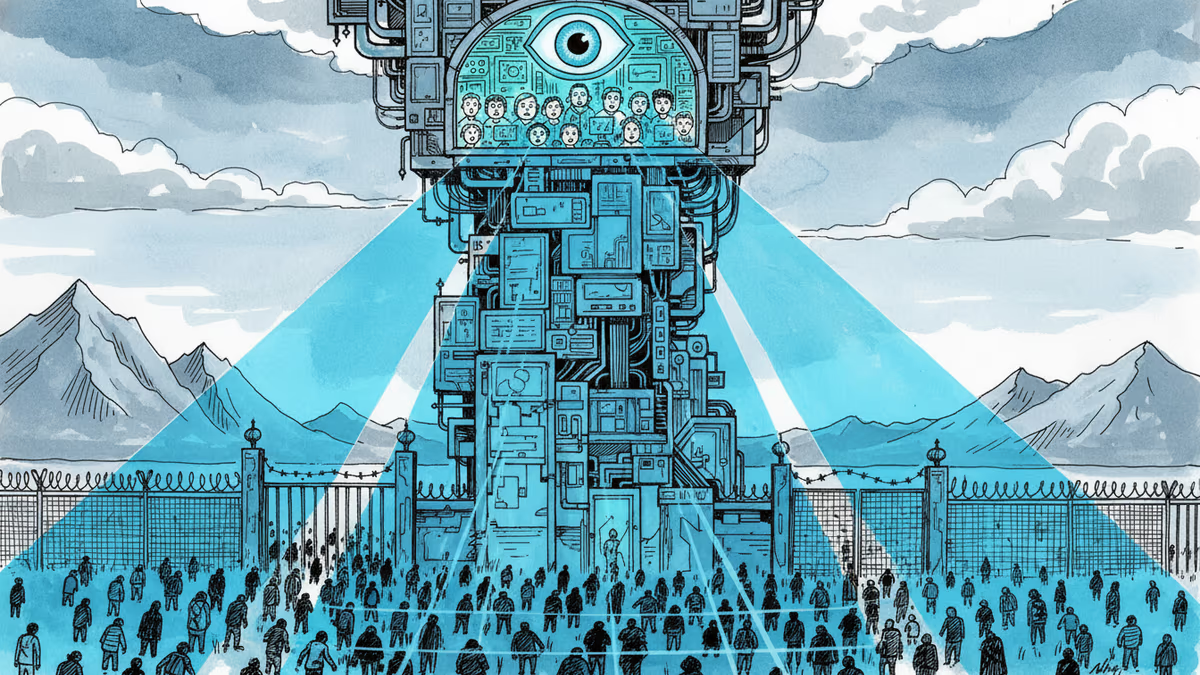
Palantir has become the tech backbone of Trump's immigration enforcement. Former employees are calling it a 'descent into fascism.' What happens when the people who build surveillance tools start asking uncomfortable questions?
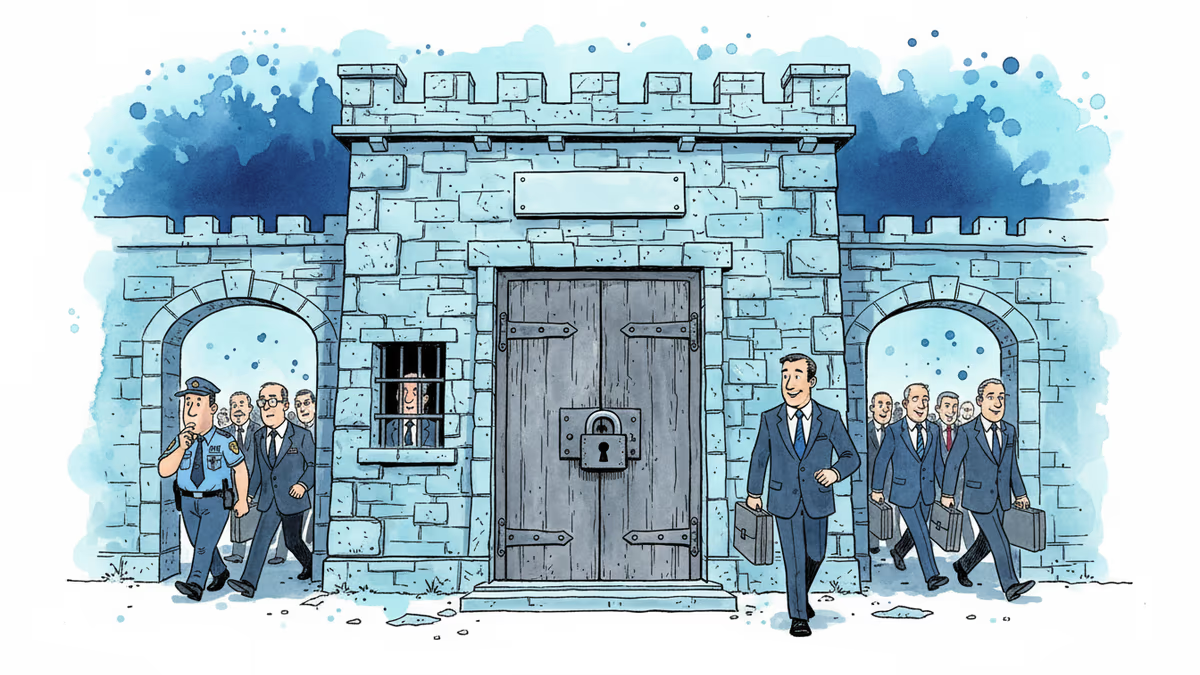
Anthropic's AI cybersecurity model is reportedly available to the NSA and Commerce Department—but not to CISA, the agency responsible for defending US federal infrastructure. What that gap reveals.
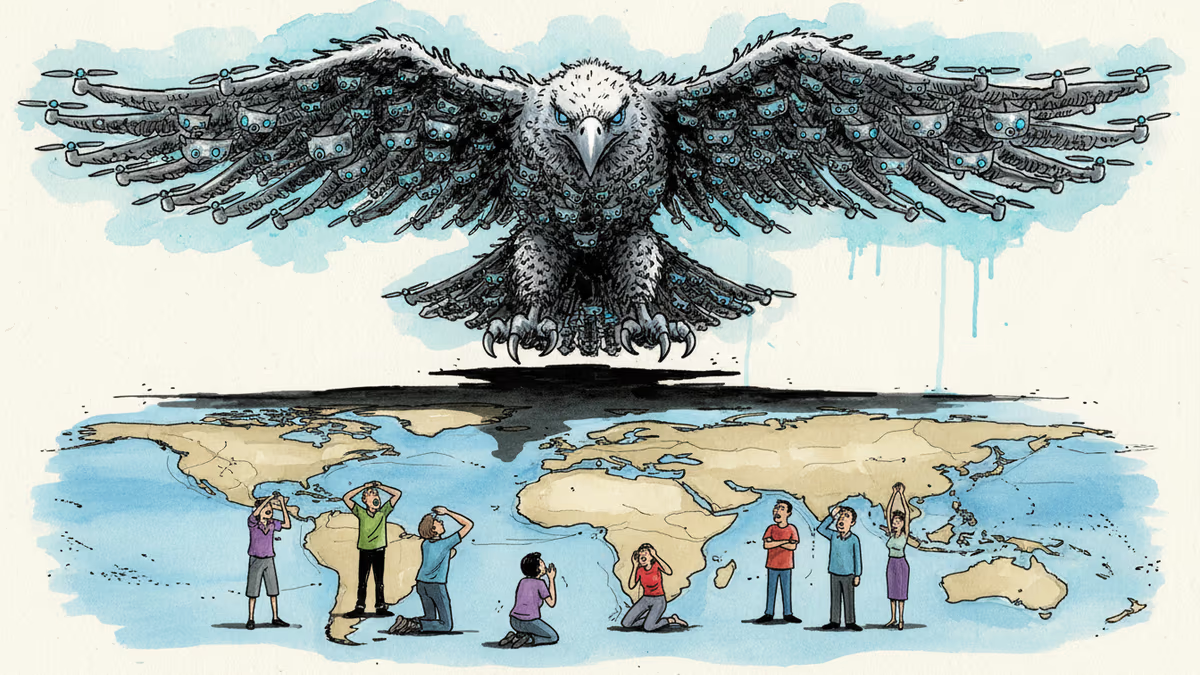
The US defense budget request for FY2027 includes $53.6 billion for drone and autonomous warfare—more than most nations spend on their entire military. What does this mean for global security and the future of war?
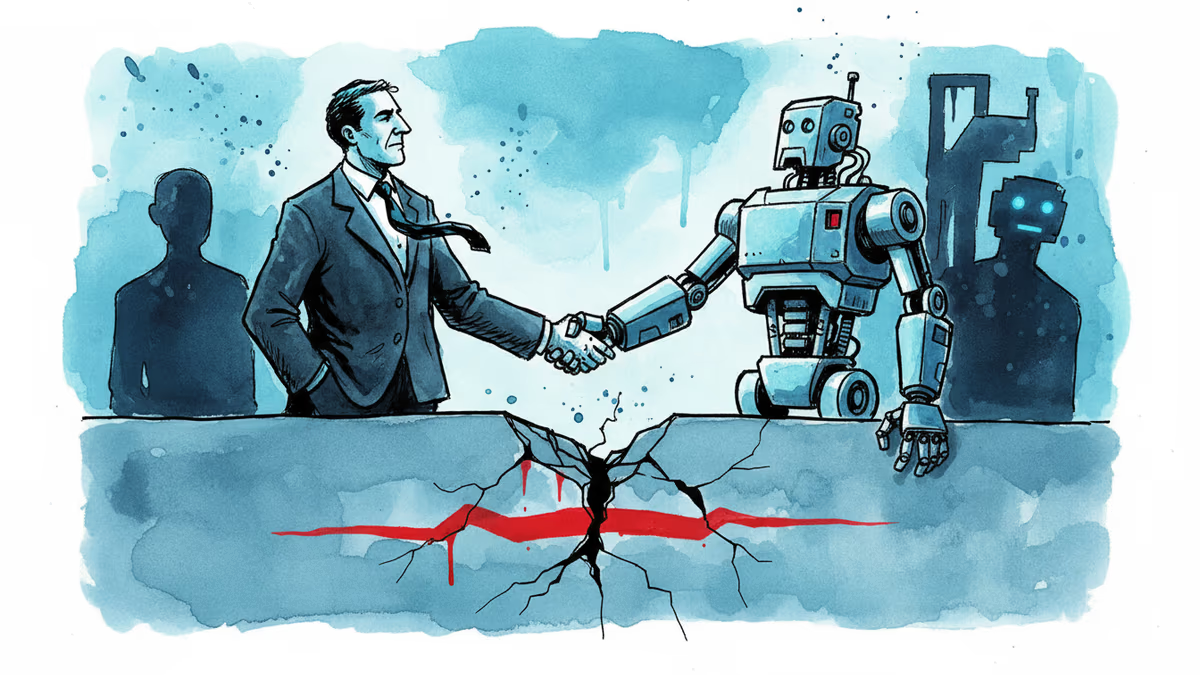
After two months of bitter conflict, Anthropic and the Trump administration may be thawing—thanks to a new cybersecurity AI model. What does it mean when principle meets political pressure?
Palantir has become the tech backbone of Trump's immigration enforcement. Former employees are calling it a 'descent into fascism.' What happens when the people who build surveillance tools start asking uncomfortable questions?
Anthropic's AI cybersecurity model is reportedly available to the NSA and Commerce Department—but not to CISA, the agency responsible for defending US federal infrastructure. What that gap reveals.
The US defense budget request for FY2027 includes $53.6 billion for drone and autonomous warfare—more than most nations spend on their entire military. What does this mean for global security and the future of war?
After two months of bitter conflict, Anthropic and the Trump administration may be thawing—thanks to a new cybersecurity AI model. What does it mean when principle meets political pressure?
Thoughts
Share your thoughts on this article
Sign in to join the conversation