

When Silicon Valley Said No to the Pentagon
Anthropic CEO rejects Defense Department's demand for unrestricted AI access, sparking a precedent-setting clash over technology ethics and national security
5:01 PM Friday Was Supposed to Be Judgment Day
With less than 24 hours until Defense Secretary Pete Hegseth's ultimatum expires, Anthropic CEO Dario Amodei delivered his answer: No. "I cannot in good conscience accede to the Pentagon's request," he declared Thursday, setting up what might become Silicon Valley's most consequential standoff with the military-industrial complex.
The Pentagon wants unrestricted access to Anthropic's AI systems for all lawful military purposes. No exceptions. No corporate ethics committees drawing red lines around national defense. But Amodei has identified two non-negotiables: mass surveillance of Americans and fully autonomous weapons with no human oversight.
The Contradiction at the Heart of Power
The Defense Department's response reveals the schizophrenic nature of government-tech relations in 2026. On one hand, they're threatening to label Anthropic a "supply chain risk"—a designation typically reserved for foreign adversaries like Chinese tech firms. On the other, they're considering invoking the Defense Production Act, treating Claude as essential national security infrastructure.
Amodei highlighted this contradiction with surgical precision: "One labels us a security risk; the other labels Claude as essential to national security." It's a paradox that exposes how unprepared Washington remains for the AI age.
Currently, Anthropic is the only frontier AI lab with classified-ready military systems. The DOD is reportedly preparing xAI as a backup, but that relationship remains unproven. This gives Amodei leverage that few tech CEOs have ever possessed against the Pentagon.

The New Power Dynamic
What's really at stake here isn't just one contract—it's the future of AI governance. Should private companies have veto power over how their technologies are deployed by democratically elected governments? Or should national security imperatives override corporate ethical guidelines?
The tech industry has been grappling with these questions since the Google employees' revolt over Project Maven in 2018. But Anthropic's position is different. They're not just employees voicing concerns—they're a company with unique capabilities saying no to the world's most powerful military.
Amodei's tone suggests he's prepared for the consequences: "Should the Department choose to offboard Anthropic, we will work to enable a smooth transition to another provider." Translation: There's no need to be nasty about it.
The Ripple Effect
This standoff will reverberate far beyond Silicon Valley. European AI companies are watching closely, as are defense contractors who've traditionally had no qualms about military work. If Anthropic can successfully resist Pentagon pressure, it establishes a precedent that other tech firms might follow.
The timing is also significant. With tensions rising globally and AI becoming central to military strategy, the Pentagon likely expected tech companies to fall in line. Anthropic's resistance suggests a new generation of AI leaders who view their technology as too powerful to hand over without conditions.
Authors
Related Articles
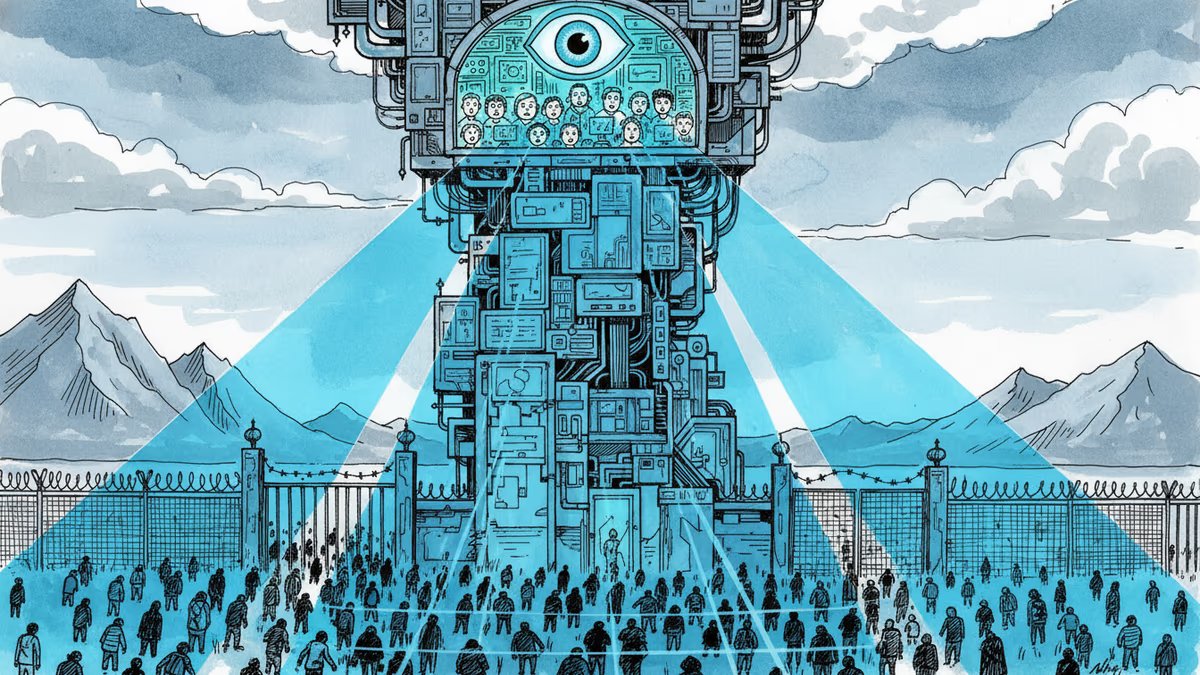
Palantir has become the tech backbone of Trump's immigration enforcement. Former employees are calling it a 'descent into fascism.' What happens when the people who build surveillance tools start asking uncomfortable questions?
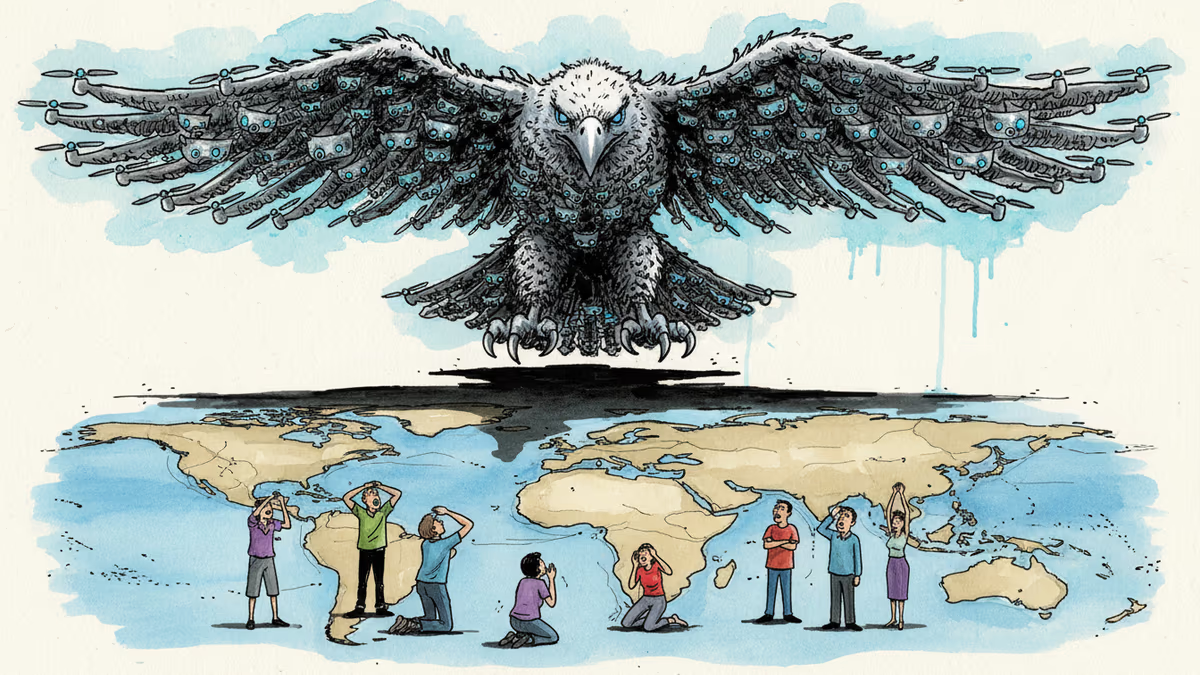
The US defense budget request for FY2027 includes $53.6 billion for drone and autonomous warfare—more than most nations spend on their entire military. What does this mean for global security and the future of war?
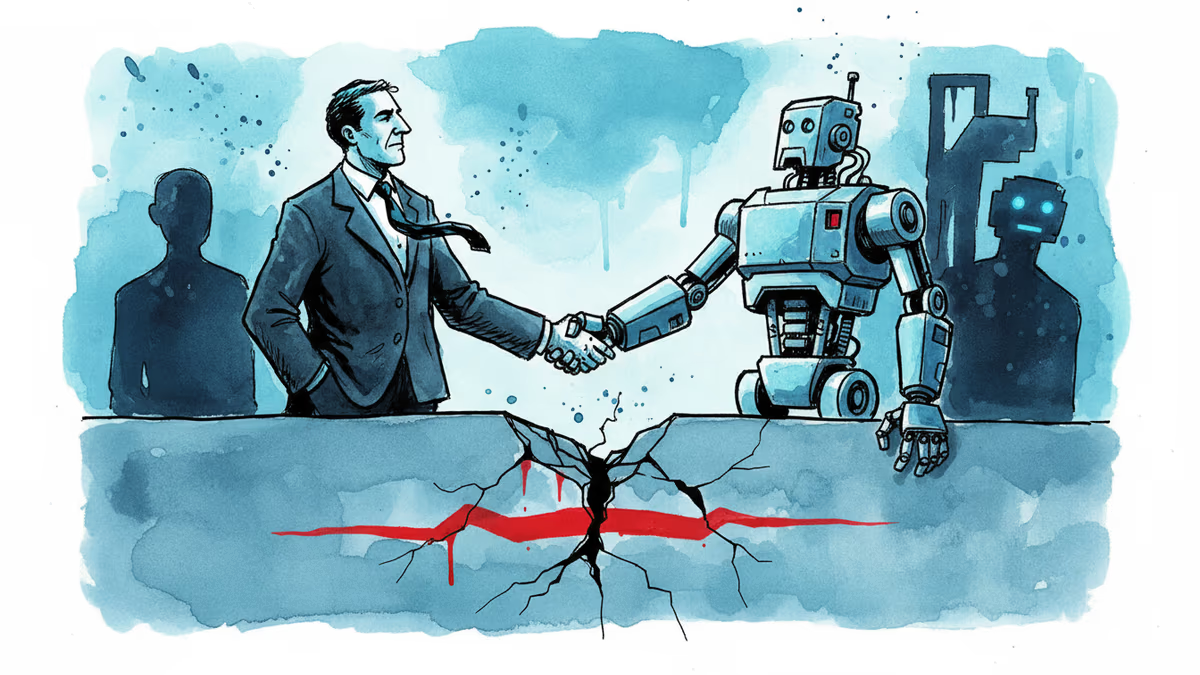
After two months of bitter conflict, Anthropic and the Trump administration may be thawing—thanks to a new cybersecurity AI model. What does it mean when principle meets political pressure?
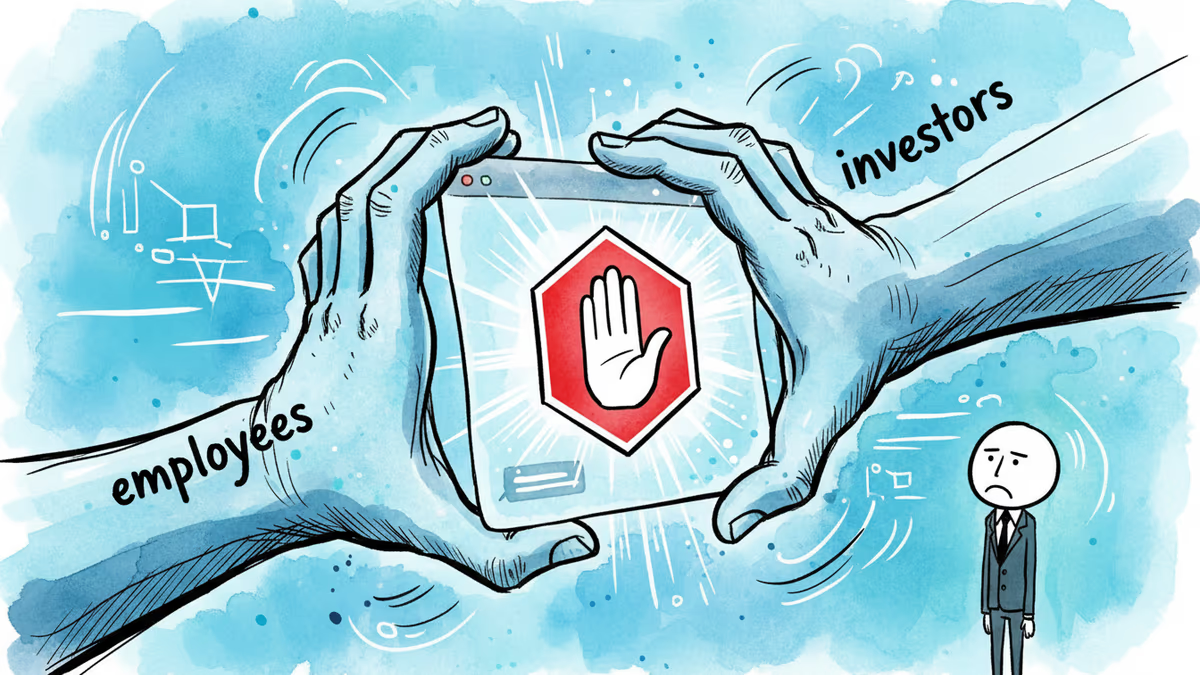
OpenAI has shelved its erotic ChatGPT feature indefinitely. The real story isn't about adult content—it's about who gets to decide what AI will and won't do.
Palantir has become the tech backbone of Trump's immigration enforcement. Former employees are calling it a 'descent into fascism.' What happens when the people who build surveillance tools start asking uncomfortable questions?
The US defense budget request for FY2027 includes $53.6 billion for drone and autonomous warfare—more than most nations spend on their entire military. What does this mean for global security and the future of war?
After two months of bitter conflict, Anthropic and the Trump administration may be thawing—thanks to a new cybersecurity AI model. What does it mean when principle meets political pressure?
OpenAI has shelved its erotic ChatGPT feature indefinitely. The real story isn't about adult content—it's about who gets to decide what AI will and won't do.
Thoughts
Share your thoughts on this article
Sign in to join the conversation