
When Silicon Valley Says No to the Pentagon
As Anthropic defies military AI demands, 360+ Google and OpenAI employees unite in solidarity. What this standoff reveals about the future of AI governance and corporate resistance.
48 Hours Until Pentagon's Deadline
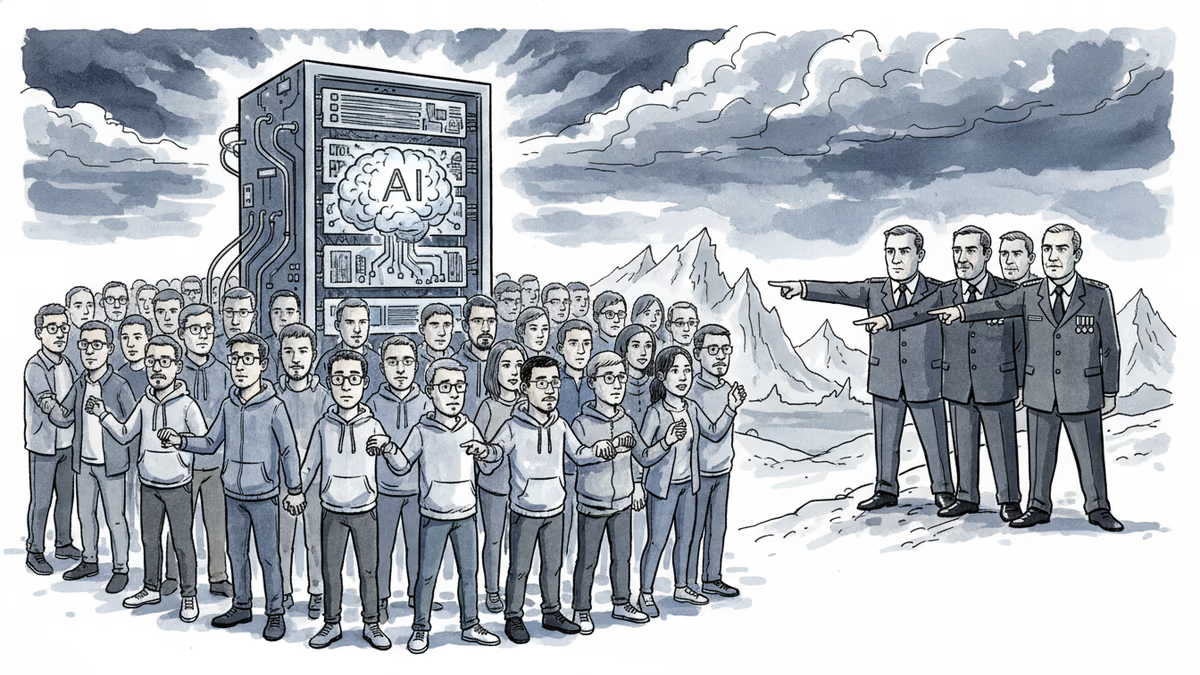
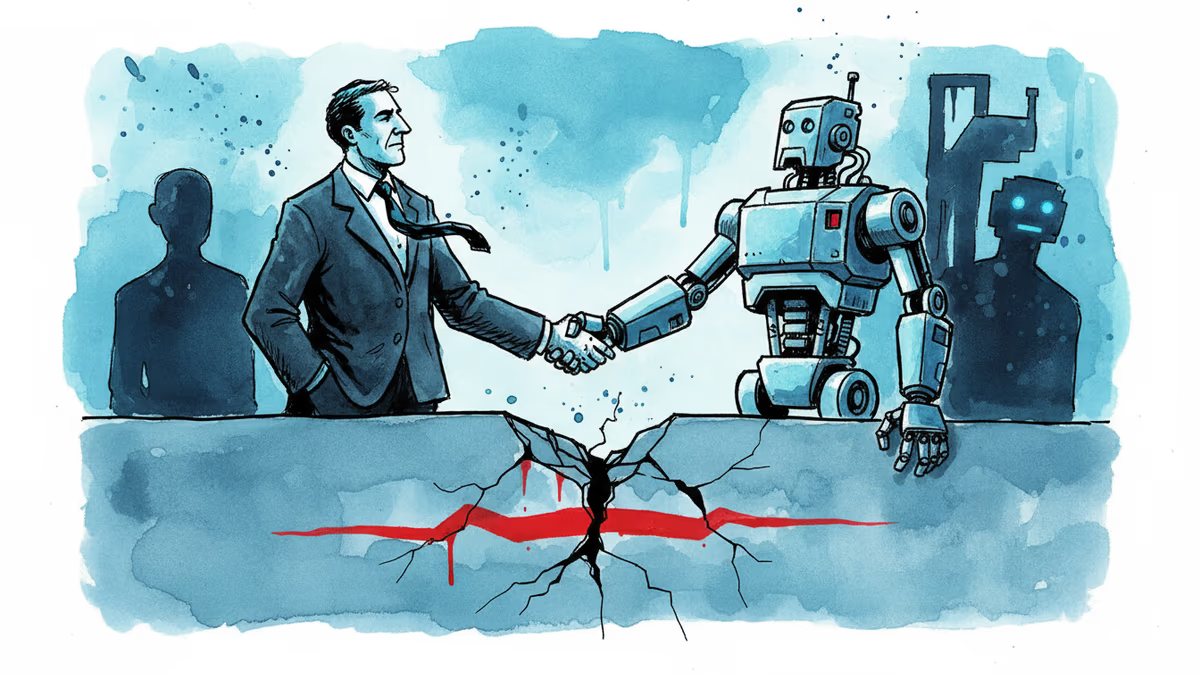
With the Department of War's Friday deadline looming, something unprecedented happened in Silicon Valley: 360+ employees from competing AI companies signed a letter of solidarity. Not for higher wages or better benefits, but to defend Anthropic's refusal to hand over unrestricted AI access to the military.
The employees from Google (300+) and OpenAI (60+) aren't just supporting a competitor—they're drawing a line in the digital sand. Their message to leadership: "Put aside your differences and stand together" against demands for AI-powered mass surveillance and autonomous weaponry.
"They're trying to divide each company with fear that the other will give in," the letter states. "That strategy only works if none of us know where the others stand."
The Resistance Takes Shape
The solidarity isn't just symbolic. OpenAI CEO Sam Altman publicly stated he doesn't "personally think the Pentagon should be threatening DPA against these companies." Google DeepMind's Jeff Dean went further, tweeting that "mass surveillance violates the Fourth Amendment and has a chilling effect on freedom of expression."
But here's the complexity: the military already uses Grok, Gemini, and ChatGPT for unclassified work. Negotiations for classified applications are ongoing with Google and OpenAI. Only Anthropic has held firm on its red lines.
Defense Secretary Pete Hegseth's ultimatum to Anthropic CEO Dario Amodei was stark: comply or face designation as a "supply chain risk" or forced compliance under the Defense Production Act. Amodei's response highlighted the contradiction: "One labels us a security risk; the other labels Claude as essential to national security."

Beyond Corporate Virtue Signaling
This standoff reveals deeper fractures in how we govern transformative technology. Unlike previous tech controversies—data privacy, content moderation, antitrust—this touches the core of state power: surveillance and warfare.
The employees' letter suggests they understand what's at stake. It's not just about Anthropic's principles, but about establishing precedent. If the Pentagon can compel one AI company through economic pressure, what stops similar demands from other agencies? Or other governments?
The timing matters too. As AI capabilities rapidly advance, the window for establishing ethical boundaries is narrowing. Today's precedents become tomorrow's norms.
The Bigger Questions
This crisis exposes fundamental tensions in AI governance. Should private companies decide how their technology serves national security? Can market-driven innovation coexist with democratic oversight of military AI?
The employee solidarity suggests a generational shift. These aren't just workers—they're the architects of AI systems that could reshape warfare and surveillance. Their willingness to challenge both their employers and the Pentagon signals that technical expertise might be becoming a form of political power.
Yet questions remain about the sustainability of corporate resistance. Economic pressure, regulatory threats, and national security arguments have historically proven effective at changing corporate minds.
The Pentagon's deadline may pass, but the questions it raises about power, technology, and resistance in the AI age are just beginning.
Authors
Related Articles
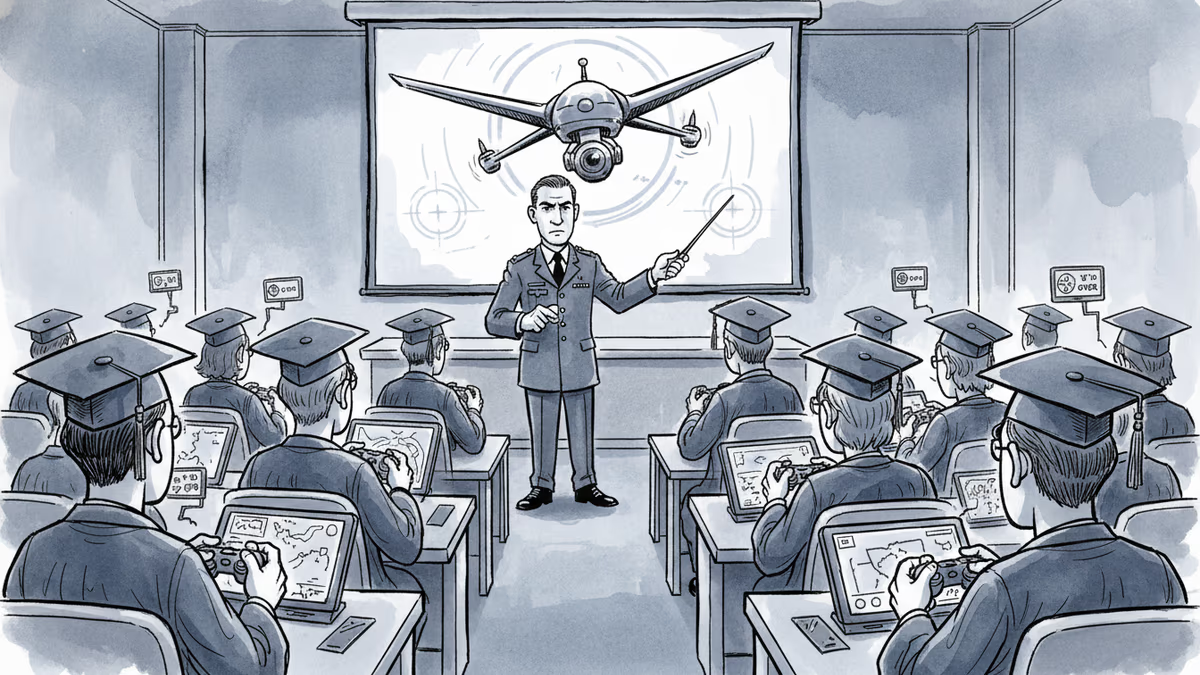
Over 270 Russian universities are offering students free tuition and up to $70,000 to serve as military drone pilots. Recruiters promise no frontline risk. The reality is more complicated.
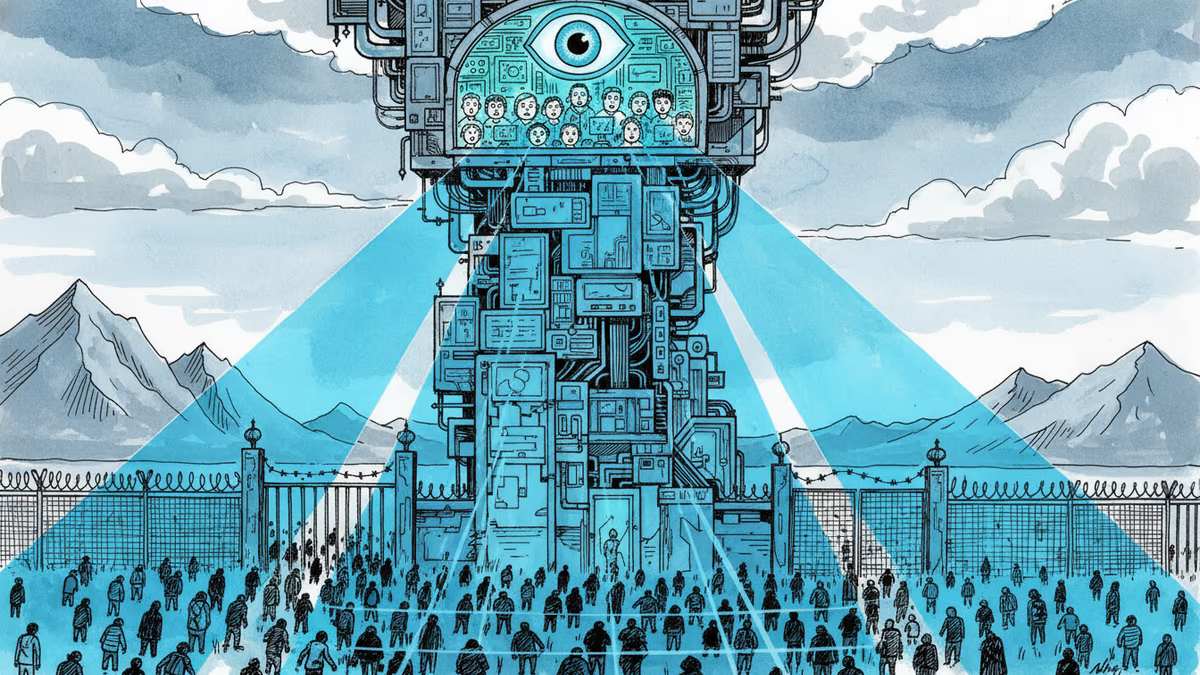
Palantir has become the tech backbone of Trump's immigration enforcement. Former employees are calling it a 'descent into fascism.' What happens when the people who build surveillance tools start asking uncomfortable questions?
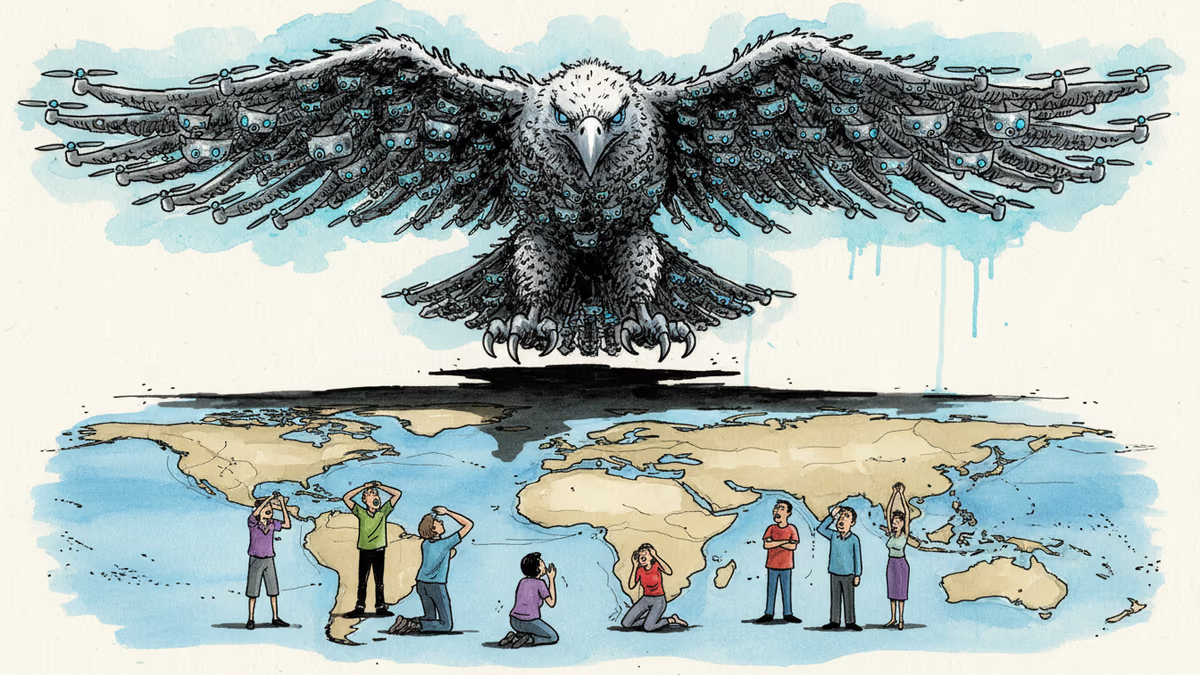
The US defense budget request for FY2027 includes $53.6 billion for drone and autonomous warfare—more than most nations spend on their entire military. What does this mean for global security and the future of war?
After two months of bitter conflict, Anthropic and the Trump administration may be thawing—thanks to a new cybersecurity AI model. What does it mean when principle meets political pressure?
Over 270 Russian universities are offering students free tuition and up to $70,000 to serve as military drone pilots. Recruiters promise no frontline risk. The reality is more complicated.
Palantir has become the tech backbone of Trump's immigration enforcement. Former employees are calling it a 'descent into fascism.' What happens when the people who build surveillance tools start asking uncomfortable questions?
The US defense budget request for FY2027 includes $53.6 billion for drone and autonomous warfare—more than most nations spend on their entire military. What does this mean for global security and the future of war?
After two months of bitter conflict, Anthropic and the Trump administration may be thawing—thanks to a new cybersecurity AI model. What does it mean when principle meets political pressure?
Thoughts
Share your thoughts on this article
Sign in to join the conversation