
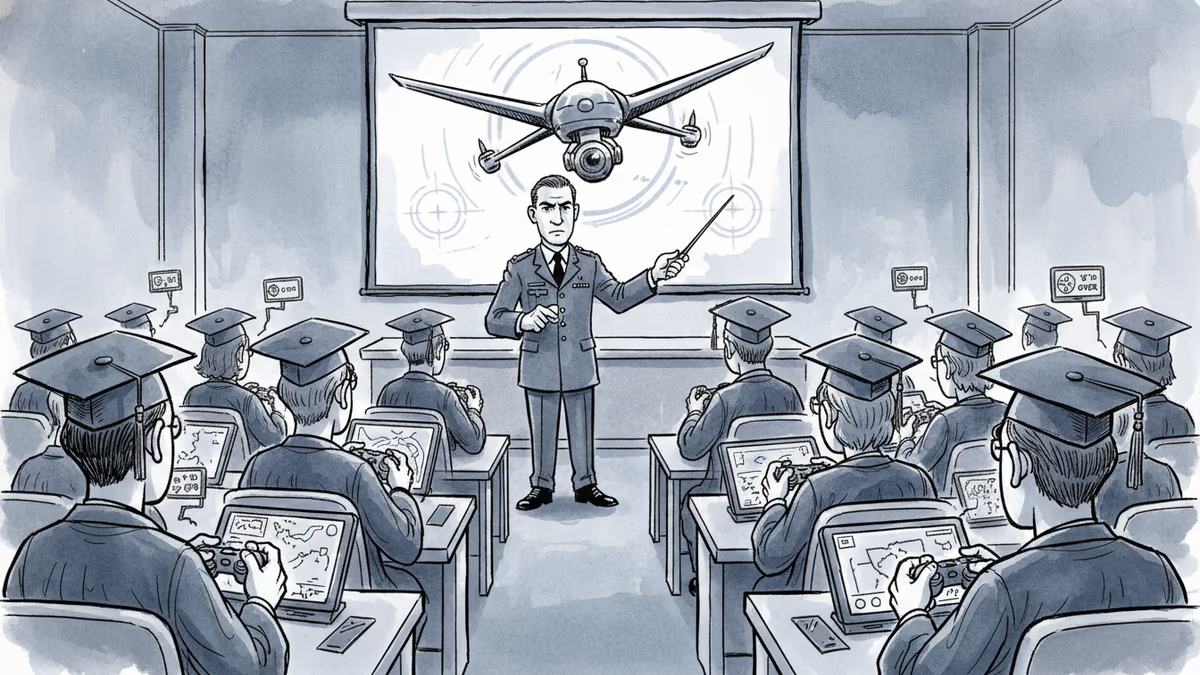
Russia Is Recruiting Drone Pilots on Campus. One Is Already Dead.
Over 270 Russian universities are offering students free tuition and up to $70,000 to serve as military drone pilots. Recruiters promise no frontline risk. The reality is more complicated.
The pamphlet made it sound like a scholarship. Free tuition. Up to $70,000 in compensation. No frontline duty. Just sit behind a screen and fly drones for a year.
At least one student who took that deal is now dead.
The Campus Recruitment Drive
According to Bloomberg, flyers with this pitch were distributed at Bauman Moscow State Technical University, one of Russia's most prestigious engineering schools. But Bauman is far from alone. Independent magazine Groza documented at least 270 Russian academic institutions actively promoting military service contracts to their students—in the fifth year of a war that began with Russia's full-scale invasion of Ukraine in February 2022.
The target pool is significant: approximately 2 million men currently enrolled in Russian universities. Russia's Defense Ministry has been explicit about who it wants. The ideal recruit has experience flying drones or model aircraft, a background in electronics or radio engineering, and computer proficiency. As Bloomberg reported, gamers and technically skilled students are specifically in the crosshairs. The logic is straightforward: someone already fluent in first-person interfaces and hand-eye coordination requires far less training than a conventional soldier being retooled for drone warfare.
The incentives vary by institution. Some offer tuition waivers. Others add tax exemptions, student loan forgiveness, or—in certain cases—free land grants. The common thread is the promise that drone operators work from the rear, away from the trenches. "You won't face frontline combat" is the central selling point.
Then NBC News reported that at least one student drone pilot recruited through this program has been confirmed killed in action, with additional deaths possibly unreported.

Why This Is Happening Now
Russia's partial mobilization in September 2022 sent shockwaves through society. Hundreds of thousands fled the country to avoid conscription. Since then, Russian authorities have leaned heavily on voluntary contract recruitment rather than forced drafts—a strategy designed to minimize social friction while sustaining troop levels.
Drones have become central to that calculation. Both Russia and Ukraine have deployed FPV (first-person view) drones at industrial scale, fundamentally altering battlefield dynamics. Skilled operators are in acute demand, and the military can't produce them fast enough through conventional training pipelines. Universities, with their concentration of technically literate young men, offer a faster route.
The timing carries its own tension. Intermittent signals of potential ceasefire negotiations have circulated in recent months—yet Russia is simultaneously expanding its campus recruitment apparatus. The two tracks are running in parallel, which tells you something about how seriously military planners view the current operational tempo regardless of diplomatic atmospherics.
Three Ways to Read This
For students, the calculus is genuinely complicated. Economic pressure, the appeal of a technical role over infantry service, and the promise of safety make the offer hard to dismiss outright. But the confirmed battlefield death exposes the gap between the recruitment pitch and operational reality. "Rear-area" in a drone war is a more fluid concept than the pamphlets suggest.
For military analysts, this is a data point in a broader pattern: the industrialization of drone warfare is pulling civilian technical expertise directly into the conflict system, bypassing traditional military career structures. The speed at which gaming skills translate to lethal capability has compressed the boundary between civilian and combatant in ways that existing legal frameworks weren't designed to handle.
For human rights organizations, the voluntary framing deserves scrutiny. When financial incentives are calibrated to students under economic stress, and when the alternative is potential conscription, the line between genuine choice and coerced consent becomes harder to locate. The 270-institution scale suggests this is state policy, not a scattered local initiative.
This content is AI-generated based on source articles. While we strive for accuracy, errors may occur. We recommend verifying with the original source.
Related Articles
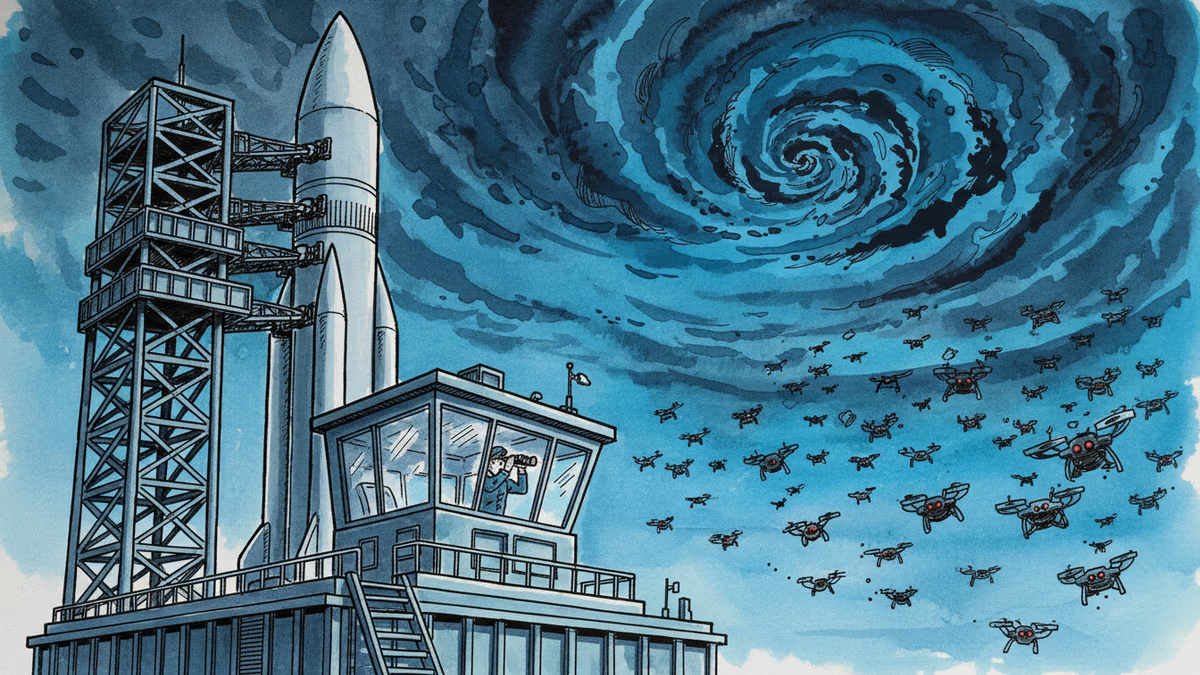
Russia's Plesetsk Cosmodrome has faced multiple drone attacks as Moscow races to build its own Starlink-like satellite network. What does this mean for the future of space warfare?
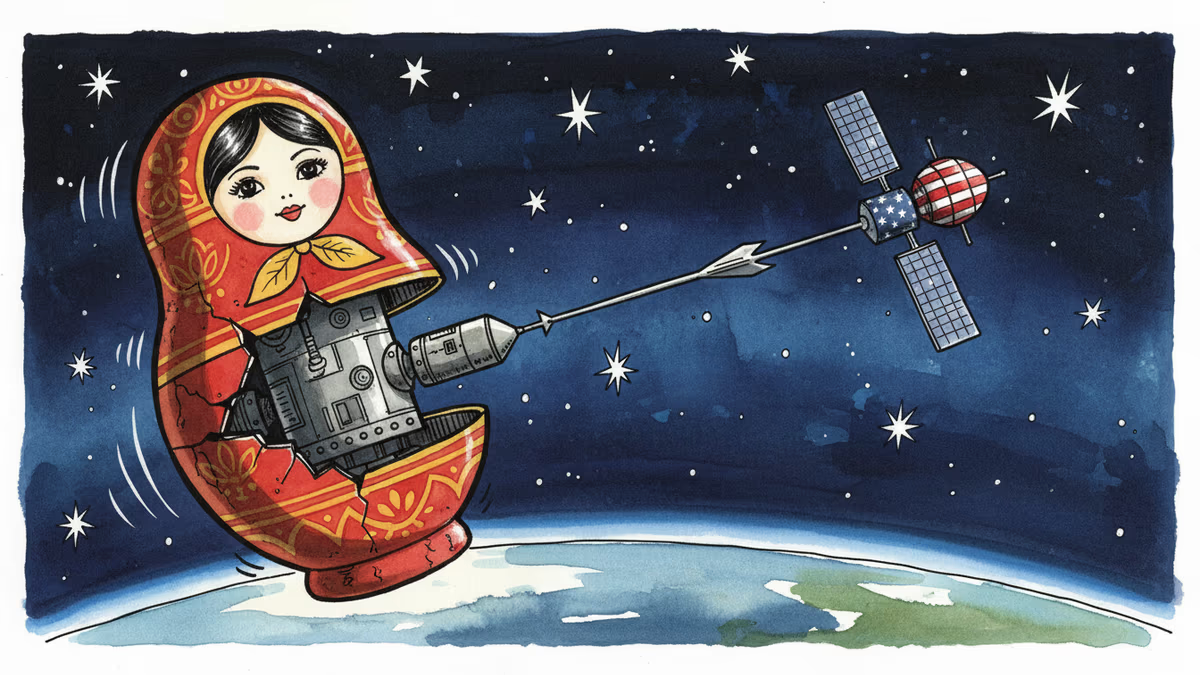
US Space Command confirms Russia has deployed operational anti-satellite weapons tracking American spy satellites in low-Earth orbit. What does this mean for space security?
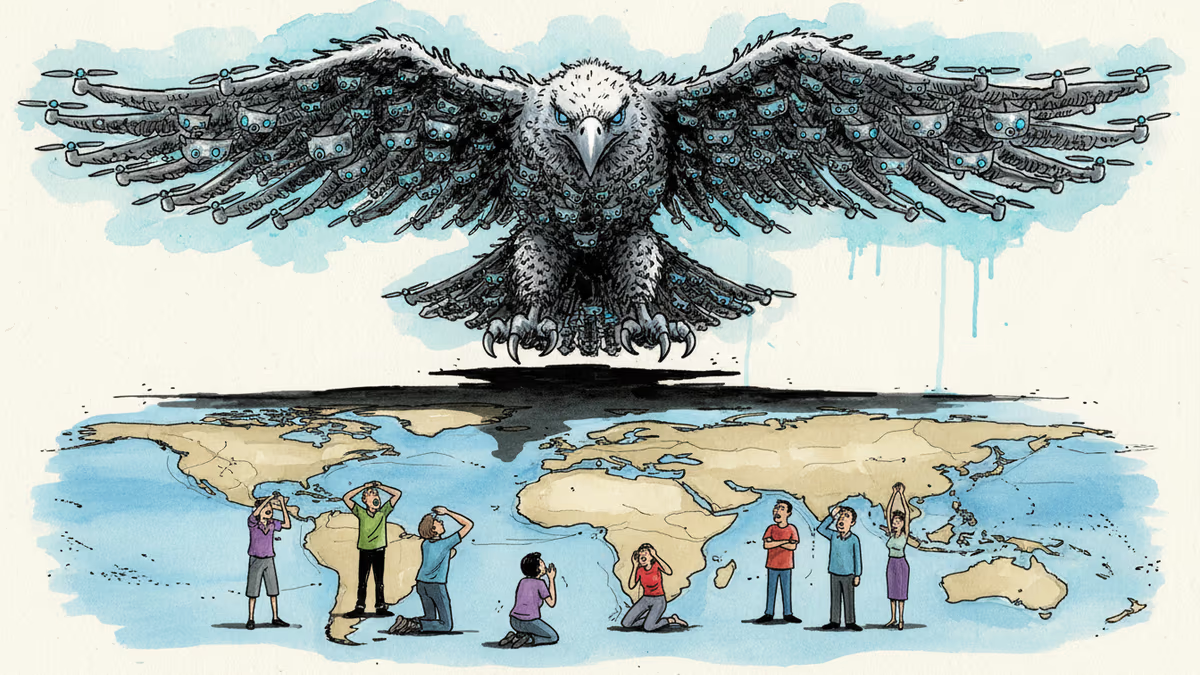
The US defense budget request for FY2027 includes $53.6 billion for drone and autonomous warfare—more than most nations spend on their entire military. What does this mean for global security and the future of war?
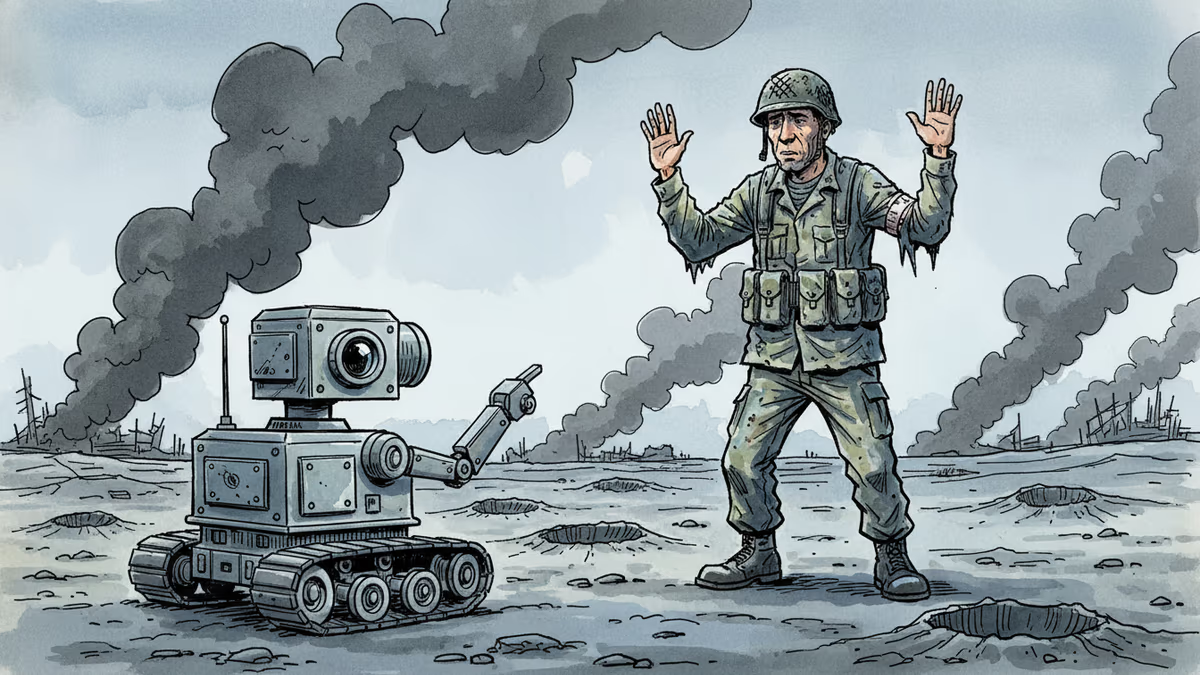
Ukraine claims ground robots and drones forced Russian soldiers to surrender without a human soldier present. If verified, it marks a turning point in autonomous warfare with global implications.
Russia's Plesetsk Cosmodrome has faced multiple drone attacks as Moscow races to build its own Starlink-like satellite network. What does this mean for the future of space warfare?
US Space Command confirms Russia has deployed operational anti-satellite weapons tracking American spy satellites in low-Earth orbit. What does this mean for space security?
The US defense budget request for FY2027 includes $53.6 billion for drone and autonomous warfare—more than most nations spend on their entire military. What does this mean for global security and the future of war?
Ukraine claims ground robots and drones forced Russian soldiers to surrender without a human soldier present. If verified, it marks a turning point in autonomous warfare with global implications.
Thoughts
Share your thoughts on this article
Sign in to join the conversation