

Elon Musk Nvidia Alpamayo Critique: Tesla FSD Lead Remains Safe for 5+ Years
Elon Musk critiques Nvidia's new Alpamayo autonomous vehicle models at CES 2026, claiming Tesla FSD faces no real competition for at least 5-6 years.
A 5-year head start for Tesla? Elon Musk is downplaying Nvidia's latest leap into autonomous driving. Despite their collaborative history, the Tesla CEO claims that the newly unveiled Alpamayo AI models won't pose a serious threat to Tesla's Full Self-Driving (FSD) for at least 5 to 6 years.
The Core of Elon Musk Nvidia Alpamayo Critique
During the CES 2026 conference in Las Vegas, Nvidia CEO Jensen Huang introduced Alpamayo, a family of open AI models designed for autonomous vehicle (AV) development. Nvidia describes it as a vision language action (VLA) model that brings "humanlike thinking" to the road, helping cars navigate complex and novel scenarios.

Musk reacted to the news on X, stating that while reaching 99% reliability is "easy," solving the "long tail of the distribution"—the rare edge cases that cause accidents—is incredibly difficult. He noted that legacy automakers won't be able to integrate the necessary cameras and AI computers at scale for several years, pushing any real competitive pressure into the 2030s.
Tesla's Robotaxi Ambitions and the Hardware Barrier
For Tesla, FSD isn't just a feature—it's the backbone of its robotaxi and humanoid robot strategy. The company has already launched a limited robotaxi service in Austin and continues to refine its models. Interestingly, Musk's xAI recently raised $20 billion from investors including Nvidia, highlighting the complex "frenemy" relationship between the two tech giants.
Authors
Related Articles
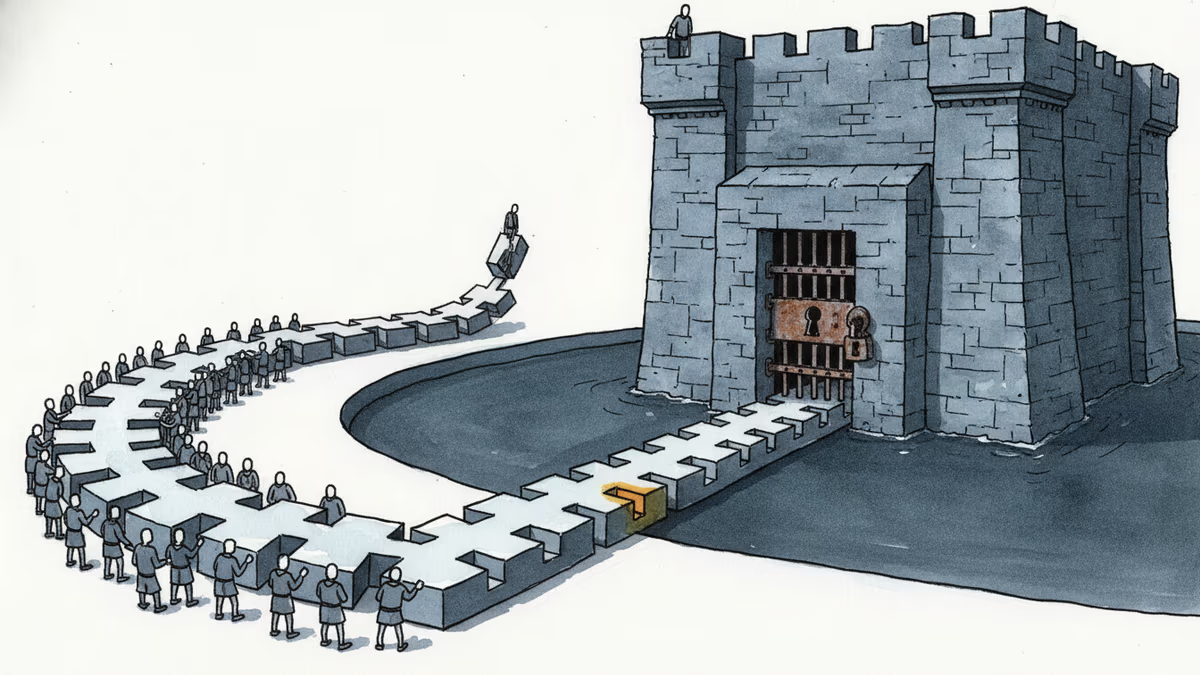
Nvidia shipped roughly a billion RISC-V cores in 2024, then announced it would run CUDA on the open standard. We break down how royalty-free instruction sets and open software stacks are trying to route around CUDA's lock-in. Part 2 of the Semiconductor Sovereignty series.
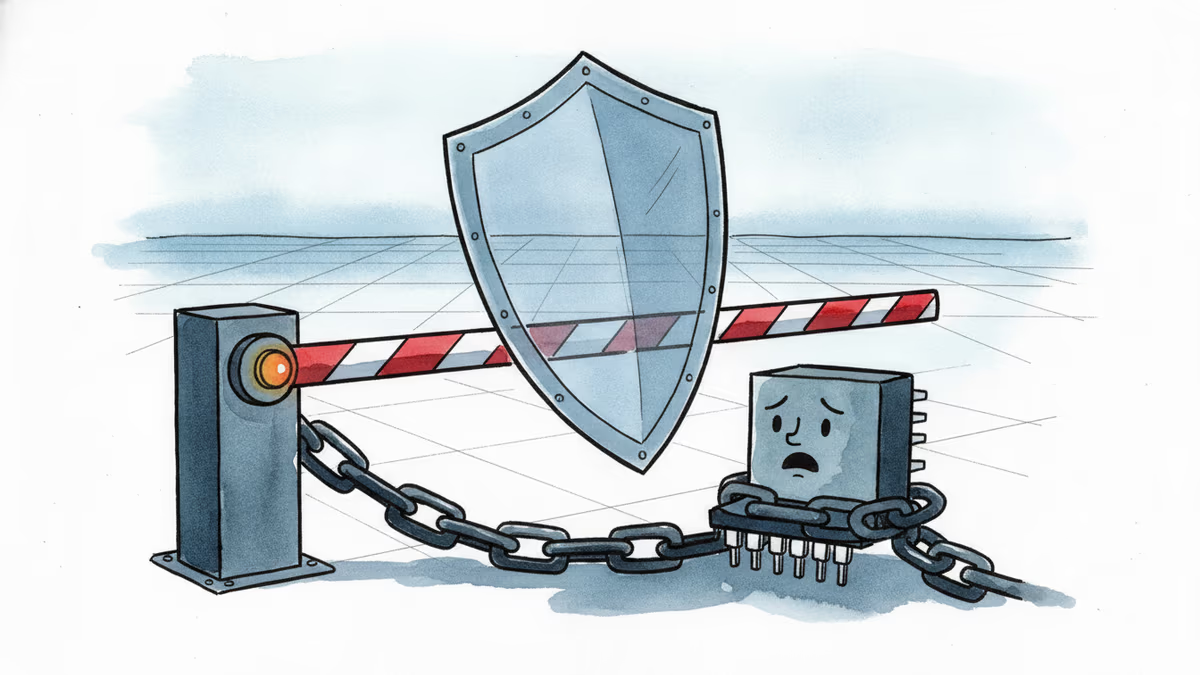
US AI-chip export controls split into three layers in the first half of 2026 — January easing, a May crackdown on circumvention, and a pending bill. Nvidia erased China from its guidance and still posted a record $81.6 billion quarter. A look at the export policy that both shields and cages it.
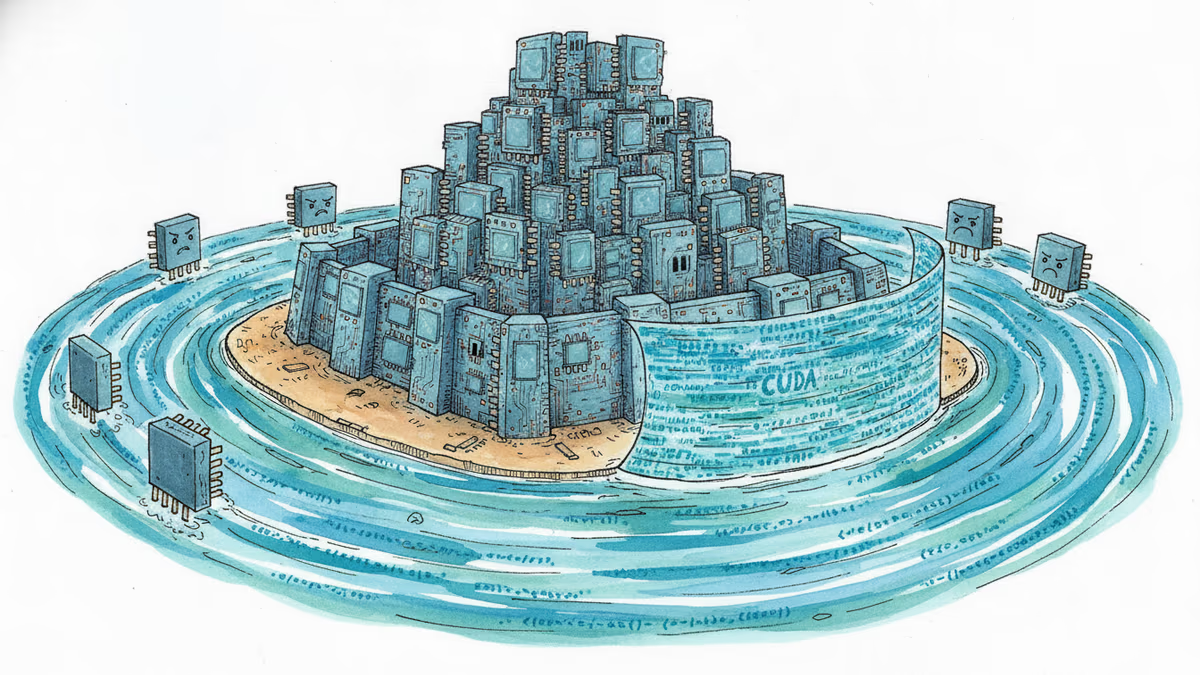
AMD's MI325X matches or beats Nvidia on memory and bandwidth — yet Nvidia's 86-92% share holds. The real moat is CUDA, 20 years in the making. Part 1 of 4.
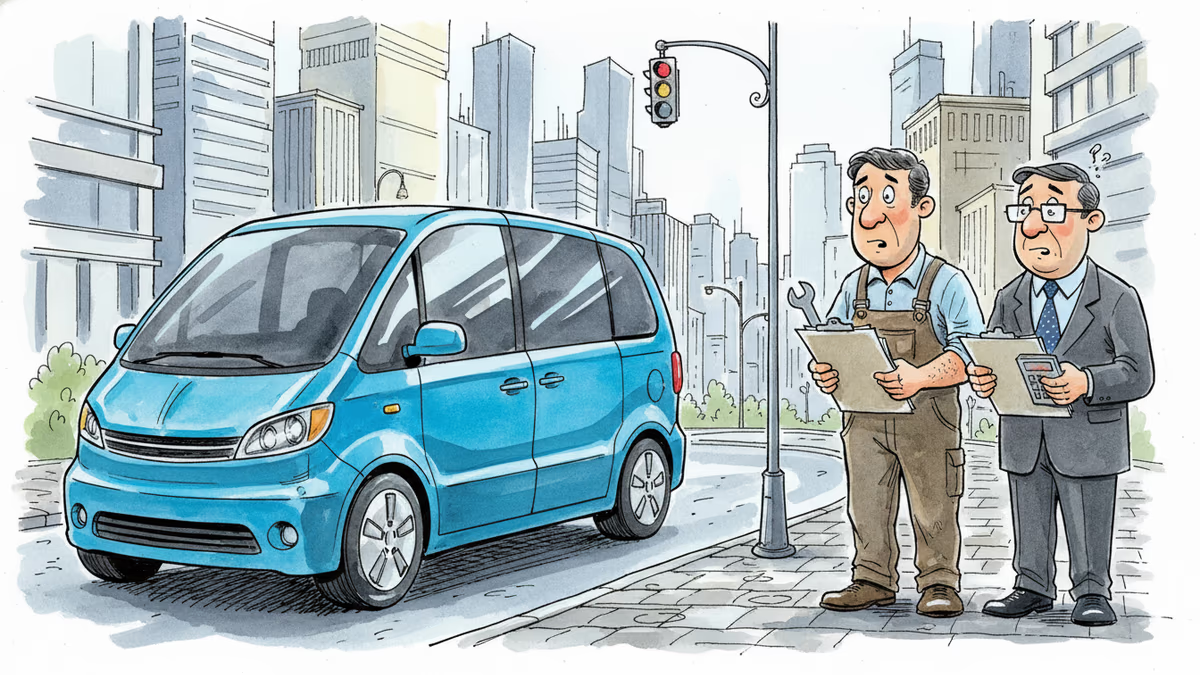
Waymo's new Ojai robotaxi isn't just a vehicle upgrade. It's the company's most serious attempt yet at cracking the cost problem that has kept autonomous vehicles from scaling. Here's what's really at stake.
Nvidia shipped roughly a billion RISC-V cores in 2024, then announced it would run CUDA on the open standard. We break down how royalty-free instruction sets and open software stacks are trying to route around CUDA's lock-in. Part 2 of the Semiconductor Sovereignty series.
US AI-chip export controls split into three layers in the first half of 2026 — January easing, a May crackdown on circumvention, and a pending bill. Nvidia erased China from its guidance and still posted a record $81.6 billion quarter. A look at the export policy that both shields and cages it.
AMD's MI325X matches or beats Nvidia on memory and bandwidth — yet Nvidia's 86-92% share holds. The real moat is CUDA, 20 years in the making. Part 1 of 4.
Waymo's new Ojai robotaxi isn't just a vehicle upgrade. It's the company's most serious attempt yet at cracking the cost problem that has kept autonomous vehicles from scaling. Here's what's really at stake.
Thoughts
Share your thoughts on this article
Sign in to join the conversation