

230M Weekly Users: ChatGPT Health Launch and the 2026 AI Regulation War
230 million people are using AI for health queries as OpenAI officially launches ChatGPT Health. Meanwhile, the US faces a massive battle over AI regulation 2026.
The era of 'Dr. Google' is fading. Every week, 230 million people now turn to OpenAI's chatbot for medical advice. This month's official ChatGPT Health launch marks a pivotal shift in how the world accesses medical expertise, turning complex AI models into personal health consultants.
ChatGPT Health Launch: Beyond Simple Search
According to MIT Technology Review, the convenience of using LLMs for symptom checking is undeniable. However, the risks aren't gone. While OpenAI claims the benefits outweigh the dangers, the potential for AI-driven medical misinformation remains a critical concern for clinicians. The big question for 2026 is whether these tools can truly provide a net benefit to public health without causing systemic harm.
The Battle for AI Regulation 2026

The US is heading toward a legal showdown. On December 11, 2025, President Donald Trump signed a sweeping executive order intended to block states from creating their own AI rules. It's a massive win for Big Tech, which has been fighting a 'patchwork' of state laws that they say stifle innovation. In response, several states are preparing to challenge the order in court, setting the stage for a volatile 2026 in tech policy.
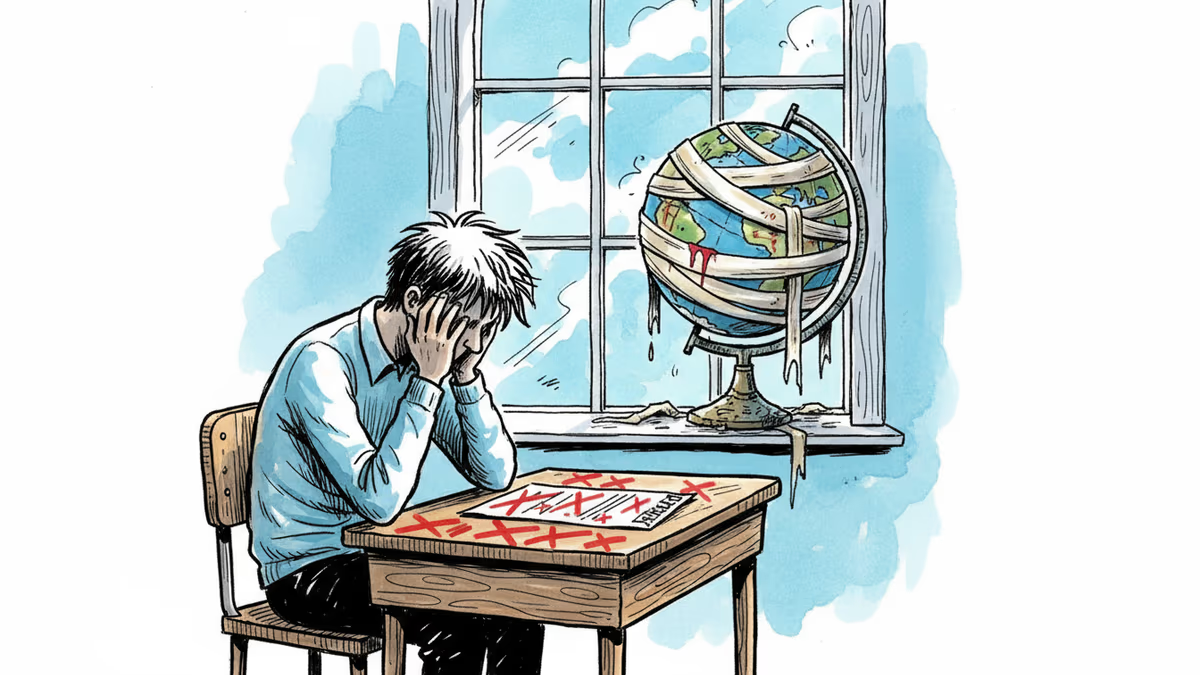
Global Health in Crisis
While AI advances, traditional health threats persist. The US has seen over 2,500 measles cases since early 2025, leading scientists to deploy advanced wastewater tracking to stop the spread. Compounding the crisis, the US has officially withdrawn from the WHO, leaving behind nearly $300 million in unpaid dues and isolating itself from global disease monitoring networks.
Authors
Related Articles
WHO's 2026 global health statistics report shows HIV, tuberculosis, and malaria targets are badly off track. What went wrong—and what does it mean for 2030?

OpenAI has reorganized for the second time in a month, merging ChatGPT and Codex into a single agentic platform under president Greg Brockman's unified product leadership.

After two weeks of witnesses calling him a liar, OpenAI CEO Sam Altman testified in his own defense, claiming Elon Musk tried to kill the company twice.

Sam Nelson, 19, died after following ChatGPT's advice to mix Kratom and Xanax. His parents are suing OpenAI for wrongful death, raising urgent questions about AI trust, liability, and design.
WHO's 2026 global health statistics report shows HIV, tuberculosis, and malaria targets are badly off track. What went wrong—and what does it mean for 2030?
OpenAI has reorganized for the second time in a month, merging ChatGPT and Codex into a single agentic platform under president Greg Brockman's unified product leadership.
After two weeks of witnesses calling him a liar, OpenAI CEO Sam Altman testified in his own defense, claiming Elon Musk tried to kill the company twice.
Sam Nelson, 19, died after following ChatGPT's advice to mix Kratom and Xanax. His parents are suing OpenAI for wrongful death, raising urgent questions about AI trust, liability, and design.
Thoughts
Share your thoughts on this article
Sign in to join the conversation