
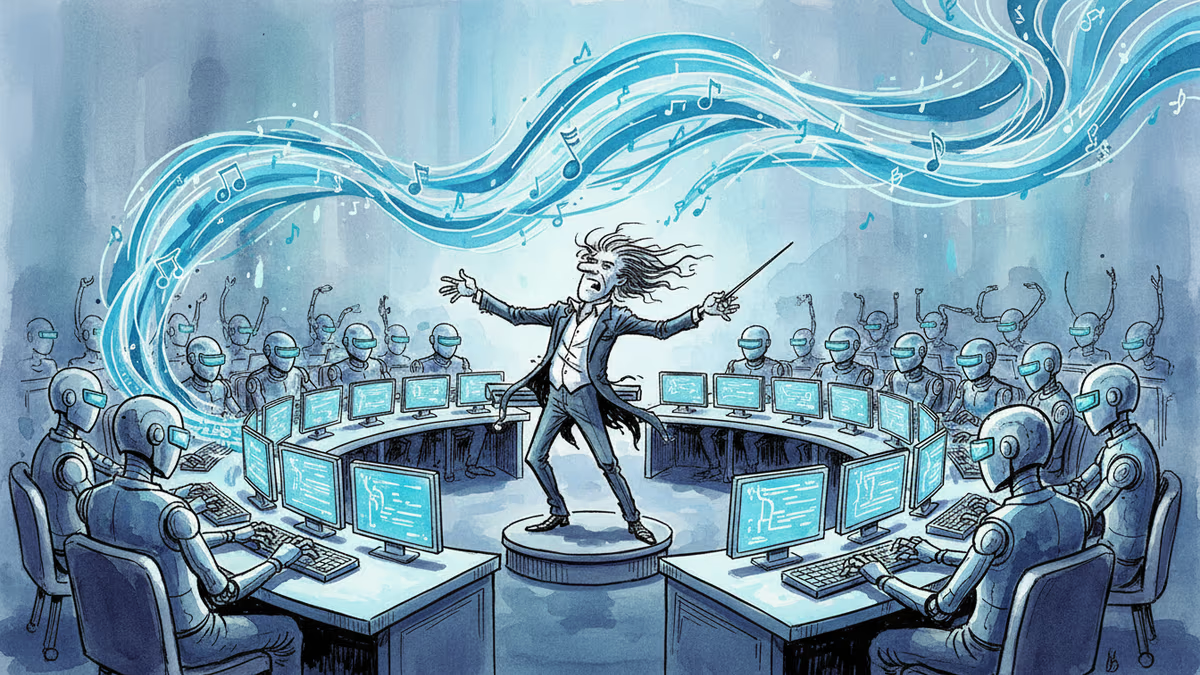
The Coders Who Don't Code Anymore
As AI coding agents reshape Silicon Valley, 'high-agency' humans become the new premium talent. But what happens when everyone else becomes obsolete?
Four AI Agents, Zero Lines of Code
Simon Last coded for nearly two decades. Then he stopped. Abruptly.
Today, the Notion cofounder runs up to four AI coding agents simultaneously. When he's at a party or sleeping, he gets "token anxiety" if his agents aren't working in the background. He won't use more than four, though—that causes "context overload" on his human brain.
"Knowing how to harness these agents is now the most important skill in the world," says Last. "And it's not really something you can train for."
This isn't some fringe experiment. It's happening at a $11 billion productivity startup that millions use daily. And it's spreading across Silicon Valley like wildfire.
From Coder to Agent Whisperer
Last doesn't manage humans anymore—only agents. But the way he manages them isn't unlike overseeing employees. He delegates work, reviews output, fixes code. He's become what Notion calls a "super IC" (individual contributor).
Andreessen Horowitz partner Jennifer Li says it's hard to find a portfolio company where employees don't use AI coding tools. "If we come across people who are oblivious to it, it's a big red flag. It impacts how we think about picking founders."
But there's a catch: just because you use AI agents doesn't make you "high-agency." Teams have a "no slop rule"—you're still responsible if the AI-generated code breaks.

Slow Ventures partner Yoni Rechtman shared a job posting from portfolio company Phoebe that captures this shift: "I'm not looking for raw IC execution... I expect agents to take over more and more of this role over the next few months."
Instead, they want people "excited about building the machine that lets us move fast and build features end-to-end with agents."
The Great Divide
Here's what's unsettling: this isn't just about coding. Notion's Akshay Kothari believes the "new way of work" will hit finance, legal, and creative industries next.
"Today's agents might already be more capable than all three of us here in the room," says Kothari. "Eventually, the only thing left for humans is agency."
A recent Gallup survey found most Americans still don't use AI much at work—yet. But the number is rising. And Silicon Valley is already sorting people into two categories: those who can orchestrate AI agents, and those who can't.
Notion isn't downsizing because of AI, but it's hiring differently. "There's more value in the Valley today to have a few Simons than thousands of engineers," says Kothari.
The Agency Paradox
The term "high-agency" has developed what Rechtman calls "a sort of stink around it."
"I think it's cringy to refer to yourself or someone else as agentic," he admits. "But that doesn't mean those are not, in fact, good qualities to look for and cultivate."
The problem? It "reveals a worldview that you genuinely, unironically believe there are two kinds of people in the world: the NPCs and the main characters, and you're one of the main characters."
Authors
Related Articles
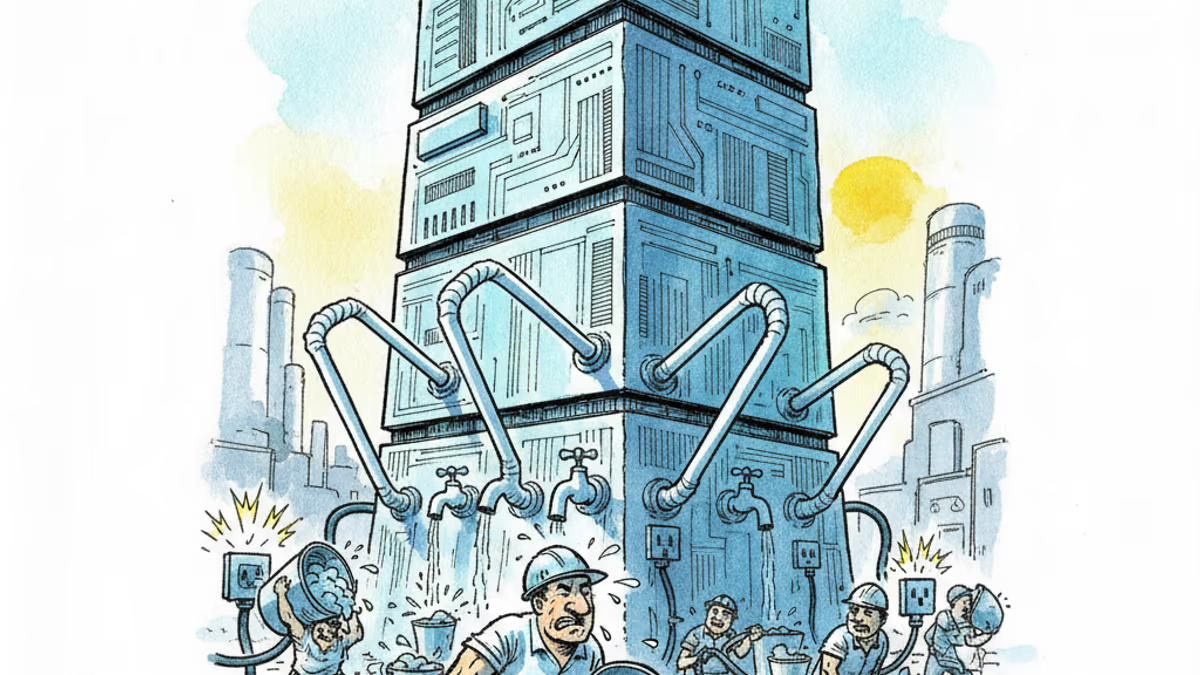
Samsung and SK unveiled a chip and AI investment package worth thousands of trillions of won on June 29. The headline number swings wildly by outlet, but the real contest isn't capital — it's water and power.

A small but growing group of developers has gone all-in on AI coding agents like Claude Code and OpenClaw. History suggests the rest of us won't be far behind.
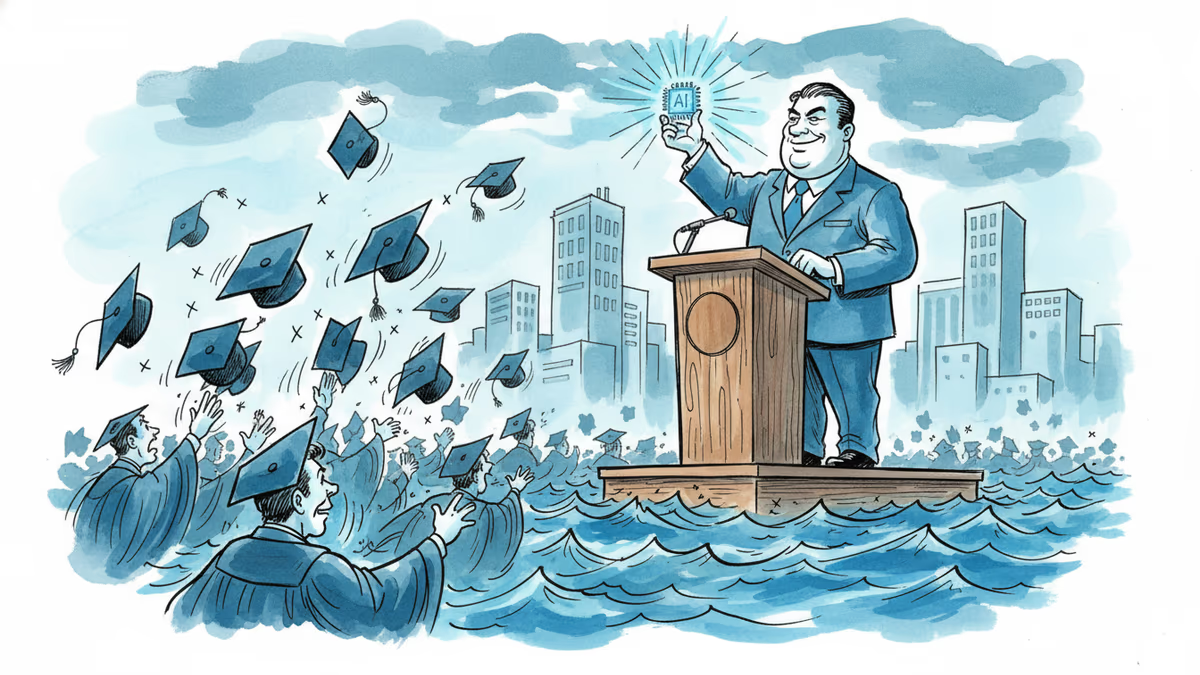
Viral videos show 2026 graduates jeering executives who praise AI at commencement ceremonies. It's not just rudeness — it's a signal about who pays for technological optimism.
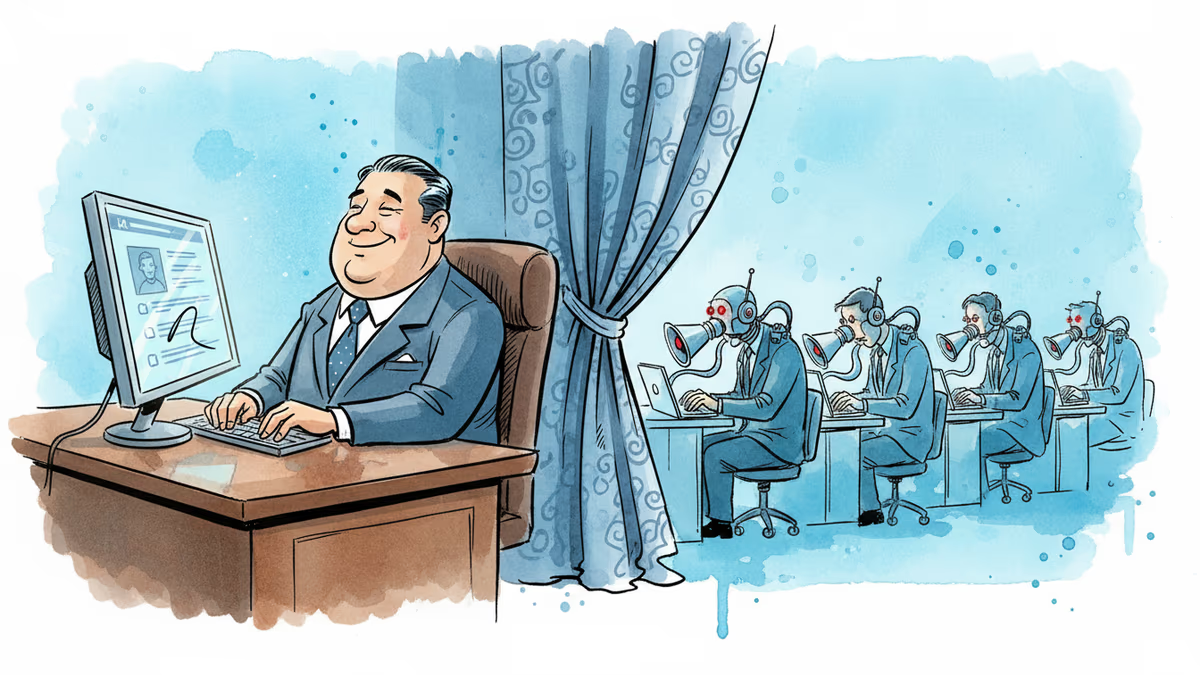
Filipino virtual assistants using AI to ghost-manage LinkedIn profiles for executives is now a structured industry. 30 comments a day, fake engagement rings, and a platform struggling to tell real from fabricated.
Samsung and SK unveiled a chip and AI investment package worth thousands of trillions of won on June 29. The headline number swings wildly by outlet, but the real contest isn't capital — it's water and power.
A small but growing group of developers has gone all-in on AI coding agents like Claude Code and OpenClaw. History suggests the rest of us won't be far behind.
Viral videos show 2026 graduates jeering executives who praise AI at commencement ceremonies. It's not just rudeness — it's a signal about who pays for technological optimism.
Filipino virtual assistants using AI to ghost-manage LinkedIn profiles for executives is now a structured industry. 30 comments a day, fake engagement rings, and a platform struggling to tell real from fabricated.
Thoughts
Share your thoughts on this article
Sign in to join the conversation