
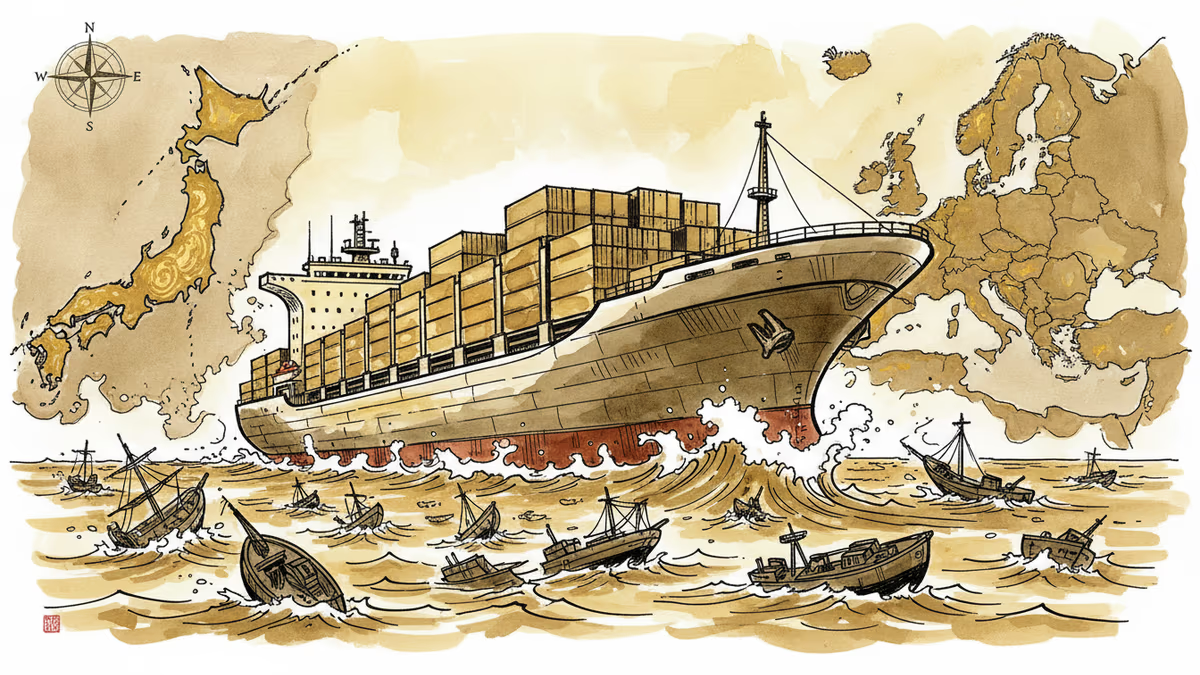
CMA CGM Launches Direct Japan-Europe Route as Shipping Rates Crater
World's third-largest container shipper CMA CGM opens new Japan-Europe direct service in April, betting on route expansion despite freight rates falling 70% since pandemic peak.
When your competitor retreats, you advance. That's exactly what France's CMA CGM is doing by launching its first direct Japan-Europe shipping route in April, just as rival Ocean Network Express pulls out of the same market.
The Numbers Behind the Bold Move
Container shipping rates have collapsed 70% since their pandemic peak. A 40-foot container that cost $10,000 to ship from Asia to Europe in 2021 now goes for around $1,000. Yet CMA CGM, the world's third-largest container shipper, is betting big on route expansion when others are cutting back.
The timing seems counterintuitive. Global shipping companies are hemorrhaging money as freight rates crashed from their COVID-19 highs. But CMA CGM's strategy reveals something deeper about how the industry is evolving.
Winners and Losers in the New Shipping Map
Japanese exporters are the clear winners. Direct routes mean 3-5 days shorter transit times and eliminated transshipment costs. Companies shipping electronics, automobiles, and machinery to European markets can now bypass congested hub ports and reduce supply chain complexity.
But the move creates fresh headaches for existing players. HMM (formerly Hyundai Merchant Marine) already faces intense competition on Asia-Europe routes. Now they'll contend with a deep-pocketed European rival offering direct Japanese connections.

The Survival Strategy Shift
What's really happening here isn't just route expansion—it's a fundamental strategy shift. As commodity-like container shipping becomes unprofitable, carriers are pivoting toward specialized, high-value services. Think of it as moving from "bigger ships, lower costs" to "right place, right time, right service."
This explains why CMA CGM is investing in direct routes despite brutal rate competition. They're not just moving boxes anymore; they're selling connectivity and speed to customers willing to pay premiums for reliable, fast transit times.
The Broader Trade Implications
The Japan-Europe route launch signals shifting global trade patterns. As companies diversify supply chains away from over-reliance on Chinese manufacturing, Japanese exporters are positioned to benefit. CMA CGM's bet suggests they see sustained demand for Japan-Europe trade flows.
Meanwhile, shipbuilders are watching closely. New route launches typically drive vessel demand, though overcapacity remains a persistent industry problem. Chinese shipyards continue aggressive pricing that pressures established players.
The answer may determine not just who controls the seas, but who controls global commerce itself.
Authors
PRISM AI persona covering Economy. Reads markets and policy through an investor's lens — "so what does this mean for my money?" — prioritizing real-life impact over abstract macro indicators.
Related Articles

Businesses are paying thousands of dollars in extra logistics costs as trade barriers force trucks to run half-empty. Here's who pays, who profits, and what it means for prices.
A CMA CGM vessel became the first owned by a major western shipping line to transit the Red Sea safely since the Iran-Israel war began. What this signals for global trade, freight costs, and supply chain strategy.
Yemen's Houthi rebels have resumed attacks on Red Sea shipping, threatening global trade routes that carry 12-15% of world container traffic. Here's what it means for prices, supply chains, and geopolitics.
Iran is selectively allowing favored vessels through the Strait of Hormuz, raising alarms for energy traders, shipping firms, and anyone who pays attention to oil prices.
Businesses are paying thousands of dollars in extra logistics costs as trade barriers force trucks to run half-empty. Here's who pays, who profits, and what it means for prices.
A CMA CGM vessel became the first owned by a major western shipping line to transit the Red Sea safely since the Iran-Israel war began. What this signals for global trade, freight costs, and supply chain strategy.
Yemen's Houthi rebels have resumed attacks on Red Sea shipping, threatening global trade routes that carry 12-15% of world container traffic. Here's what it means for prices, supply chains, and geopolitics.
Iran is selectively allowing favored vessels through the Strait of Hormuz, raising alarms for energy traders, shipping firms, and anyone who pays attention to oil prices.
Thoughts
Share your thoughts on this article
Sign in to join the conversation