

Ford CEO Admits Defeat: The Widening US China EV Market Gap
Ford's CEO admits that US automakers aren't currently competing with China's global EV dominance. Learn more about the widening US China EV market gap.
"There's no real competition." That's the blunt assessment from Ford CEO Jim Farley regarding the current state of the global electric vehicle race. In a recent podcast appearance, he signaled a white flag of sorts, acknowledging that China isn't just winning—it's dominating the landscape in a way that American icons like Tesla or GM simply aren't matching right now.
The Massive US China EV Market Gap: A Decade in the Making
For the past 10 years, while Detroit focused on scaling internal combustion profits to fund future tech, China built an impenetrable EV ecosystem. Farley noted that China's dominance is most visible outside its own borders, where their brands are rapidly scaling. According to industry analysts, the gap isn't just about the number of cars sold; it's about the entire cost structure and battery supply chain.

Detroit's Reality Check
The admission is a significant pivot from the usual corporate optimism. It highlights a reality where US automakers are being edged out of emerging markets by cheaper, tech-heavy Chinese alternatives. Even with significant subsidies like the Inflation Reduction Act, matching Chinese manufacturing efficiency remains a monumental challenge for the Big Three.
Authors
Related Articles
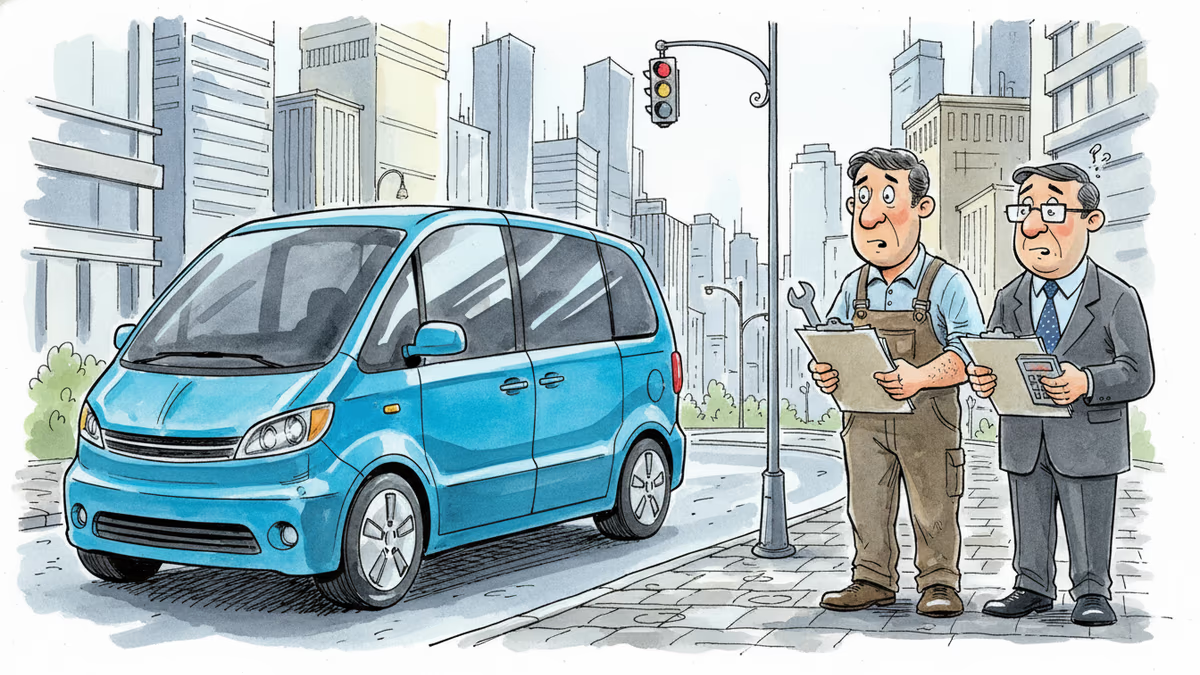
Waymo's new Ojai robotaxi isn't just a vehicle upgrade. It's the company's most serious attempt yet at cracking the cost problem that has kept autonomous vehicles from scaling. Here's what's really at stake.
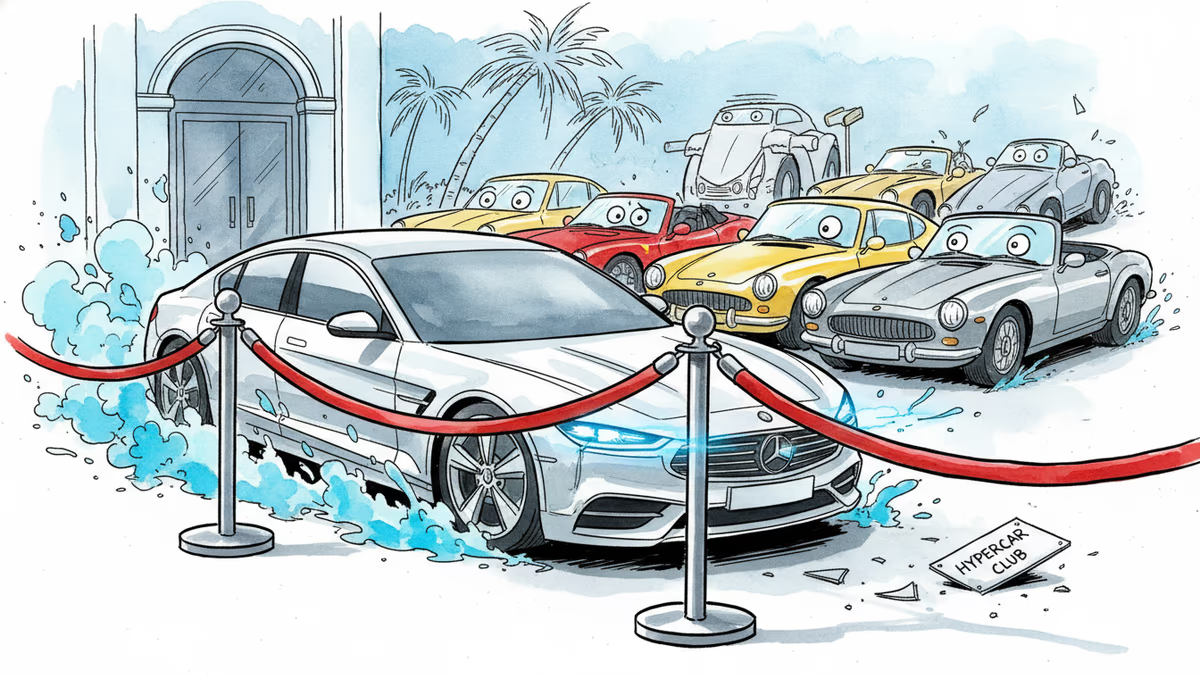
Mercedes-AMG's new GT 4-door coupe packs three YASA axial flux motors producing 1,153 hp and 1,475 lb-ft of torque. Here's what it means for the EV performance race—and who actually wins.
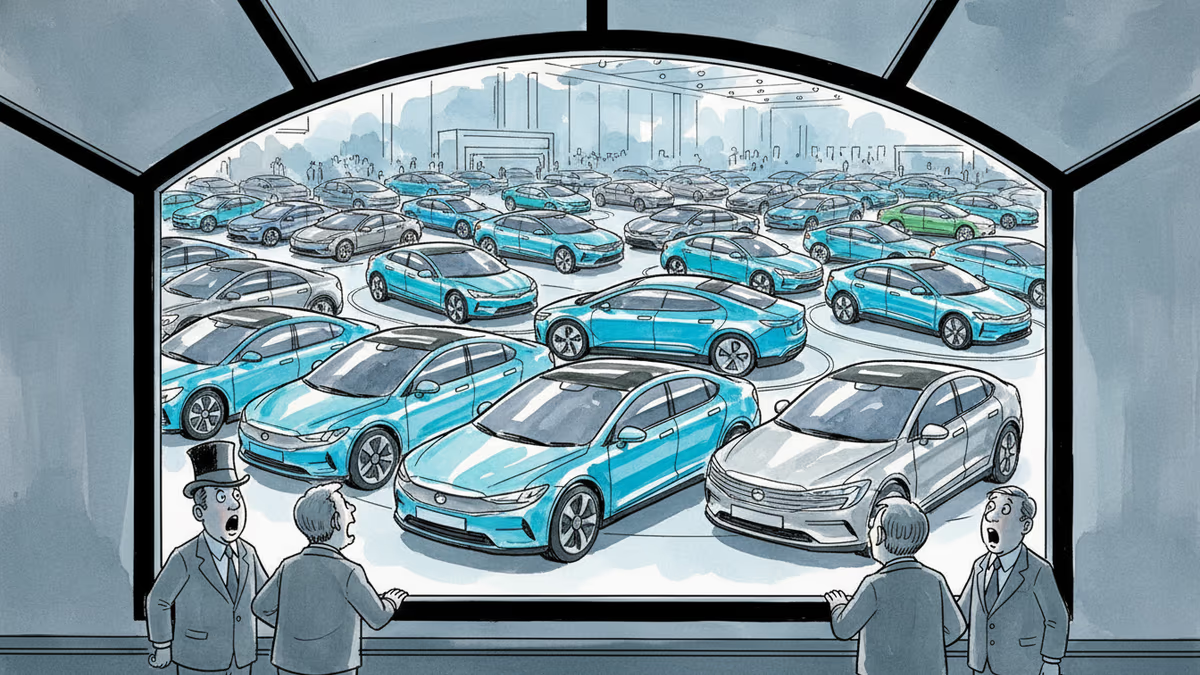
Auto China 2026 set records with 1,451 vehicles and 181 world premieres. But the real story isn't the size—it's how Chinese automakers stopped competing on price and started competing on brains.
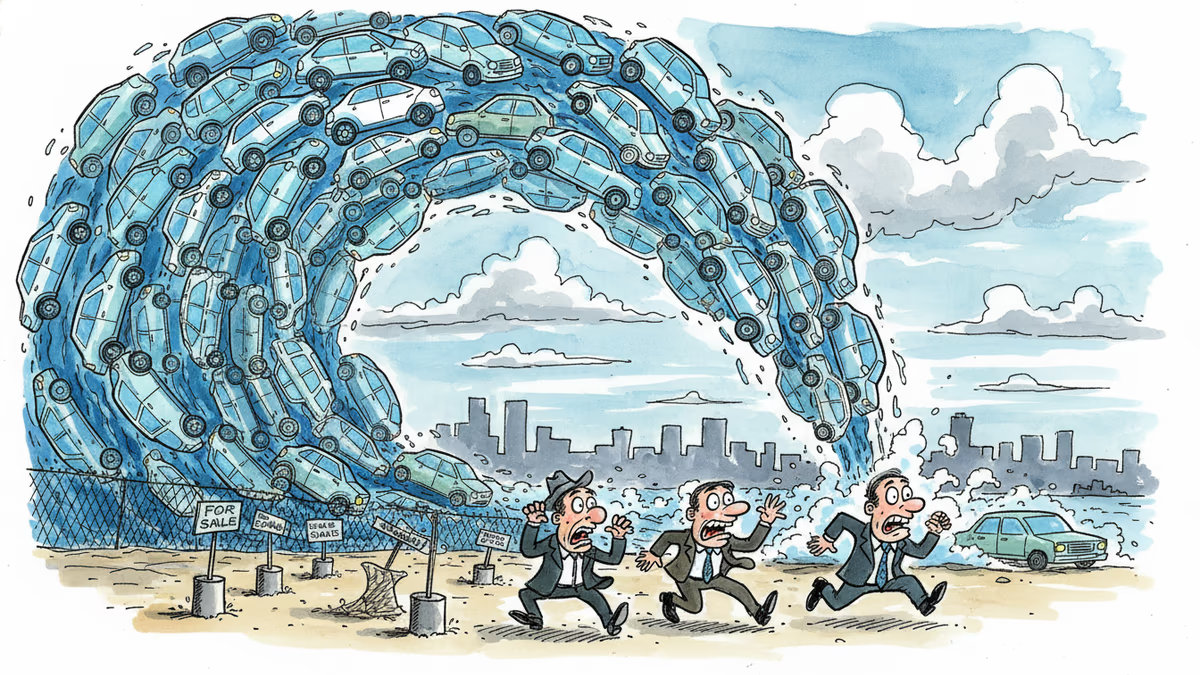
Expiring leases will flood the US used car market with over a million electric vehicles by 2028. Could this do what subsidies couldn't — make EVs genuinely affordable?
Waymo's new Ojai robotaxi isn't just a vehicle upgrade. It's the company's most serious attempt yet at cracking the cost problem that has kept autonomous vehicles from scaling. Here's what's really at stake.
Mercedes-AMG's new GT 4-door coupe packs three YASA axial flux motors producing 1,153 hp and 1,475 lb-ft of torque. Here's what it means for the EV performance race—and who actually wins.
Auto China 2026 set records with 1,451 vehicles and 181 world premieres. But the real story isn't the size—it's how Chinese automakers stopped competing on price and started competing on brains.
Expiring leases will flood the US used car market with over a million electric vehicles by 2028. Could this do what subsidies couldn't — make EVs genuinely affordable?
Thoughts
Share your thoughts on this article
Sign in to join the conversation