
5-Minute Charging: BYD's Battery Breakthrough Changes Everything
Chinese automaker BYD unveils battery technology that charges from 10% to 70% in just 5 minutes, potentially eliminating EVs' biggest weakness
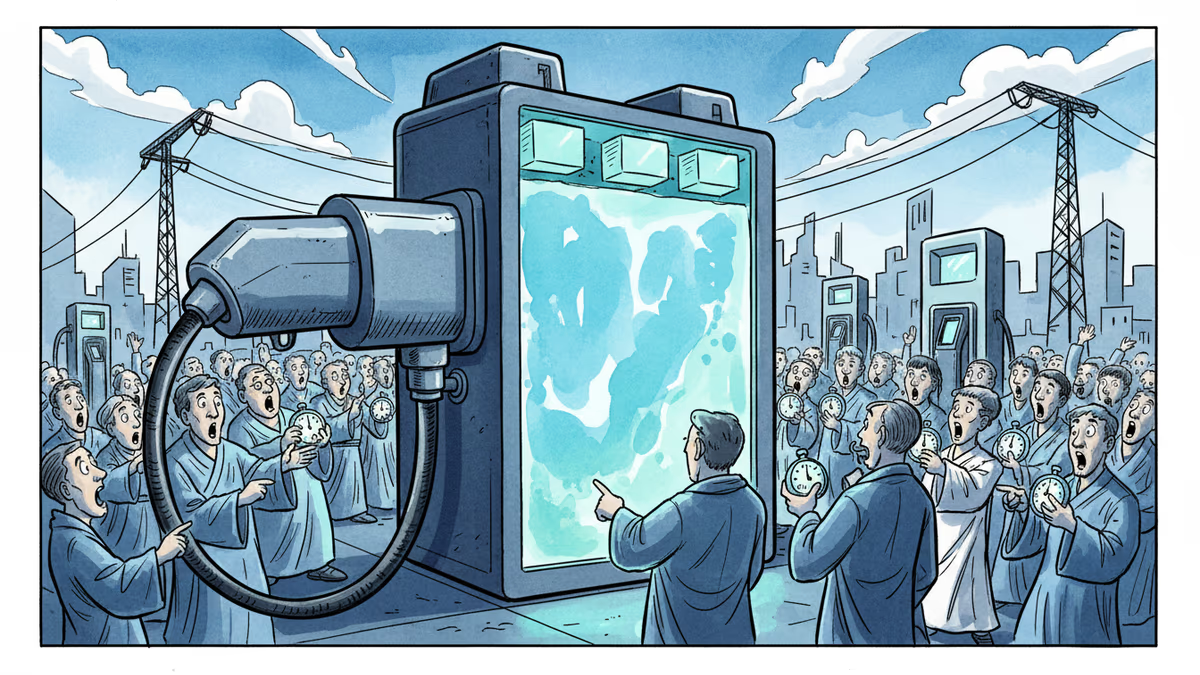
Five minutes. That's how long it takes to grab coffee and a snack at a gas station. Now, thanks to Chinese automaker BYD's latest innovation, it's also enough time to charge an electric vehicle from 10% to 70%. Getting to nearly 100% takes just four more minutes.
This isn't just another incremental improvement. BYD's Blade Battery 2.0 system, unveiled Thursday, could finally eliminate one of the last advantages internal combustion engines hold over electric vehicles: refueling speed.
Cold Weather? No Problem
Here's where things get really interesting. Even in bitter -4°F (-20°C) weather—conditions that typically cripple EV performance—the battery pack can charge from 20% to 97% in under 12 minutes. For anyone who's experienced the frustration of slow winter charging, this represents a quantum leap.
The technology debuts in the Yangwang U7, a full-size luxury sedan. But there's a catch: these lightning-fast charging times only work with BYD's proprietary Flash Charging stations, which pump out 1.5 megawatts of electricity.
Warren Buffett's 20x Win
BYD wasn't always the EV giant it is today. Back in 2008, Warren Buffett's Berkshire Hathaway bought a 10% stake for $230 million—long before BYD became a Tesla rival or household name. Berkshire sold its last shares in 2025, returning more than 20x the original investment.
Today, BYD is the world's largest EV manufacturer, but it's facing pressure. Combined January and February 2026 sales dropped roughly 36% compared to the previous year. With Chinese competitors like Li Auto, Xpeng, Xiaomi, and Zeekr breathing down its neck, this battery breakthrough couldn't come at a better time.

The Chemistry Behind the Speed
BYD's secret weapon is lithium iron phosphate (LFP), a chemistry that automakers are betting will democratize EVs by avoiding expensive metals like cobalt and nickel. Currently, LFP packs cost $81 per kilowatt-hour compared to $128 for nickel manganese cobalt (NMC) batteries.
The trade-off? Energy density. LFP can't pack as much energy into the same space, limiting range. That's why Western automakers typically reserve LFP for their budget models. BYD's gamble is that ultra-fast charging can make this limitation irrelevant.
Infrastructure Reality Check
BYD claims to have 4,200 Flash Charging stations completed across China, with plans to add 16,000 more by year-end. Meanwhile, the fastest chargers in the US and Europe typically max out at 350 kW, though 500 kW units are slowly rolling out.
The U7 can travel just over 1,000 kilometers (621 miles) on China's optimistic CLTC test cycle. In real-world conditions—using the more conservative EPA standards—expect closer to 400 miles per charge. Still, adding 240 miles of range in five minutes could make range anxiety obsolete.
The Bigger Picture: Speed vs Standards
BYD's approach raises fascinating questions about the future of EV charging. While Tesla built success with its Supercharger network, the industry is moving toward universal standards. BYD is betting on the opposite: a proprietary ecosystem that delivers unmatched performance.
This strategy worked for Apple with its Lightning connector—until regulatory pressure forced the switch to USB-C. Will BYD face similar challenges as governments push for charging standardization?
Authors
Related Articles
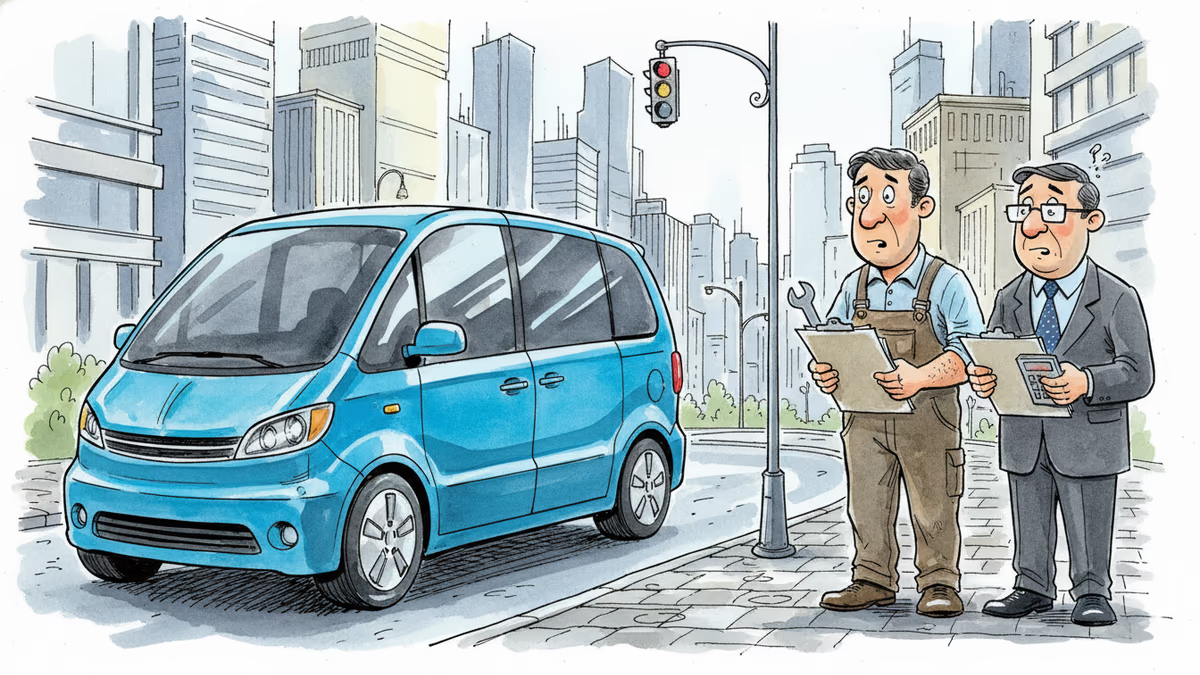
Waymo's new Ojai robotaxi isn't just a vehicle upgrade. It's the company's most serious attempt yet at cracking the cost problem that has kept autonomous vehicles from scaling. Here's what's really at stake.
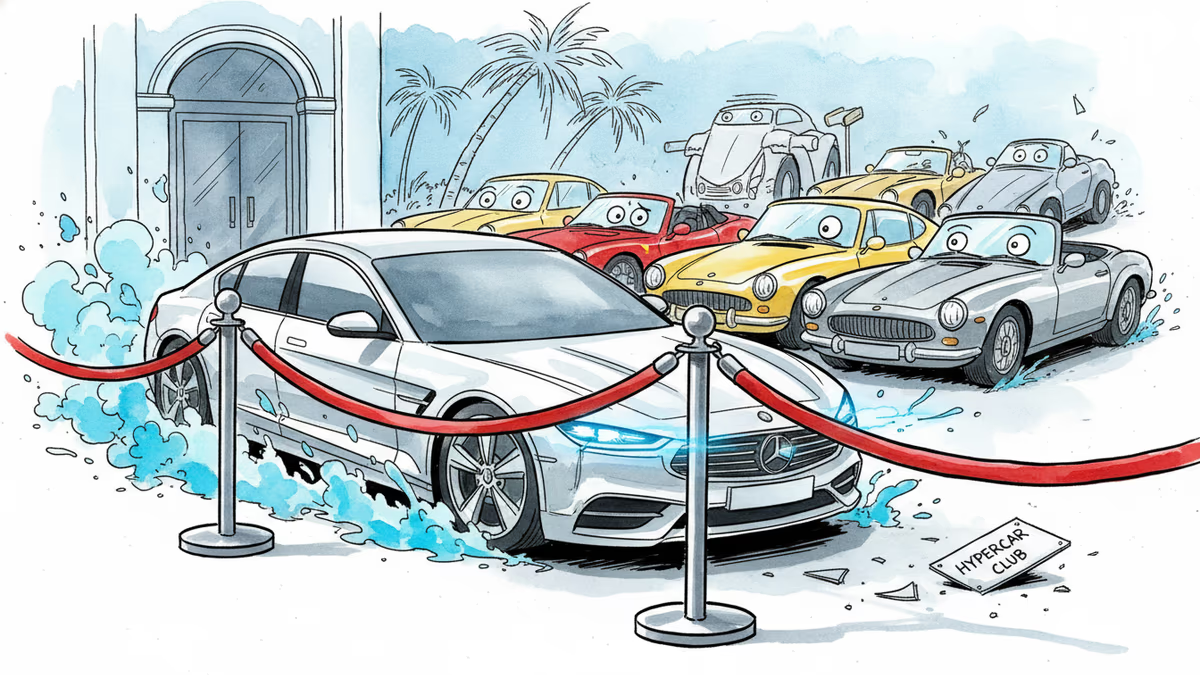
Mercedes-AMG's new GT 4-door coupe packs three YASA axial flux motors producing 1,153 hp and 1,475 lb-ft of torque. Here's what it means for the EV performance race—and who actually wins.
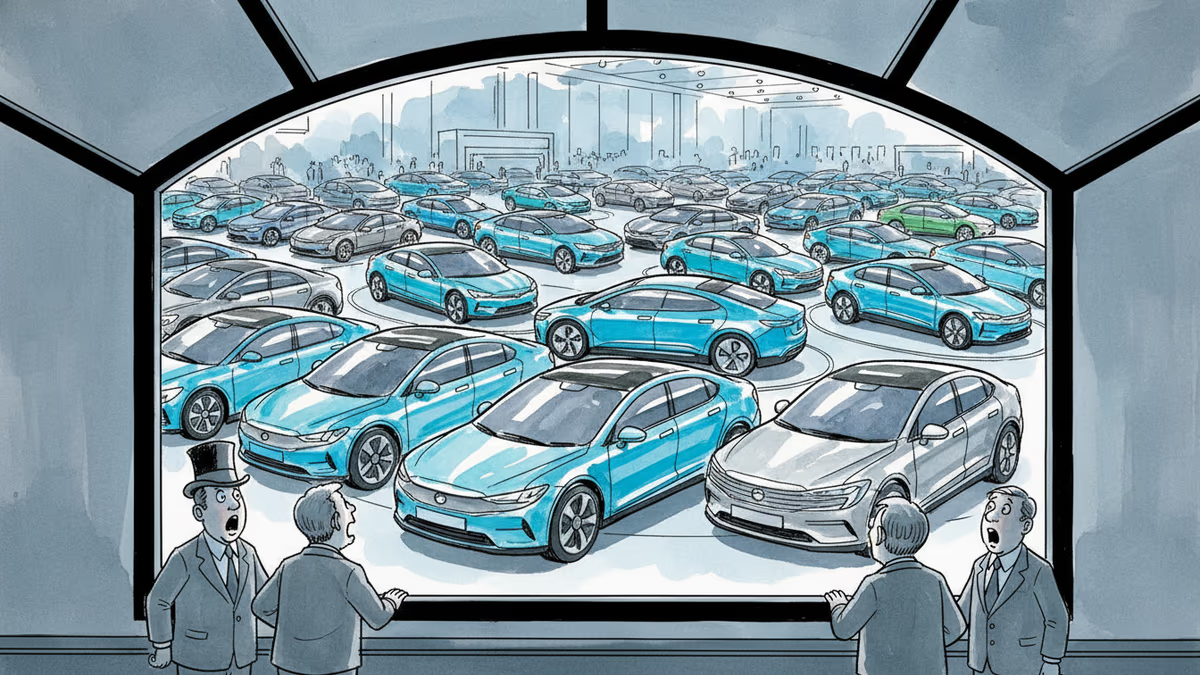
Auto China 2026 set records with 1,451 vehicles and 181 world premieres. But the real story isn't the size—it's how Chinese automakers stopped competing on price and started competing on brains.
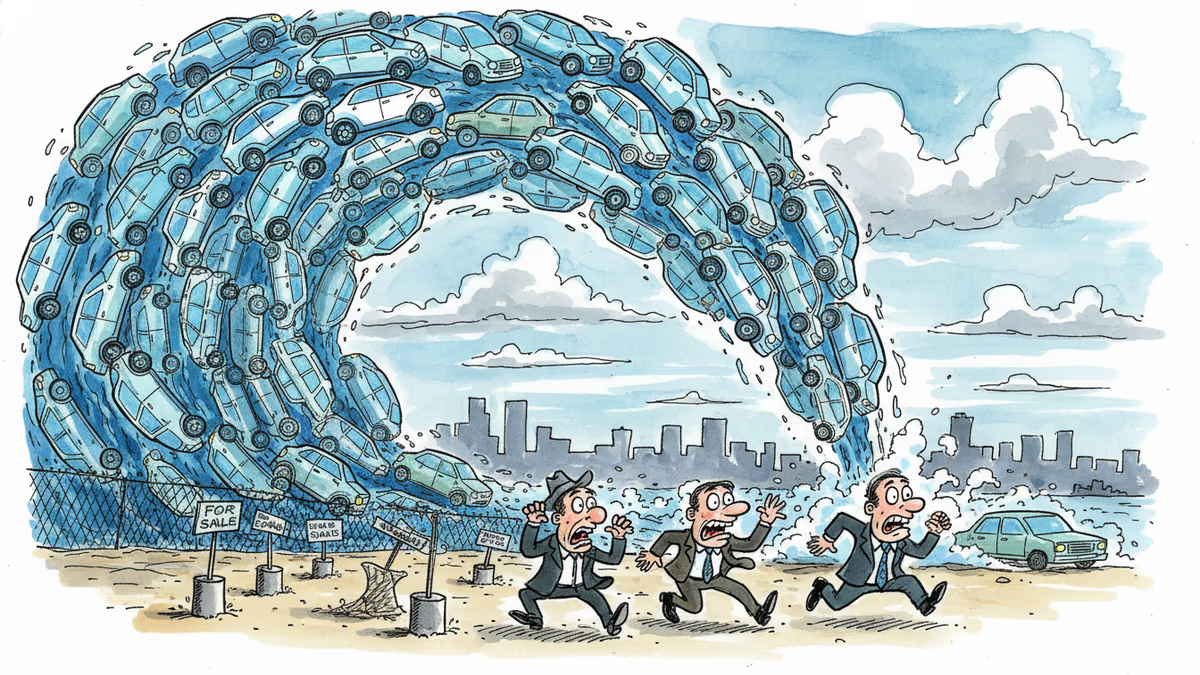
Expiring leases will flood the US used car market with over a million electric vehicles by 2028. Could this do what subsidies couldn't — make EVs genuinely affordable?
Waymo's new Ojai robotaxi isn't just a vehicle upgrade. It's the company's most serious attempt yet at cracking the cost problem that has kept autonomous vehicles from scaling. Here's what's really at stake.
Mercedes-AMG's new GT 4-door coupe packs three YASA axial flux motors producing 1,153 hp and 1,475 lb-ft of torque. Here's what it means for the EV performance race—and who actually wins.
Auto China 2026 set records with 1,451 vehicles and 181 world premieres. But the real story isn't the size—it's how Chinese automakers stopped competing on price and started competing on brains.
Expiring leases will flood the US used car market with over a million electric vehicles by 2028. Could this do what subsidies couldn't — make EVs genuinely affordable?
Thoughts
Share your thoughts on this article
Sign in to join the conversation