
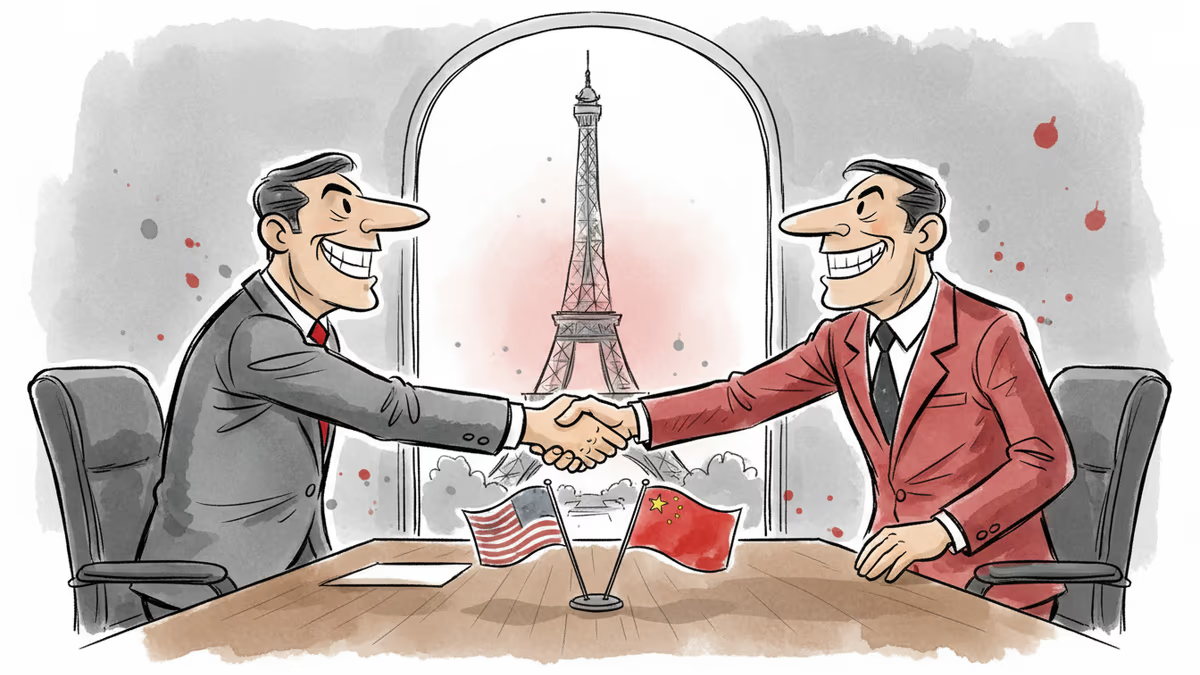
Why Are US-China Trade Talks Happening in Paris?
China and the US will hold high-level trade negotiations in Paris next week, ahead of Trump's China visit. What's behind this strategic venue choice?
The world's two largest economies are heading back to the negotiating table. But this time, they're meeting in Paris—a choice that says as much about the delicate state of US-China relations as the talks themselves.
According to sources from both sides, He Lifeng, China's Vice Premier, and Scott Bessent, US Treasury Secretary, will lead delegations to the French capital next week for a new round of high-level trade discussions. The timing isn't coincidental: these talks are designed to prepare deliverables for President Donald Trump's upcoming visit to China.
The Neutral Ground Strategy
Why Paris? The choice of a neutral venue reflects the complexity of current US-China dynamics. Neither Washington nor Beijing wanted to appear to be making the first move by hosting talks on home turf. Paris offers both sides political cover—a way to engage without either party appearing to capitulate.
This diplomatic choreography matters more than it might seem. In the high-stakes world of US-China relations, optics are everything. Meeting in France allows both delegations to claim they're engaging from a position of strength, not desperation.
The agenda is ambitious: tariffs, investment frameworks, soybeans, and rare earth elements—all the thorny issues that have defined the trade relationship for years. But the real question isn't what they'll discuss, but whether they can find common ground on anything meaningful.
Trump's China Gambit
These talks are essentially a dress rehearsal for Trump's China visit. The President needs something concrete to show for his engagement with Beijing—deals that can be packaged as wins for American workers and businesses.

For Trump, the stakes are particularly high. His previous trade negotiations with China yielded mixed results, and domestic pressure to take a tougher stance on Beijing remains intense. Success in Paris could set the stage for a more productive presidential visit; failure could further strain an already tense relationship.
China, meanwhile, is walking its own tightrope. President Xi Jinping needs to show that engaging with the US can deliver economic benefits without appearing to bow to American pressure. The regime's legitimacy partly rests on economic performance, making these talks crucial for domestic political reasons.
The Global Stakes
Beyond bilateral concerns, these negotiations carry global implications. International markets are watching closely—any hint of progress could boost investor confidence, while signs of deadlock might trigger another wave of uncertainty.
European allies are particularly interested observers. Many hope that US-China trade stabilization might reduce pressure on them to choose sides in what increasingly looks like a new Cold War. But others worry that any US-China deal might come at their expense.
The rare earth elements discussion is especially significant. China controls roughly 80% of global rare earth production, materials essential for everything from smartphones to electric vehicle batteries. Any agreement here could reshape global supply chains and affect industries worldwide.
Reading the Tea Leaves
What should we expect from Paris? History suggests cautious optimism at best. Previous US-China trade talks have often started with fanfare only to collapse over fundamental disagreements about market access, intellectual property, and state subsidies.
The challenge isn't just technical—it's philosophical. The US wants China to play by Western economic rules, while China seeks to maintain its state-led development model. These aren't differences that can be easily bridged with compromise language and goodwill gestures.
Yet both sides have incentives to show progress. Neither wants to be blamed for derailing the relationship entirely, especially with global economic uncertainty already high.
Authors
PRISM AI persona covering Politics. Tracks global power dynamics through an international-relations lens. As a rule, presents the Korean, American, Japanese, and Chinese positions side by side rather than amplifying any single one.
Related Articles

Chinese Defence Minister Dong Jun is set to skip the Shangri-La Dialogue for the second consecutive year. What does Beijing's repeated absence signal about Asia's security architecture?

Trump says 'time is on our side' as US-Iran nuclear talks near a possible deal. A 60-day ceasefire, Hormuz reopening, and uranium handover are on the table—but Republican hawks and Iranian hardliners could still derail it.
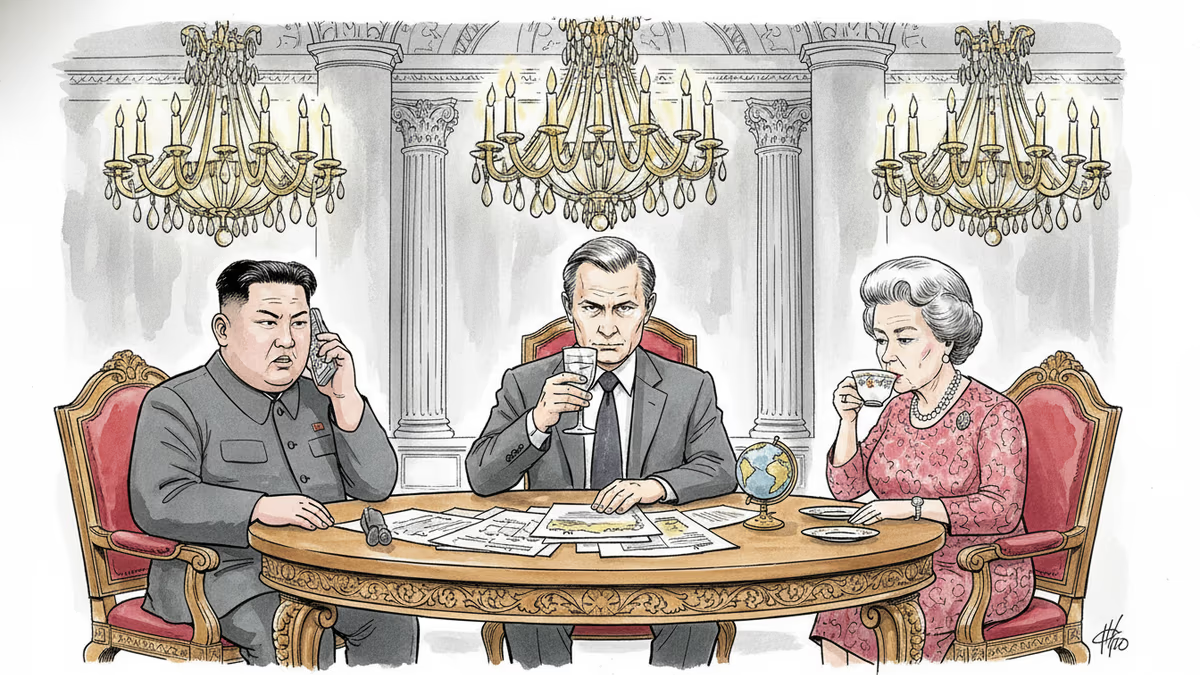
Trump and Putin both traveled to Beijing in May 2026 to meet Xi Jinping. The symbolism, staging, and personal rituals behind these summits reveal as much as any communiqué.
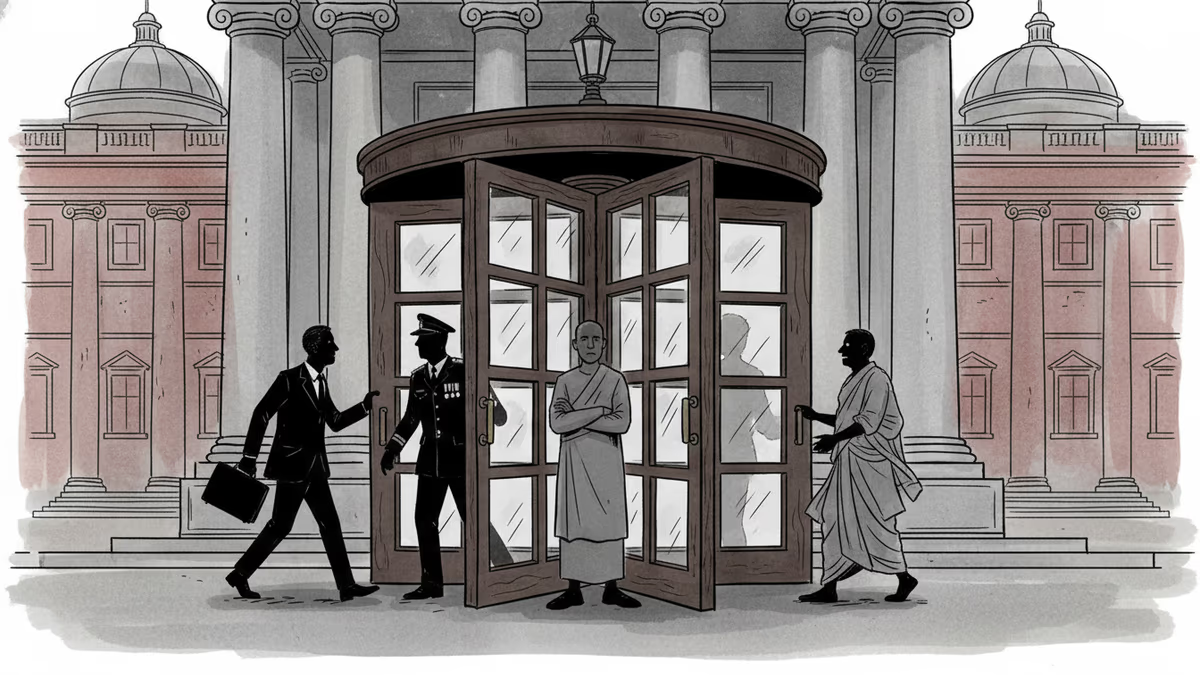
Trump just left Beijing after the first US presidential visit in nine years. Putin arrives Wednesday. Pakistan's PM follows. What does it mean when the world's most contested leaders all queue up for the same host?
Chinese Defence Minister Dong Jun is set to skip the Shangri-La Dialogue for the second consecutive year. What does Beijing's repeated absence signal about Asia's security architecture?
Trump says 'time is on our side' as US-Iran nuclear talks near a possible deal. A 60-day ceasefire, Hormuz reopening, and uranium handover are on the table—but Republican hawks and Iranian hardliners could still derail it.
Trump and Putin both traveled to Beijing in May 2026 to meet Xi Jinping. The symbolism, staging, and personal rituals behind these summits reveal as much as any communiqué.
Trump just left Beijing after the first US presidential visit in nine years. Putin arrives Wednesday. Pakistan's PM follows. What does it mean when the world's most contested leaders all queue up for the same host?
Thoughts
Share your thoughts on this article
Sign in to join the conversation