
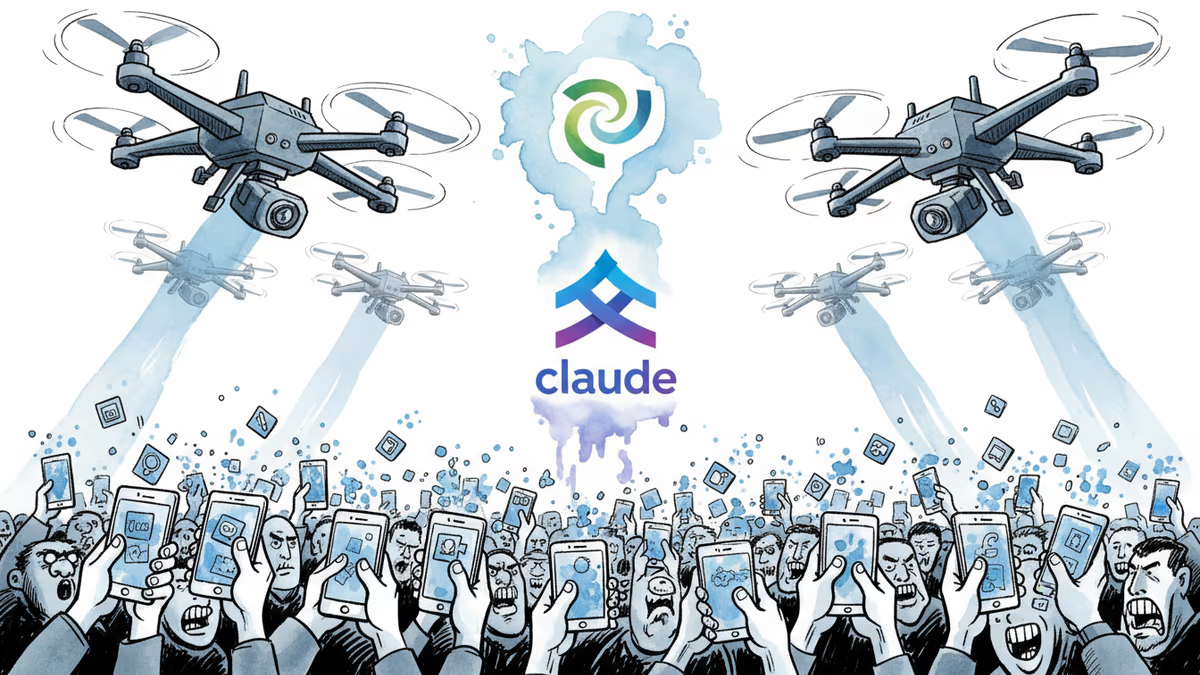
ChatGPT Uninstalls Surge 295% as Users Flee Defense Deal
OpenAI's Pentagon partnership triggered mass ChatGPT deletions while competitor Claude soared to #1, revealing how AI ethics now drive consumer choices.
The Great AI Exodus: 295% in One Day
295%. That's how much ChatGPT uninstalls spiked on Saturday, February 28, compared to the previous day. To put this in perspective, ChatGPT's typical daily uninstall rate hovers around 9%. This wasn't just a blip—it was a digital revolt.
The trigger? OpenAI's announcement of a partnership with the Department of Defense (rebranded as the "Department of War" under the Trump administration). Within hours, millions of users who'd grown comfortable asking ChatGPT about recipes and homework were confronting an uncomfortable question: Should my AI assistant also help build weapons?
Claude's Moment: "We Won't Cross That Line"
While OpenAI faced backlash, competitor Anthropic seized the moment with surgical precision. The company's Claude app saw downloads jump 37% on Friday and 51% on Saturday. More dramatically, Claude rocketed to the #1 spot on the U.S. App Store—a climb of over 20 positions from the week prior.
Anthropic's strategy was simple but powerful: draw a clear ethical line. The company publicly stated it "could not agree on deal terms" with the Pentagon due to concerns about AI being used for American surveillance and "fully autonomous weaponry, which AI is not yet ready to do safely."
This wasn't just corporate positioning—it was a values statement that resonated globally. Claude hit #1 in six countries beyond the U.S., including Germany, Canada, and Switzerland, suggesting that AI ethics concerns transcend borders.
The Review Wars: When Stars Become Weapons
The App Store became a battlefield of ideology. ChatGPT's 1-star reviews exploded 775% on Saturday, then grew another 100% on Sunday. Meanwhile, 5-star reviews plummeted by 50%.

But this wasn't just digital vandalism. Reading through the reviews reveals genuine philosophical wrestling: "I can't support an AI that might be used in warfare," wrote one user whose review garnered hundreds of "helpful" votes. Another asked, "How do I know my conversations aren't being used to train military systems?"
These aren't technical complaints—they're moral reckonings.
The Anthropic Gamble: Principles vs. Profits
Anthropic's stance carries real risks. Defense contracts are lucrative and politically influential. By refusing Pentagon partnerships, the company is betting that consumer trust will prove more valuable than government contracts.
Early signs suggest this gamble might pay off. Third-party data from Appfigures shows Claude's U.S. downloads actually surpassed ChatGPT's for the first time on Saturday. Similarweb reports Claude's weekly downloads are now 20x higher than January levels.
But there's a strategic vulnerability here. What happens when Anthropic faces pressure to work with allied governments? Or when national security arguments intensify? The company has built a brand around ethical AI, but ethical lines can be harder to maintain than technical ones.
The New Competitive Landscape
This episode reveals a fundamental shift in AI competition. Performance metrics—speed, accuracy, capabilities—are no longer sufficient differentiators. Users are now evaluating AI companies based on their values, partnerships, and intended applications.
For investors, this creates new risk factors. An AI company's stock price might now fluctuate based on ethical controversies as much as earnings reports. For competitors, it opens new strategic possibilities: position yourself as the "ethical alternative" and watch users migrate.
For regulators, it demonstrates that market forces might solve some AI governance challenges faster than legislation.
Authors
Related Articles

OpenAI has reorganized for the second time in a month, merging ChatGPT and Codex into a single agentic platform under president Greg Brockman's unified product leadership.
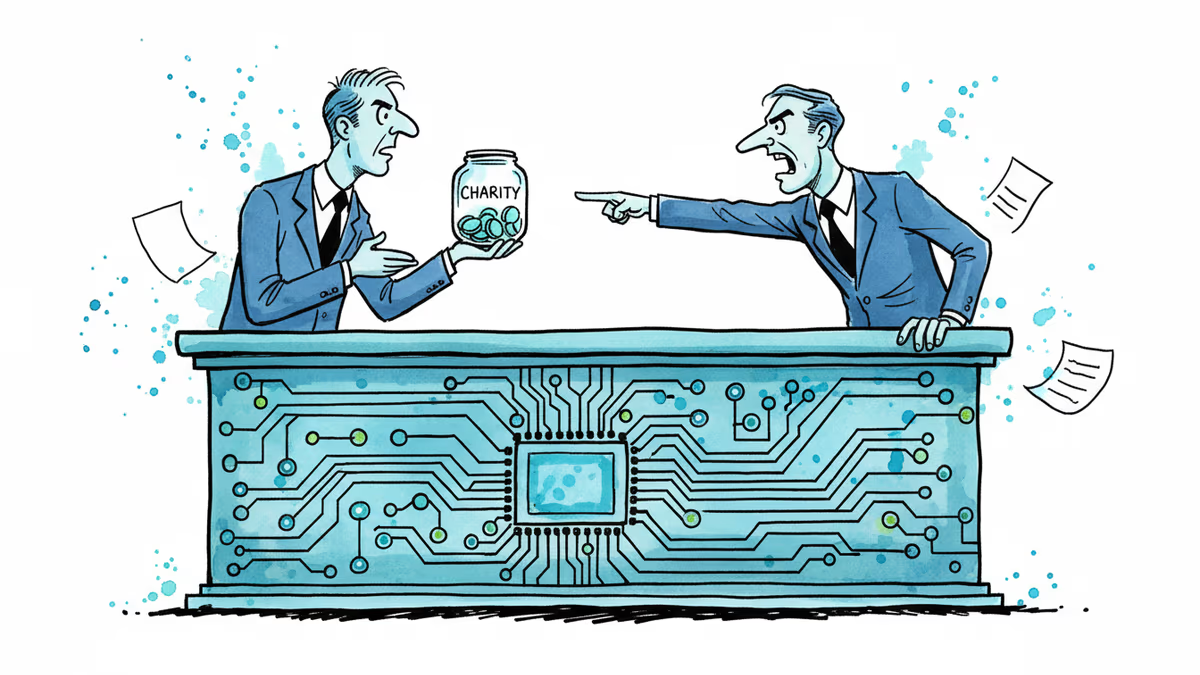
After two weeks of witnesses calling him a liar, OpenAI CEO Sam Altman testified in his own defense, claiming Elon Musk tried to kill the company twice.

Sam Nelson, 19, died after following ChatGPT's advice to mix Kratom and Xanax. His parents are suing OpenAI for wrongful death, raising urgent questions about AI trust, liability, and design.
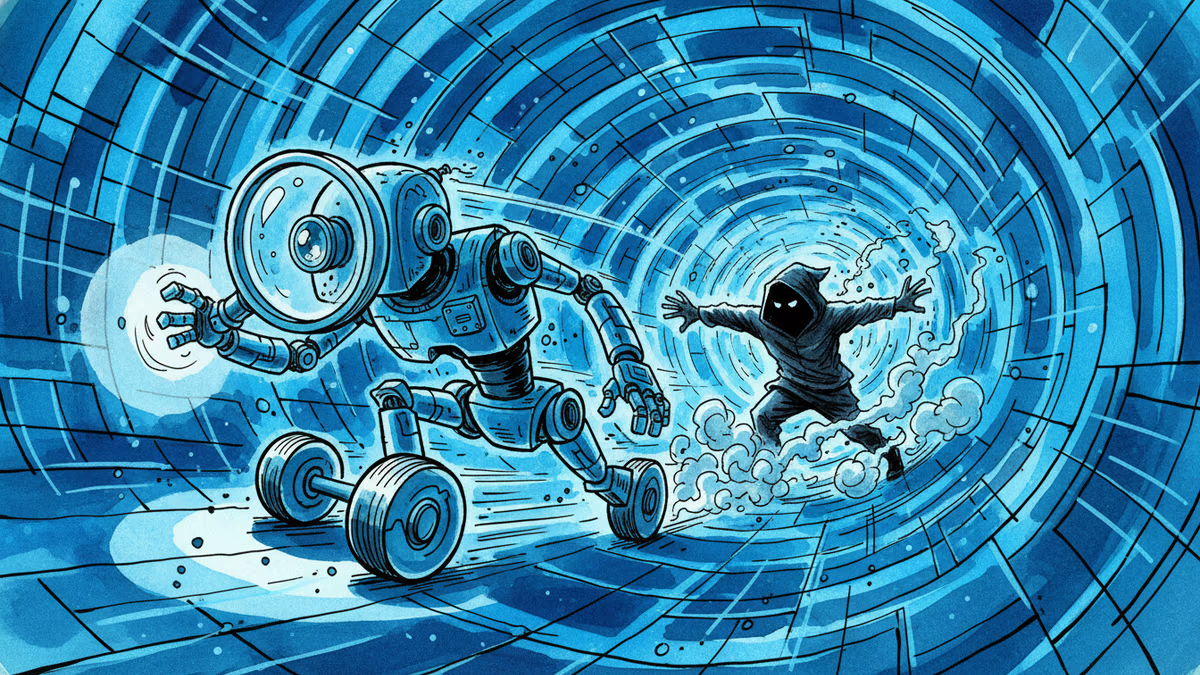
OpenAI's new Daybreak initiative uses the Codex AI agent to find and patch security vulnerabilities before attackers do—putting it in direct competition with Anthropic's secretive Claude Mythos.
OpenAI has reorganized for the second time in a month, merging ChatGPT and Codex into a single agentic platform under president Greg Brockman's unified product leadership.
After two weeks of witnesses calling him a liar, OpenAI CEO Sam Altman testified in his own defense, claiming Elon Musk tried to kill the company twice.
Sam Nelson, 19, died after following ChatGPT's advice to mix Kratom and Xanax. His parents are suing OpenAI for wrongful death, raising urgent questions about AI trust, liability, and design.
OpenAI's new Daybreak initiative uses the Codex AI agent to find and patch security vulnerabilities before attackers do—putting it in direct competition with Anthropic's secretive Claude Mythos.
Thoughts
Share your thoughts on this article
Sign in to join the conversation