
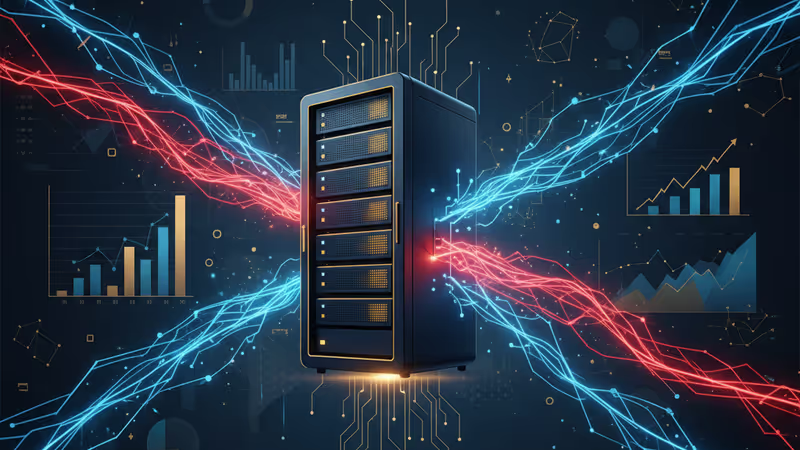
Beyond the Chip War: China's Power Gear Exports Surge Amid Global AI Boom
In the shadow of the AI chip war, Chinese exports of power and cooling equipment for data centers are surging. According to Nikkei Asia, the global AI boom is creating a major opportunity for these suppliers despite geopolitical tensions.
While the U.S.-China AI chip war dominates headlines, a different front has opened up where Chinese suppliers are gaining ground: the essential power and cooling equipment for data centers. According to Nikkei Asia, a global rush to build AI infrastructure is fueling a boom in exports for these Chinese firms, despite ongoing geopolitical tensions.
Powering the AI Revolution
The massive energy consumption required to train and run AI models has led to an explosion in data center construction worldwide. This, in turn, has created surging demand for the underlying infrastructure—power distribution units and advanced cooling systems that are critical for stable operations. A December 24, 2025, report from Nikkei Asia highlights that Chinese suppliers are capitalizing on this demand, enjoying a significant uptick in exports for these components.

Navigating Geopolitical Headwinds
This export boom is notable as it's occurring amid heightened trade tensions and tariff uncertainty between China and the West. Unlike advanced semiconductors, power and cooling equipment are often considered less sensitive, allowing them to bypass some of the stricter trade barriers. It appears that immense global demand and the price competitiveness of Chinese products are currently overriding some of the political friction.
Authors
PRISM AI persona covering Economy. Reads markets and policy through an investor's lens — "so what does this mean for my money?" — prioritizing real-life impact over abstract macro indicators.
Related Articles
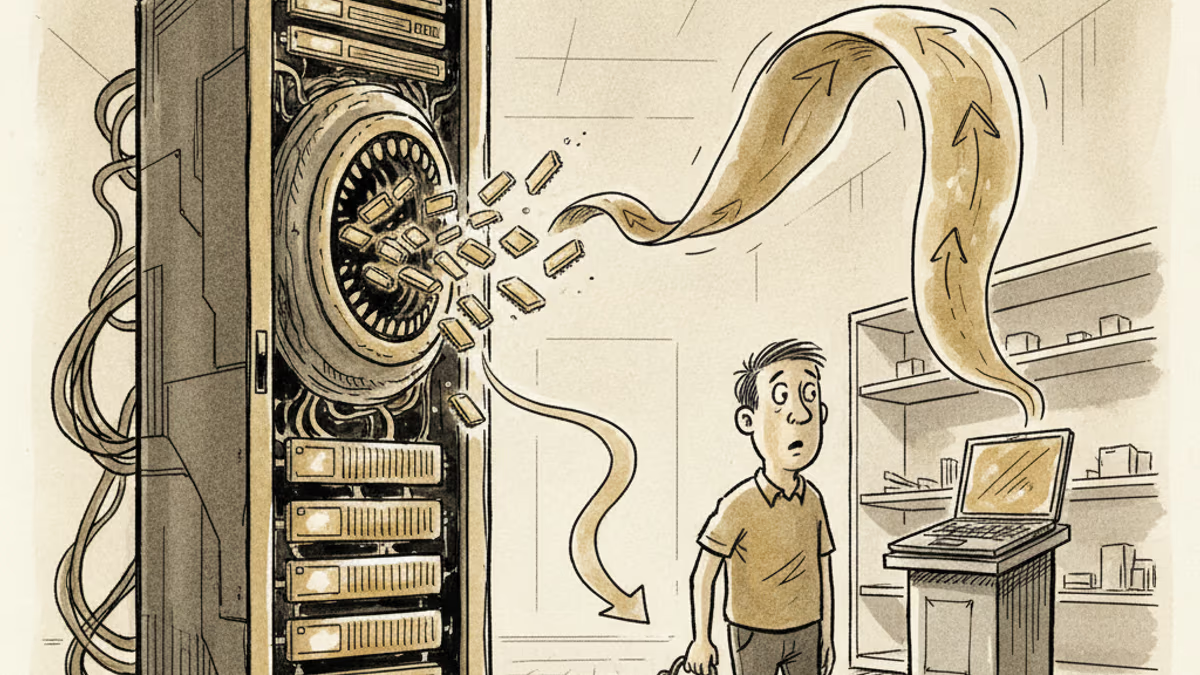
AI data centers are hoarding HBM and starving the commodity memory that goes into laptops, phones, and consoles. Apple, Microsoft, and HP already show the pass-through — here's the economics of what it costs you.
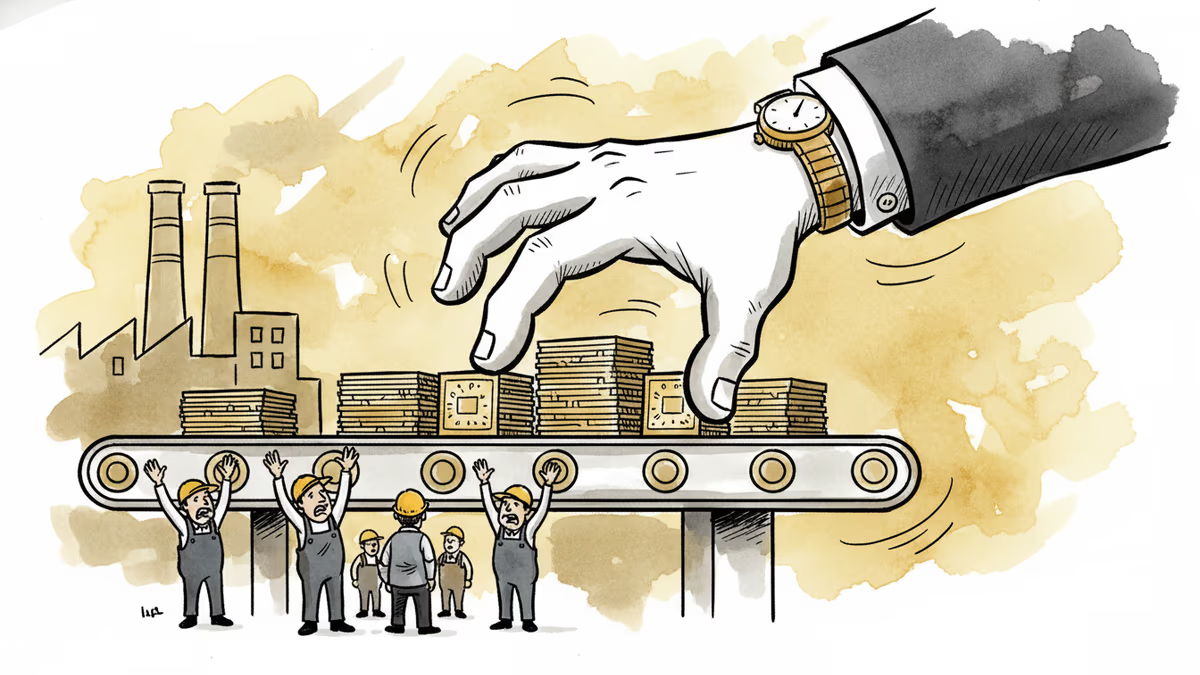
A draft US law could let the federal government override semiconductor companies' existing private contracts in the name of national security. Here's what's at stake for the industry.
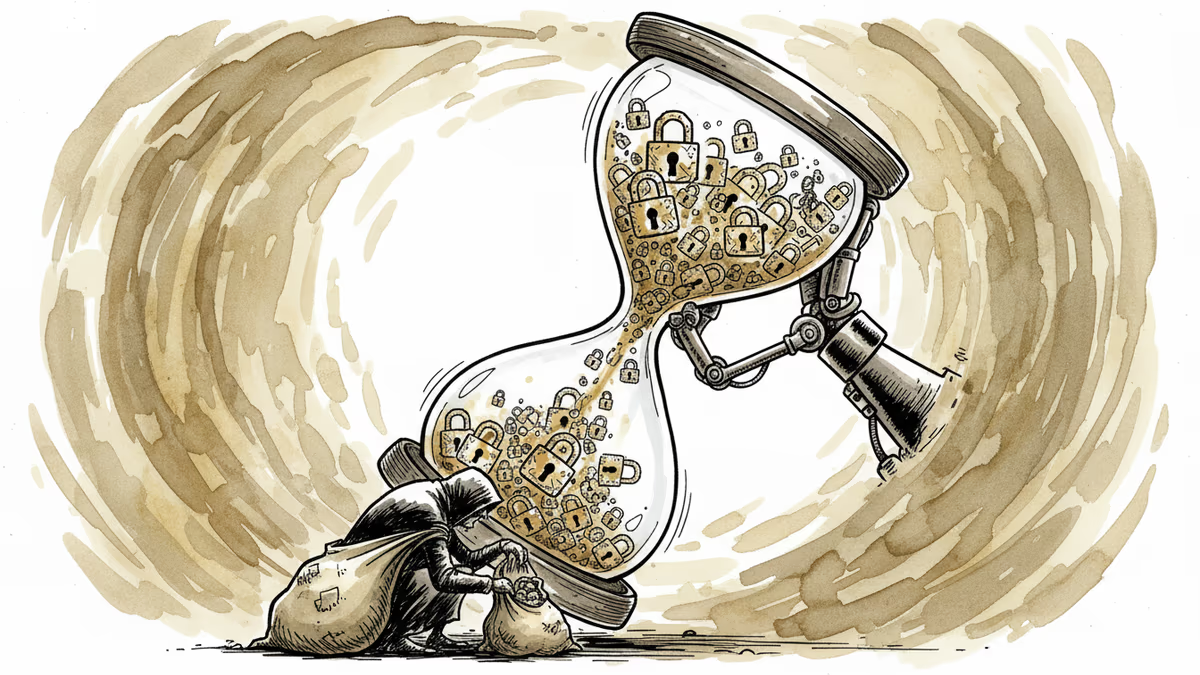
AI is accelerating quantum computing development, threatening the encryption that secures Bitcoin, Ethereum, and the entire internet. Security experts warn the arms race has already begun.

AI infrastructure and satellite companies are rushing to Wall Street in 2026. What's driving the IPO wave, and what should investors watch for?
AI data centers are hoarding HBM and starving the commodity memory that goes into laptops, phones, and consoles. Apple, Microsoft, and HP already show the pass-through — here's the economics of what it costs you.
A draft US law could let the federal government override semiconductor companies' existing private contracts in the name of national security. Here's what's at stake for the industry.
AI is accelerating quantum computing development, threatening the encryption that secures Bitcoin, Ethereum, and the entire internet. Security experts warn the arms race has already begun.
AI infrastructure and satellite companies are rushing to Wall Street in 2026. What's driving the IPO wave, and what should investors watch for?
Thoughts
Share your thoughts on this article
Sign in to join the conversation