
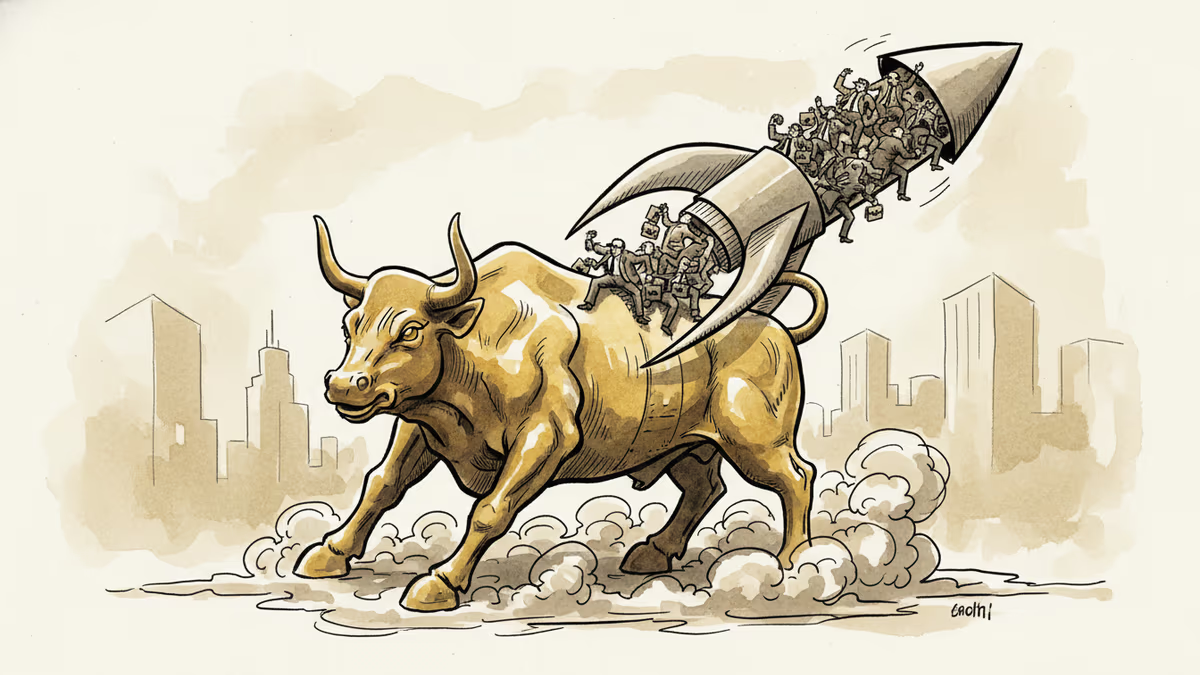
AI and Satellite IPOs: Bull Market or Bubble?
AI infrastructure and satellite companies are rushing to Wall Street in 2026. What's driving the IPO wave, and what should investors watch for?
The last time Wall Street saw a listing frenzy like this, a lot of retail investors ended up holding the bag. So what's different in 2026 — and what isn't?
The Starting Gun Has Fired
A cluster of AI infrastructure and low-earth-orbit satellite companies are either filing for or actively preparing initial public offerings, signaling what analysts expect to be the most active IPO cycle since 2021. Renaissance Capital projects U.S. IPO proceeds could exceed $200 billion this year — more than three times the 2023 total.
CoreWeave, the GPU cloud provider backed by Nvidia, kicked things off earlier this year with a high-profile Nasdaq debut. It set a tone: the market has an appetite for AI infrastructure plays, even when profitability is still a future promise. Behind it, a queue of AI data center operators, model-serving platforms, and satellite broadband providers are moving toward the public markets.
The satellite angle is particularly telling. SpaceX's Starlink has spent years demonstrating that low-earth-orbit internet is commercially viable at scale. That proof of concept has given a green light to competitors who need public capital to build out their own constellations — and to the investors who want exposure before the sector matures.
Why the Timing Isn't Accidental
Two structural forces are converging. First, the Federal Reserve began cutting rates in late 2025, breathing life back into growth stock valuations. High-rate environments punish companies whose value is weighted toward future earnings; lower rates flip that math. The IPO pipeline that had been stuck for two years is now moving.

Second, the generative AI investment cycle is still near its peak. For founders and early backers, there is a rational urgency to monetize while the narrative is strongest. Waiting for the cycle to cool — or for a competitor to IPO first and absorb investor appetite — is a real risk.
This dynamic creates an inherent tension. Companies are incentivized to list at the moment of maximum hype, which is not necessarily the moment of maximum business maturity.
Who Wins, Who Pays
The clearest winners are the ones who've been waiting longest: early-stage venture funds sitting on illiquid positions, employee shareholders with vested stock, and the investment banks collecting underwriting fees. For them, a hot IPO window is straightforwardly good news.
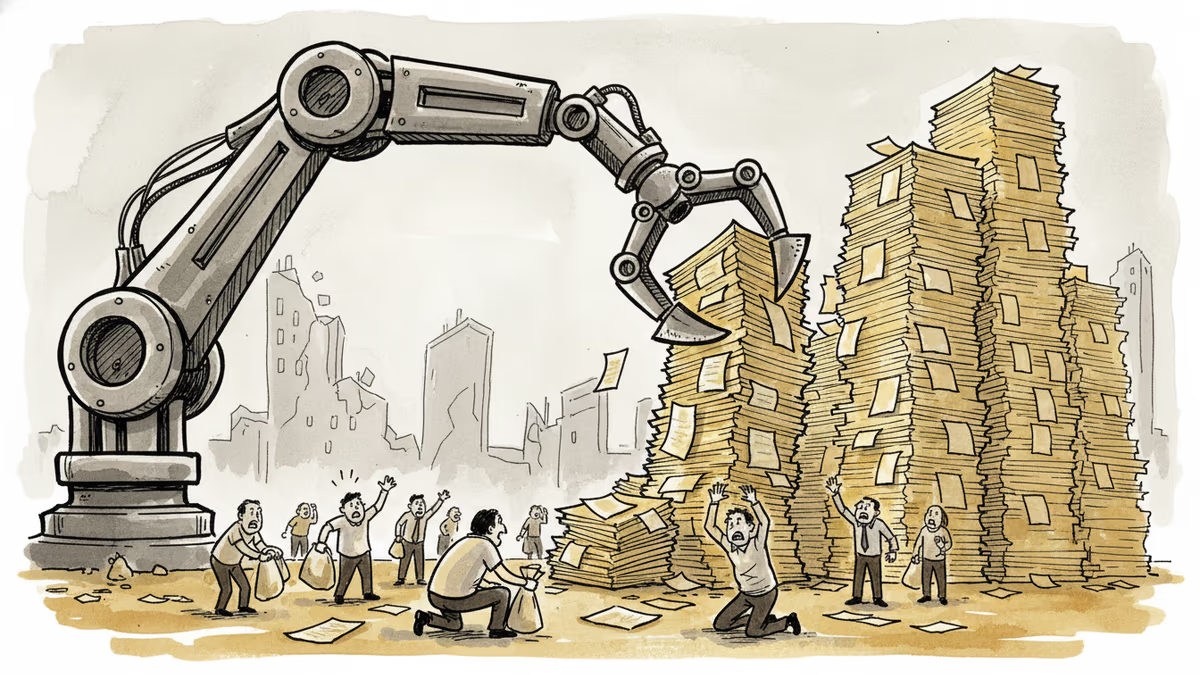
For public market investors, the historical record is sobering. More than 60% of companies that went public during the 2021 boom were trading below their IPO price within 12 months. The pattern is consistent: retail buyers tend to enter after institutional investors have already priced in optimism.
That doesn't mean every company in this wave is overvalued. AI infrastructure and satellite connectivity address real, large markets. The question is whether individual companies have the unit economics to justify the valuations being floated — and that requires looking past the sector tailwind at the actual business.
For institutional investors, the calculus is different. Getting allocation in a hot IPO at the offering price, then deciding when to exit, is a different game than buying on the open market at a first-day pop. The two groups are not playing the same sport.
This content is AI-generated based on source articles. While we strive for accuracy, errors may occur. We recommend verifying with the original source.
Related Articles
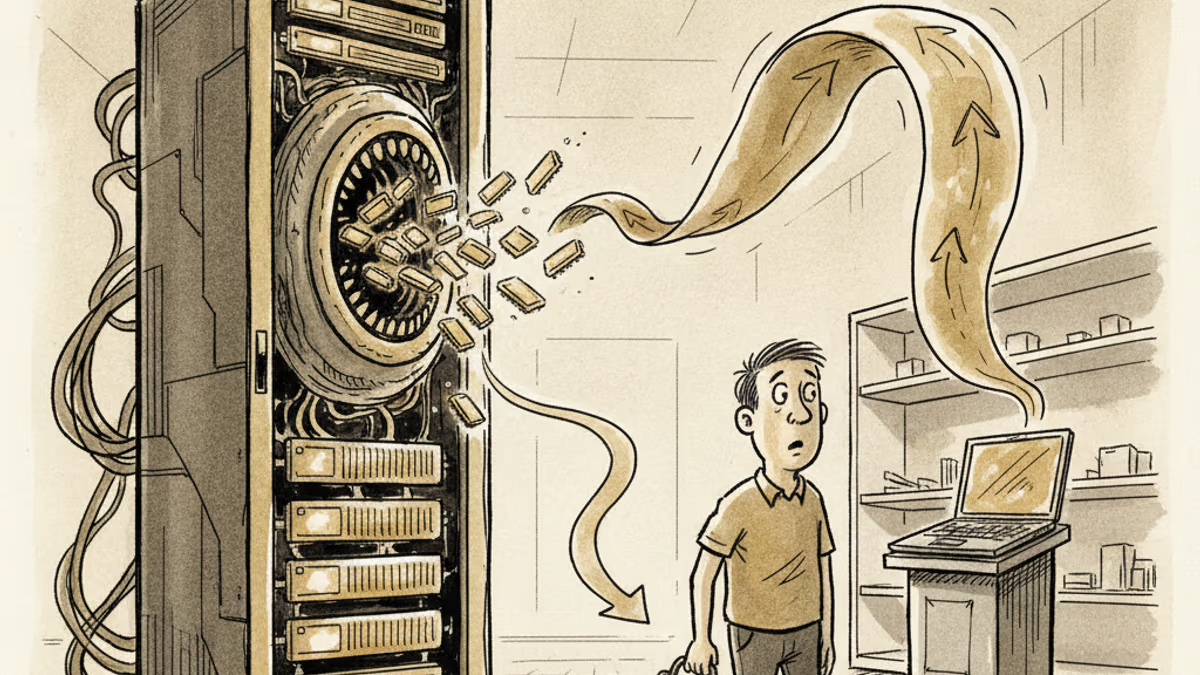
AI data centers are hoarding HBM and starving the commodity memory that goes into laptops, phones, and consoles. Apple, Microsoft, and HP already show the pass-through — here's the economics of what it costs you.
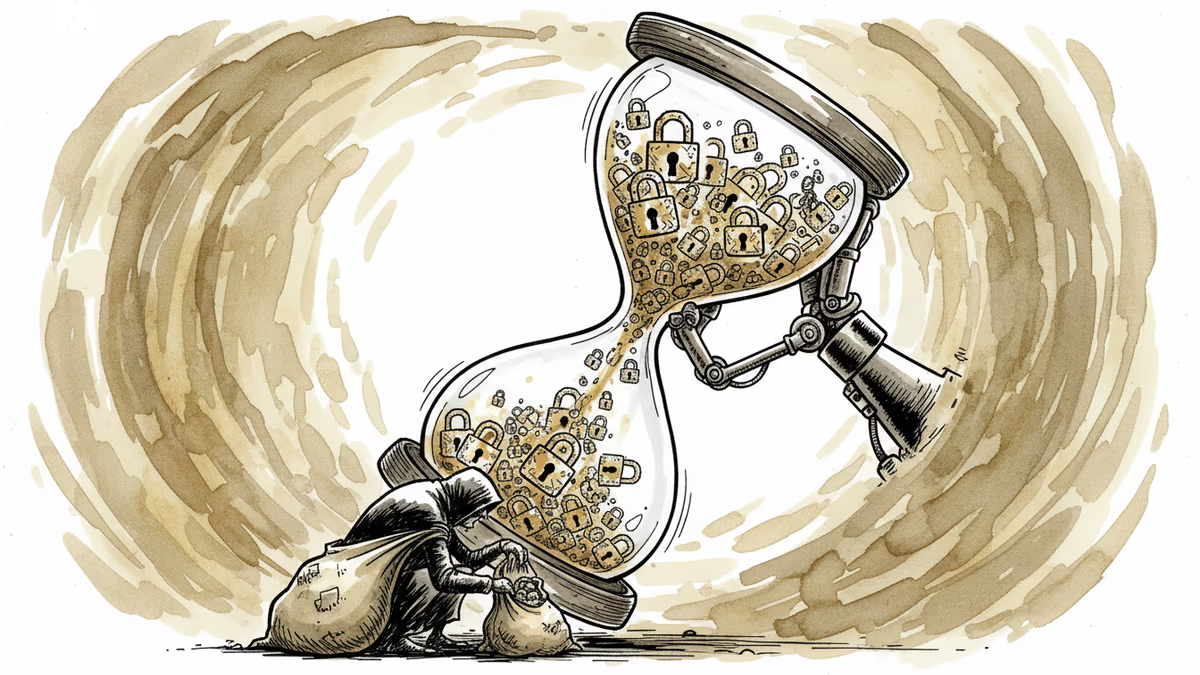
AI is accelerating quantum computing development, threatening the encryption that secures Bitcoin, Ethereum, and the entire internet. Security experts warn the arms race has already begun.
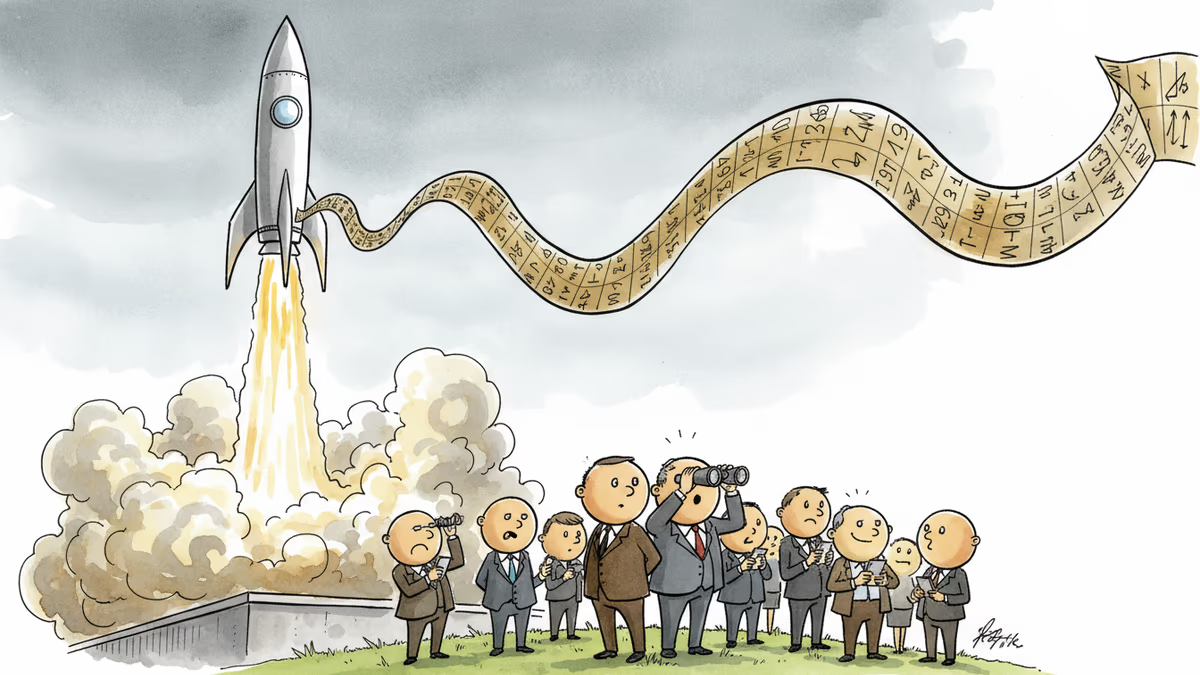
SpaceX launched Starship V3 on its 12th test flight, days after filing for a $75 billion IPO. Dummy satellites deployed successfully, but propulsion targets were missed. What does that mean for investors?
Passive funds now control over $15 trillion in assets. Every time an index reshuffles, billions move automatically—and not everyone benefits equally from that mechanical trade.
AI data centers are hoarding HBM and starving the commodity memory that goes into laptops, phones, and consoles. Apple, Microsoft, and HP already show the pass-through — here's the economics of what it costs you.
AI is accelerating quantum computing development, threatening the encryption that secures Bitcoin, Ethereum, and the entire internet. Security experts warn the arms race has already begun.
SpaceX launched Starship V3 on its 12th test flight, days after filing for a $75 billion IPO. Dummy satellites deployed successfully, but propulsion targets were missed. What does that mean for investors?
Passive funds now control over $15 trillion in assets. Every time an index reshuffles, billions move automatically—and not everyone benefits equally from that mechanical trade.
Thoughts
Share your thoughts on this article
Sign in to join the conversation