

Apple's Walled Garden Fractures: Japan Forces App Store Open, But Freedom Comes with a Fee
Apple opens iOS to third-party app stores in Japan, mirroring EU changes. PRISM analyzes the new fees and the global regulatory assault on the App Store.
The Lede: The Global Pincer Movement Tightens
Apple's lucrative App Store monopoly is facing a coordinated global assault, and Japan just opened a critical second front. Following the EU's lead, Tokyo has forced Apple to permit third-party app stores and payment systems on iOS. For executives and investors, this isn't just a regional compliance issue; it's the crystallization of Apple’s global strategy for a post-monopoly world. They are building a playbook to contain regulatory threats, preserve services revenue, and ensure that even when the garden walls are breached, the house always wins.
Why It Matters: The Ripple Effects of a Regulated Gatekeeper
This development sends clear signals across the tech ecosystem, impacting developers, competitors, and future regulation worldwide.
- For Developers: The promise of choice comes with a catch. While developers in Japan can now access alternative distribution and payment channels, Apple is ensuring it still gets a cut. The new commission structures are a calculated friction, designed to make the simplicity and reach of the official App Store remain the most attractive option for the vast majority. This isn't liberation; it's a managed concession.
- For Apple: This is a test case for exporting its EU Digital Markets Act (DMA) compliance strategy. By replicating the core tenets—allowing alternatives while introducing new fees—Apple is creating a standardized, global template for defanging antitrust actions. This signals to Wall Street that its high-margin Services revenue is more resilient than feared, capable of adapting its monetization model under duress.
- For Regulators: Japan's move creates a powerful precedent. Other nations, including the United States and the United Kingdom, now have a clear model to follow. The era of platforms setting their own rules in a vacuum is definitively over. We are entering an age of internationally harmonized digital platform regulation.
The Analysis: Malicious Compliance Goes Global

A Playbook Perfected in Brussels
What we're seeing in Japan is a direct copy of the strategy Apple deployed in response to the EU's DMA. Critics, including Epic Games CEO Tim Sweeney, have labeled Apple's EU compliance a masterclass in complexity and deterrence, riddled with new fees like the "Core Technology Fee" that can make leaving the App Store financially unviable for many. Apple learned that the letter of the law can be met while violating its spirit.
By offering a similar deal in Japan—sideloading is allowed, but in-app purchases on third-party stores will still incur a 5 percent commission payable to Apple—the company is making a calculated bet. It bets that the combination of this new "Apple Tax" and the loss of the App Store's frictionless user experience and discovery engine will be enough to keep most developers and users firmly within its ecosystem. It’s a strategic retreat, not a surrender.
The Competitive Landscape Shifts
This also recalibrates the competitive dynamic with Google's Android. For years, Android’s openness to sideloading was a key differentiator. Now, as iOS is forced to open, the focus shifts from access to economics. Apple's intricate new fee models could, ironically, provide a blueprint for Google to further monetize its own platform under increasing regulatory scrutiny. The battleground is no longer about open vs. closed, but about which gatekeeper can architect the most profitable and regulator-proof tollbooth system.
PRISM's Take: The Illusion of Choice
Apple is not fighting a war to keep its garden walls intact; that battle is lost. It is now fighting a guerrilla campaign to make the world outside those walls as complicated and economically unattractive as possible. The changes in Japan, like those in the EU, introduce a technical form of freedom that is practically constrained for most. This is a brilliant, if cynical, long-term strategy. It satisfies the regulators' checklists while ensuring the App Store remains the default commercial and developmental hub for iOS. The walled garden isn't being demolished; it's being converted into a gated community with a complex new set of bylaws and association fees.
Authors
Related Articles
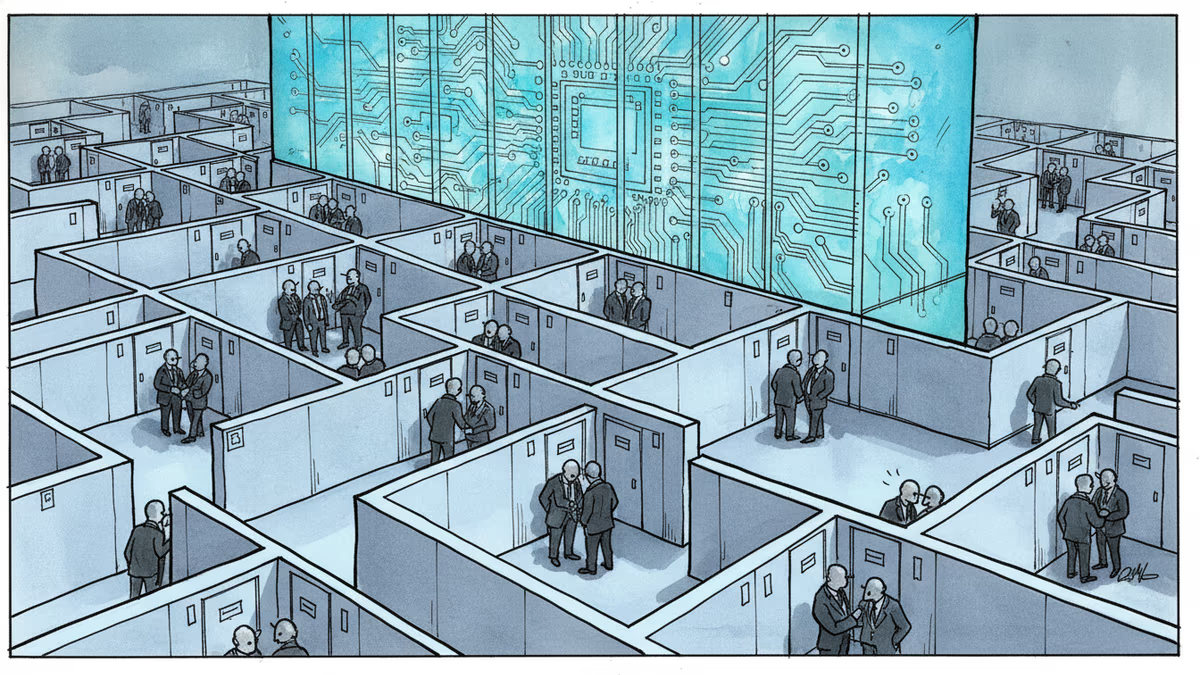
Behind every congressional hearing on Big Tech, there's a quieter room where the real rules get negotiated. As AI regulation, antitrust battles, and privacy law converge on Capitol Hill in 2026, the stakes have never been higher.
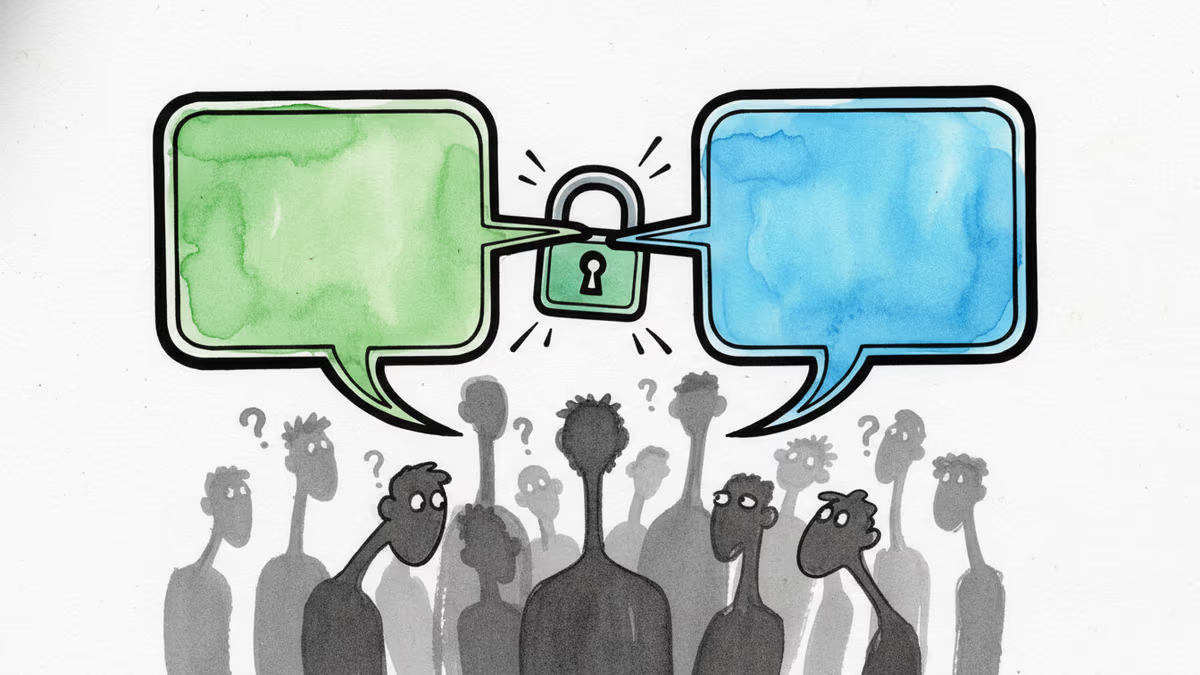
After 15 years of fragmented mobile messaging, Apple and Google are rolling out end-to-end encrypted RCS messaging between iPhones and Android devices. Here's what changed, why it took so long, and what it means for your privacy.
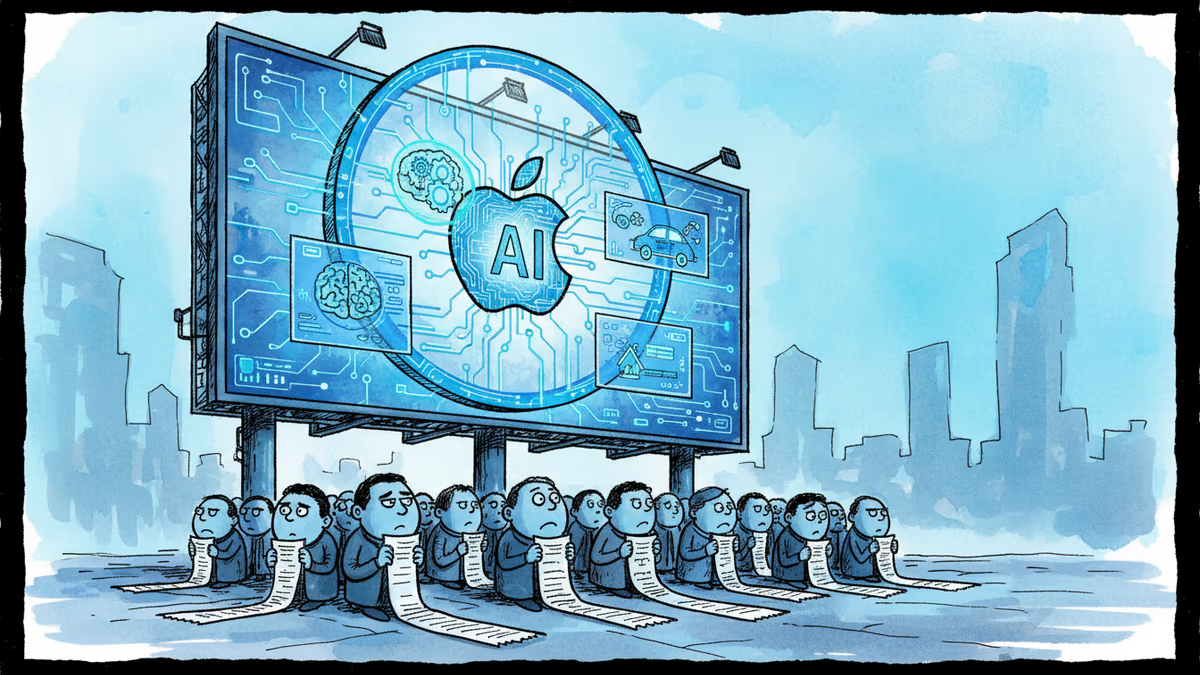
Apple agreed to pay $250 million to settle claims it misled iPhone 16 buyers about Apple Intelligence features. What this means for consumers, Big Tech marketing, and the AI industry.
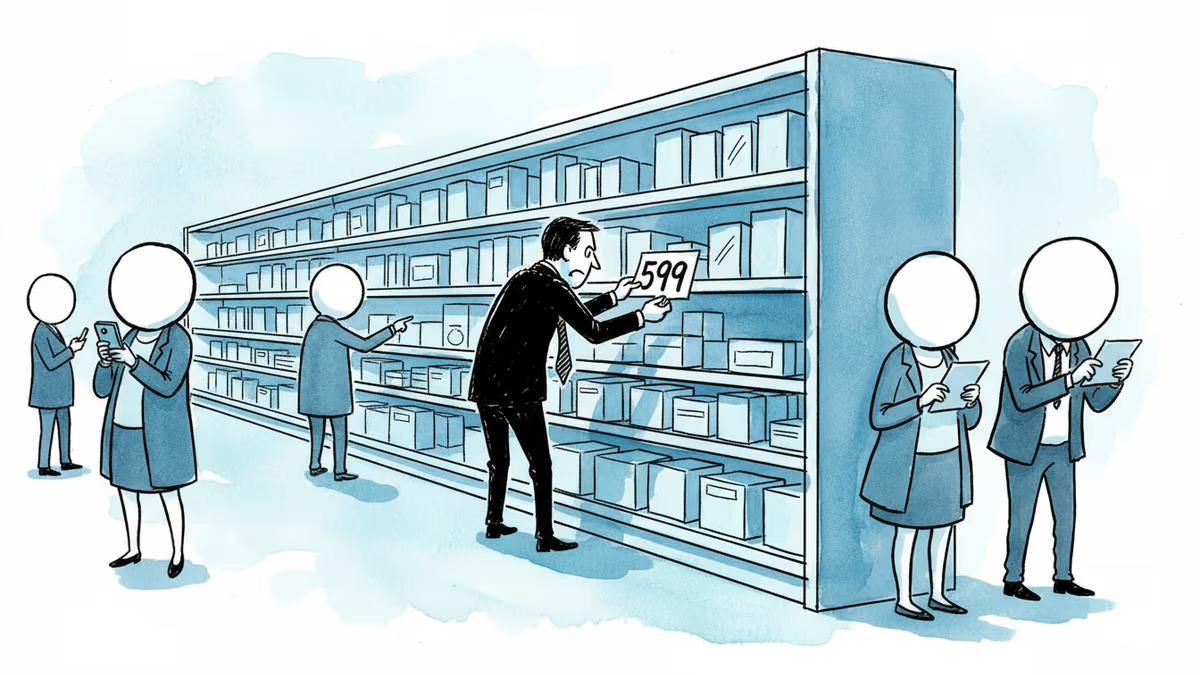
Apple quietly removed the entry-level $599 Mac Mini, raising the starting price to $799 — just one day after Tim Cook warned of chip supply constraints on the earnings call.
Behind every congressional hearing on Big Tech, there's a quieter room where the real rules get negotiated. As AI regulation, antitrust battles, and privacy law converge on Capitol Hill in 2026, the stakes have never been higher.
After 15 years of fragmented mobile messaging, Apple and Google are rolling out end-to-end encrypted RCS messaging between iPhones and Android devices. Here's what changed, why it took so long, and what it means for your privacy.
Apple agreed to pay $250 million to settle claims it misled iPhone 16 buyers about Apple Intelligence features. What this means for consumers, Big Tech marketing, and the AI industry.
Apple quietly removed the entry-level $599 Mac Mini, raising the starting price to $799 — just one day after Tim Cook warned of chip supply constraints on the earnings call.
Thoughts
Share your thoughts on this article
Sign in to join the conversation