
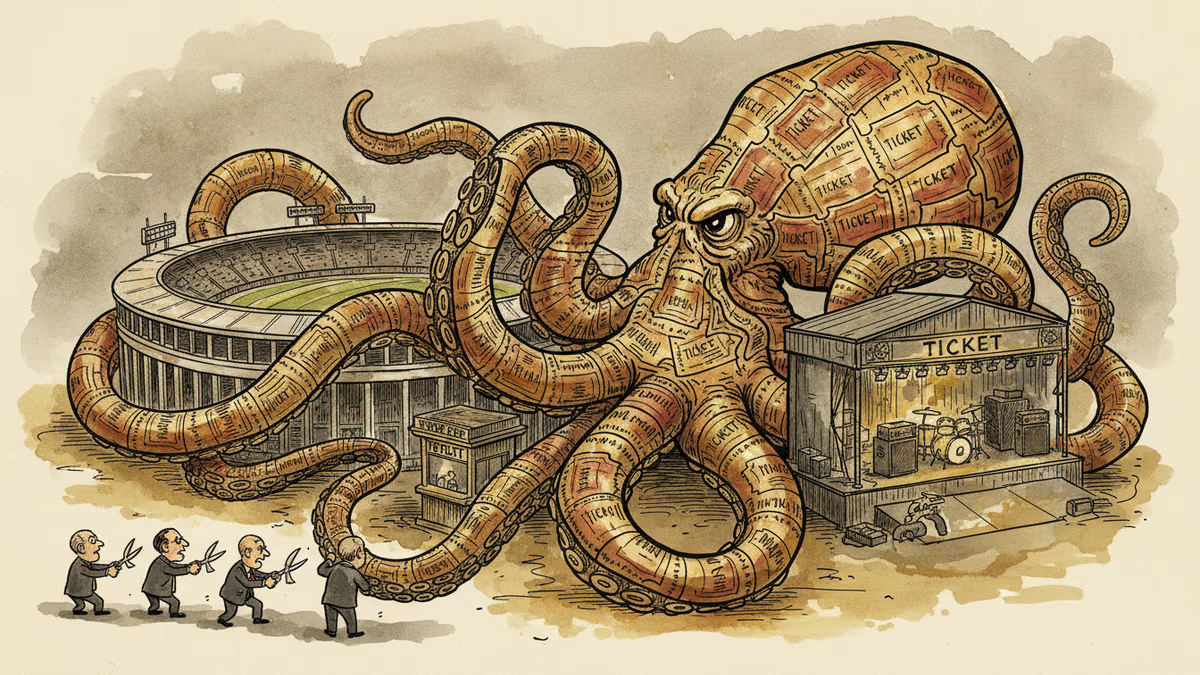
DOJ vs. Ticketmaster: A Settlement Without a Breakup
Live Nation-Ticketmaster settled a federal antitrust lawsuit, but reports suggest no forced split. With 27 states pressing on, is this the end—or just halftime?
You Paid the Fee. The Monopoly Stayed.
You've seen the number. You pick a concert ticket listed at $75, add it to your cart, and by checkout it's $110. The difference—service fees, facility charges, order processing fees—flows largely to one company: Ticketmaster. For years, fans asked why there was no alternative. The answer, the Department of Justice eventually argued, was that the alternative had been systematically eliminated.
On Monday, Live Nation-Ticketmaster agreed to settle that federal antitrust lawsuit. Eight states have indicated they'll join the settlement. Four more remain undecided. And 27 states plus Washington DC have made clear they're not settling at all—they're pushing forward with their own litigation.
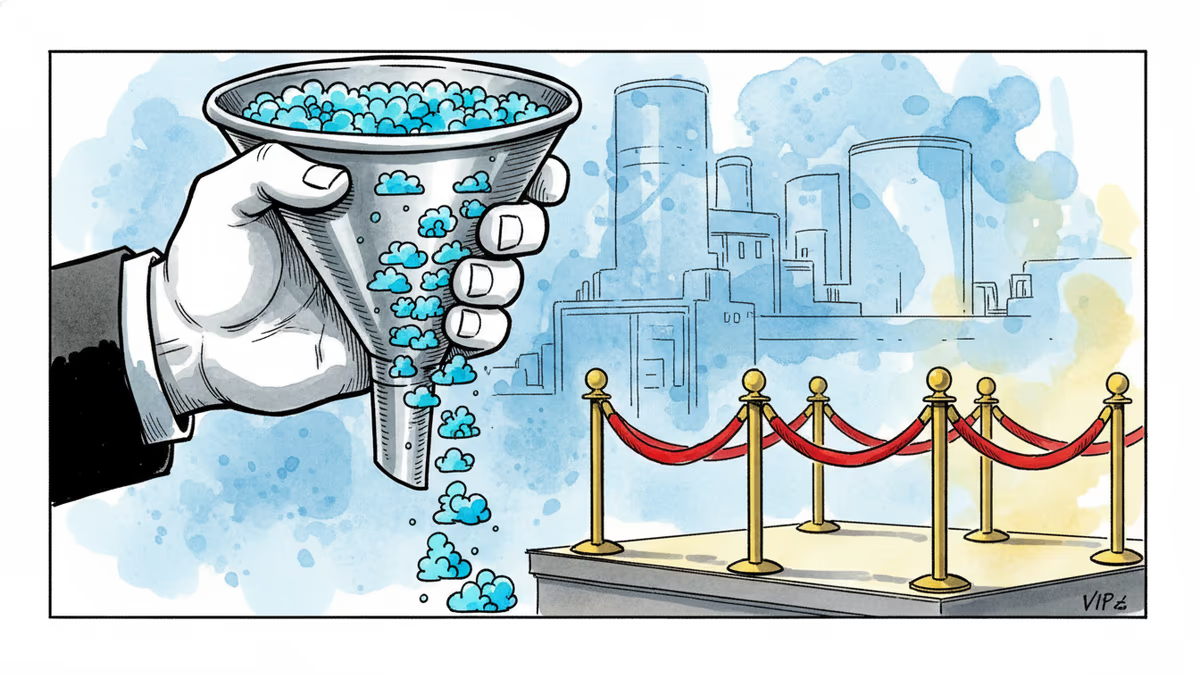
The terms of the deal haven't been made public. But reporting from Politico and Bloomberg points to the same conclusion: the settlement will not require Live Nation to spin off Ticketmaster.
How One Merger Built a Vertical Empire
To understand why this case matters, you need to understand what Live Nation actually is. When Live Nation and Ticketmaster merged in 2010, regulators approved it with conditions. What emerged was something regulators hadn't fully anticipated: a company that controls the entire live event supply chain.
Live Nation promotes concerts. Ticketmaster sells the tickets. Live Nation also owns or operates hundreds of venues. That means the same company books the artist, sells you the ticket, and owns the building you walk into. The DOJ's lawsuit alleged this structure wasn't just dominant—it was weaponized. Venues were allegedly pressured into exclusive Ticketmaster deals. Rival ticketing companies found themselves locked out. And consumers, with nowhere else to go, absorbed the costs.

What a Settlement Without a Breakup Actually Means
The absence of a forced breakup is the defining feature of this deal—and the most contested one.
From the DOJ's perspective, a negotiated settlement offers something a trial cannot guarantee: certainty. Antitrust cases are long, expensive, and unpredictable. A consent decree with behavioral remedies—restrictions on exclusive contracts, perhaps new rules around data access or venue dealings—can reshape market dynamics without the years of litigation a structural remedy would require.
From the consumer and critic perspective, behavioral remedies have a mixed track record. The 2010 merger itself came with conditions that critics say were never adequately enforced. If the structure of the monopoly remains intact, the incentives that produced the problem remain intact too.
The 27 states and DC continuing their litigation are the wildcard. State attorneys general can pursue remedies that go further than federal settlements, including structural ones. This means the legal pressure on Live Nation doesn't end Monday—it bifurcates.
The Broader Antitrust Moment
This case doesn't exist in isolation. It's part of a wider reassessment of how regulators handle platform dominance—companies that control not just one layer of an industry but the entire stack. The same debate plays out in tech: should Google be forced to divest Chrome? Should Meta unwind its acquisitions of Instagram and WhatsApp?
The Live Nation case is, in some ways, a cleaner test. Live events are tangible. The harm—higher ticket prices, reduced competition—is easier to quantify than algorithmic bias or data monopolies. If regulators can't achieve structural change here, it raises questions about whether behavioral remedies alone can ever be sufficient in vertically integrated markets.
For independent promoters and smaller ticketing platforms, the stakes are direct. A settlement that leaves the core structure untouched may offer little room for new entrants. For artists, who have long complained about the leverage Live Nation holds over touring decisions, the outcome matters too—though their concerns often go unspoken publicly given the company's market position.
Authors
Related Articles
Behind every congressional hearing on Big Tech, there's a quieter room where the real rules get negotiated. As AI regulation, antitrust battles, and privacy law converge on Capitol Hill in 2026, the stakes have never been higher.
A federal jury ruled Live Nation operated as an illegal monopoly. Slack messages mocking customers, a possible Ticketmaster breakup, and what it means for every concert ticket you've ever bought.
Apple hits its 50th birthday with a $3 trillion valuation — but AI struggles, antitrust pressure, and a quiet innovation drought are raising real questions about what comes next.
A cloud provider trade group has filed an EU antitrust complaint against Broadcom after it slashed VMware's CSP partner count from 4,000+ to just 19 in the US. Here's what's really at stake.
Behind every congressional hearing on Big Tech, there's a quieter room where the real rules get negotiated. As AI regulation, antitrust battles, and privacy law converge on Capitol Hill in 2026, the stakes have never been higher.
A federal jury ruled Live Nation operated as an illegal monopoly. Slack messages mocking customers, a possible Ticketmaster breakup, and what it means for every concert ticket you've ever bought.
Apple hits its 50th birthday with a $3 trillion valuation — but AI struggles, antitrust pressure, and a quiet innovation drought are raising real questions about what comes next.
A cloud provider trade group has filed an EU antitrust complaint against Broadcom after it slashed VMware's CSP partner count from 4,000+ to just 19 in the US. Here's what's really at stake.
Thoughts
Share your thoughts on this article
Sign in to join the conversation