
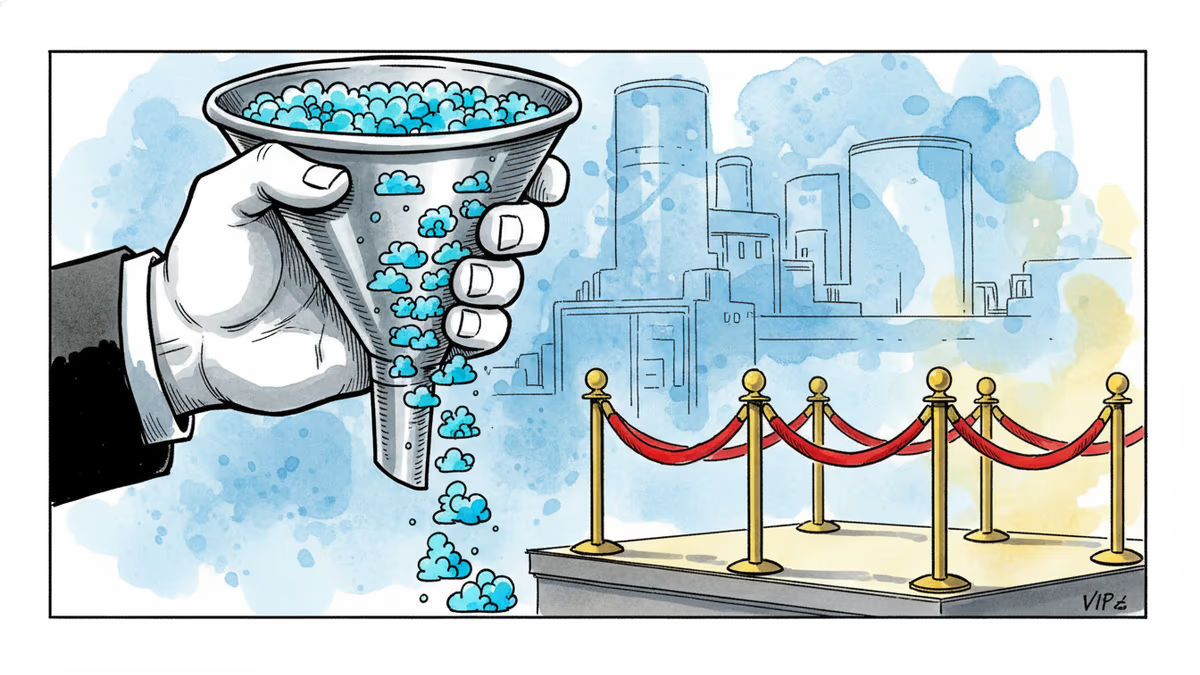
From 4,000 Partners to 19: Broadcom's VMware Squeeze
A cloud provider trade group has filed an EU antitrust complaint against Broadcom after it slashed VMware's CSP partner count from 4,000+ to just 19 in the US. Here's what's really at stake.
Before Broadcom bought VMware, more than 4,000 cloud service providers were part of the program. Today, there are 19 in the United States. Nine in the United Kingdom.
That's not a restructuring. That's a purge.
How We Got Here
Broadcom closed its $61 billion acquisition of VMware in late 2023, and almost immediately began dismantling the partner ecosystem that had made VMware the backbone of enterprise virtualization worldwide. The existing open partner program was scrapped and replaced with an invite-only alternative — one explicitly designed to favor large partners serving enterprise clients over those working with small and medium-sized businesses.
For cloud service providers specifically, Broadcom added a hard threshold: to qualify as a CSP partner, you now need to operate a minimum of 3,500 cores. Hundreds of smaller CSPs couldn't meet that bar. Their partnerships — some built over years — were effectively terminated.
This month, a trade association representing those CSPs took the fight to Brussels. The group filed a formal antitrust complaint with the European Commission, arguing that Broadcom's actions amount to an abuse of market dominance.
The Leverage Nobody Talks About
To understand why this matters beyond a corporate partner spat, you need to understand what VMware actually is.

VMware's virtualization technology sits at the foundation of how thousands of businesses run their IT infrastructure. It's not a product you swap out on a Tuesday afternoon. Migrating away from VMware takes months, sometimes years, and costs that scale with the size of the organization. Broadcom knows this. Critics argue the company is exploiting that switching cost — cutting partner access while simultaneously raising licensing prices, leaving customers with limited options and limited time.
For mid-market CSPs, the math is brutal. They can't meet the 3,500-core threshold. They can't pass the price increases on to customers without losing them. And they can't migrate fast enough to escape the squeeze.
Three Very Different Reactions
Broadcom shareholders have largely cheered the strategy. Fewer partners means lower support overhead. Focusing on large enterprise clients means higher-margin contracts. The logic is clean from a quarterly earnings perspective.
But the CSPs being cut out see something different: a company leveraging an acquired monopoly to reshape a market in its own favor, not through better products or lower prices, but through access control. That's the core of the antitrust argument — and it's a credible one.
For enterprise customers sitting in the middle, the concern is longer-term. If regional and mid-sized CSPs disappear, the cloud market consolidates further around a handful of hyperscalers. Less competition, less pricing pressure, fewer choices. The irony is that Broadcom's move to cut the long tail of partners may end up benefiting AWS, Azure, and Google Cloud more than anyone.
Why the EU, Why Now
The timing of the complaint isn't accidental. The European Commission has been the most aggressive regulator of big tech over the past several years — from the Digital Markets Act to investigations into Apple, Meta, and Google. Filing in Brussels gives the complainants the best chance of a serious hearing.
In the US, the regulatory picture is murkier. The current administration has sent mixed signals on antitrust enforcement, particularly in tech. That asymmetry is increasingly shaping where aggrieved parties choose to file — and it says something about where meaningful regulatory power over global tech companies actually lives right now.
EC investigations typically take years. But the filing itself creates pressure, generates scrutiny, and — perhaps most importantly — signals to other regulators that the case is worth watching.
Authors
Related Articles
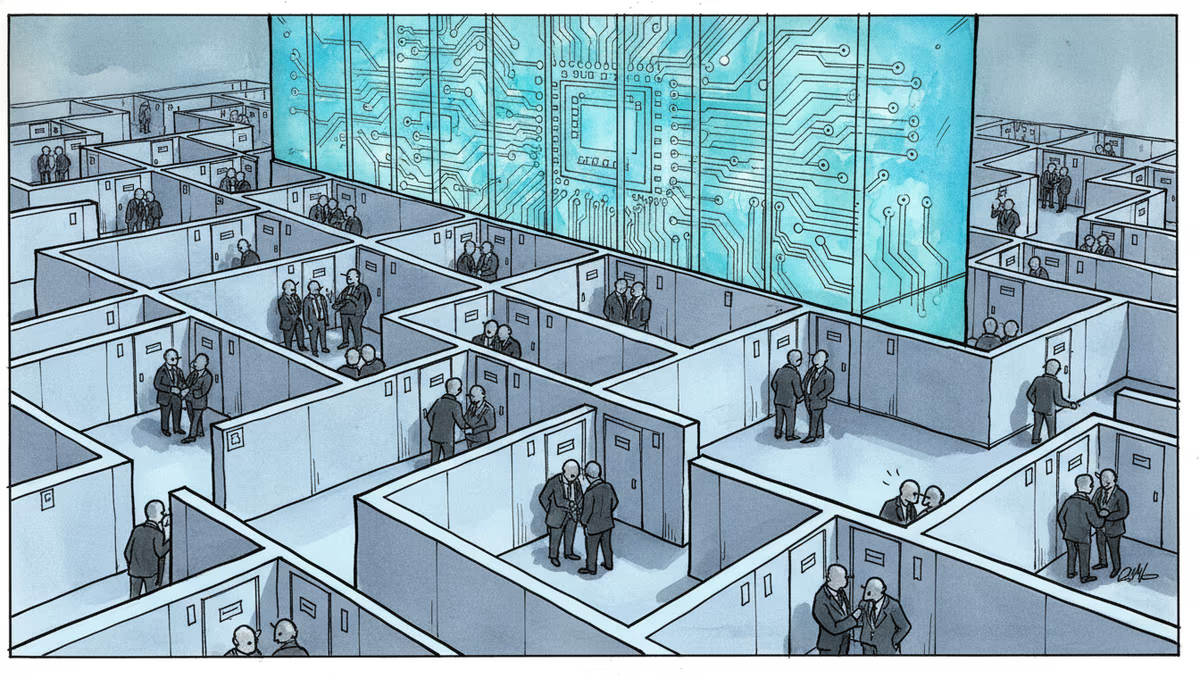
Behind every congressional hearing on Big Tech, there's a quieter room where the real rules get negotiated. As AI regulation, antitrust battles, and privacy law converge on Capitol Hill in 2026, the stakes have never been higher.
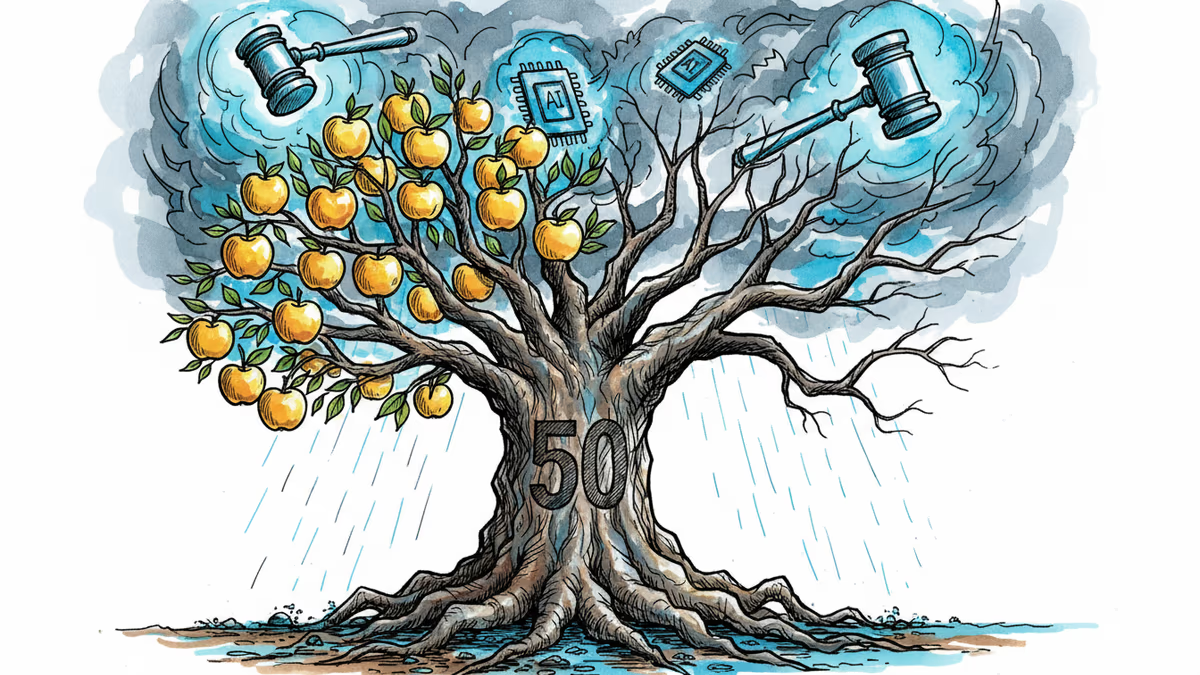
Apple hits its 50th birthday with a $3 trillion valuation — but AI struggles, antitrust pressure, and a quiet innovation drought are raising real questions about what comes next.
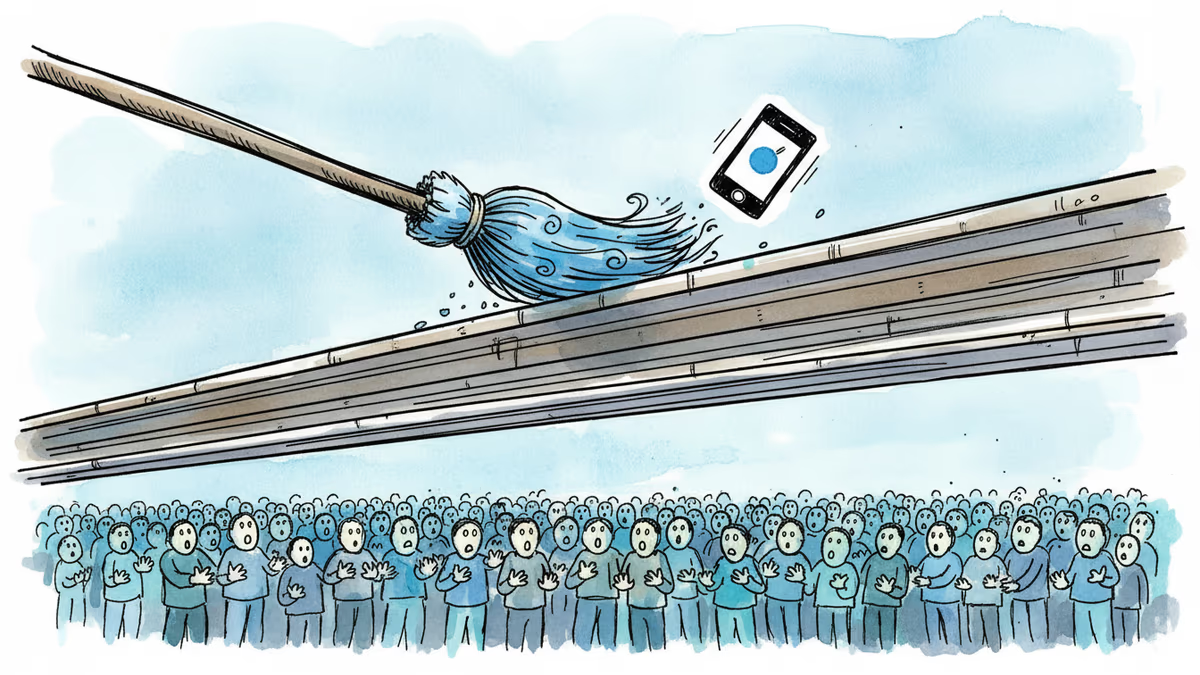
A federal judge dismissed Musi's lawsuit against Apple with prejudice after the free music app was pulled from the App Store. What does it mean for developers, users, and platform power?
Google's $32 billion acquisition of Wiz is the largest venture-backed startup deal in history. Here's why the cybersecurity firm was worth every penny — and what it signals for the cloud wars ahead.
Behind every congressional hearing on Big Tech, there's a quieter room where the real rules get negotiated. As AI regulation, antitrust battles, and privacy law converge on Capitol Hill in 2026, the stakes have never been higher.
Apple hits its 50th birthday with a $3 trillion valuation — but AI struggles, antitrust pressure, and a quiet innovation drought are raising real questions about what comes next.
A federal judge dismissed Musi's lawsuit against Apple with prejudice after the free music app was pulled from the App Store. What does it mean for developers, users, and platform power?
Google's $32 billion acquisition of Wiz is the largest venture-backed startup deal in history. Here's why the cybersecurity firm was worth every penny — and what it signals for the cloud wars ahead.
Thoughts
Share your thoughts on this article
Sign in to join the conversation