
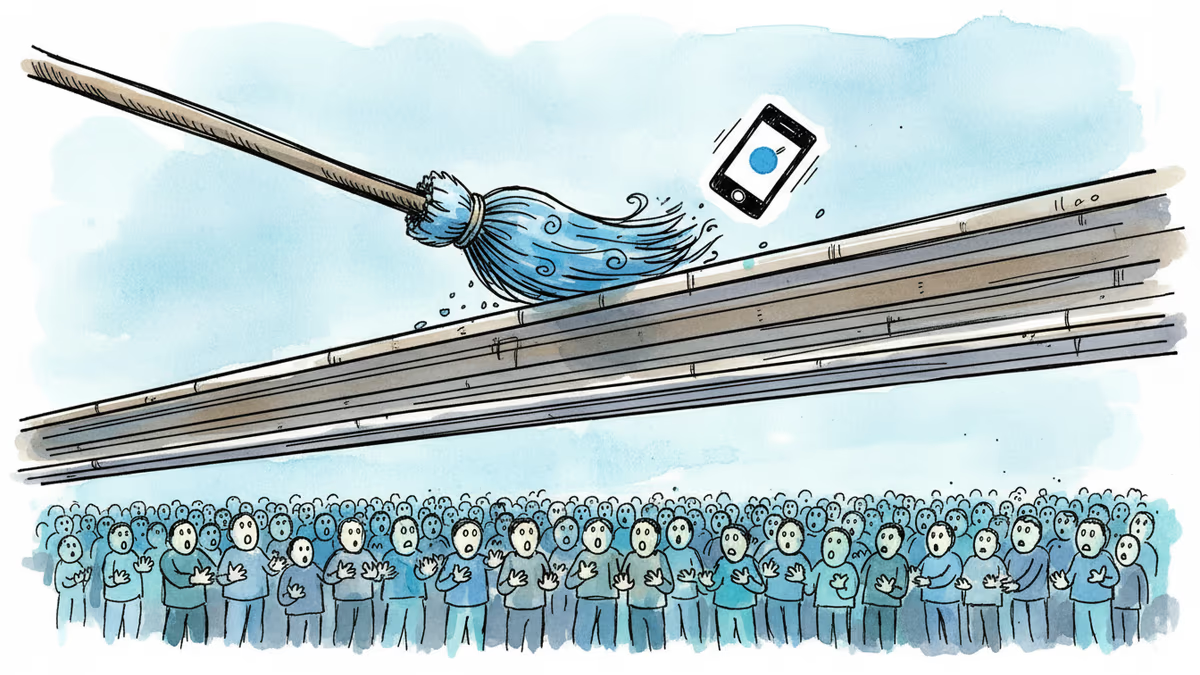
Musi Is Gone. The Questions It Leaves Aren't.
A federal judge dismissed Musi's lawsuit against Apple with prejudice after the free music app was pulled from the App Store. What does it mean for developers, users, and platform power?
Tens of millions of downloads. Zero dollars paid to rights holders. And now, not even a lawsuit to show for it.
That's the arc of Musi, a free music streaming app that built its entire model on a legal gray zone—and just had that zone collapse on top of it. In March 2026, a federal judge dismissed Musi's lawsuit against Apple with prejudice, and went a step further: sanctioning Musi's own lawyers for fabricating facts to patch holes in their case. It's a clean legal loss. But the story underneath is messier than any court ruling can resolve.
What Musi Actually Was
Musi didn't do what Spotify or Apple Music does. It never negotiated licenses with record labels or publishers. Instead, it built an interface that played music sourced directly from YouTube—arguing in its 2024 lawsuit that it was merely "enhancing the user experience" of content users were already accessing themselves. The app ran its own ads and offered a one-time $5.99 fee to remove them.
The argument was clever: if users are the ones interacting with YouTube content, and Musi is just a prettier window, is that really infringement? Musi said no. YouTube said yes—and filed intellectual property complaints with Apple, which pulled the app from the App Store in September 2024. Musi has no Android version, so that removal effectively ended its existence.
Musi's lawsuit claimed Apple violated its own Developer Program License Agreement (DPLA) by removing the app based on what it called "unsubstantiated" IP claims. The federal court didn't buy it. The dismissal with prejudice means Musi can't refile. The sanctions against its lawyers suggest the court found the case not just weak, but actively misleading.
Three Parties, Three Very Different Readings
**For Apple and YouTube**: This is the system working. A third party flagged a potential IP violation. The platform acted. The court agreed, implicitly, that the removal was defensible. Platforms have both the right and arguably the responsibility to police their ecosystems.

For the app's users: Tens of millions of people lost access to something they used daily—replaced by nothing, unless they're willing to pay $10–$11 a month for a streaming subscription. The question of music accessibility isn't just about wanting something for free. It's about what happens when the legal, affordable options are priced out of reach for a significant slice of the population.
For independent developers: This is the part that should make anyone with an app in the store uncomfortable. Apple removed Musi based on a third-party complaint—before any court had ruled on whether Musi actually violated copyright law. The lawsuit's dismissal means that process was never formally challenged. The precedent, such as it is, leaves Apple's unilateral removal power largely intact.
The Bigger Platform Power Question
This case arrives at a moment when Apple's App Store dominance is under sustained legal and regulatory pressure. The EU's Digital Markets Act has already forced Apple to allow third-party app stores in Europe. In the US, antitrust scrutiny of App Store policies has been building for years.
Musi's case doesn't directly implicate those battles—it's about copyright, not market access. But it illustrates the same underlying dynamic: when a platform controls the only distribution channel, it controls who gets to exist. A complaint from YouTube (owned by Google, one of Apple's largest competitors and partners simultaneously) was enough to remove an app used by tens of millions of people, with no prior judicial finding of wrongdoing.
The lawyers got sanctioned. Musi made a weak case. But the structural question—who checks the checker?—wasn't answered. It was sidestepped.
What This Means for the Streaming Economy
Musi's model was parasitic by design: it monetized an audience without compensating the creators whose work built that audience. That's a legitimate critique. But it also filled a real gap. Streaming services have fragmented the music catalog across multiple platforms, raised prices, and made ad-supported tiers increasingly restrictive. People found Musi because it was frictionless and free.
The app is gone. The friction remains. And the next Musi—whatever form it takes—is probably already being built somewhere.
Authors
Related Articles
Behind every congressional hearing on Big Tech, there's a quieter room where the real rules get negotiated. As AI regulation, antitrust battles, and privacy law converge on Capitol Hill in 2026, the stakes have never been higher.
New data shows global app releases surged 60% year-over-year in Q1 2026. The theory that AI chatbots would replace apps may have it completely backwards.
Suno's AI music platform claims to block copyrighted content, but researchers found its filters can be bypassed with minimal effort and free tools, generating near-identical imitations of Beyoncé, Black Sabbath, and more.
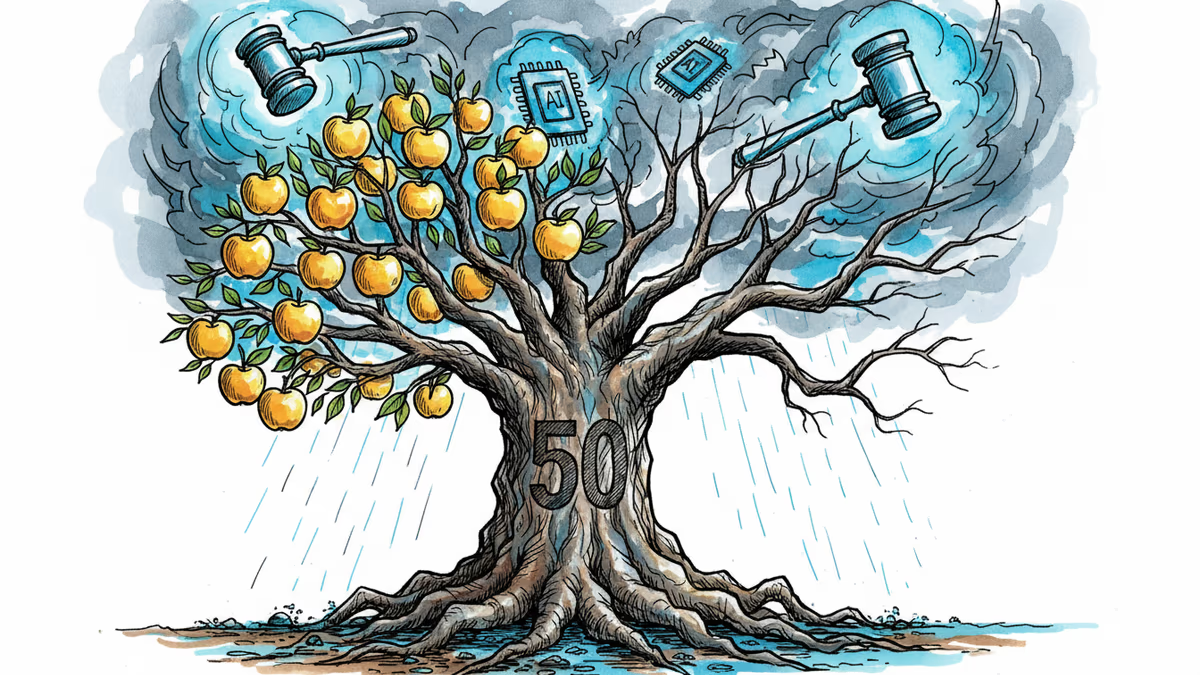
Apple hits its 50th birthday with a $3 trillion valuation — but AI struggles, antitrust pressure, and a quiet innovation drought are raising real questions about what comes next.
Behind every congressional hearing on Big Tech, there's a quieter room where the real rules get negotiated. As AI regulation, antitrust battles, and privacy law converge on Capitol Hill in 2026, the stakes have never been higher.
New data shows global app releases surged 60% year-over-year in Q1 2026. The theory that AI chatbots would replace apps may have it completely backwards.
Suno's AI music platform claims to block copyrighted content, but researchers found its filters can be bypassed with minimal effort and free tools, generating near-identical imitations of Beyoncé, Black Sabbath, and more.
Apple hits its 50th birthday with a $3 trillion valuation — but AI struggles, antitrust pressure, and a quiet innovation drought are raising real questions about what comes next.
Thoughts
Share your thoughts on this article
Sign in to join the conversation