
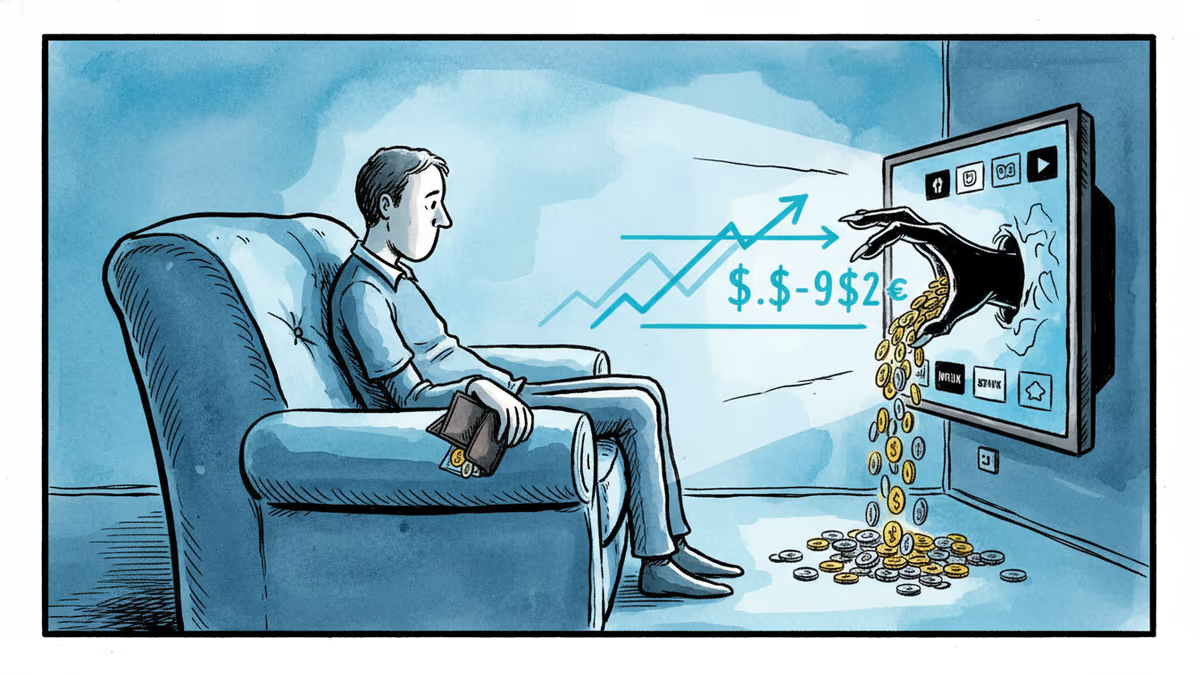
Netflix Raised Prices Again. Here's Why You'll Probably Stay.
Netflix has hiked prices across all plans, including its ad-supported tier, just 14 months after its last increase. What this means for subscribers, competitors, and the future of streaming economics.
You agreed to watch the ads. That was the deal. Now Netflix wants $1 more a month for the privilege of watching them.
What Just Changed
On March 26, 2026, Netflix raised prices across every single plan it offers in the US. The ad-supported Standard tier climbs from $7.99 to $8.99 per month. The ad-free Standard plan jumps $2, from $17.99 to $19.99. Premium goes from $24.99 to $26.99—also a $2 increase. Adding an extra member outside your household to an ad-free plan now costs $9.99, up from $8.99.
New subscribers see the new prices immediately. Existing members get a one-month warning email before the changes hit their billing cycle, with the rollout happening gradually over the coming months.
Netflix told TechCrunch the increases reflect improvements to its "wide range of entertainment" and service quality—pointing to recent additions like video podcasts, expanded live streaming, a mobile app redesign, and a new short-form video feature. This is the company's second price hike in 14 months, following a January 2025 increase.
Why This Moment Is Different
The timing matters. Just weeks before this announcement, Netflix walked away from a bid to acquire Warner Bros. Discovery. The studio had received a competing offer of $31 per share from Paramount Skydance and gave Netflix four business days to counter its $82.7 billion all-cash offer. Netflix declined to raise its bid and stepped away.
Read together, these two moves sketch a clear strategic picture: Netflix is betting on organic growth over acquisition. And organic growth, in streaming economics, means squeezing more revenue from existing subscribers rather than buying new content libraries.

What makes this hike structurally notable is the ad-supported tier increase. That plan was designed as a price-sensitive entry point—lower subscription fees subsidized by ad revenue. Raising it signals one of two things: either ad revenue alone isn't scaling fast enough to justify keeping prices flat, or Netflix has enough confidence in subscriber retention that it's willing to test the floor. Given that Netflix's ad-supported membership has grown rapidly, the latter seems more likely.
The Stakeholder Breakdown
For subscribers, the calculus is getting harder to ignore. The average US household now juggles 4.2 streaming subscriptions, according to recent industry surveys. Each individual hike feels manageable. Cumulatively, the monthly entertainment bill is quietly approaching cable-era territory—the very thing cord-cutting was supposed to escape.
For competitors, the picture is complicated. On the surface, a Netflix price hike is a gift to Disney+, Max, Apple TV+, and Peacock—it widens the price gap and gives budget-conscious subscribers a reason to reconsider. But there's a counterargument: if Netflix raises prices and barely loses anyone, it proves the content moat is real. That's not a reassuring signal for the competition.
For advertisers, the ad-supported tier's price increase is actually good news. It suggests Netflix is positioning the plan not as a budget product but as a premium ad environment—one worth charging more for, which in turn justifies higher CPMs for brands buying inventory.
For investors, this is a textbook ARPU (average revenue per user) play. Subscriber growth in mature markets is flattening. The next lever is charging existing users more. Netflix has now pulled that lever twice in just over a year.
The Bigger Pattern
Streaming is quietly repricing itself. The industry's early growth phase was defined by low prices, password sharing, and a race for eyeballs. That era is over. Netflix's crackdown on account sharing in 2023 was the first move. Price hikes are the second. The logical third act—consolidation—almost happened with Warner Bros. Discovery, and may still happen elsewhere in the industry.
What's emerging is a two-tier streaming economy: a handful of must-have platforms that consumers treat like utilities (and pay utility-level prices for), and a rotating cast of niche services that subscribers cycle through seasonally. Netflix is clearly betting it belongs in the first category. The question is how many others can make the same claim.
Authors
Related Articles
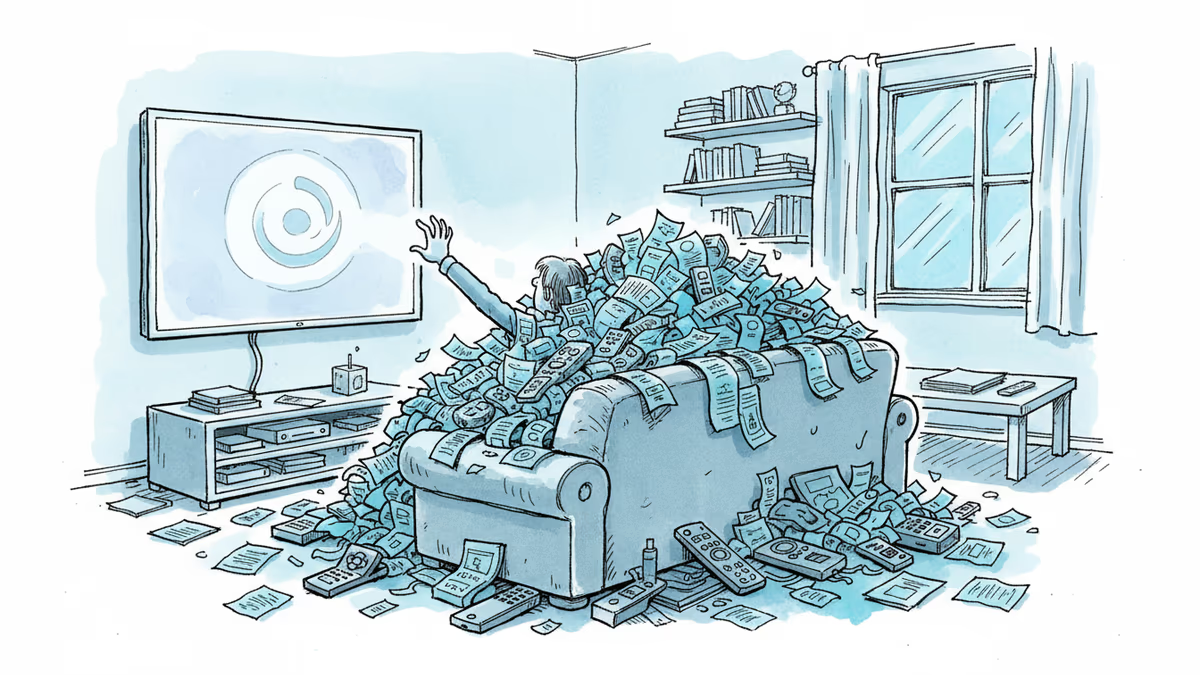
Streaming prices have doubled in a decade. Netflix, Disney, HBO Max — every platform is charging more and adding ads. Here's why, and what it means for you.
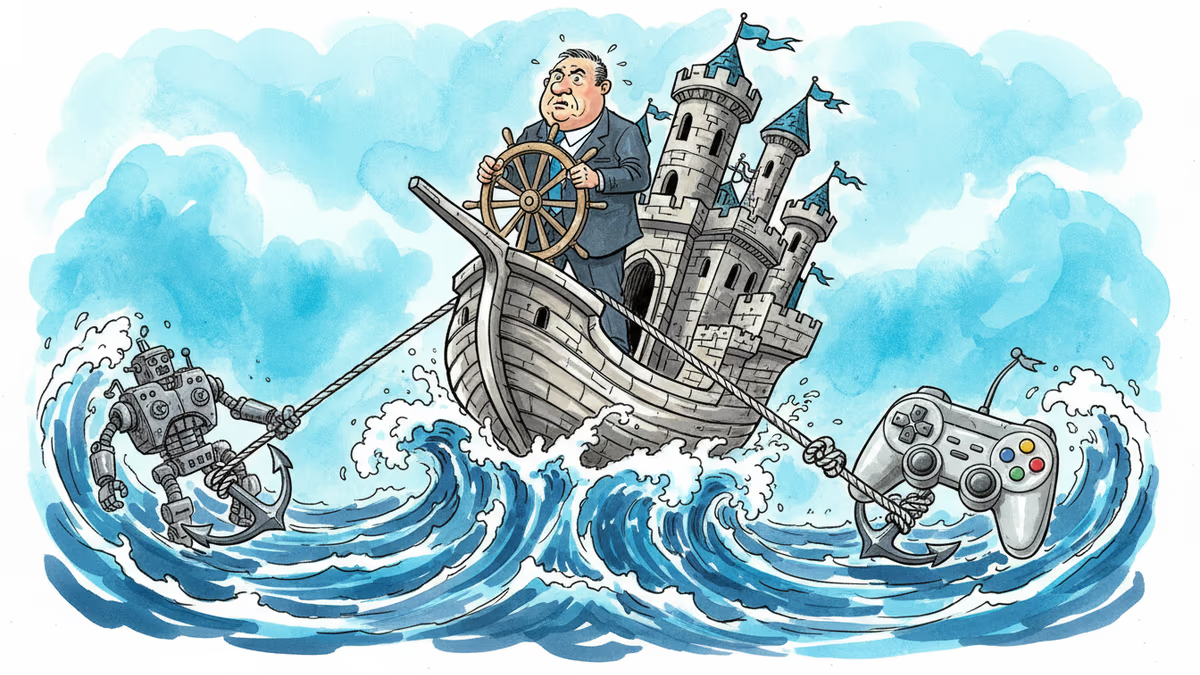
Days into his tenure, Disney CEO Josh D'Amaro faces simultaneous crises: OpenAI's Sora shutdown threatens a $1B AI deal, while Epic's layoffs cast doubt on a $1.5B metaverse plan.
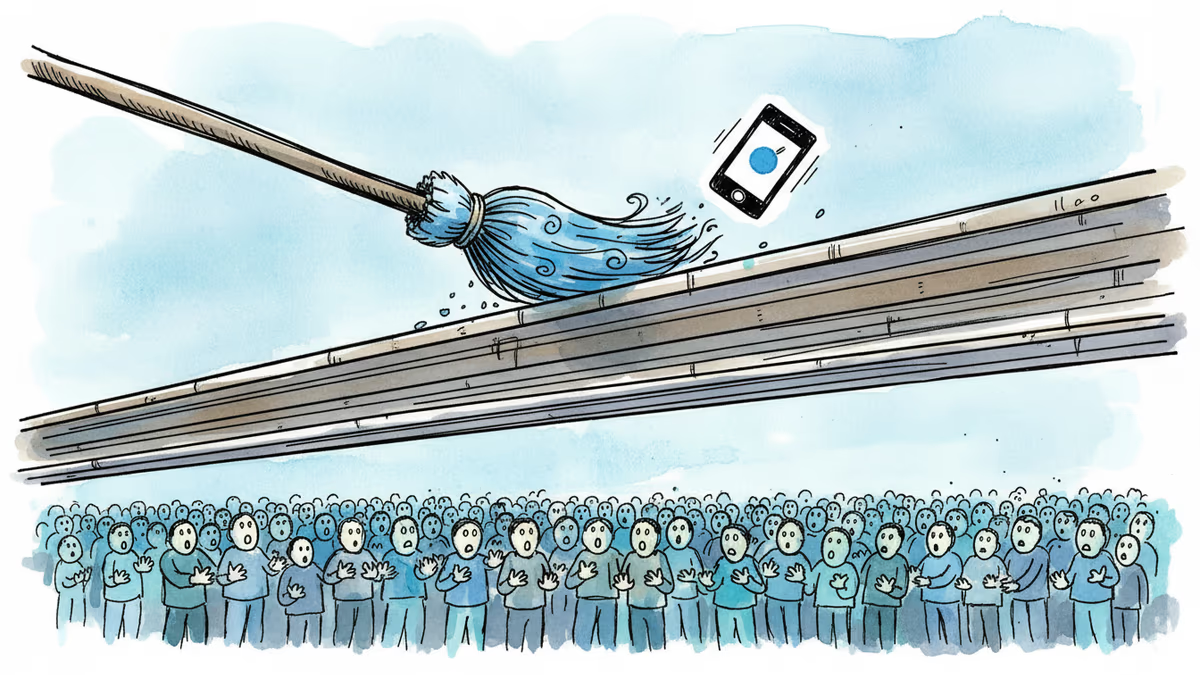
A federal judge dismissed Musi's lawsuit against Apple with prejudice after the free music app was pulled from the App Store. What does it mean for developers, users, and platform power?

Shinichiro Watanabe is personally backing a live-action Samurai Champloo from Tomorrow Studios. Can the One Piece playbook save anime adaptations from themselves?
Streaming prices have doubled in a decade. Netflix, Disney, HBO Max — every platform is charging more and adding ads. Here's why, and what it means for you.
Days into his tenure, Disney CEO Josh D'Amaro faces simultaneous crises: OpenAI's Sora shutdown threatens a $1B AI deal, while Epic's layoffs cast doubt on a $1.5B metaverse plan.
A federal judge dismissed Musi's lawsuit against Apple with prejudice after the free music app was pulled from the App Store. What does it mean for developers, users, and platform power?
Shinichiro Watanabe is personally backing a live-action Samurai Champloo from Tomorrow Studios. Can the One Piece playbook save anime adaptations from themselves?
Thoughts
Share your thoughts on this article
Sign in to join the conversation