
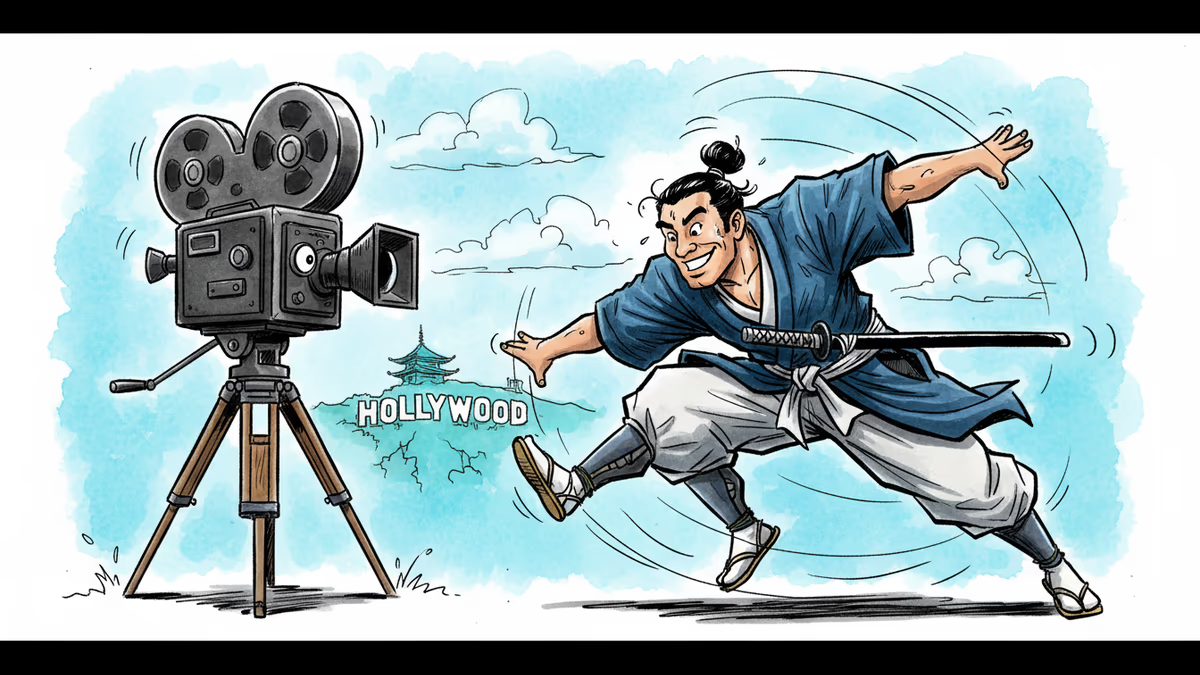
After Cowboy Bebop Flopped, Samurai Champloo Gets Its Shot
Shinichiro Watanabe is personally backing a live-action Samurai Champloo from Tomorrow Studios. Can the One Piece playbook save anime adaptations from themselves?
Two anime adaptations. Same studio. One disaster, one triumph. Now they're going for a third.
Tomorrow Studios — the production house behind Netflix's widely panned Cowboy Bebop live-action and its surprisingly well-received One Piece — is developing a live-action adaptation of Samurai Champloo, according to Variety. The key difference this time: creator Shinichiro Watanabe has given his blessing and agreed to be directly involved. The project is in early development with no distributor attached yet.
What Went Wrong With Cowboy Bebop
When Netflix's live-action Cowboy Bebop dropped in November 2021, it was cancelled after a single season. Critics and fans were largely united in their disappointment. The adaptation stripped away the jazz-inflected melancholy and existential drift that made the original a cult landmark, replacing it with a glossier, more conventional action-drama aesthetic.
Notably, Watanabe had no meaningful creative role in that production. He later expressed his dissatisfaction publicly.
One Piece, by contrast, became one of Netflix's biggest hits of 2023, topping global charts and winning over both longtime fans and newcomers. The widely credited reason: original manga creator Eiichiro Oda was embedded in the production process from the start, with effective veto power over creative decisions.
The pattern is hard to ignore. And Tomorrow Studios, led by Marty Adelstein, appears to have taken notes.

The Harder Problem: What Is Samurai Champloo?
Released in 2004, Samurai Champloo is a period action series set in Edo-era Japan — but filtered through hip-hop culture, breakdance-inspired swordfighting, and a road-movie structure. Protagonist Mugen fights using a style that blends capoeira and b-boying with traditional kenjutsu. The show's entire identity rests on genre collision: samurai drama meets street culture.
That hybridity is precisely what makes it so difficult to adapt. In animation, a character spinning on their head mid-sword fight reads as stylish. In live-action, the same scene risks tipping into unintentional comedy or awkward spectacle. The question isn't whether the story can be told in live-action — it's whether the feeling can survive the translation.
Tomorrow Studios' approach on One Piece was to commit fully to the source material's internal logic, however absurd, rather than grounding it in realism. Whether that same philosophy applies to Champloo's specific brand of anachronistic cool remains to be seen.
Three Stakeholders, Three Very Different Hopes
For fans, Watanabe's involvement is genuinely reassuring — but not unconditionally so. The Champloo fanbase skews toward viewers who value the show's rough edges and countercultural attitude. A polished, streaming-friendly version could sand away the very qualities that made it matter.
For Tomorrow Studios, this is about consolidating a niche: the trusted adapter of prestige Japanese IP. The fact that no distributor is attached yet is telling — they may be shopping the project beyond Netflix, potentially to platforms like Amazon, Apple TV+, or even a theatrical route.
For the broader anime industry, the stakes are structural. If Champloo works, it validates a model where creator involvement is non-negotiable rather than optional. If it doesn't, it raises a harder question: maybe some anime are simply untranslatable, not because of execution, but because the medium is the message.
Authors
Related Articles
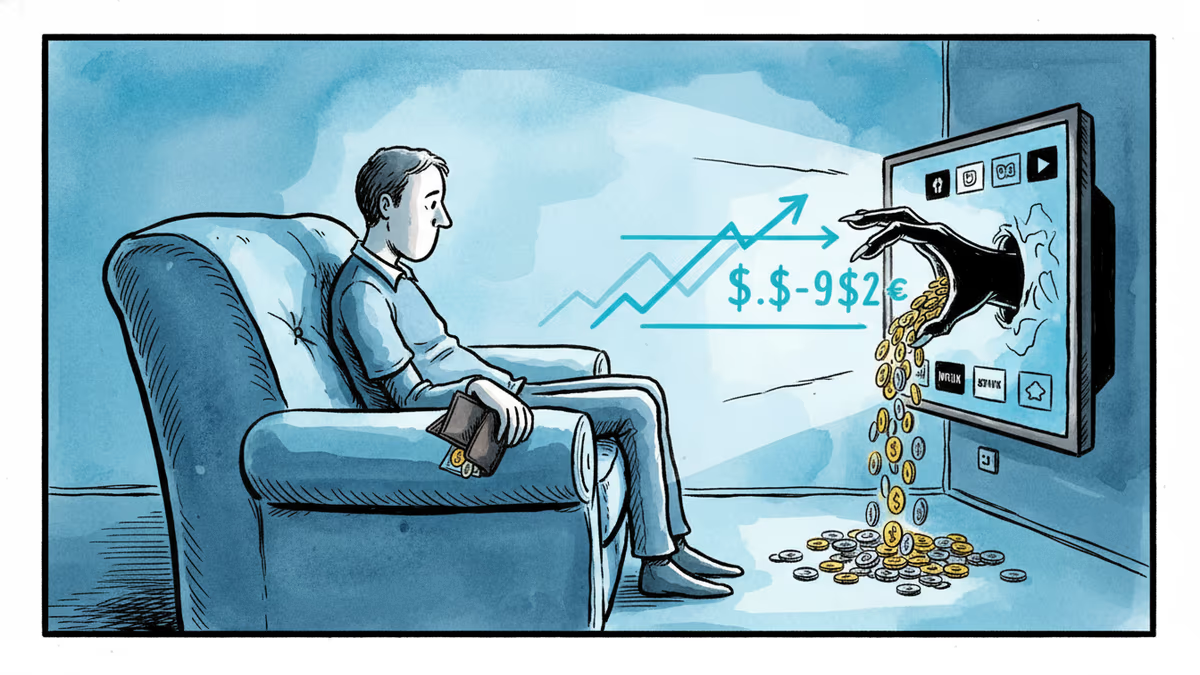
Netflix has hiked prices across all plans, including its ad-supported tier, just 14 months after its last increase. What this means for subscribers, competitors, and the future of streaming economics.
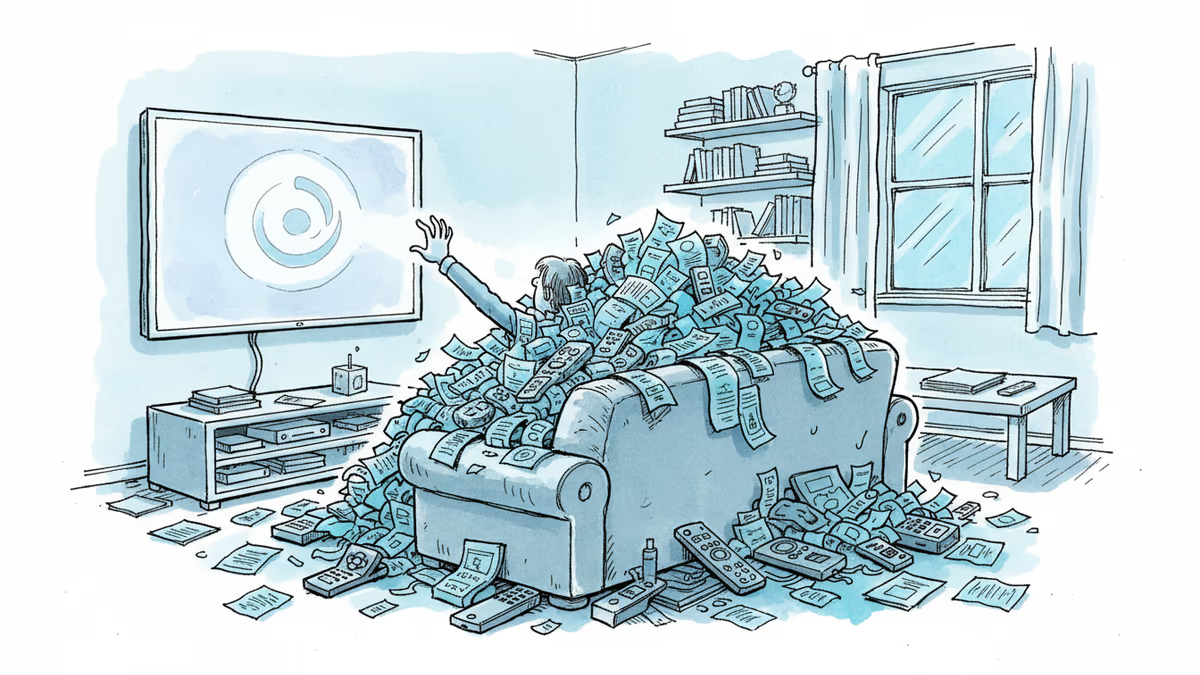
Streaming prices have doubled in a decade. Netflix, Disney, HBO Max — every platform is charging more and adding ads. Here's why, and what it means for you.
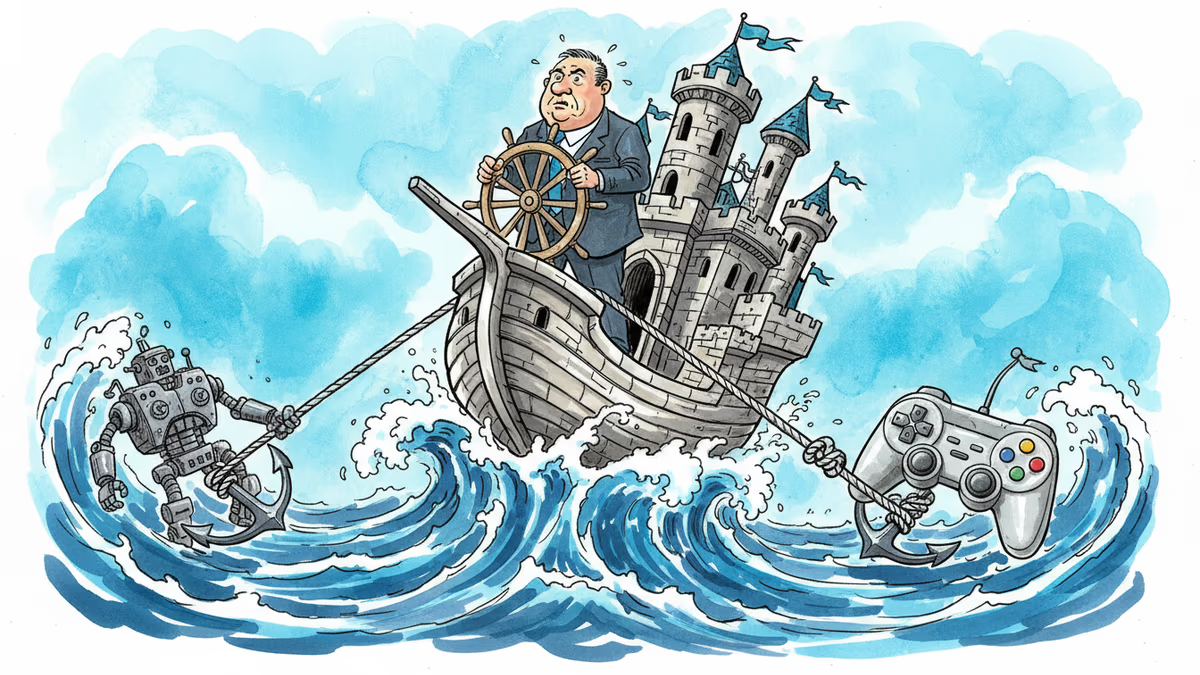
Days into his tenure, Disney CEO Josh D'Amaro faces simultaneous crises: OpenAI's Sora shutdown threatens a $1B AI deal, while Epic's layoffs cast doubt on a $1.5B metaverse plan.
A federal judge dismissed Musi's lawsuit against Apple with prejudice after the free music app was pulled from the App Store. What does it mean for developers, users, and platform power?
Netflix has hiked prices across all plans, including its ad-supported tier, just 14 months after its last increase. What this means for subscribers, competitors, and the future of streaming economics.
Streaming prices have doubled in a decade. Netflix, Disney, HBO Max — every platform is charging more and adding ads. Here's why, and what it means for you.
Days into his tenure, Disney CEO Josh D'Amaro faces simultaneous crises: OpenAI's Sora shutdown threatens a $1B AI deal, while Epic's layoffs cast doubt on a $1.5B metaverse plan.
A federal judge dismissed Musi's lawsuit against Apple with prejudice after the free music app was pulled from the App Store. What does it mean for developers, users, and platform power?
Thoughts
Share your thoughts on this article
Sign in to join the conversation