
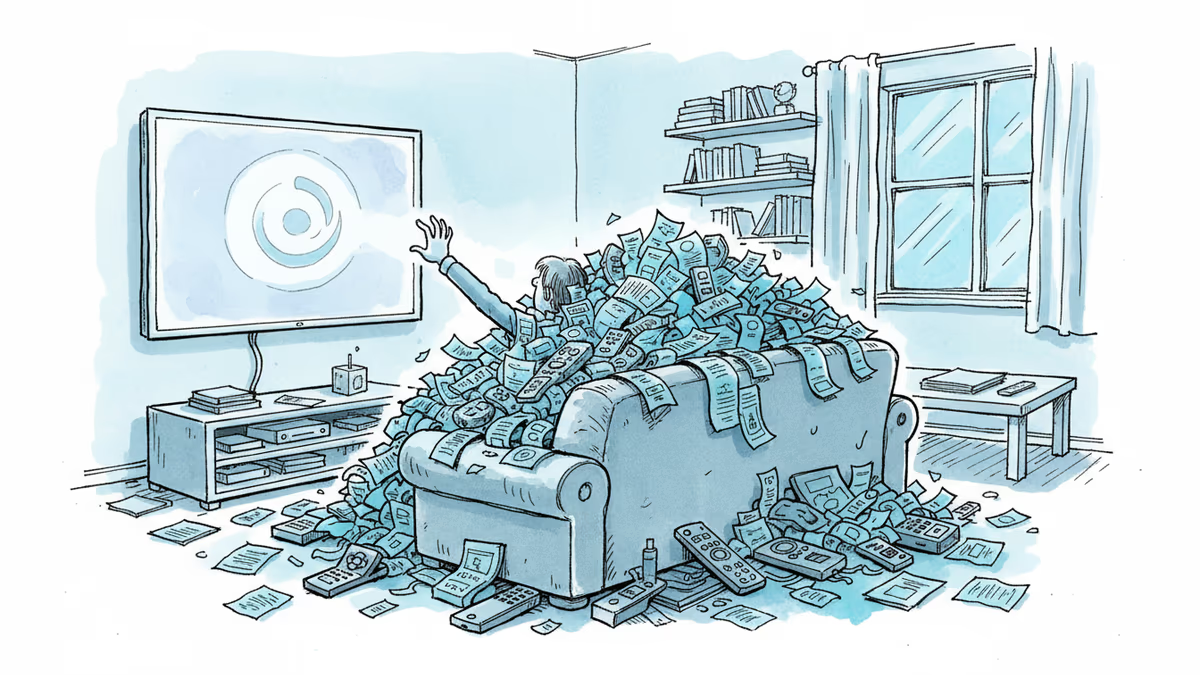
You're Paying More to Watch Ads. How Did We Get Here?
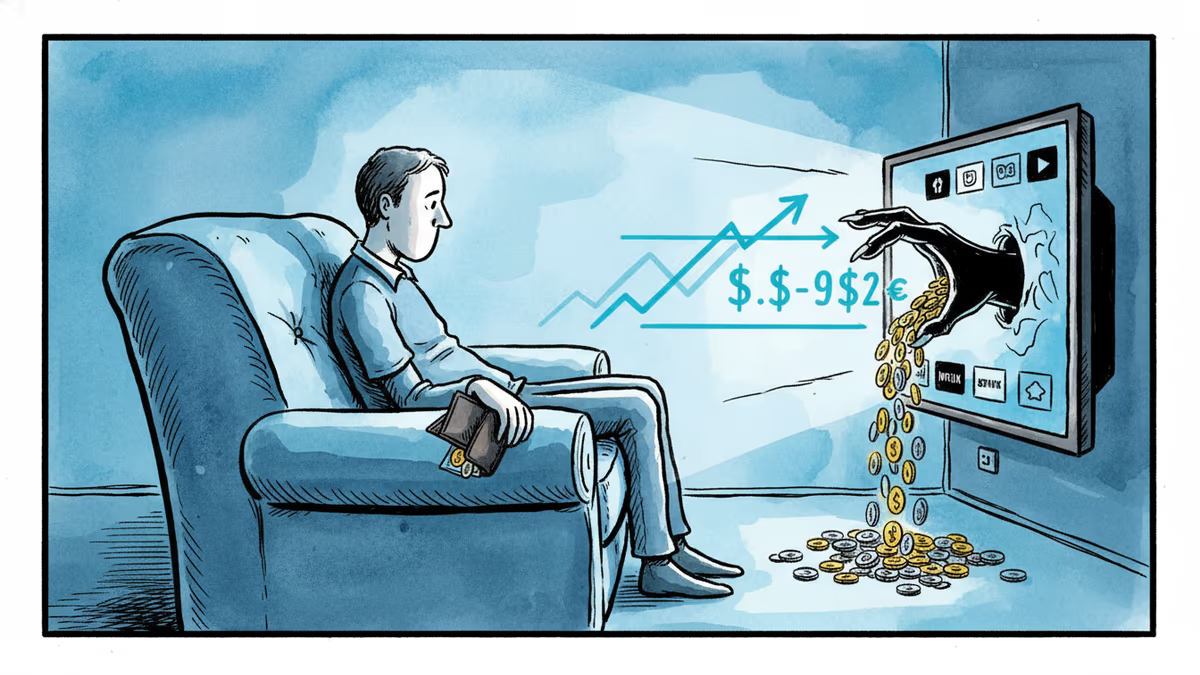
Streaming prices have doubled in a decade. Netflix, Disney, HBO Max — every platform is charging more and adding ads. Here's why, and what it means for you.
Remember when cutting the cord was supposed to save you money?
In 2010, a Netflix subscription cost $7.99 a month — no ads, no tiers, no password-sharing rules. Today, the standard ad-free plan runs $17.99. Add Disney Plus, HBO Max, and Apple TV Plus, and you're looking at north of $60 a month — roughly what a basic cable package used to cost. The disruption disrupted itself.
The Decade-Long Bait and Switch
The price hikes aren't random. They're the predictable conclusion of a strategy that dominated the 2010s: grow at all costs, worry about profit later. Streaming platforms spent like the bill would never come due. Netflix alone was burning through $17 billion a year on content at its peak. Disney launched Disney Plus at $6.99 — a price analysts called unsustainably low from day one — to vacuum up subscribers before competitors could establish themselves.
Investors loved it. As long as subscriber counts climbed, Wall Street stayed happy. But when growth plateaued — Netflix famously lost subscribers for the first time in a decade in early 2022 — the entire industry's incentive structure flipped overnight. The question changed from how many subscribers do you have? to how much money are you actually making?
What followed was a cascade. Price increases across nearly every major platform. HBO Max raised prices three years in a row. Peacock went up by $3. Apple TV Plus hit $12.99. Amazon Prime Video — bundled into a Prime membership most people already paid for — started showing ads in January 2024, then charged extra to remove them. Even the resolution you watch in became a revenue lever: Max quietly stripped 4K from legacy subscribers unless they upgraded.
Password Crackdowns and the Content Paradox
Pricing wasn't the only lever. Netflix's password-sharing crackdown in 2023 was met with outrage — and then quietly worked. Subscriber numbers rose. Revenue climbed. Disney and Max followed with their own enforcement campaigns.
But the content side of the equation has gotten stranger. Platforms have canceled well-reviewed shows not because audiences didn't watch them, but to claim tax write-downs. Titles have been pulled from platforms entirely — sometimes vanishing from subscribers' libraries without warning. Funimation shut down and took users' purchased digital libraries with it. The implicit promise of streaming — pay monthly, access everything — has quietly eroded.

The irony is sharp: consumers were told they were paying for content. But increasingly, they're paying for the platform's financial engineering.
Who's Winning, Who's Losing
The picture looks different depending on where you sit.
For consumers, the math has turned ugly. Subscribing to the top four or five services now costs as much as — or more than — the cable bundle they were supposed to replace. And unlike cable, streaming libraries shift constantly. A show you loved last year might be gone, sold to a competitor, or locked behind a higher tier.
For platforms, the pressure is real. Sports rights have become the new battleground — Fubo's cheapest plan now costs $85 a month — and live sports are the last content category that genuinely resists time-shifting. Whoever controls live sports controls a captive audience. The cost of that control gets passed to subscribers.
For content creators, the 2023 Hollywood writers' and actors' strikes made the tension explicit: platforms were generating enormous value from streaming, but the residual structures — designed for a broadcast era — weren't reflecting that in paychecks. The strikes won some concessions, but the underlying tension between platform economics and creator compensation hasn't been resolved.
For advertisers, the ad-supported tiers are a genuine opportunity. Streaming audiences are more engaged and more measurable than traditional TV. The irony is that the ad-supported tiers — which consumers pay less for — may actually be more valuable to platforms than the premium ad-free ones, because of advertiser revenue on top of subscription fees.
What Comes Next
The bundling era is already beginning. Disney, Hulu, and Max have started offering joint packages — a move that looks less like innovation and more like the cable bundle reassembling itself under new branding. Roku has entered with a $2.99 ad-free tier, betting that price sensitivity will drive consumers toward cheaper, leaner options.
The question is whether any of this stabilizes. Streaming fatigue is real — surveys consistently show consumers cycling through subscriptions, bingeing one platform, canceling, moving to the next. Platforms know this, which is why they're investing in live sports and events that can't be binge-watched and then canceled.
Authors
Related Articles
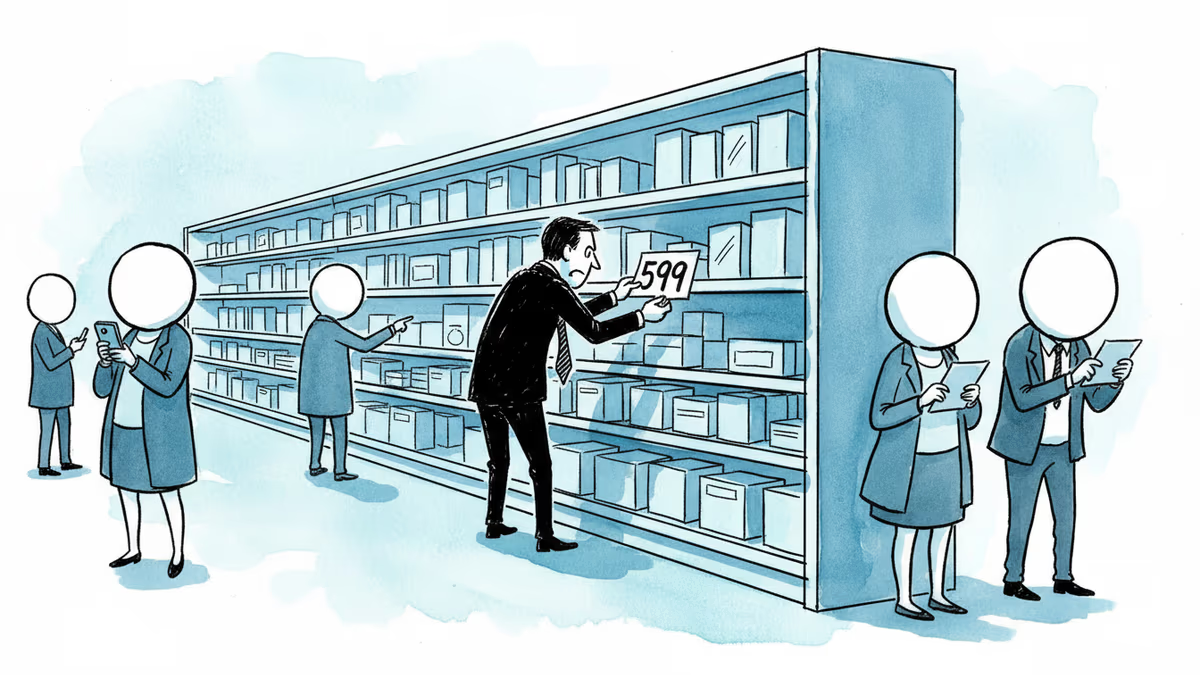
Apple quietly removed the entry-level $599 Mac Mini, raising the starting price to $799 — just one day after Tim Cook warned of chip supply constraints on the earnings call.
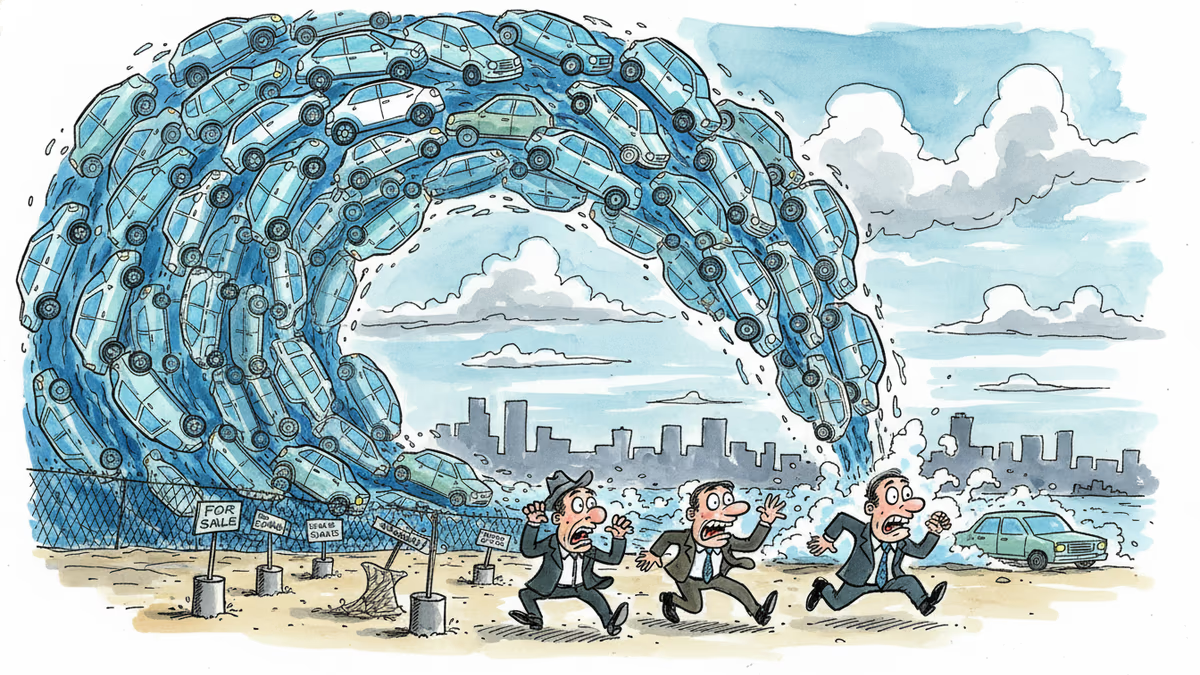
Expiring leases will flood the US used car market with over a million electric vehicles by 2028. Could this do what subsidies couldn't — make EVs genuinely affordable?
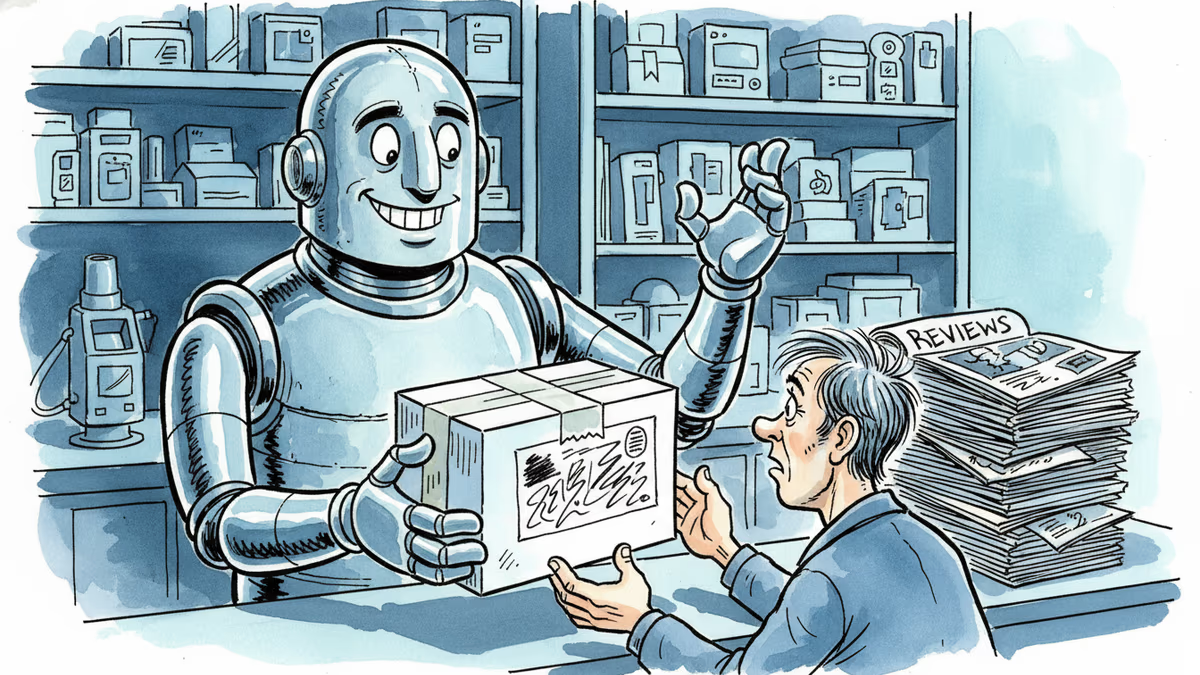
OpenAI's revamped shopping assistant in ChatGPT confidently recommended products WIRED never reviewed—raising urgent questions about AI reliability in consumer decisions.
Netflix has hiked prices across all plans, including its ad-supported tier, just 14 months after its last increase. What this means for subscribers, competitors, and the future of streaming economics.
Apple quietly removed the entry-level $599 Mac Mini, raising the starting price to $799 — just one day after Tim Cook warned of chip supply constraints on the earnings call.
Expiring leases will flood the US used car market with over a million electric vehicles by 2028. Could this do what subsidies couldn't — make EVs genuinely affordable?
OpenAI's revamped shopping assistant in ChatGPT confidently recommended products WIRED never reviewed—raising urgent questions about AI reliability in consumer decisions.
Netflix has hiked prices across all plans, including its ad-supported tier, just 14 months after its last increase. What this means for subscribers, competitors, and the future of streaming economics.
Thoughts
Share your thoughts on this article
Sign in to join the conversation