
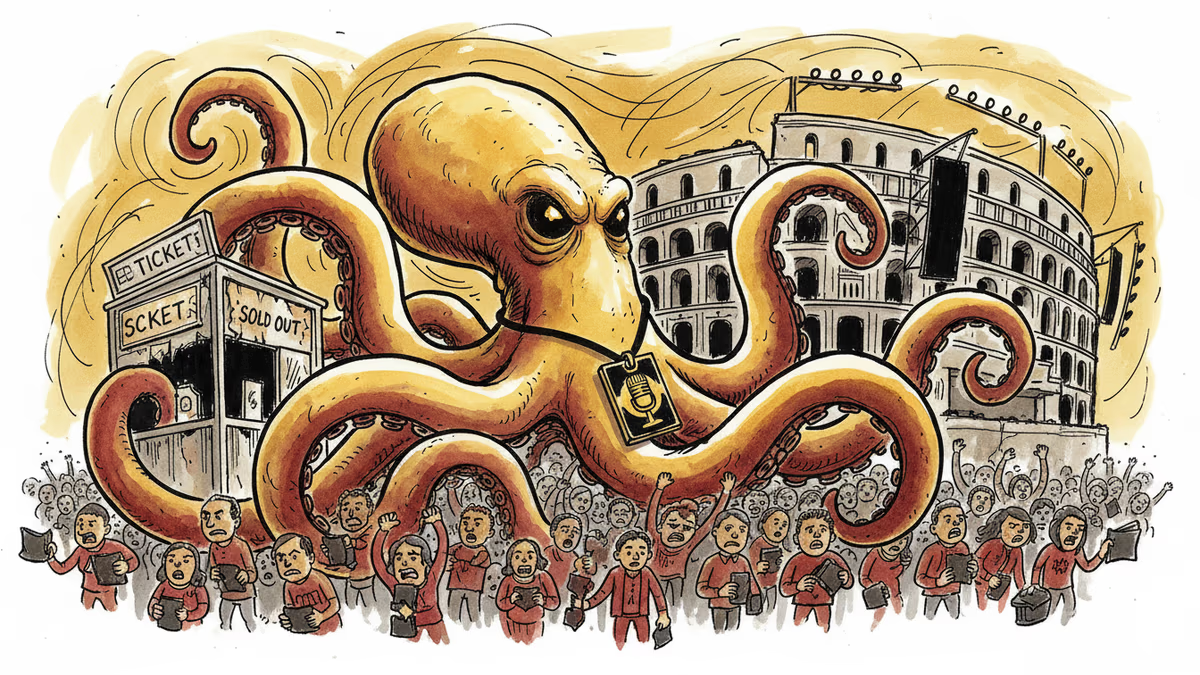
Robbing Them Blind": Live Nation Found Guilty of Monopoly
A federal jury ruled Live Nation operated as an illegal monopoly. Slack messages mocking customers, a possible Ticketmaster breakup, and what it means for every concert ticket you've ever bought.
"Robbing them blind baby."
That's not a line from a corporate villain in a Netflix drama. It's a real Slack message sent by a Live Nation employee while discussing parking price hikes — and it was read aloud in a federal courtroom. On Wednesday, a jury agreed with the implication: Live Nation has been running an illegal monopoly.
What the Jury Actually Decided
The verdict caps a legal battle that started in 2024, when the Department of Justice and 40 state attorneys general sued Live Nation over alleged monopolistic practices. The core argument: when Live Nation merged with Ticketmaster in 2010, it created a vertically integrated entertainment empire — controlling concert promotion, venue booking, and ticket sales simultaneously — that made meaningful competition nearly impossible.
With no viable alternatives, fans had little choice but to accept whatever pricing model Live Nation chose. That meant dynamic pricing that sent ticket costs soaring minutes after a sale opened, and service fees that materialized — seemingly from nowhere — at the final checkout screen.
The Slack messages that surfaced during the trial put a human face on what critics had long suspected. Ben Baker, now head of ticketing for Venue Nation, wrote about raising parking prices: "These people are so stupid. I almost feel bad taking advantage of them BAHAHAHAHAHA." In a separate conversation, he added: "Robbing them blind baby." Live Nation called these "off-the-cuff banter, not policy, decision-making, or facts of consequence." The jury, apparently, was not persuaded.
The Settlement Wasn't Enough for 34 States

Here's where the story gets complicated. The DOJ had already reached a tentative settlement with Live Nation — a $280 million fine and the divestiture of at least 13 venues, with those venues required to accept bookings from competing promoters. For many, that looked like a slap on the wrist for a company that controls the majority of ticket sales and venue bookings in the country.
So 34 attorneys general pressed forward with a separate state-level trial. And they won. Judge Arun Subramanian still needs to determine remedies, but the possibility of breaking up Live Nation and Ticketmaster entirely is now on the table. What that breakup would look like — and how long it would take — remains genuinely unclear.
Three Groups Watching the Remedy Phase Very Closely
Concertgoers are the obvious winners if a breakup materializes. More competition in ticketing could mean more transparent fee structures and genuine price competition. But history offers a caution: the breakup of AT&T in the 1980s took years to translate into consumer benefits, and the telecom market eventually reconsolidated anyway.
Artists have a more complicated stake. Live Nation's vertical integration meant that acts who wanted access to major venues often had little leverage in negotiations. A more fragmented market could shift some of that power back toward musicians. But smaller promoters may also mean less capital for large-scale tours — the economics of live music don't become simple just because a monopoly is broken up.
Investors and the broader entertainment industry are watching the remedy phase with obvious anxiety. Live Nation's stock moved on the verdict. More significantly, the ruling sends a signal to other platform-era companies that vertical integration — owning the infrastructure, the marketplace, and the customer relationship simultaneously — is now under serious legal scrutiny in the United States.
Why This Verdict Lands Differently in 2026
Antitrust law in America spent decades in a kind of hibernation, particularly in tech and entertainment. The prevailing view held that as long as consumer prices didn't rise in obvious ways, monopoly power wasn't a problem worth prosecuting. That framework is visibly cracking. The DOJ's suit against Live Nation, the ongoing scrutiny of Google, Apple, and Amazon — these aren't isolated events. They reflect a bipartisan shift in how regulators think about market concentration.
The timing matters for another reason: the Slack messages. In an era when internal communications are increasingly discoverable in litigation, the Live Nation case is a reminder that corporate culture — not just pricing strategy — can become evidence. What employees say to each other about customers, when no one outside is supposed to be listening, may end up being the most damning exhibit.
Authors
Related Articles
Apple agreed to pay $250 million to settle claims it misled iPhone 16 buyers about Apple Intelligence features. What this means for consumers, Big Tech marketing, and the AI industry.
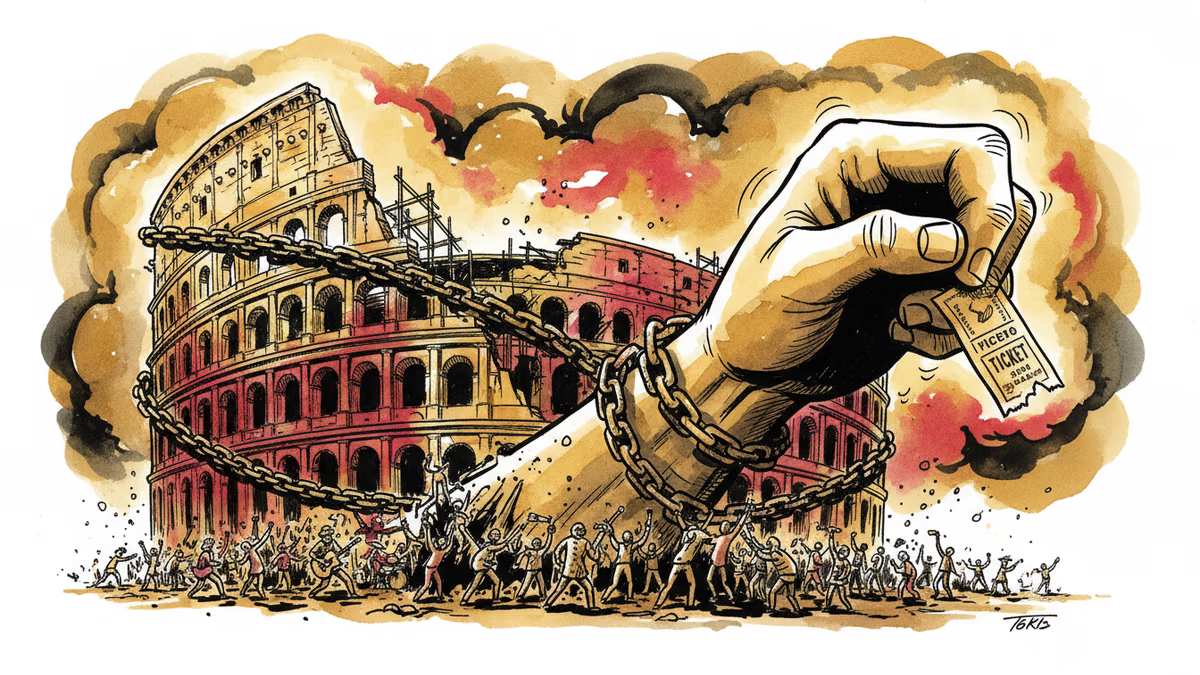
A 2021 audio recording between two CEOs sits at the heart of the US anti-monopoly case against Live Nation. As the DOJ settles, dozens of states press on — and the concert industry watches nervously.
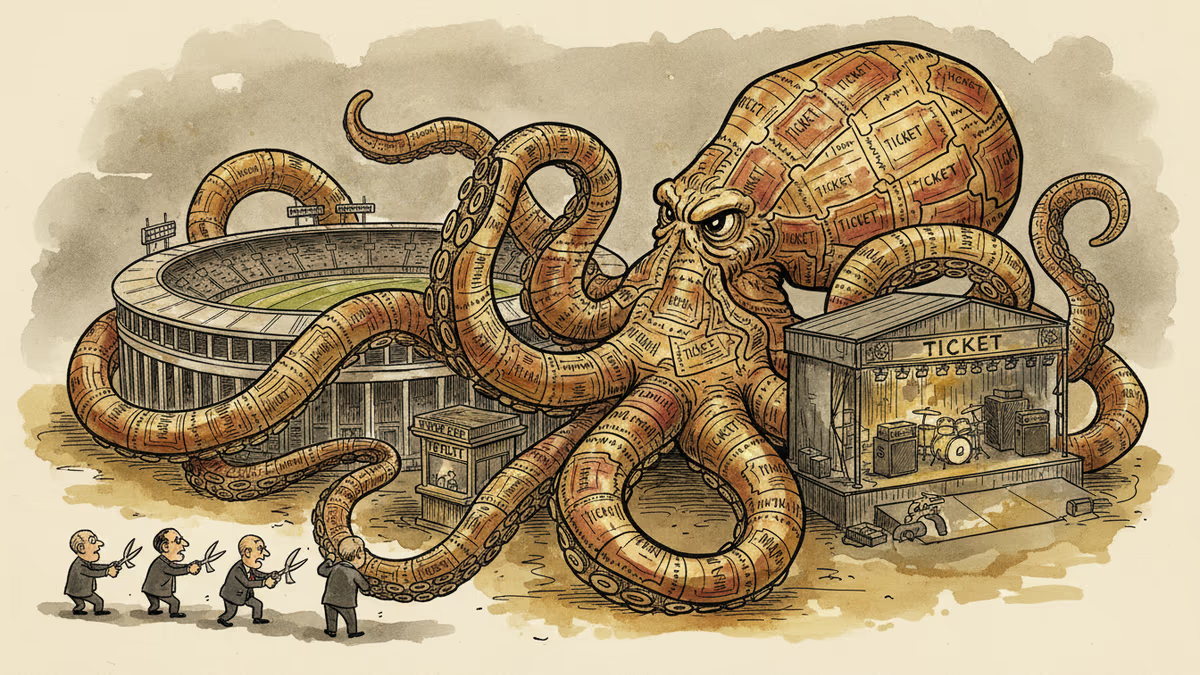
Live Nation-Ticketmaster settled a federal antitrust lawsuit, but reports suggest no forced split. With 27 states pressing on, is this the end—or just halftime?
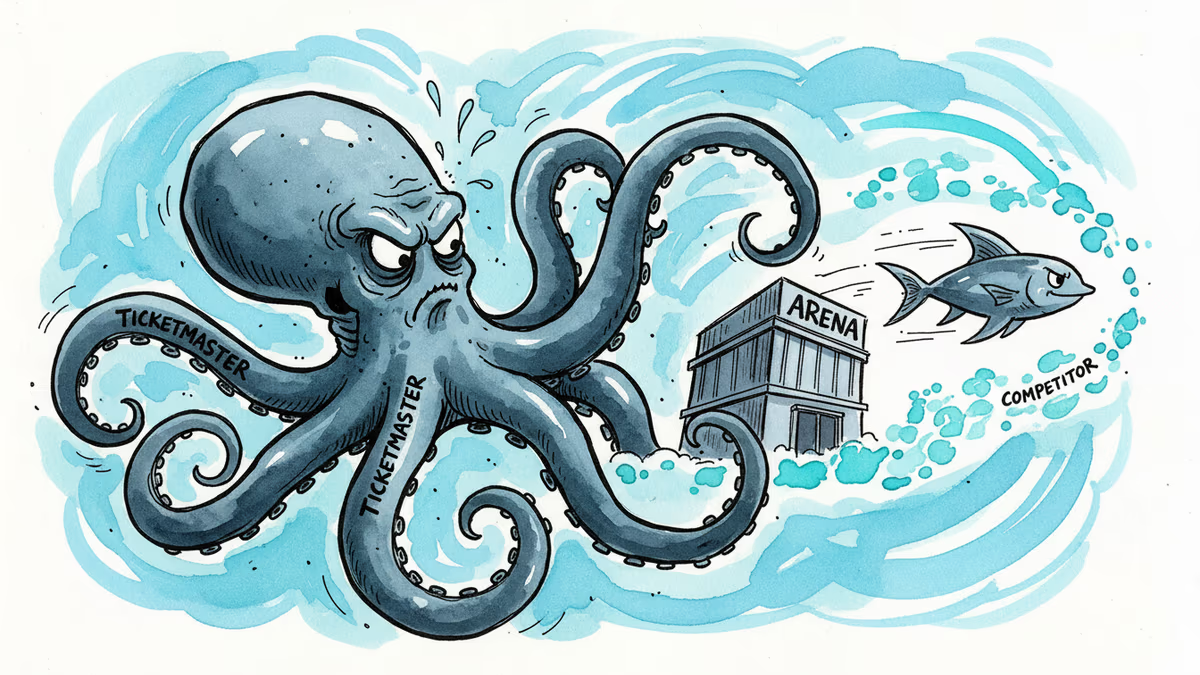
How Barclays Center chose SeatGeek over Ticketmaster reveals cracks in the ticketing giant's monopoly and what it means for consumers
Apple agreed to pay $250 million to settle claims it misled iPhone 16 buyers about Apple Intelligence features. What this means for consumers, Big Tech marketing, and the AI industry.
A 2021 audio recording between two CEOs sits at the heart of the US anti-monopoly case against Live Nation. As the DOJ settles, dozens of states press on — and the concert industry watches nervously.
Live Nation-Ticketmaster settled a federal antitrust lawsuit, but reports suggest no forced split. With 27 states pressing on, is this the end—or just halftime?
How Barclays Center chose SeatGeek over Ticketmaster reveals cracks in the ticketing giant's monopoly and what it means for consumers
Thoughts
Share your thoughts on this article
Sign in to join the conversation