
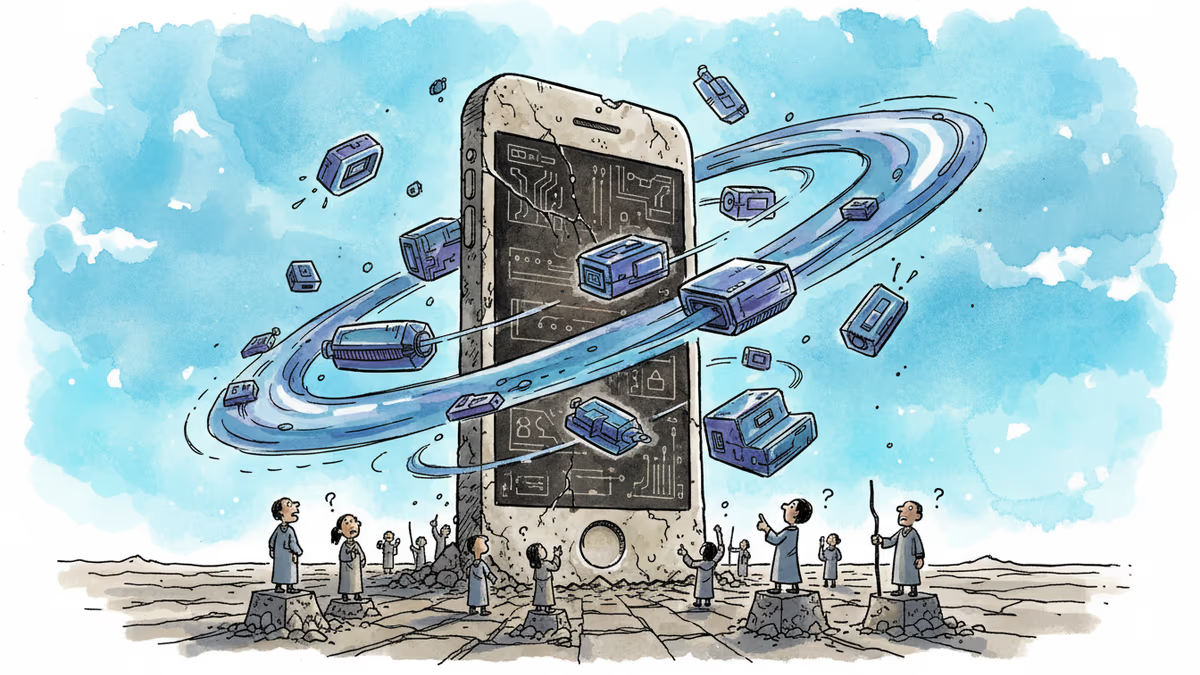
Apple Thinks You'll Still Have an iPhone in 2076
At Apple's 50th anniversary, top executives insisted the iPhone will anchor the AI era—and beyond. But is that confidence visionary or a warning sign?
Steve Jobs refused to discuss the Mac's 25th birthday. "If you look backward in this business, you'll be crushed," he told a reporter in 2008. So when Apple staged a concert at Grand Central Station—Alicia Keys performing in front of a glass cube—to mark its 50th anniversary, it felt like a company doing something slightly against its own religion.
But forget the party. The more revealing moment came in the interviews that surrounded it.
What Apple Actually Said About the Next 50 Years
Journalist Steven Levy sat down with two of Apple's most senior executives: Greg Joswiak, SVP of Worldwide Marketing, who joined Apple in 1986, and John Ternus, SVP of Hardware Engineering and the widely cited frontrunner to succeed Tim Cook as CEO. The conversation turned, inevitably, to AI—the one arena where Apple's critics say the company has stumbled.
The executives pushed back, hard. "We were doing AI before we called it AI," Joswiak said. Ternus took a more pragmatic line: even if Apple didn't pioneer AI model development, "our products are the best place people will use the existing AI tools."
Then came the statement that will likely define how this interview is remembered. Asked whether AI might eventually demand entirely new hardware paradigms—the kind Jony Ive is reportedly designing with OpenAI—Joswiak didn't hedge. "The iPhone is not going to go away." He went further: competitors scrambling to build AI devices were, in his telling, essentially building accessories for a product they don't own. "That's where everybody else struggles. They don't have an iPhone."
Tim Cook, speaking briefly at the event, framed it in even broader terms. "Yes, the technologies of the future will change. Yes, there will be more products and more categories. But the things that made Apple Apple will be the same for the next 50 years, and the next 100 and the next 1,000."
A thousand years. For context, a thousand years ago, the internet, electricity, and the printing press did not exist.
Why the Confidence Has a Logic—and a Limit
Apple's position isn't without foundation. The company sits at the center of an ecosystem of over 2.2 billion active devices worldwide. The iPhone isn't just a phone; it's the hub through which Apple Pay, AirPods, Apple Watch, and an expanding suite of services flow. That network effect is genuinely hard to dislodge in the short term.

And Apple has navigated inflection points before. It survived the transition from command-line computing to graphical interfaces with the Macintosh. It repositioned itself for the internet era with the iMac. It didn't invent the smartphone, but it redefined the category so completely that it effectively owned the mobile era. The just-released MacBook Neo—an update to a 42-year-old product line—sold out quickly, suggesting the franchise still has pulse.
But the historical record cuts both ways. Nokia once held over 40% of the global mobile phone market. Kodak invented the digital camera and still went bankrupt clinging to film. In both cases, the companies' confidence in their existing platforms wasn't irrational—it was based on real dominance. The problem was that dominance in one paradigm doesn't transfer automatically to the next.
The question isn't whether Apple is strong today. It clearly is. The question is whether the iPhone is a platform flexible enough to absorb whatever AI becomes—or whether AI will eventually require something the iPhone, by design, cannot be.
The Ive Problem
There's a particular awkwardness in Apple's position that the interview doesn't fully resolve. Jony Ive, the designer responsible for the physical language of every major Apple product since the iMac, has left to build AI-native hardware with OpenAI. He isn't iterating on the smartphone. He's trying to design around it.
OpenAI CEO Sam Altman has speculated that his own successor might not be human. When Levy put the same question to Cook—could an AI model one day appear on Apple's leadership page?—Cook laughed and said no. The certainty was immediate and total.
That certainty may be correct. But it's worth noting that the leaders most blindsided by disruption are rarely the ones who saw it coming and dismissed it. They're usually the ones who genuinely couldn't imagine it.
Levy himself, who has covered Apple for decades, added a candid footnote: despite the executives' bravado, he would be "shocked" if Apple doesn't release an AI-powered gadget within the next few years. The public messaging and the internal roadmap, in other words, may not be identical.
What This Means for Consumers and Investors
For the average iPhone user, the near-term implication is straightforward: Apple is betting its AI features will improve fast enough that you won't feel the need to buy a dedicated AI device. Whether that bet pays off depends heavily on how quickly Apple Intelligence—the company's AI platform, currently seen as lagging behind Google Gemini and ChatGPT in capability—closes the gap.
For investors, the calculus is more nuanced. Apple's services revenue, which carries far higher margins than hardware, is increasingly dependent on the iPhone remaining the primary computing surface in people's lives. If that assumption holds, the services flywheel keeps spinning. If it doesn't—if AI companions, smart glasses, or some device we haven't imagined yet begin to replace the phone as the primary interface—the entire valuation model shifts.
For the broader tech industry, Apple's stance is itself a market signal. If the world's most valuable company is publicly committed to the iPhone as the AI era's central device, that shapes investment, developer attention, and competitive strategy across the ecosystem. It also raises the stakes for anyone betting on a post-smartphone future.
Authors
Related Articles
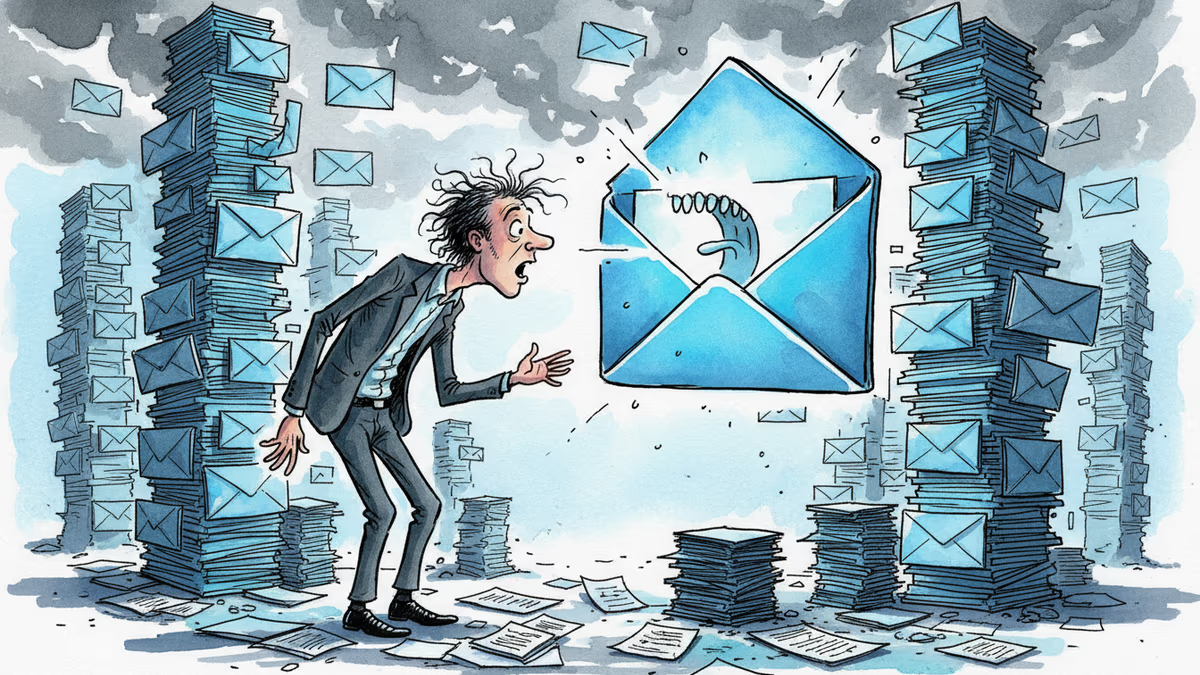
Google's Gmail Live lets you ask your inbox questions out loud. Announced at I/O 2026, it's AI's pitch to skeptics — and a reminder of how much Google already knows about you.
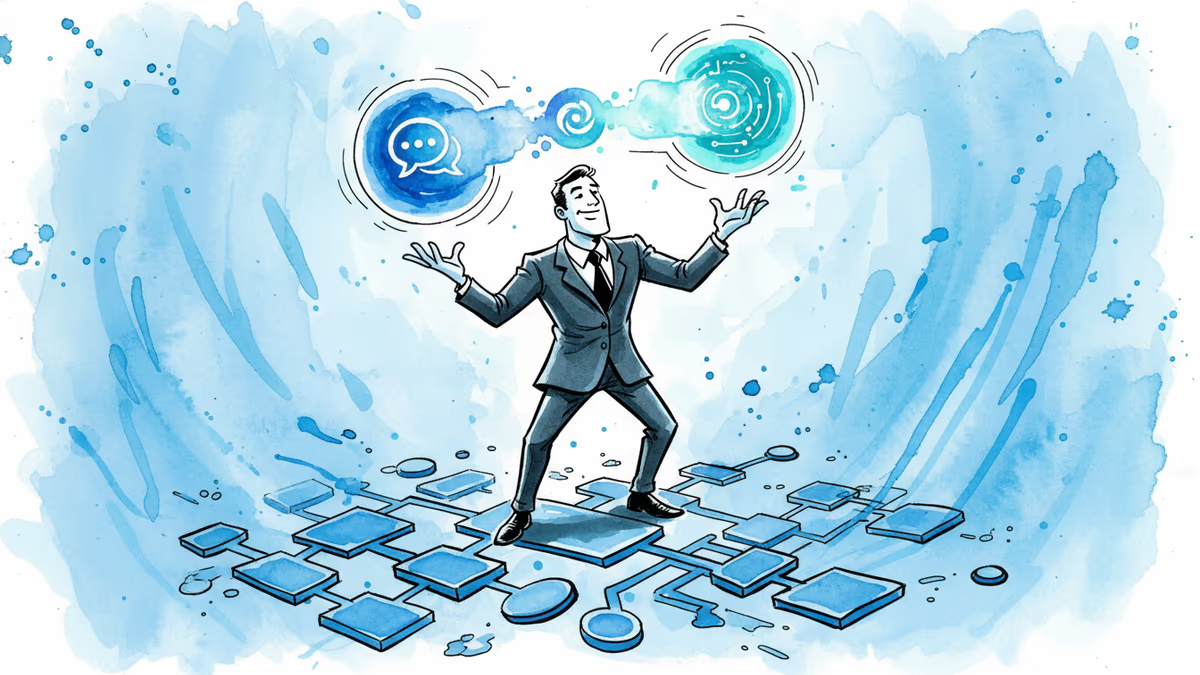
OpenAI has reorganized for the second time in a month, merging ChatGPT and Codex into a single agentic platform under president Greg Brockman's unified product leadership.
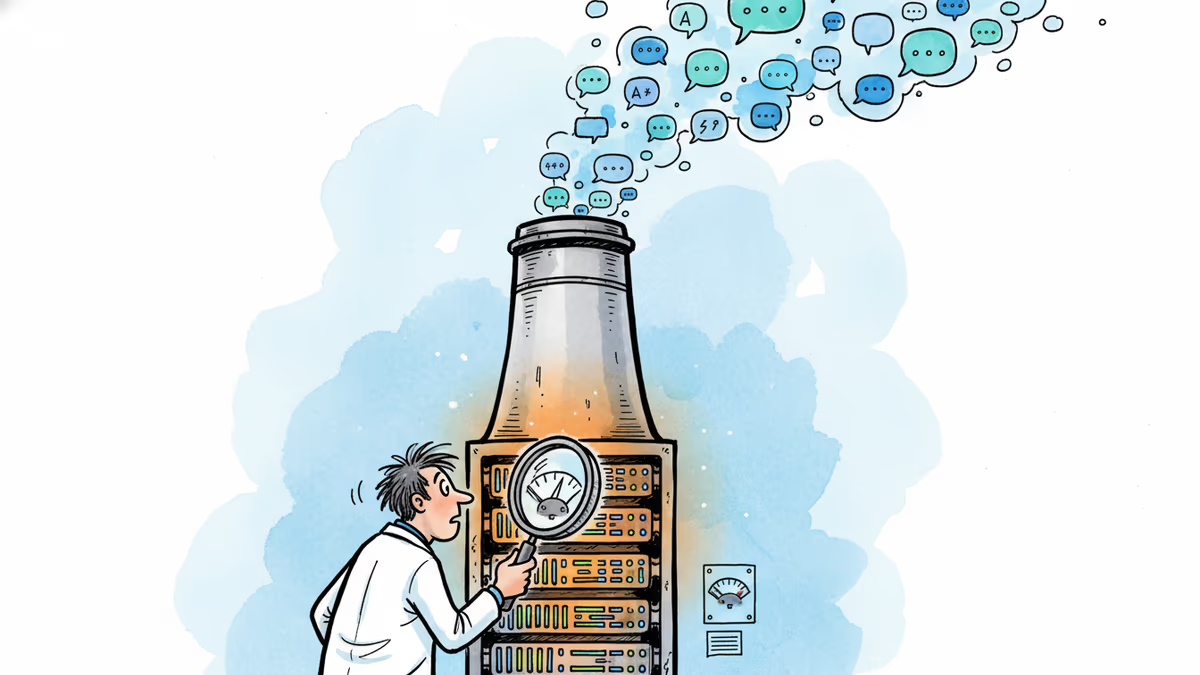
AI sustainability researcher Sasha Luccioni is launching a new venture to push for energy transparency in AI. Here's why Big Tech keeps the numbers hidden—and what's starting to change.
After 15 years of fragmented mobile messaging, Apple and Google are rolling out end-to-end encrypted RCS messaging between iPhones and Android devices. Here's what changed, why it took so long, and what it means for your privacy.
Google's Gmail Live lets you ask your inbox questions out loud. Announced at I/O 2026, it's AI's pitch to skeptics — and a reminder of how much Google already knows about you.
OpenAI has reorganized for the second time in a month, merging ChatGPT and Codex into a single agentic platform under president Greg Brockman's unified product leadership.
AI sustainability researcher Sasha Luccioni is launching a new venture to push for energy transparency in AI. Here's why Big Tech keeps the numbers hidden—and what's starting to change.
After 15 years of fragmented mobile messaging, Apple and Google are rolling out end-to-end encrypted RCS messaging between iPhones and Android devices. Here's what changed, why it took so long, and what it means for your privacy.
Thoughts
Share your thoughts on this article
Sign in to join the conversation