
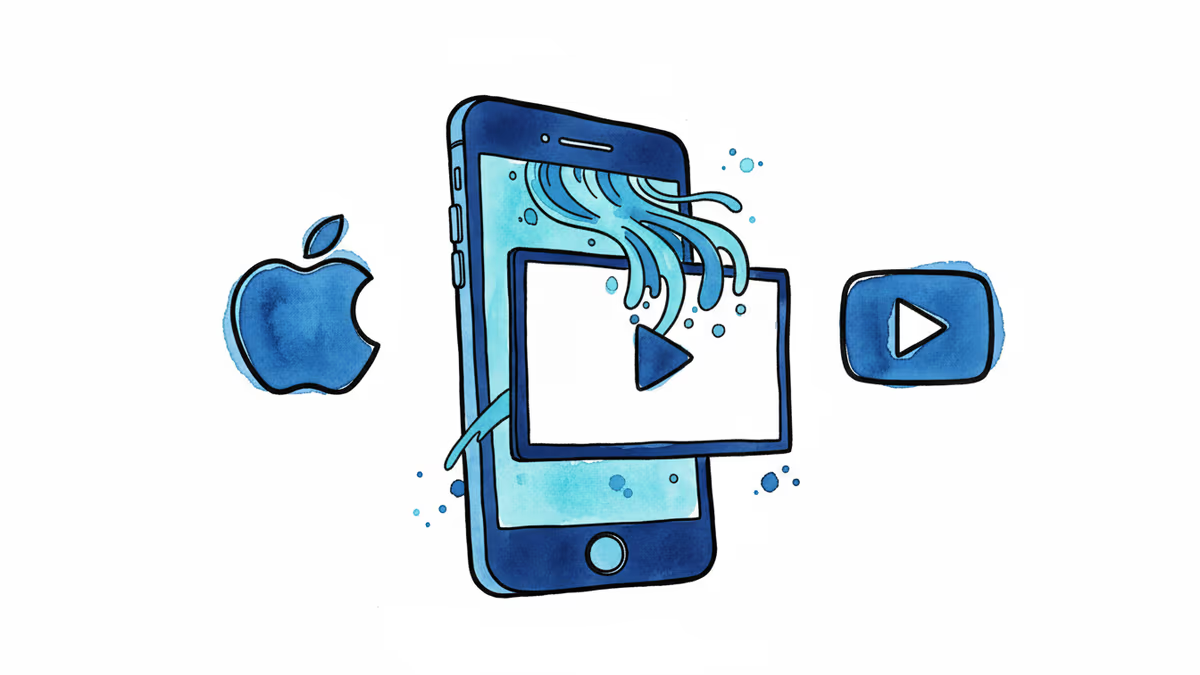
Apple's Podcast Play Could Shake YouTube's Billion-User Empire
Apple adds seamless audio-video switching to Podcasts app, challenging YouTube's dominance in video podcasting. What this means for creators, listeners, and the streaming wars.
1 billion people watch podcasts on YouTube. Apple just declared war on that number.
The tech giant quietly rolled out a game-changing feature to its Podcasts app: seamless switching between audio and video versions of shows. Users can now flip their phone horizontal while listening and instantly jump into the video version, powered by HTTP Live Streaming (HLS) technology.
It sounds simple. It's anything but.
The YouTube Problem Apple's Trying to Solve
YouTube dominates video podcasting with over 1 billion monthly podcast viewers as of last February. Apple's Podcasts app, while never officially disclosing user numbers, is estimated to serve around 100 million users globally.
But here's YouTube's Achilles' heel: it's video-first. If you start watching The Joe Rogan Experience on YouTube, you're committed to the full visual experience. Want to switch to audio-only for your commute? You'll lose your place, your context, everything.
Apple's betting that flexibility trumps scale. Their new feature lets you start a 3-hour podcast as audio during your morning run, then seamlessly switch to video when you're home and want to see the guest's reactions. No interruption, no lost progress.
Creators Face a New Dilemma
Podcast creators are caught in an expensive bind. Video production costs 3-5 times more than audio-only shows, requiring lighting, cameras, and extensive post-production. Yet video podcasts consistently outperform audio versions in engagement and reach.

Michelle Obama's podcast saw a 400% increase in engagement when Spotify added video components. But smaller creators struggle with the additional overhead.
Apple's approach could be the answer: shoot once, serve both ways. Creators can produce video content knowing listeners can consume it however they prefer, potentially maximizing both reach and production efficiency.
The Spotify Wild Card
While Apple targets YouTube, Spotify quietly dominates the audio podcast market with 456 million users. The Swedish company has been aggressively expanding into video, acquiring exclusive shows and building video infrastructure.
Spotify's response will be crucial. They have the user base and the technology to implement similar features. More importantly, they have exclusive content deals that Apple lacks.
The real question: Will this become a three-way race, or will one platform's approach prove definitively superior?
What Listeners Actually Want
Early user feedback reveals interesting patterns. Commuters love starting shows as audio and switching to video at home. But many report feeling "overwhelmed" by constant format decisions.
Sarah Koenig, creator of Serial, recently noted that some stories work better in specific formats. "Not every conversation needs to be seen," she said. "Sometimes the voice carries everything."
This raises a fundamental question about content consumption: Are we optimizing for convenience or for the integrity of the medium?
Authors
Related Articles
After 15 years of fragmented mobile messaging, Apple and Google are rolling out end-to-end encrypted RCS messaging between iPhones and Android devices. Here's what changed, why it took so long, and what it means for your privacy.
Apple agreed to pay $250 million to settle claims it misled iPhone 16 buyers about Apple Intelligence features. What this means for consumers, Big Tech marketing, and the AI industry.
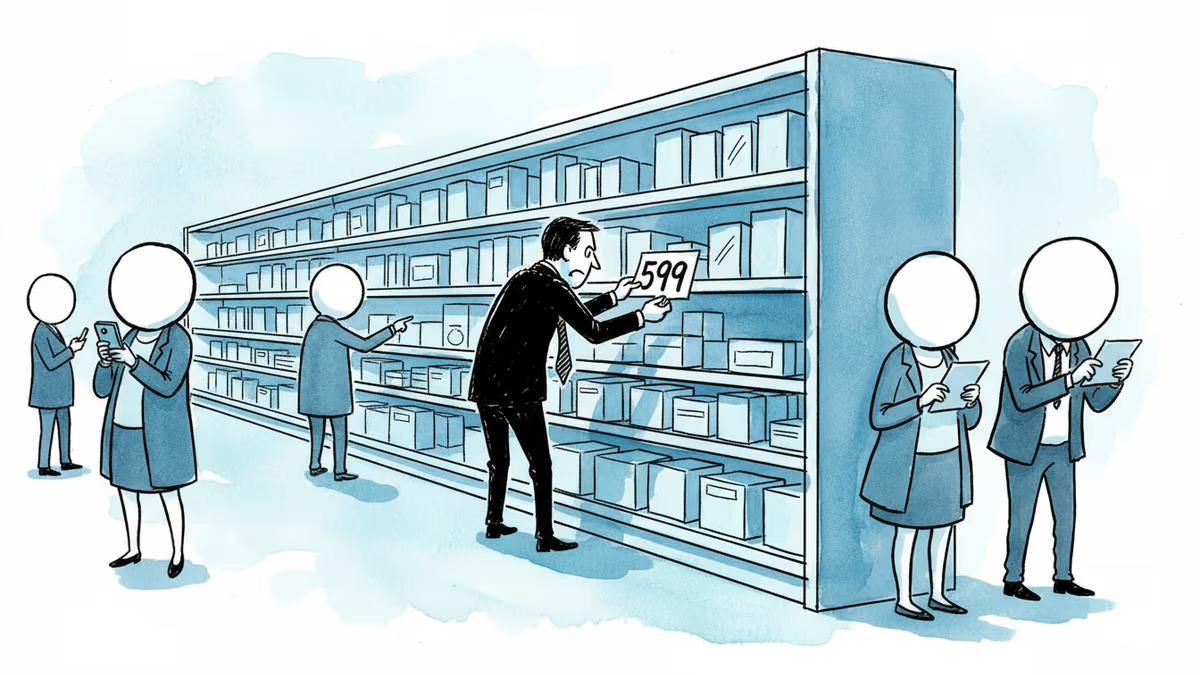
Apple quietly removed the entry-level $599 Mac Mini, raising the starting price to $799 — just one day after Tim Cook warned of chip supply constraints on the earnings call.
Apple names John Ternus, its hardware engineering chief, as the next CEO. The shift from operator to product person signals where Apple thinks its next decade of growth will come from — and raises real questions about what comes next.
After 15 years of fragmented mobile messaging, Apple and Google are rolling out end-to-end encrypted RCS messaging between iPhones and Android devices. Here's what changed, why it took so long, and what it means for your privacy.
Apple agreed to pay $250 million to settle claims it misled iPhone 16 buyers about Apple Intelligence features. What this means for consumers, Big Tech marketing, and the AI industry.
Apple quietly removed the entry-level $599 Mac Mini, raising the starting price to $799 — just one day after Tim Cook warned of chip supply constraints on the earnings call.
Apple names John Ternus, its hardware engineering chief, as the next CEO. The shift from operator to product person signals where Apple thinks its next decade of growth will come from — and raises real questions about what comes next.
Thoughts
Share your thoughts on this article
Sign in to join the conversation