
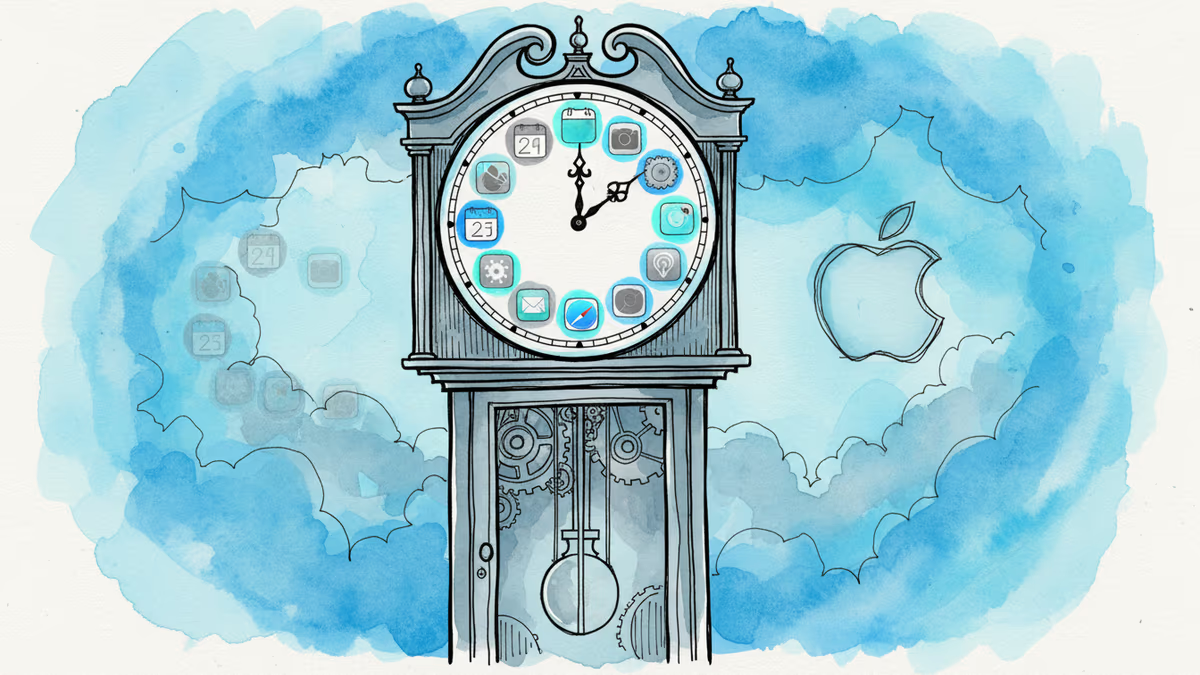
Why Apple's March iPhone Launch Changes Everything
Apple launches iPhone 17e in March for second consecutive year at $599 with MagSafe and 256GB base storage. Breaking traditional September pattern signals strategic shift.
$599. The moment Apple announced the iPhone 17e price, Samsung's stock dropped 1.2% in Seoul trading. Coincidence? Hardly. Apple launching iPhones in March for the second straight year isn't just about product cycles—it's about rewriting the rules of the smartphone game.
Breaking the September Tradition
For over a decade, September meant iPhone season. But Apple's March launches are becoming the new normal. The iPhone 17e, available for pre-order March 4th and shipping March 11th, signals a fundamental shift in how Apple thinks about market timing.
The specs tell an interesting story. The phone packs an A19 chip (same as the iPhone 17) but with four GPU cores instead of five. The cellular modem gets an upgrade to C1X for faster speeds, and it supports Apple Intelligence with 8GB of RAM.
Two standout changes close the gap with pricier models: MagSafe charging returns after being notably absent from last year's 16e, and base storage doubles to 256GB. The new Ceramic Shield 2 glass promises 3x better scratch resistance. A 512GB version costs $799.
Samsung's Headache, China's Opportunity
This timing creates problems for Samsung. The Galaxy S25 series was supposed to dominate the first half of 2026, but now faces direct competition in the crucial $600 price bracket where Samsung's Galaxy A series lives.

Chinese brands like Xiaomi and Oppo see opportunity in Apple's mid-range push. If premium brands flood the affordable segment, it could erode the "premium mystique" that justifies higher prices.
U.S. carriers are already adjusting. One Verizon executive noted they're "completely rethinking spring marketing budgets" to accommodate Apple's new schedule.
The Services Play Behind the Hardware
Why break tradition? Because for Apple, hardware is increasingly just the entry point. Services revenue hit $24.1 billion in Q4 2025, representing 25% of total revenue. The math is simple: get more users into the ecosystem at $599, then monetize them through iCloud, Apple Music, and App Store purchases.
Apple Intelligence support on a budget phone is crucial here. By democratizing AI features, Apple prevents competitors from claiming "AI is only for premium devices." It's ecosystem expansion disguised as product positioning.
The strategy mirrors what happened with AirPods—start premium, then create accessible entry points that hook users on the broader Apple experience.
Market Implications: The New Rhythm
This isn't just about Apple. If March iPhone launches stick, the entire industry calendar shifts. Instead of one major smartphone season, we get two: spring flagships and fall refreshes. That's more opportunities for consumers, but twice the competitive pressure for manufacturers.
Google might accelerate Pixel releases. Samsung could split Galaxy launches. The whole "back-to-school" and "holiday shopping" smartphone narrative gets rewritten.
Authors
Related Articles
After 15 years of fragmented mobile messaging, Apple and Google are rolling out end-to-end encrypted RCS messaging between iPhones and Android devices. Here's what changed, why it took so long, and what it means for your privacy.
Apple agreed to pay $250 million to settle claims it misled iPhone 16 buyers about Apple Intelligence features. What this means for consumers, Big Tech marketing, and the AI industry.
Apple quietly removed the entry-level $599 Mac Mini, raising the starting price to $799 — just one day after Tim Cook warned of chip supply constraints on the earnings call.

Apple names John Ternus, its hardware engineering chief, as the next CEO. The shift from operator to product person signals where Apple thinks its next decade of growth will come from — and raises real questions about what comes next.
After 15 years of fragmented mobile messaging, Apple and Google are rolling out end-to-end encrypted RCS messaging between iPhones and Android devices. Here's what changed, why it took so long, and what it means for your privacy.
Apple agreed to pay $250 million to settle claims it misled iPhone 16 buyers about Apple Intelligence features. What this means for consumers, Big Tech marketing, and the AI industry.
Apple quietly removed the entry-level $599 Mac Mini, raising the starting price to $799 — just one day after Tim Cook warned of chip supply constraints on the earnings call.
Apple names John Ternus, its hardware engineering chief, as the next CEO. The shift from operator to product person signals where Apple thinks its next decade of growth will come from — and raises real questions about what comes next.
Thoughts
Share your thoughts on this article
Sign in to join the conversation