
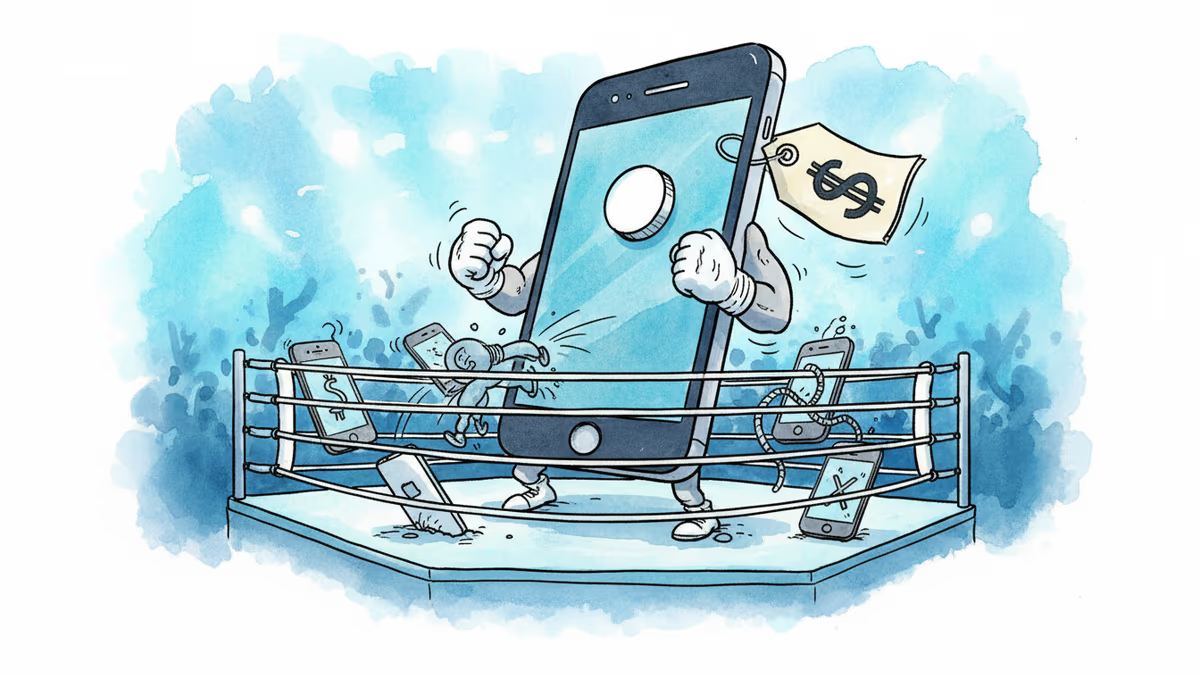
Apple's $599 iPhone 17E Strategy Could Reshape the Mid-Range Battle
iPhone 17E starts at $599 with 256GB storage and MagSafe compatibility. How Apple's budget push threatens Samsung and Chinese brands in the competitive mid-range market.
The $599 Question That's Shaking Up Android
Apple just threw a curveball at the mid-range smartphone market. The iPhone 17E, available for preorder ahead of its March 11th launch, maintains the $599 starting price of its predecessor while doubling base storage to 256GB and adding full MagSafe compatibility.
On paper, it sounds like a modest upgrade. But dig deeper, and you'll see Apple's calculated move to disrupt a market segment it's largely ignored. The 6.1-inch 17E isn't just another budget iPhone—it's Apple's trojan horse into Android's stronghold.
Why Samsung and Chinese Brands Are Watching Nervously
The $600-800 smartphone segment has been Android's playground. Samsung's Galaxy A series, Xiaomi, OnePlus, and others have thrived here while Apple focused on premium buyers willing to spend $1,000+.
Now Apple's crashing the party with a phone that offers genuine iPhone experience at a price point where consumers actually shop. For Samsung, this means their Galaxy A lineup faces a formidable new competitor with superior brand cachet. For Chinese manufacturers who've built their strategy around undercutting Apple on price, the game just changed.
The timing isn't coincidental. Global smartphone sales have been sluggish, and even loyal iPhone users are keeping devices longer. Apple needs new customers, and the mid-range market represents 60% of global smartphone sales.
The MagSafe Ecosystem Play

Here's where Apple gets clever. The 17E isn't just a cheaper iPhone—it's a gateway drug to Apple's accessory ecosystem. Built-in MagSafe magnets mean compatibility with dozens of accessories: wireless chargers, car mounts, battery packs, wallet cases.
This creates what economists call "switching costs." Once you've invested in MagSafe accessories, leaving for Android becomes more expensive. It's the same strategy that made iPods successful: hardware as a loss leader for a profitable ecosystem.
The 256GB base storage also reduces reliance on iCloud subscriptions while ensuring users don't hit storage limits that might push them toward competitors offering expandable storage.
The Carrier Subsidy Wild Card
In the US market, carrier promotions could make the 17E even more attractive. With trade-in deals and monthly credits, the effective price could drop to $300-400 for qualified customers. At that price point, Apple starts competing with budget Android phones while offering premium brand appeal.
T-Mobile, Verizon, and AT&T have already signaled aggressive promotional strategies for the 17E launch. Their motivation is clear: iPhone users generate higher average revenue per user than Android customers.
What This Means for Innovation
Apple's mid-range push raises uncomfortable questions about smartphone innovation. If a $599 iPhone with year-old technology satisfies most users, what does that say about the value proposition of $1,200 flagship devices?
For competitors, the pressure intensifies to justify premium pricing through genuine innovation rather than incremental upgrades. The days of competing solely on specs and price may be ending.
Authors
Related Articles
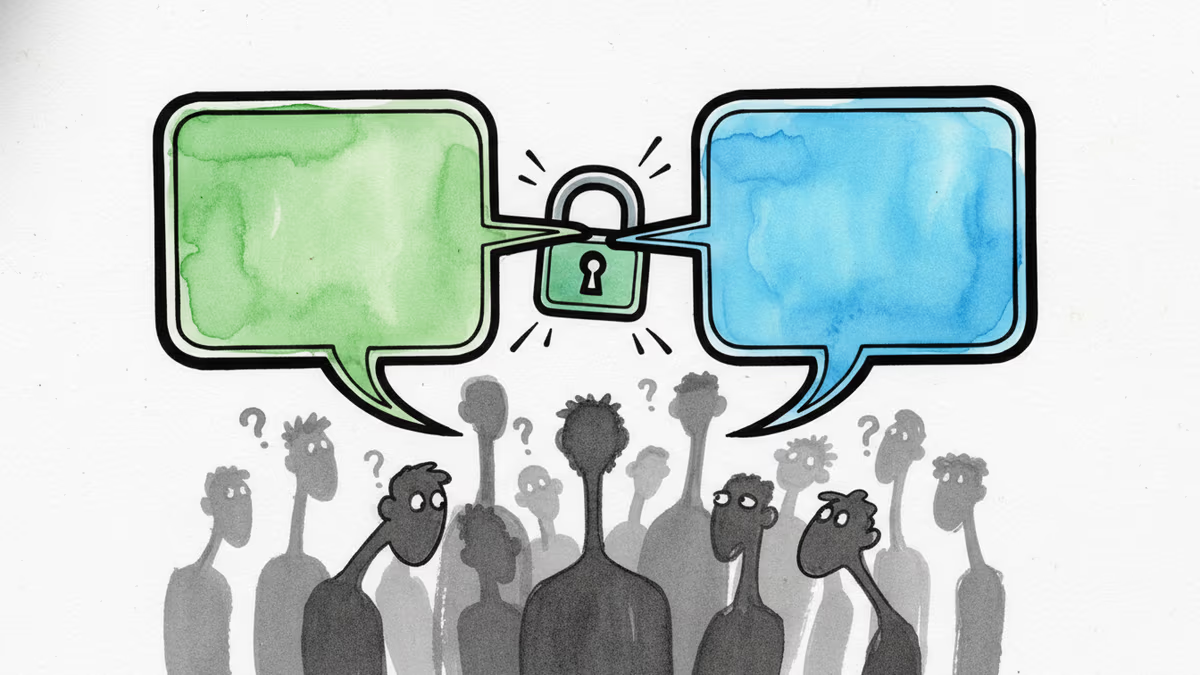
After 15 years of fragmented mobile messaging, Apple and Google are rolling out end-to-end encrypted RCS messaging between iPhones and Android devices. Here's what changed, why it took so long, and what it means for your privacy.
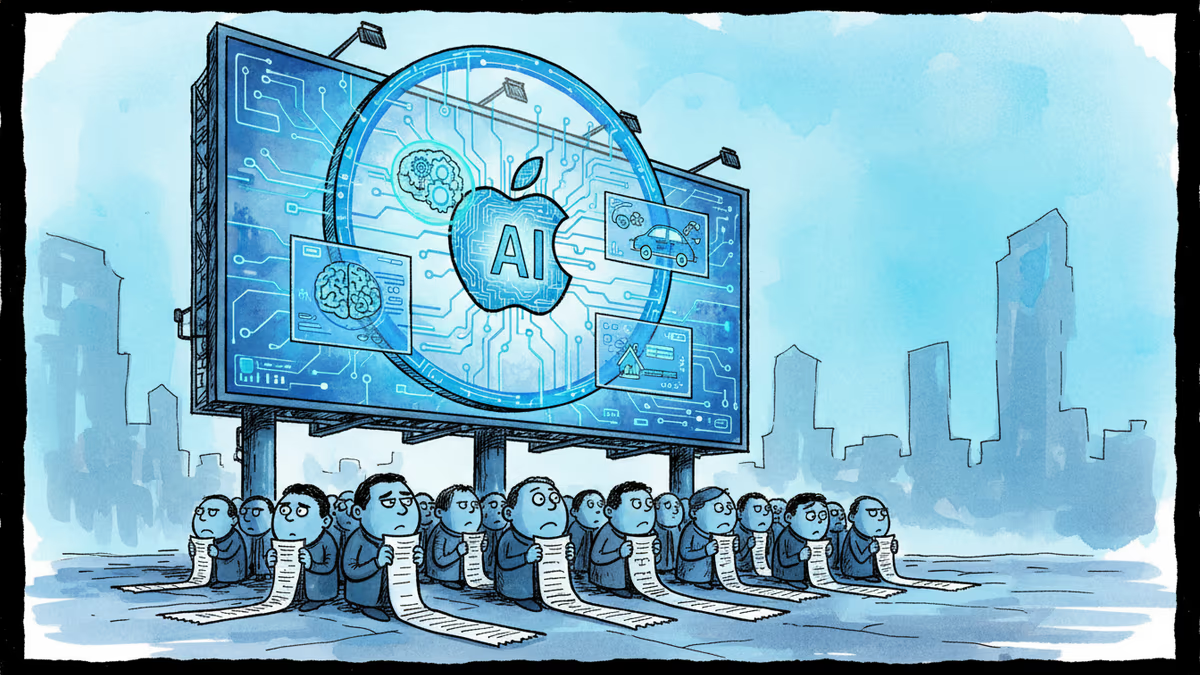
Apple agreed to pay $250 million to settle claims it misled iPhone 16 buyers about Apple Intelligence features. What this means for consumers, Big Tech marketing, and the AI industry.
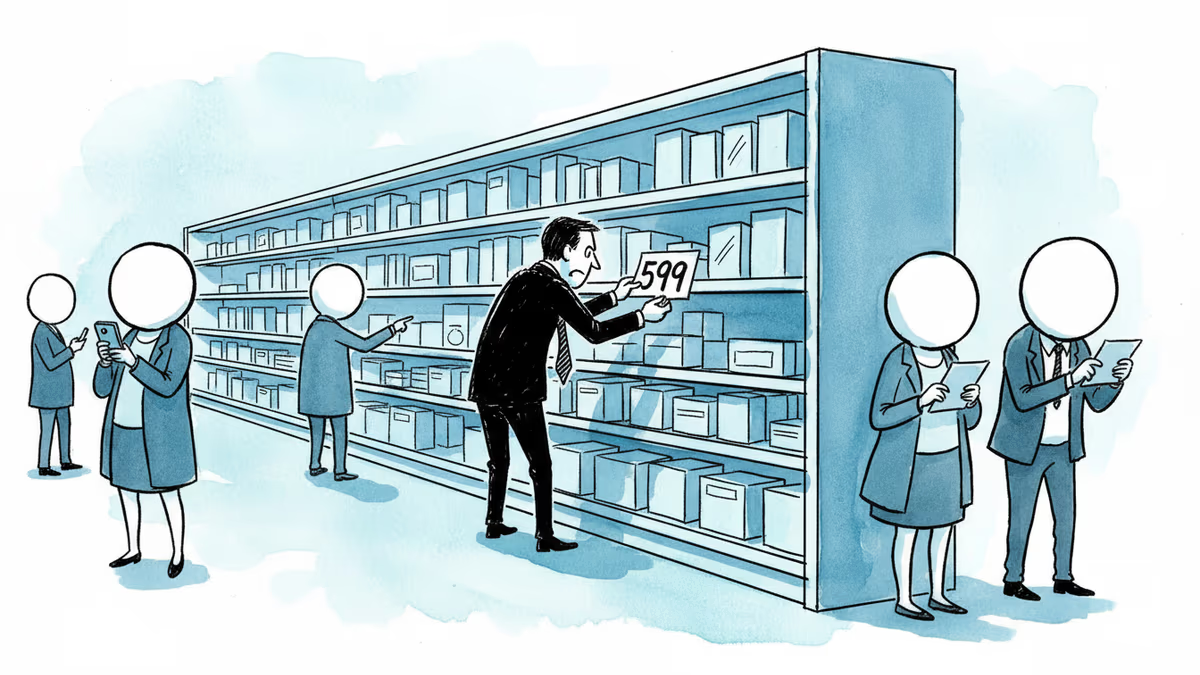
Apple quietly removed the entry-level $599 Mac Mini, raising the starting price to $799 — just one day after Tim Cook warned of chip supply constraints on the earnings call.

Apple names John Ternus, its hardware engineering chief, as the next CEO. The shift from operator to product person signals where Apple thinks its next decade of growth will come from — and raises real questions about what comes next.
After 15 years of fragmented mobile messaging, Apple and Google are rolling out end-to-end encrypted RCS messaging between iPhones and Android devices. Here's what changed, why it took so long, and what it means for your privacy.
Apple agreed to pay $250 million to settle claims it misled iPhone 16 buyers about Apple Intelligence features. What this means for consumers, Big Tech marketing, and the AI industry.
Apple quietly removed the entry-level $599 Mac Mini, raising the starting price to $799 — just one day after Tim Cook warned of chip supply constraints on the earnings call.
Apple names John Ternus, its hardware engineering chief, as the next CEO. The shift from operator to product person signals where Apple thinks its next decade of growth will come from — and raises real questions about what comes next.
Thoughts
Share your thoughts on this article
Sign in to join the conversation