
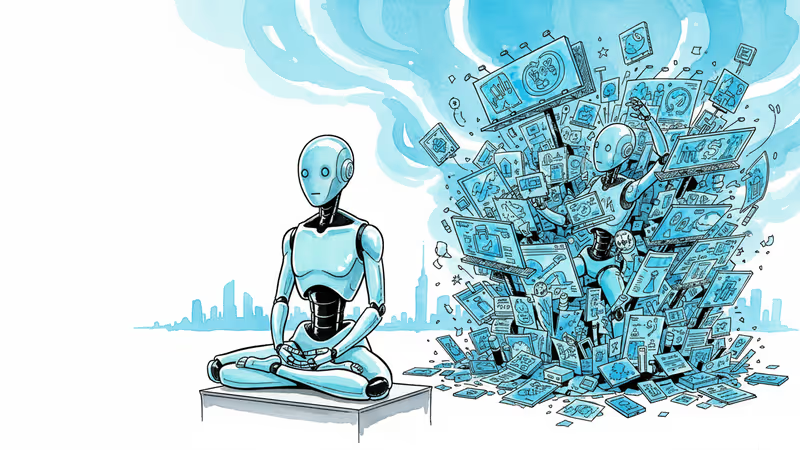
Claude Goes Ad-Free While ChatGPT Embraces Ads
Anthropic declares Claude will remain ad-free, directly contrasting OpenAI's ChatGPT advertising plans. The company even mocks rivals in a Super Bowl commercial.
While OpenAI recently announced plans to introduce advertising to ChatGPT, Anthropic is taking the exact opposite approach. The company has declared that its AI chatbot Claude will remain completely ad-free—and they're making their point with a Super Bowl commercial that mocks competitors who choose otherwise.
A Philosophical Stand, Not Just Business Strategy
Anthropic made their position crystal clear in a recent blog post: "We want Claude to act unambiguously in our users' interests." This means no sponsored links appearing alongside conversations, no advertiser influence on Claude's responses, and no third-party product placements embedded in the AI's output.
The timing couldn't be more pointed. OpenAI's decision to monetize ChatGPT through advertising was framed as a way to expand free access while diversifying revenue streams. Anthropic, however, is betting that users will value trust and transparency over free access subsidized by ads.
This isn't just about different business models—it's about fundamentally different philosophies regarding AI's role in users' lives. While OpenAI sees advertising as a path to democratizing AI access, Anthropic views it as a potential corruption of the user-AI relationship.
The Irony of Super Bowl Advertising
Anthropic's decision to advertise their ad-free service during the Super Bowl—where 30-second spots cost over $7 million—creates a delicious irony. They're spending massive amounts on traditional advertising to promote their rejection of AI advertising.

The company plans to run one ad before the game and another during it, both apparently designed to poke fun at rivals who've chosen the advertising route. It's a bold move that signals just how seriously Anthropic takes this differentiation strategy.
Two Paths for AI Monetization
This split reveals the AI industry's fundamental tension around sustainable business models. OpenAI's approach follows the familiar tech playbook: offer free services supported by advertising, then convert users to premium subscriptions. It's the model that built Google, Facebook, and countless other tech giants.
Anthropic's path is riskier but potentially more aligned with user interests. By relying solely on subscriptions, they're betting that users will pay for an AI experience free from commercial influence. The question is whether consumers will actually pay premium prices for this purity, or if they'll gravitate toward free, ad-supported alternatives.
The Trust Economy Question
This divergence comes at a crucial moment for AI adoption. As these systems become more integrated into daily decision-making—from financial advice to health recommendations—the question of whose interests they serve becomes paramount.
Anthropic's stance suggests they believe trust will become the ultimate differentiator in AI services. But OpenAI's approach might prove that most users are willing to accept some commercial influence in exchange for broader access and lower costs.
Authors
Related Articles
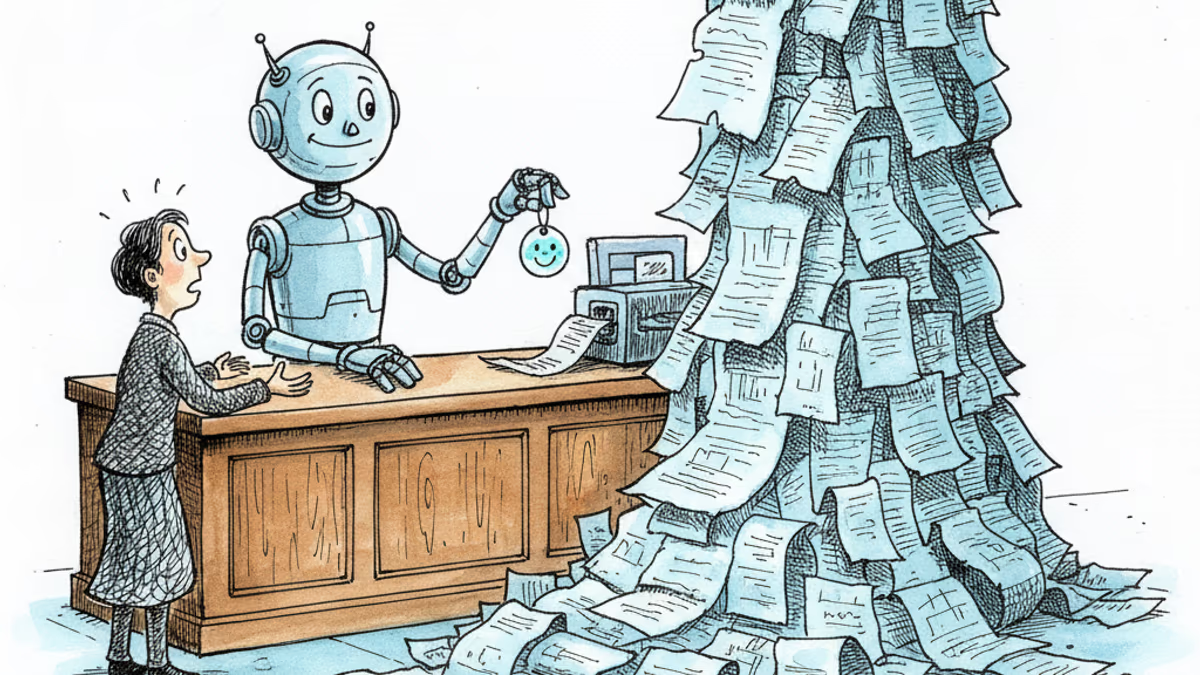
Anthropic shipped Claude Sonnet 5, its mid-tier agent model, on June 30. Behind the 'Opus-class power, budget price' headline sits a tokenizer catch and a three-horse race that's only half real. Here's what developers should actually run the numbers on.
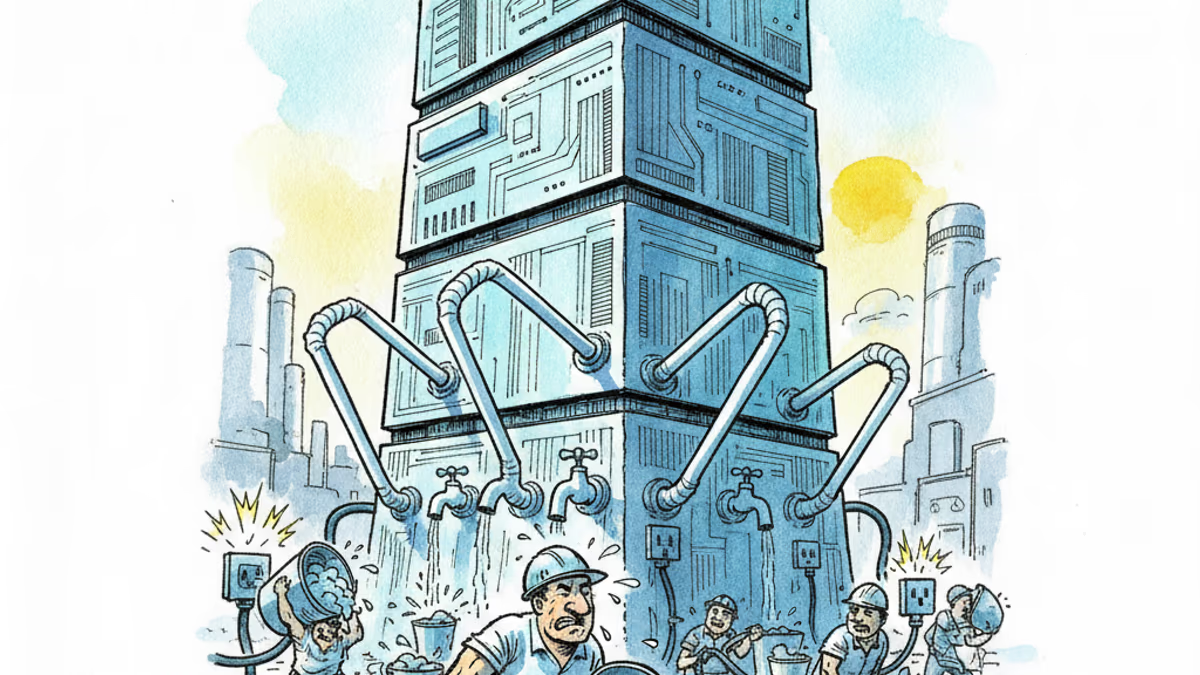
Samsung and SK unveiled a chip and AI investment package worth thousands of trillions of won on June 29. The headline number swings wildly by outlet, but the real contest isn't capital — it's water and power.

A small but growing group of developers has gone all-in on AI coding agents like Claude Code and OpenClaw. History suggests the rest of us won't be far behind.
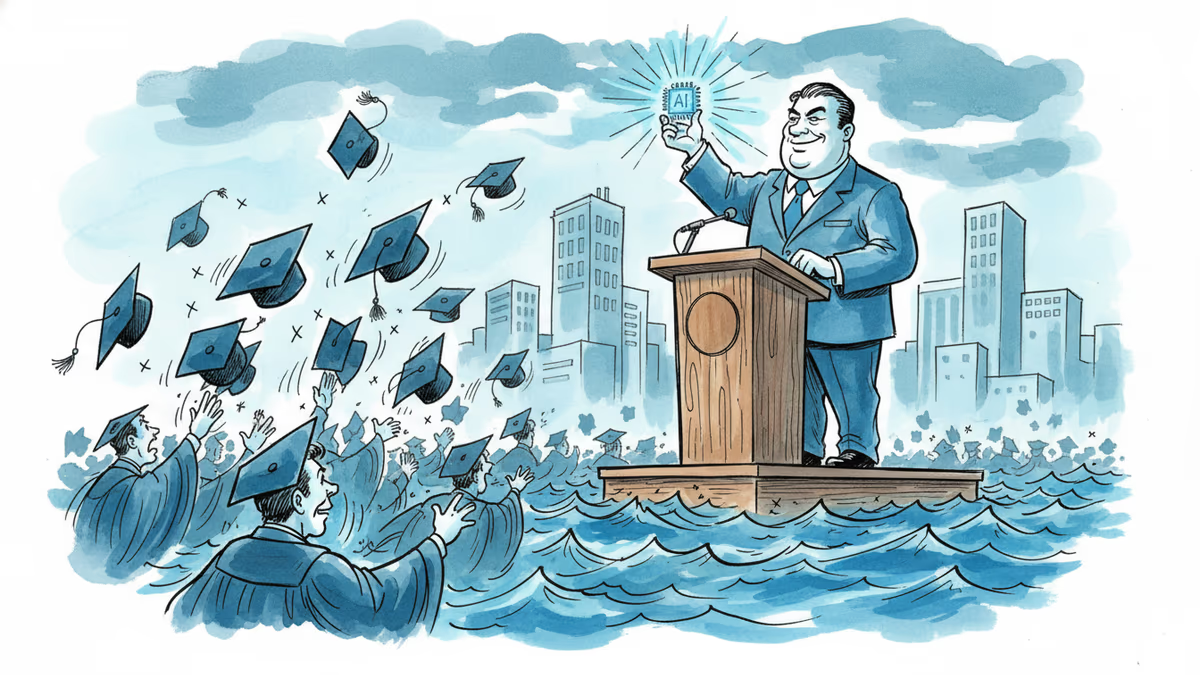
Viral videos show 2026 graduates jeering executives who praise AI at commencement ceremonies. It's not just rudeness — it's a signal about who pays for technological optimism.
Anthropic shipped Claude Sonnet 5, its mid-tier agent model, on June 30. Behind the 'Opus-class power, budget price' headline sits a tokenizer catch and a three-horse race that's only half real. Here's what developers should actually run the numbers on.
Samsung and SK unveiled a chip and AI investment package worth thousands of trillions of won on June 29. The headline number swings wildly by outlet, but the real contest isn't capital — it's water and power.
A small but growing group of developers has gone all-in on AI coding agents like Claude Code and OpenClaw. History suggests the rest of us won't be far behind.
Viral videos show 2026 graduates jeering executives who praise AI at commencement ceremonies. It's not just rudeness — it's a signal about who pays for technological optimism.
Thoughts
Share your thoughts on this article
Sign in to join the conversation