
When AI Cupid Gets It Wrong: The Algorithmic Dating Dilemma
A 15-year-old matchmaking service launches an AI-powered dating app promising deeper connections, but real-world testing reveals the limitations of algorithmic romance
What if an AI trained by 15 years of professional matchmaking expertise could find your perfect match? Three Day Rule, a new dating app launched in 2025, promised exactly that. But after two months of testing, the reality proved far different. Out of 16 AI-curated matches, not a single person felt like someone I'd actually want to meet.
The Digitization of Romance
Three Day Rule operated as a white-glove matchmaking service for affluent clients before entering the app space, charging upward of $10,000 for personalized service. The app version, at $25 monthly for premium features, democratizes access to what was once exclusive territory.
The approach differs radically from swipe-based apps. Instead of Tinder's photo-first model, AI matchmaker "Tai" conducts extensive interviews through 100+ questions spanning lifestyle, values, relationship goals, and even political preferences. The AI, trained by 60 professional matchmakers, analyzes voice tone and speech patterns to detect inconsistencies—a digital lie detector for dating.
CEO Adam Cohen-Aslatei, who previously consulted for Bumble and Raya, emphasizes creating "connections beyond hair color and taco preferences." The promise is compelling: algorithmic precision meeting human intuition to deliver matches that traditional apps miss.
The Uncanny Valley of AI Romance
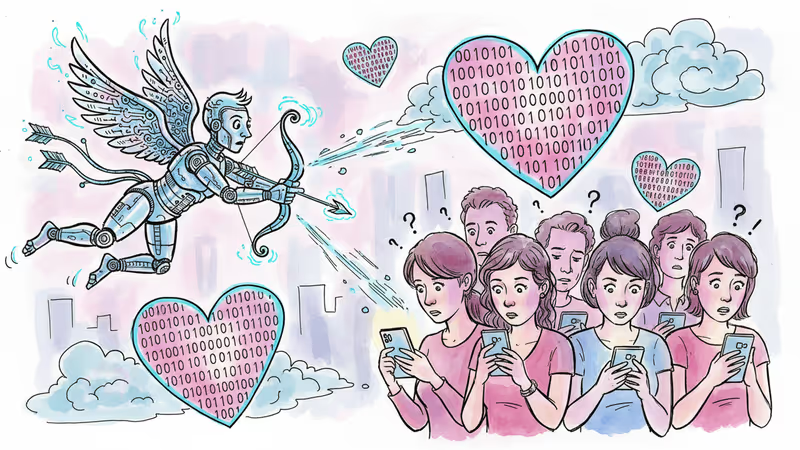
Yet the execution revealed troubling patterns. Match after match began conversations with eerily similar AI-generated openers: "Hey Molly! I noticed you enjoy live music too; what's the best concert you've seen recently?" The conversations felt scripted, lacking the organic unpredictability that makes human interaction engaging.

More concerning was the matching accuracy itself. Despite specifying ages 26-40, my first two matches were 23 and 47—one too young to remember 9/11, the other already graduated from college when it happened. The AI repeatedly matched me with people whose fundamental values contradicted my clearly stated preferences: meat-loving gun enthusiasts paired with a vegan pacifist.
The AI coaching feature, while well-intentioned, created an additional layer of artificiality. The system provides conversation starters, response suggestions, and relationship advice based on match profiles. But this raises a fundamental question: if AI handles the conversation, are you really getting to know your potential partner, or just their algorithmic representation?
The Broader Implications for Digital Dating
These issues extend beyond one app's growing pains. As AI increasingly mediates human relationships, we're witnessing the emergence of what might be called "algorithmic dating culture"—where efficiency trumps serendipity, and data patterns override human intuition.
The limited user pool of 250,000 members compounds the problem. Unlike established platforms with millions of users, Three Day Rule's smaller database restricts matching possibilities, often pairing users with geographically distant or fundamentally incompatible partners.
This reflects a broader tension in AI applications: the promise of personalization versus the reality of pattern recognition. Current AI excels at identifying statistical correlations but struggles with the ineffable qualities that create genuine attraction—chemistry, humor timing, the spark of unexpected connection.
The Human Element in an AI World
The experience raises questions about what we lose when algorithms optimize for compatibility. Traditional matchmakers succeed not just through data analysis but through intuition, cultural understanding, and the ability to see potential in unlikely pairings. Can AI replicate this nuanced judgment?
Moreover, the app's reliance on AI-generated conversation starters creates a homogenized dating experience. When everyone receives similar prompts and suggested responses, authentic personality expression becomes increasingly difficult. The result is a dating environment where genuine human quirks—the very traits that often create lasting attraction—are smoothed away by algorithmic efficiency.
Authors
Related Articles

Samsung and SK unveiled a chip and AI investment package worth thousands of trillions of won on June 29. The headline number swings wildly by outlet, but the real contest isn't capital — it's water and power.
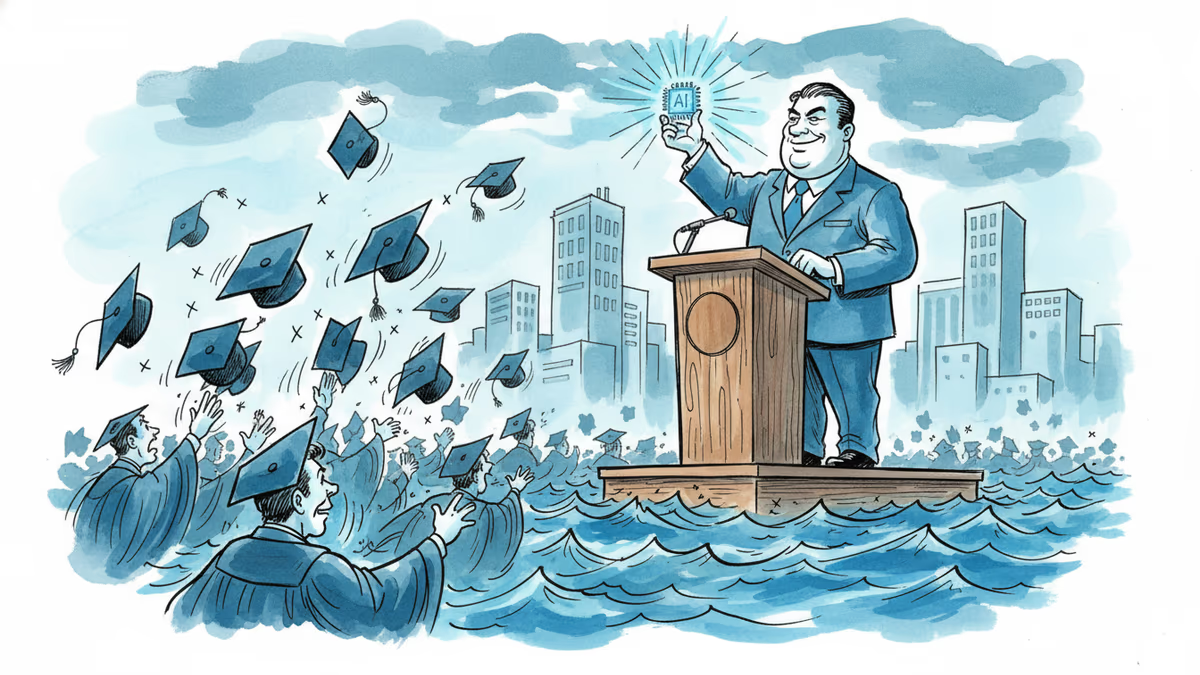
Viral videos show 2026 graduates jeering executives who praise AI at commencement ceremonies. It's not just rudeness — it's a signal about who pays for technological optimism.
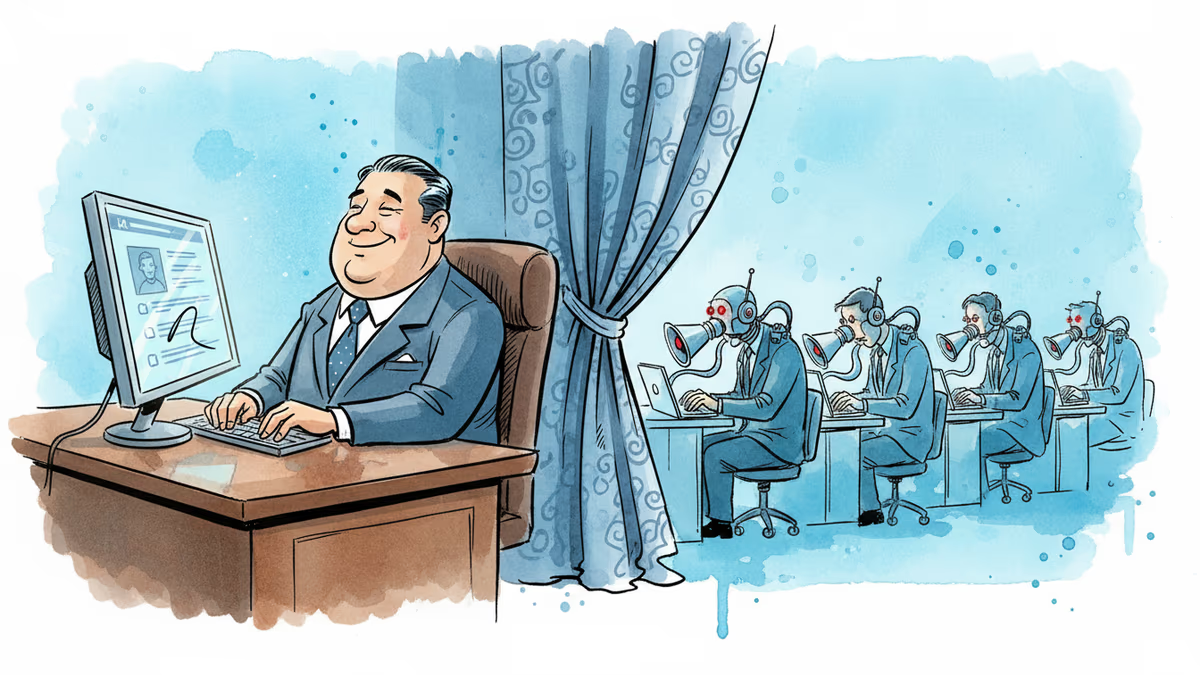
Filipino virtual assistants using AI to ghost-manage LinkedIn profiles for executives is now a structured industry. 30 comments a day, fake engagement rings, and a platform struggling to tell real from fabricated.
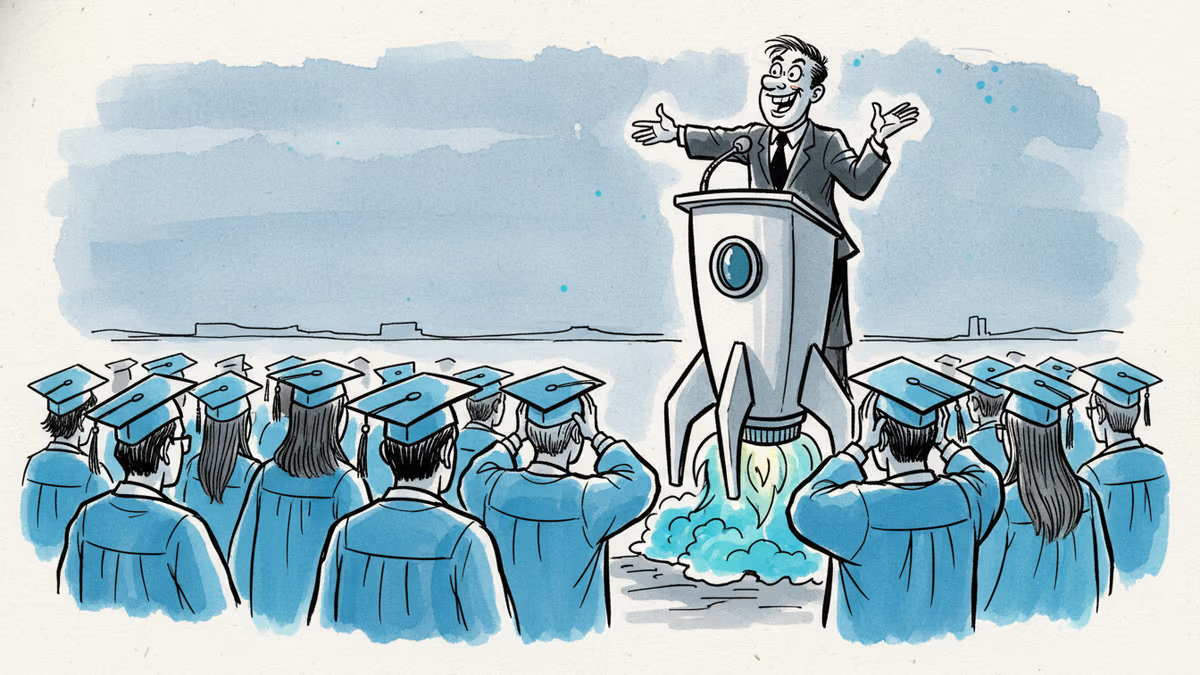
Two commencement speakers learned the hard way that AI enthusiasm doesn't land well with today's graduates. The backlash reveals a widening gap between tech optimism and Gen Z's economic reality.
Samsung and SK unveiled a chip and AI investment package worth thousands of trillions of won on June 29. The headline number swings wildly by outlet, but the real contest isn't capital — it's water and power.
Viral videos show 2026 graduates jeering executives who praise AI at commencement ceremonies. It's not just rudeness — it's a signal about who pays for technological optimism.
Filipino virtual assistants using AI to ghost-manage LinkedIn profiles for executives is now a structured industry. 30 comments a day, fake engagement rings, and a platform struggling to tell real from fabricated.
Two commencement speakers learned the hard way that AI enthusiasm doesn't land well with today's graduates. The backlash reveals a widening gap between tech optimism and Gen Z's economic reality.
Thoughts
Share your thoughts on this article
Sign in to join the conversation