
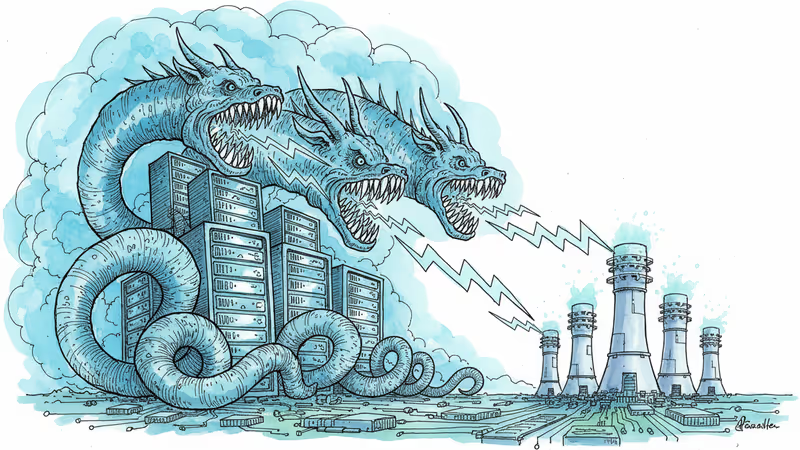
Why AI Companies Are Betting Big on Nuclear Power
Tech giants are pouring billions into next-generation nuclear reactors to power their energy-hungry AI data centers. But can small modular reactors deliver on their promises?
Generating a single ChatGPT response consumes 10 times more electricity than a Google search. As AI becomes ubiquitous, the power grid is feeling the strain.
The Insatiable Energy Appetite of AI
Training OpenAI'sGPT-4 required 25,000 high-performance GPUs running for months. Google'sGemini demanded even more computational resources. The problem? These models keep getting bigger, and more companies are joining the AI arms race.
Unlike traditional data centers that operate at 30-50% capacity on average, hyperscale AI facilities run at 80-90% around the clock. There's no downtime when you're processing millions of queries every minute.
Microsoft reported a 29% increase in carbon emissions in 2023 due to AI investments. Google's emissions jumped 48% since 2019 as it expanded AI services. The tech industry's climate commitments are colliding with AI's voracious energy demands.
Why Next-Gen Nuclear Makes Sense
Renewable energy has limitations. Solar and wind are weather-dependent, but AI needs 24/7 reliable power. Battery storage technology isn't ready to support massive data centers for extended periods.
Enter small modular reactors (SMRs). These next-generation nuclear plants promise half the construction cost and 3-5 year build times compared to traditional reactors. Most importantly, they provide carbon-free baseload power that never fluctuates.
Amazon invested $500 million in SMR developer X-energy in 2024. Microsoft signed a 20-year power purchase agreement with the Three Mile Island plant, set to restart in 2028. Even Google is exploring nuclear partnerships for its AI infrastructure.

The Regulatory Reality Check
But there's a catch: SMRs are still largely theoretical. The first commercial SMR isn't expected to come online until the early 2030s. What happens to AI development in the meantime?
The Nuclear Regulatory Commission is streamlining SMR approval processes, but safety reviews take years. European regulators are even more cautious. Meanwhile, AI companies can't wait—they need power now.
Some are turning to controversial solutions. Microsoft is reviving the shuttered Three Mile Island reactor. Amazon is buying nuclear-powered data centers directly. Others are simply building near existing nuclear plants, regardless of public opinion.
The Investment vs. Reality Gap
Venture capital is flooding into nuclear startups. Commonwealth Fusion Systems raised $1.8 billion for fusion reactors. TerraPower, backed by Bill Gates, secured $830 million for advanced reactor designs. But commercial deployment remains years away.
Meanwhile, AI companies are making massive infrastructure bets today. OpenAI is reportedly seeking $7 trillion for chip manufacturing. Meta plans to spend $65 billion on AI infrastructure in 2025 alone. The timeline mismatch is creating a potential energy crisis.
Utility companies are scrambling to meet demand. Some are extending the life of aging coal plants—hardly the clean energy future anyone envisioned. Others are fast-tracking natural gas facilities, undermining climate goals.
The Geopolitical Dimension
China is building nuclear reactors faster than any other country, completing new plants every 6-8 months. If Western AI companies can't secure reliable clean energy, will they lose the AI race to countries with more aggressive nuclear programs?
The stakes extend beyond corporate profits. AI capabilities increasingly determine national security and economic competitiveness. Energy constraints could reshape the global AI landscape in unexpected ways.
Authors
Related Articles

Samsung and SK unveiled a chip and AI investment package worth thousands of trillions of won on June 29. The headline number swings wildly by outlet, but the real contest isn't capital — it's water and power.
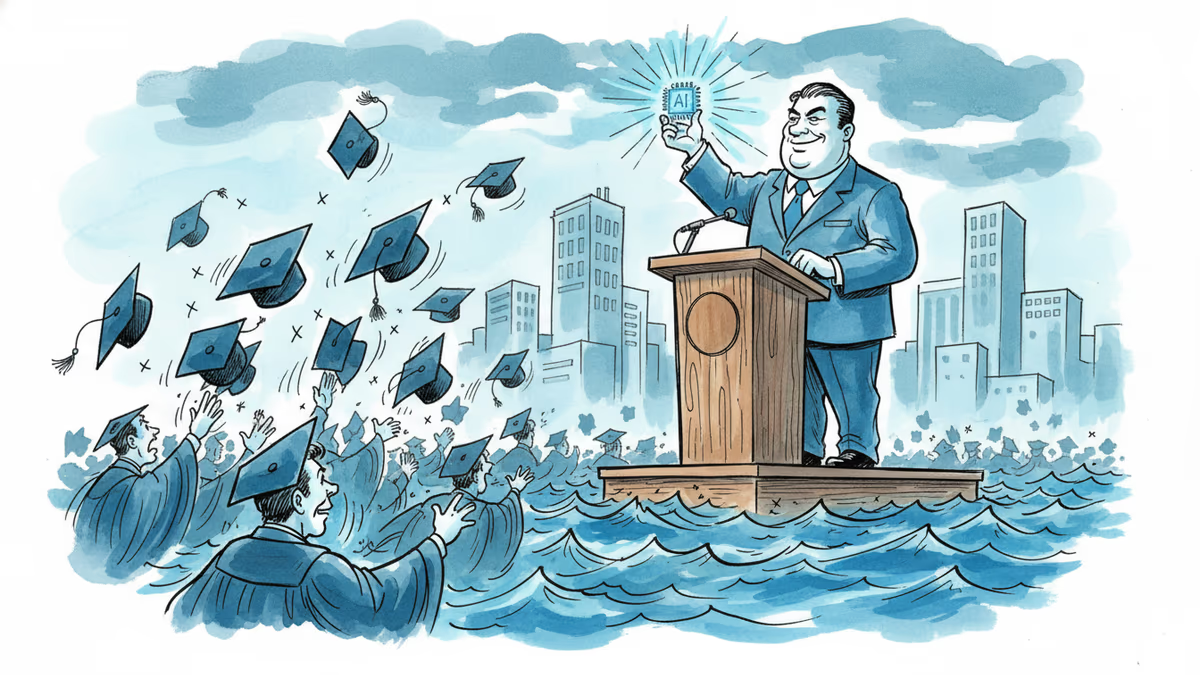
Viral videos show 2026 graduates jeering executives who praise AI at commencement ceremonies. It's not just rudeness — it's a signal about who pays for technological optimism.

Filipino virtual assistants using AI to ghost-manage LinkedIn profiles for executives is now a structured industry. 30 comments a day, fake engagement rings, and a platform struggling to tell real from fabricated.
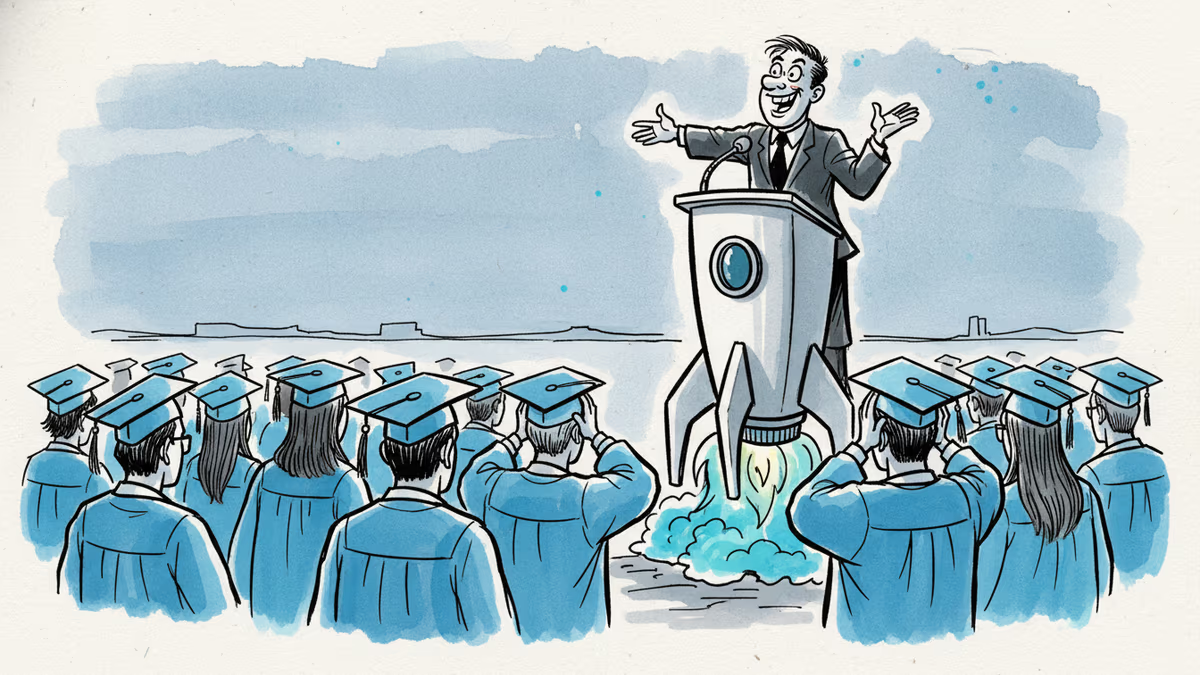
Two commencement speakers learned the hard way that AI enthusiasm doesn't land well with today's graduates. The backlash reveals a widening gap between tech optimism and Gen Z's economic reality.
Samsung and SK unveiled a chip and AI investment package worth thousands of trillions of won on June 29. The headline number swings wildly by outlet, but the real contest isn't capital — it's water and power.
Viral videos show 2026 graduates jeering executives who praise AI at commencement ceremonies. It's not just rudeness — it's a signal about who pays for technological optimism.
Filipino virtual assistants using AI to ghost-manage LinkedIn profiles for executives is now a structured industry. 30 comments a day, fake engagement rings, and a platform struggling to tell real from fabricated.
Two commencement speakers learned the hard way that AI enthusiasm doesn't land well with today's graduates. The backlash reveals a widening gap between tech optimism and Gen Z's economic reality.
Thoughts
Share your thoughts on this article
Sign in to join the conversation