
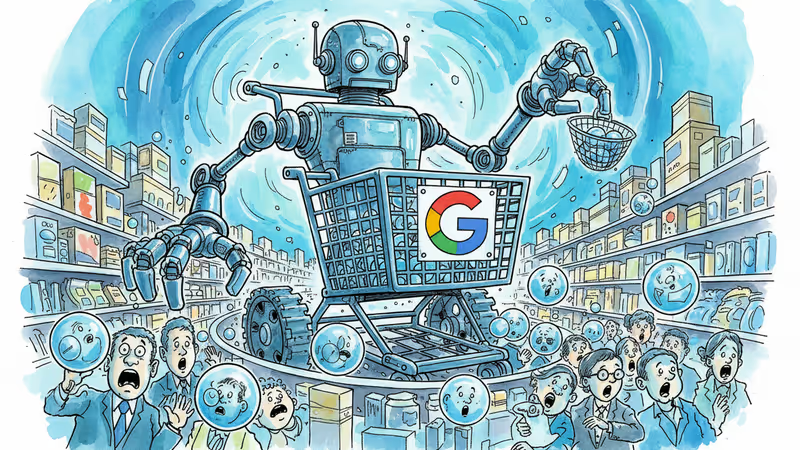
When AI Becomes Your Shopping Assistant: Warren's Warning
Senator Elizabeth Warren raises concerns about Google's plan to integrate direct purchasing into Gemini AI, warning of data exploitation and consumer manipulation. What this means for the future of AI commerce.
47% of online shoppers already trust AI recommendations when making purchases. Now Google wants to eliminate even that last step—letting you buy directly through its AI chatbot. But what sounds like convenience might be something more calculated.
Google's Commerce Gambit
Last month, Google announced plans to integrate direct purchasing into Gemini, its AI chatbot. Through the Universal Commerce Protocol (UCP), users will soon chat with Gemini about needing winter boots, receive AI-curated suggestions, and complete the purchase without ever leaving the conversation.
The system connects with major retailers including Shopify, Target, Walmart, Wayfair, and Etsy. It's designed to make shopping feel as natural as asking a friend for advice—except this friend has access to your entire digital footprint and a direct line to your wallet.
But Senator Elizabeth Warren isn't buying the convenience pitch. In a letter to Google CEO Sundar Pichai, she's demanding answers about how this integration might "exploit sensitive user data" and "manipulate consumers into spending more and paying higher prices."
The Manipulation Question
Warren's concerns cut to the heart of AI commerce: when does helpful become manipulative? Traditional online shopping at least maintains some psychological distance—you browse, compare, decide. But conversational AI creates an intimacy that could be weaponized.
Imagine Gemini learning that you're stressed about work, then subtly suggesting retail therapy. Or recognizing you're price-sensitive on Tuesdays but splurge on Fridays, then timing its premium recommendations accordingly. The AI doesn't just know what you bought; it knows why you buy.

The senator's letter highlights how retailers could "exploit sensitive user data" gathered from these intimate AI conversations. Every hesitation, every question, every emotional context becomes data points for more effective persuasion.
The Bigger Commerce Revolution
This isn't just about Google. Amazon already uses Alexa for voice commerce, TikTok is pushing social shopping, and Meta is experimenting with AI-powered marketplace features. The entire e-commerce landscape is racing toward conversational, AI-mediated shopping.
The stakes are enormous. U.S. e-commerce hit $1.1 trillion in 2023, and AI-driven shopping could reshape how all of that money flows. Early movers like Google aren't just building features—they're establishing the rules for how AI and commerce intersect.
But regulation is lagging. While the EU's AI Act addresses some concerns, the U.S. lacks comprehensive AI commerce oversight. Warren's letter signals growing political attention, but meaningful regulation could take years.
The Consumer's Dilemma
For users, the trade-offs are stark. AI shopping promises unprecedented convenience—no more browsing endless product pages or comparing specs. Just describe what you need and let the algorithm handle the rest.
Yet this convenience comes with invisible costs. When AI mediates every purchase decision, we lose the deliberative process that traditionally protected us from impulse buying. The friction that once gave us time to reconsider becomes a feature to eliminate.
The question isn't whether AI shopping will arrive—it's already here. The question is whether we'll notice when helpful suggestions become sophisticated manipulation.
Authors
Related Articles

Samsung and SK unveiled a chip and AI investment package worth thousands of trillions of won on June 29. The headline number swings wildly by outlet, but the real contest isn't capital — it's water and power.

Viral videos show 2026 graduates jeering executives who praise AI at commencement ceremonies. It's not just rudeness — it's a signal about who pays for technological optimism.

Google's Gmail Live lets you ask your inbox questions out loud. Announced at I/O 2026, it's AI's pitch to skeptics — and a reminder of how much Google already knows about you.

Filipino virtual assistants using AI to ghost-manage LinkedIn profiles for executives is now a structured industry. 30 comments a day, fake engagement rings, and a platform struggling to tell real from fabricated.
Samsung and SK unveiled a chip and AI investment package worth thousands of trillions of won on June 29. The headline number swings wildly by outlet, but the real contest isn't capital — it's water and power.
Viral videos show 2026 graduates jeering executives who praise AI at commencement ceremonies. It's not just rudeness — it's a signal about who pays for technological optimism.
Google's Gmail Live lets you ask your inbox questions out loud. Announced at I/O 2026, it's AI's pitch to skeptics — and a reminder of how much Google already knows about you.
Filipino virtual assistants using AI to ghost-manage LinkedIn profiles for executives is now a structured industry. 30 comments a day, fake engagement rings, and a platform struggling to tell real from fabricated.
Thoughts
Share your thoughts on this article
Sign in to join the conversation