
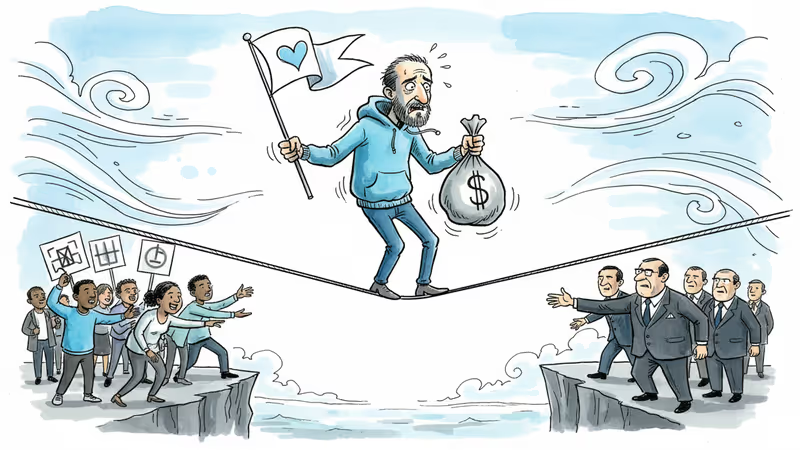
When AI CEOs Walk a Tightrope Between Conscience and Commerce
Anthropic and OpenAI leaders speak out against immigration enforcement while praising Trump—revealing the complex dance between tech values and business interests
Two of AI's most powerful CEOs just performed a delicate balancing act that reveals everything about Silicon Valley's current predicament. Dario Amodei of Anthropic and Sam Altman of OpenAI both criticized recent immigration enforcement actions—but not without carefully cushioning their words with praise for the very administration behind those policies.
The moment came after Border Patrol agents killed two U.S. citizens in Minneapolis, sparking outrage across the tech industry. Amodei went public on NBC News, expressing concern over "some of the things we've seen in the last few days" and emphasizing the need to "defend our own democratic values at home." Altman took a more cautious route, telling OpenAI employees in an internal message that "what's happening with ICE is going too far."
But here's where it gets interesting: both CEOs immediately followed their criticism with effusive praise for President Trump. Altman called him "a very strong leader" who could "rise to this moment and unite the country." Amodei applauded Trump's consideration of allowing an independent investigation into the shootings.
The Price of Speaking Up
This careful choreography isn't happening in a vacuum. Both companies are riding an unprecedented wave of growth under Trump's AI-friendly policies. OpenAI has raised at least $40 billion and is reportedly seeking another $100 billion at an $830 billion valuation. Anthropic has secured $19 billion and is in talks for another $25 billion at a $350 billion valuation.
The stakes couldn't be higher. These aren't just businesses—they're the architects of humanity's AI future, with government contracts, regulatory relationships, and investor expectations all hanging in the balance.
For Altman, this measured response represents a dramatic shift from his 2016 stance, when he called Trump "irresponsible in the way dictators are" and compared him to Germany's 1930s leadership. He ended that blog post with Edmund Burke's famous warning: "The only thing necessary for the triumph of evil is for good men to do nothing."

The Employee Uprising
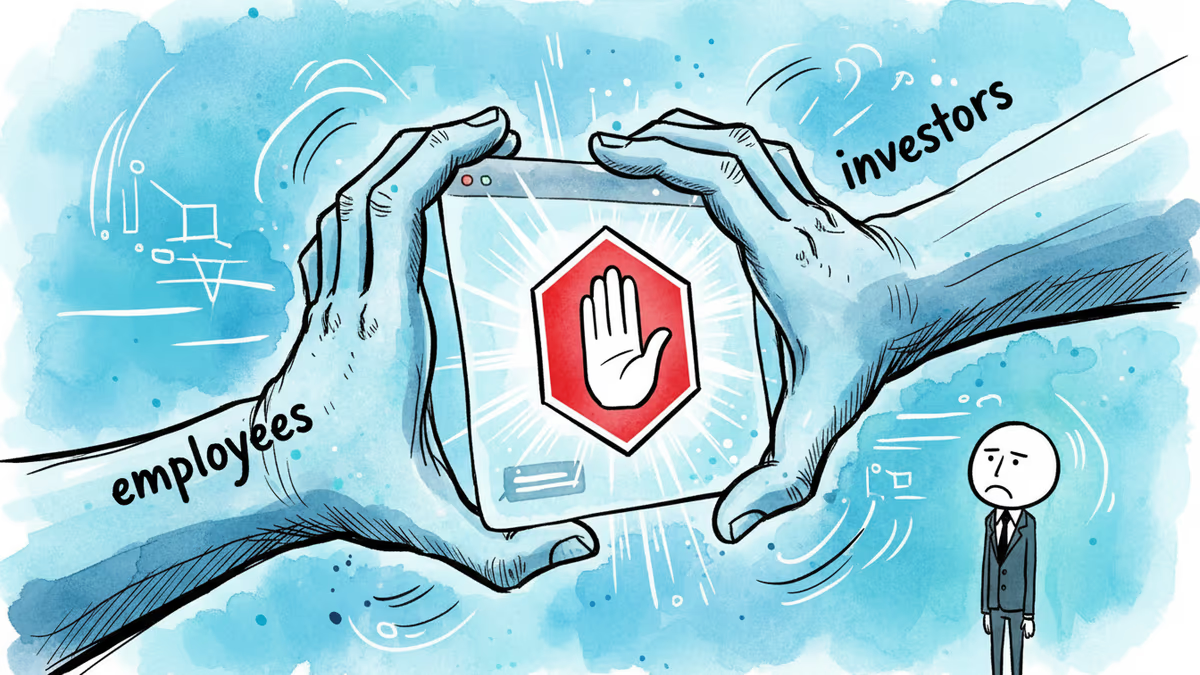
While CEOs navigate diplomatic waters, their employees are demanding clearer action. The ICEout.tech movement has organized tech workers across multiple companies, calling for contract cancellations with immigration enforcement agencies and public condemnation of violent tactics.
"We're glad to hear the CEOs of OpenAI and Anthropic condemning the ICE murders," the anonymous organizers told TechCrunch. "Now we need to hear from CEOs of Apple, Google, Microsoft and Meta, all of whom have remained silent despite calls all across the industry."
The pressure is mounting from within. These aren't just any employees—they're the engineers and researchers building the technologies that could reshape surveillance, data analysis, and enforcement capabilities. Their moral stance carries weight precisely because their work has implications far beyond corporate profits.
The Authenticity Question
Critics aren't buying the diplomatic approach. J.J. Colao, founder of Haymaker Group and a signatory on the ICEout.tech letter, accused Altman of trying to "have it both ways" by criticizing ICE while calling Trump a strong leader "as if the president bears no responsibility for ICE's actions."
This tension reveals a deeper question about corporate leadership in polarized times. Can you meaningfully oppose specific policies while praising the leader who implements them? Or does such nuance simply provide cover for prioritizing business interests over stated values?
The tech industry has long prided itself on being a force for positive change, with leaders who aren't afraid to take moral stands. But as AI companies become more valuable and more strategically important, that idealism increasingly collides with practical realities.
Authors
Related Articles
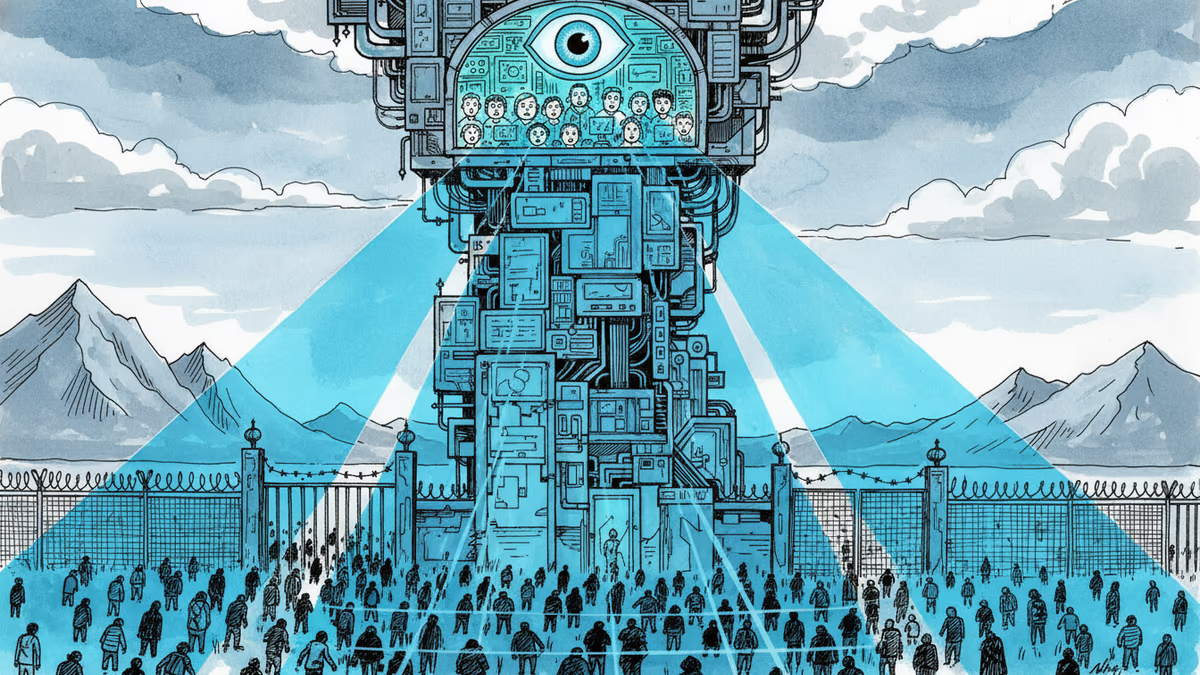
Palantir has become the tech backbone of Trump's immigration enforcement. Former employees are calling it a 'descent into fascism.' What happens when the people who build surveillance tools start asking uncomfortable questions?
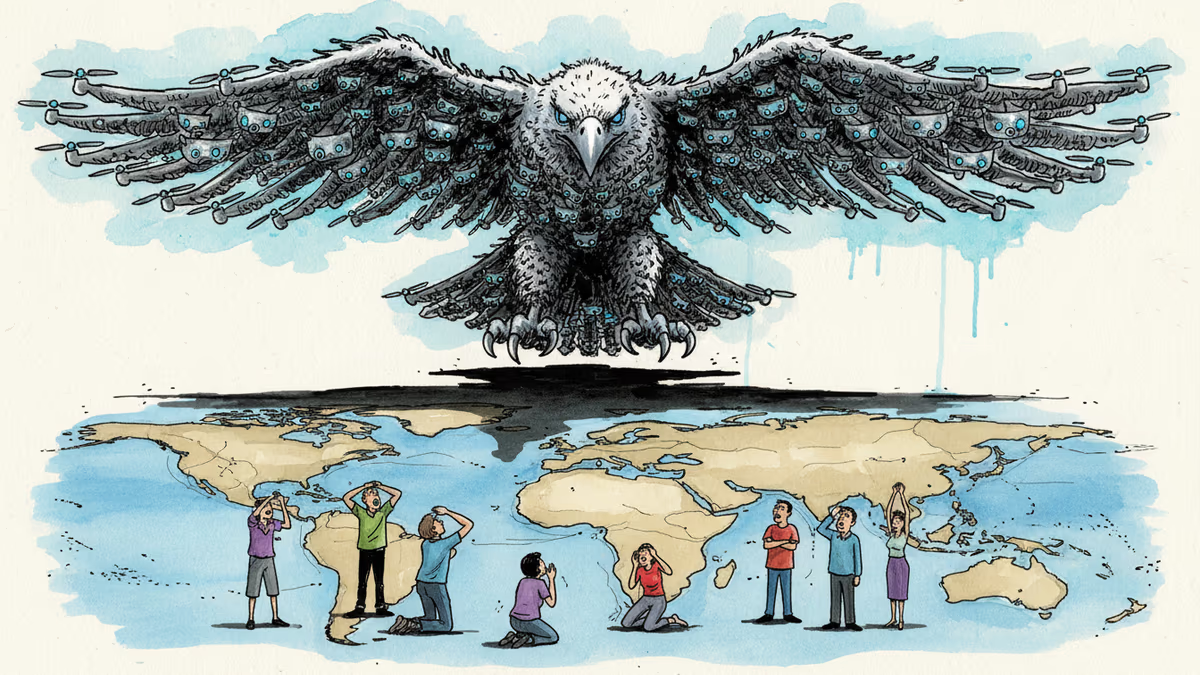
The US defense budget request for FY2027 includes $53.6 billion for drone and autonomous warfare—more than most nations spend on their entire military. What does this mean for global security and the future of war?
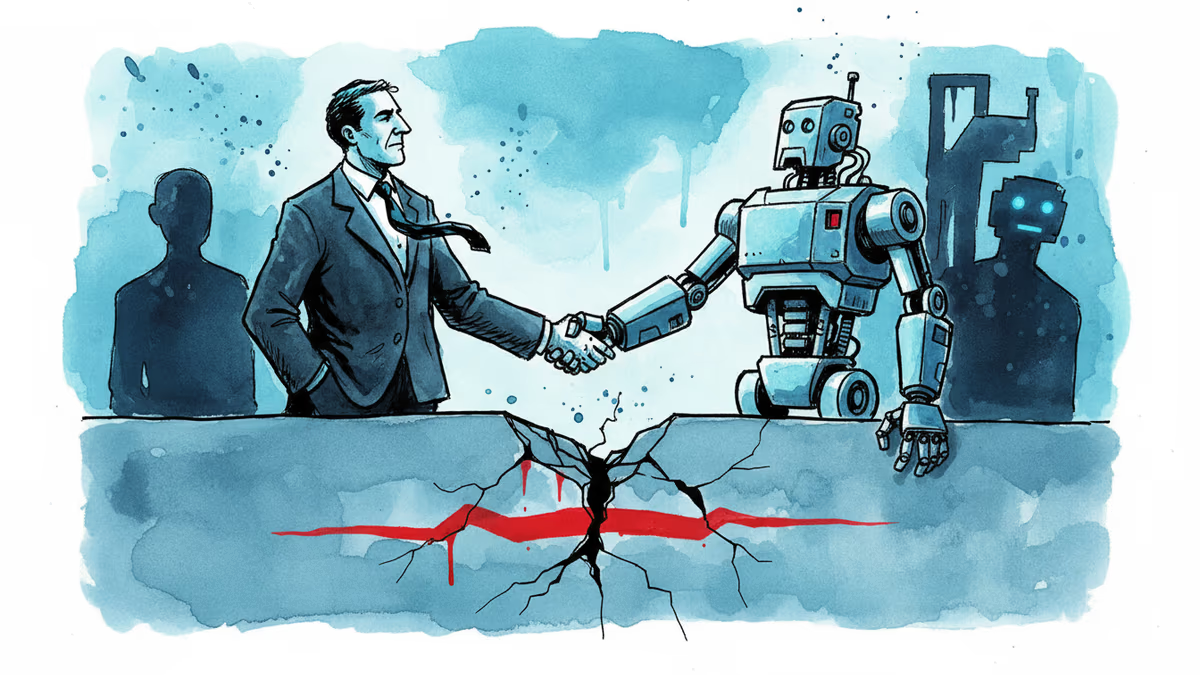
After two months of bitter conflict, Anthropic and the Trump administration may be thawing—thanks to a new cybersecurity AI model. What does it mean when principle meets political pressure?
OpenAI has shelved its erotic ChatGPT feature indefinitely. The real story isn't about adult content—it's about who gets to decide what AI will and won't do.
Palantir has become the tech backbone of Trump's immigration enforcement. Former employees are calling it a 'descent into fascism.' What happens when the people who build surveillance tools start asking uncomfortable questions?
The US defense budget request for FY2027 includes $53.6 billion for drone and autonomous warfare—more than most nations spend on their entire military. What does this mean for global security and the future of war?
After two months of bitter conflict, Anthropic and the Trump administration may be thawing—thanks to a new cybersecurity AI model. What does it mean when principle meets political pressure?
OpenAI has shelved its erotic ChatGPT feature indefinitely. The real story isn't about adult content—it's about who gets to decide what AI will and won't do.
Thoughts
Share your thoughts on this article
Sign in to join the conversation