

OpenAI ChatGPT Ads Face Political Scrutiny Over Privacy Concerns
Senator Ed Markey is investigating OpenAI's plan to bring ads to ChatGPT, citing privacy and safety concerns. Discover how the AI industry is pivoting toward an ad-based model.
Is your AI chat about to become a digital billboard? OpenAI's plan to integrate ads into ChatGPT is triggering alarms in Washington D.C., as lawmakers raise questions about the safety and privacy of millions of users.
OpenAI ChatGPT Ads and Senator Markey’s Inquiry
According to reports from The Verge, Senator Ed Markey (D-MA) is pressing OpenAI for details on its move to bring ads to its viral chatbot. He didn't stop there; letters were also sent to the CEOs of Google, Meta, Microsoft, Anthropic, Snap, and xAI. Markey argues that embedding ads into AI-driven conversations raises "significant concerns for consumer protection, privacy, and the safety of young users."

OpenAI plans to start testing ads for free users in the coming weeks. These ads will appear as "sponsored" content at the bottom of the chat interface. While the company says it'll show ads relevant to the context of the conversation, it hasn't fully cleared the air on how it'll protect sensitive user data.
The Risk to User Privacy and Young Audiences
The core of the controversy lies in the intrusive nature of AI-targeted ads. Unlike traditional search engines, LLMs handle more personal and nuanced queries. Critics fear that 7 major tech giants could prioritize ad revenue over the ethical handling of conversational data, creating new vulnerabilities for minors who rely on these tools for education and social interaction.
Authors
Related Articles

Palantir has become the tech backbone of Trump's immigration enforcement. Former employees are calling it a 'descent into fascism.' What happens when the people who build surveillance tools start asking uncomfortable questions?
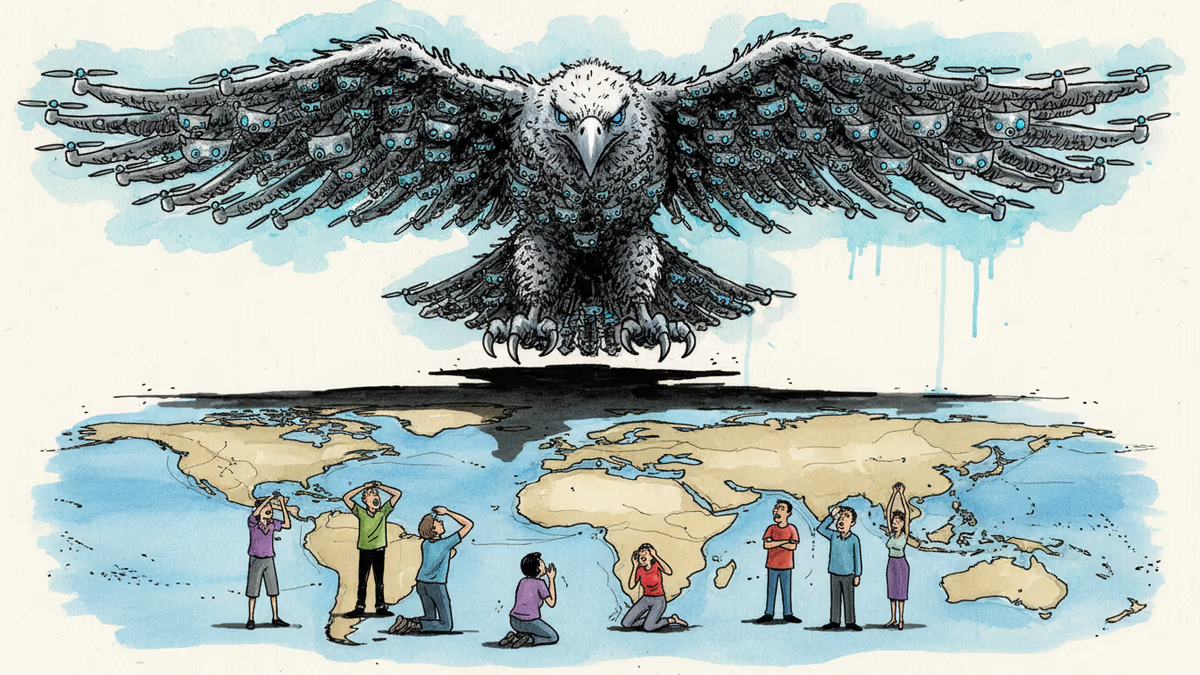
The US defense budget request for FY2027 includes $53.6 billion for drone and autonomous warfare—more than most nations spend on their entire military. What does this mean for global security and the future of war?

After two months of bitter conflict, Anthropic and the Trump administration may be thawing—thanks to a new cybersecurity AI model. What does it mean when principle meets political pressure?
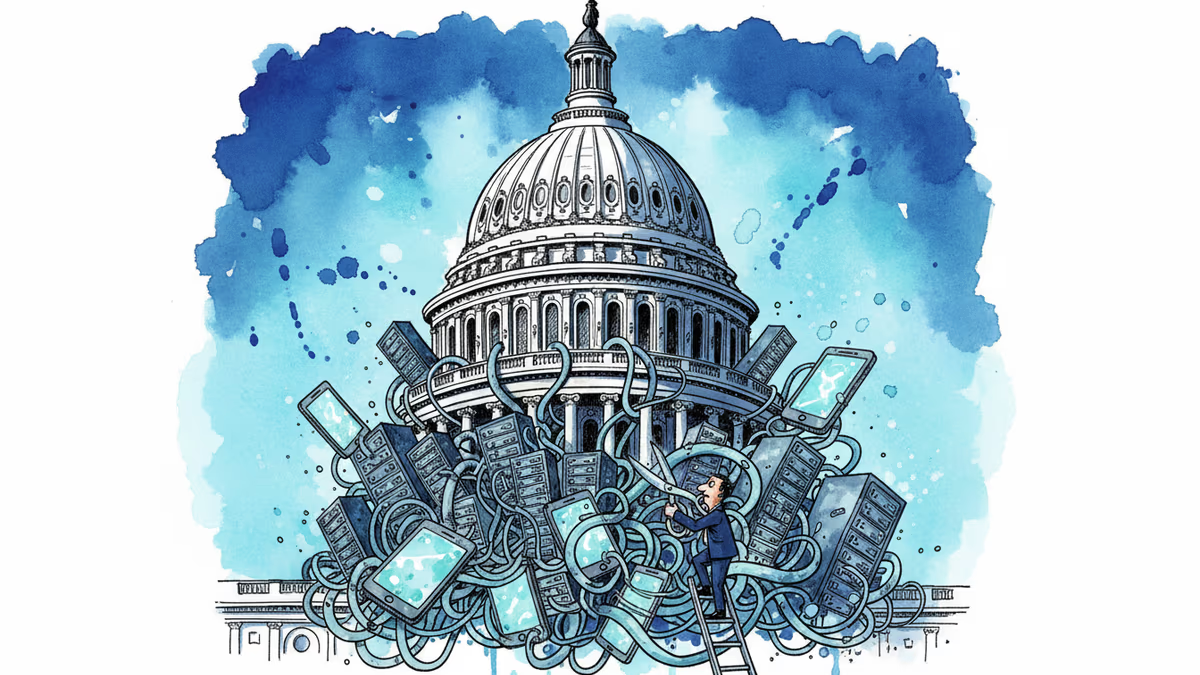
As Washington D.C. enters another political spring, the battle over Big Tech regulation is heating up — and the stakes extend far beyond Silicon Valley.
Palantir has become the tech backbone of Trump's immigration enforcement. Former employees are calling it a 'descent into fascism.' What happens when the people who build surveillance tools start asking uncomfortable questions?
The US defense budget request for FY2027 includes $53.6 billion for drone and autonomous warfare—more than most nations spend on their entire military. What does this mean for global security and the future of war?
After two months of bitter conflict, Anthropic and the Trump administration may be thawing—thanks to a new cybersecurity AI model. What does it mean when principle meets political pressure?
As Washington D.C. enters another political spring, the battle over Big Tech regulation is heating up — and the stakes extend far beyond Silicon Valley.
Thoughts
Share your thoughts on this article
Sign in to join the conversation