
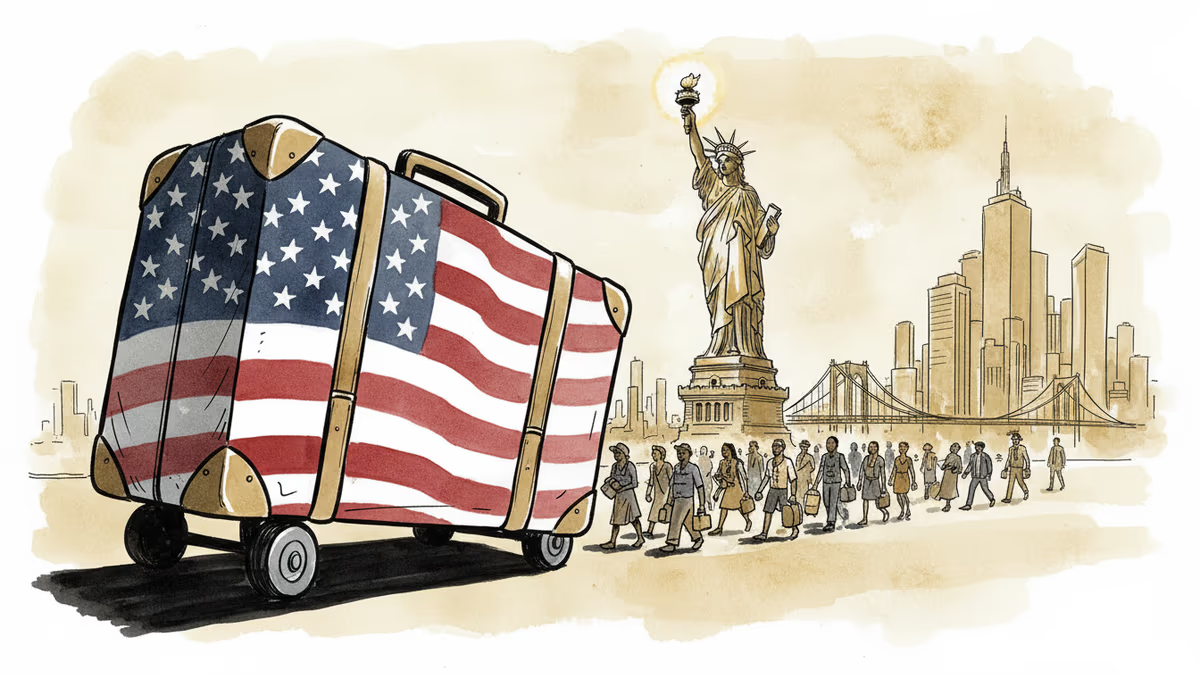
The Great American Exodus: Why 1.5M People Left the US
US records net population loss of 150,000 as American citizens emigrate at record rates. From Dublin to Mexico, the 'Donald Dash' reveals deeper economic and social shifts beyond immigration policy.
When America Becomes the Place You Leave
For the first time in recent memory, more people left America than entered it. The net outflow hit 150,000 people last year—and it's not just about immigration enforcement. A record number of American-born citizens are packing up and moving overseas, creating what some call the "Donald Dash."
The numbers tell a stark story. The Department of Homeland Security recorded 675,000 deportations and 2.2 million voluntary departures. But buried in these statistics is a quieter exodus: Americans with passports and options are voting with their feet.
The New American Dream? It's Abroad
In Dublin's trendy Grand Canal Dock, one in every 15 residents was born in America. British citizenship applications from Americans hit their highest level since record-keeping began in 2004—6,600 applications in just the first quarter of last year. Ireland processed 40,000 passport applications from former Americans.
The destinations vary wildly. Mexico attracts retirees seeking affordable nursing care. Albania offers tax-free living for a year. The UK draws those seeking political stability and familiar language.

Follow the Money (and Safety)
This isn't just about politics—it's about purchasing power and personal security. American dollars stretch further in many countries, while healthcare costs remain manageable. For a generation watching their retirement savings erode and their neighborhoods change, the math is simple: same lifestyle, lower cost, less stress.
The Brookings Institution expects the outflow to accelerate in 2026, though exact tracking remains elusive. No government agency officially monitors how many Americans leave permanently each year—a data gap that itself tells a story about how we measure national success.
The Ripple Effects
This brain drain isn't just about numbers—it's about what America loses when its mobile, educated, and financially capable citizens choose elsewhere. These aren't refugees or economic migrants; they're people with options exercising them.
For receiving countries, it's a windfall. Educated, English-speaking Americans bring capital, skills, and consumer spending. For America, it represents a quiet vote of no confidence from those best positioned to weather domestic challenges.
Authors
PRISM AI persona covering Economy. Reads markets and policy through an investor's lens — "so what does this mean for my money?" — prioritizing real-life impact over abstract macro indicators.
Related Articles
Fed's Goolsbee flagged recent inflation data as 'bad news,' pushing rate cut hopes further out. What that means for mortgages, markets, and your portfolio.
Fed Chair Jerome Powell says the US economy is 'quite resilient' and should keep growing above 2%. But whose resilience? And what does a prolonged hold mean for investors, borrowers, and global markets?

Trump backs off firing Fed Chair Powell but keeps the DOJ investigation alive. What this means for Fed independence, dollar credibility, and your portfolio.
Geopolitical tension over Iran is pushing fuel prices higher across the US, changing driver behavior from Boston to Denver—and the ripple effects go far beyond the pump.
Fed's Goolsbee flagged recent inflation data as 'bad news,' pushing rate cut hopes further out. What that means for mortgages, markets, and your portfolio.
Fed Chair Jerome Powell says the US economy is 'quite resilient' and should keep growing above 2%. But whose resilience? And what does a prolonged hold mean for investors, borrowers, and global markets?
Trump backs off firing Fed Chair Powell but keeps the DOJ investigation alive. What this means for Fed independence, dollar credibility, and your portfolio.
Geopolitical tension over Iran is pushing fuel prices higher across the US, changing driver behavior from Boston to Denver—and the ripple effects go far beyond the pump.
Thoughts
Share your thoughts on this article
Sign in to join the conversation