
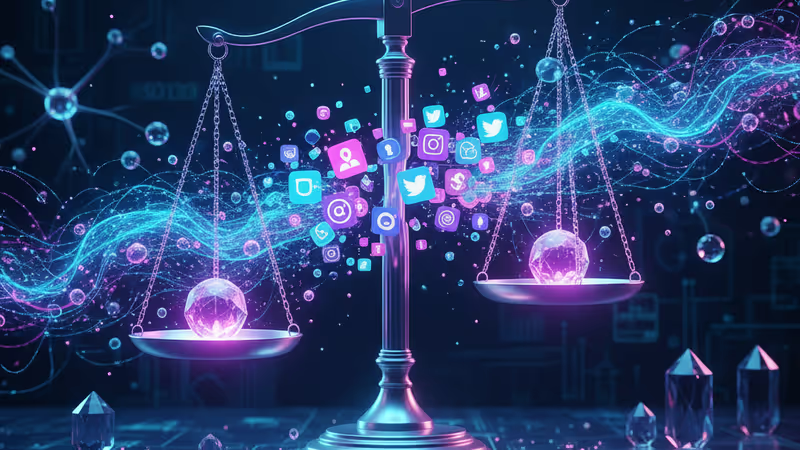
FTC Meta Monopoly Appeal 2026: The Fight to Break Up Instagram and WhatsApp
The FTC Meta Monopoly Appeal 2026 seeks to reverse a ruling clearing Meta. The appeal could force the sale of Instagram and WhatsApp to restore market competition.
The decade-long legal tug-of-war isn't over. The Federal Trade Commission (FTC) is officially appealing a November ruling that cleared Meta of monopoly allegations. This move puts the future of Instagram and WhatsApp back on the chopping block.
Analyzing the FTC Meta Monopoly Appeal 2026
In a press release issued this Tuesday, the FTC confirmed it'll continue to challenge Meta's market dominance. The regulator argues that Meta maintained an illegal monopoly by acquiring Instagram in 2012 and WhatsApp in 2014 specifically to neutralize competitive threats. They hope the US Court of Appeals for the District of Columbia will see that the trial's evidence warrants a different conclusion.

The stakes couldn't be higher. If the court sides with the FTC, Meta might face forced divestments. This would mean a total restructuring of Mark Zuckerberg's social media empire, separating its core platforms into independent entities.
A Landmark Battle for Market Competition
| Key Event | Date | Details |
|---|---|---|
| Instagram Acquisition | 2012 | Meta purchased for $1 billion |
| WhatsApp Acquisition | 2014 | Meta purchased for $19 billion |
| FTC Appeal Filed | 2026 | Challenging the dismissal of monopoly charges |
Authors
Related Articles
A law firm marketing itself on AI-powered legal success submitted fake citations in a federal appeal. Now its lawyers face sanctions — and the broader AI legal industry faces a credibility crisis.
Snap, YouTube, and TikTok settled a landmark school district lawsuit over social media addiction. With 1,000+ similar cases pending, this could reshape Big Tech's liability landscape.
Behind every congressional hearing on Big Tech, there's a quieter room where the real rules get negotiated. As AI regulation, antitrust battles, and privacy law converge on Capitol Hill in 2026, the stakes have never been higher.
Five major publishers and author Scott Turow have filed a class action lawsuit against Meta, alleging the company used illegal pirate sites like LibGen to train its Llama AI models without permission.
A law firm marketing itself on AI-powered legal success submitted fake citations in a federal appeal. Now its lawyers face sanctions — and the broader AI legal industry faces a credibility crisis.
Snap, YouTube, and TikTok settled a landmark school district lawsuit over social media addiction. With 1,000+ similar cases pending, this could reshape Big Tech's liability landscape.
Behind every congressional hearing on Big Tech, there's a quieter room where the real rules get negotiated. As AI regulation, antitrust battles, and privacy law converge on Capitol Hill in 2026, the stakes have never been higher.
Five major publishers and author Scott Turow have filed a class action lawsuit against Meta, alleging the company used illegal pirate sites like LibGen to train its Llama AI models without permission.
Thoughts
Share your thoughts on this article
Sign in to join the conversation