
YouTube AI Likeness Creator to Launch Later This Year
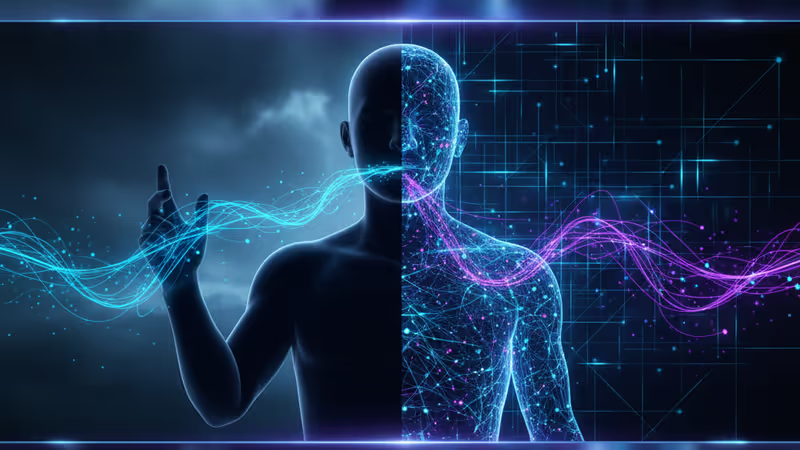
YouTube CEO Neal Mohan announced that the platform will launch a YouTube AI likeness creator feature in 2026, allowing influencers to generate Shorts using digital twins.
Your favorite YouTube star might soon be everywhere at once—without ever picking up a camera. In a major strategic shift, YouTube is preparing to let creators clone themselves using generative AI.
What to Expect from the YouTube AI Likeness Creator
According to The Verge, YouTube CEO Neal Mohan announced in his annual letter today, January 21, 2026, that creators will be able to produce Shorts using their 'own likeness' sometime this 2026 calendar year.

While specific technical details remain under wraps, YouTube spokesperson Boot Bullwinkle confirmed that the platform will share more information soon regarding the official launch date and functionality. This move represents a massive leap in YouTube's AI roadmap, which aims to integrate synthetic media directly into the creator workflow.
Scaling Human Creativity via AI
The introduction of AI likenesses is part of a broader suite of tools designed to lower the barrier for content production. By allowing creators to generate Shorts without physical filming, YouTube is effectively decoupling content creation from the creator's physical time. However, this raises critical questions about authenticity and how viewers will distinguish between real and synthetic human presence.
Authors
Related Articles
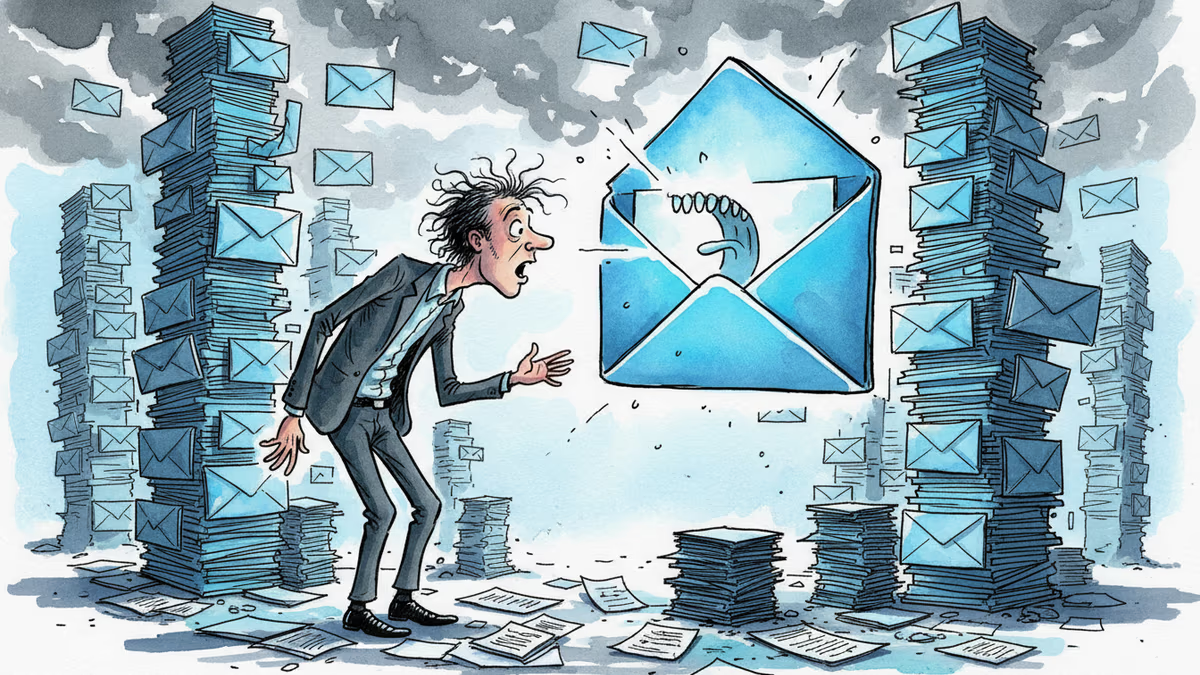
Google's Gmail Live lets you ask your inbox questions out loud. Announced at I/O 2026, it's AI's pitch to skeptics — and a reminder of how much Google already knows about you.
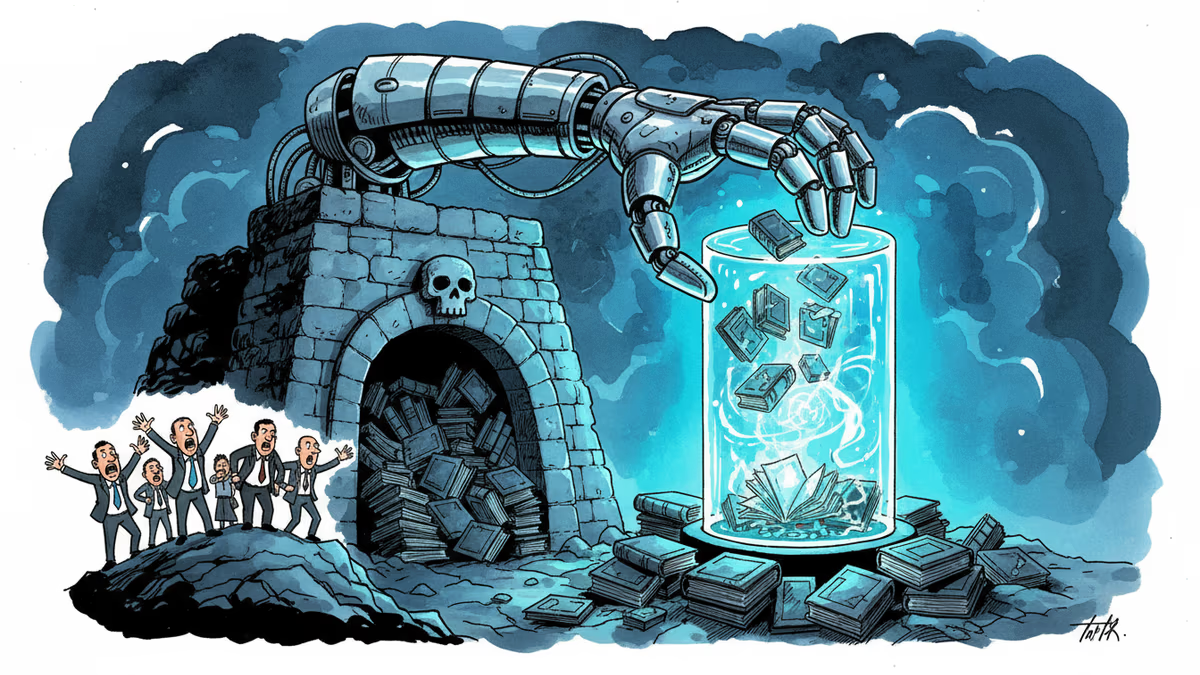
Five major publishers and author Scott Turow have filed a class action lawsuit against Meta, alleging the company used illegal pirate sites like LibGen to train its Llama AI models without permission.
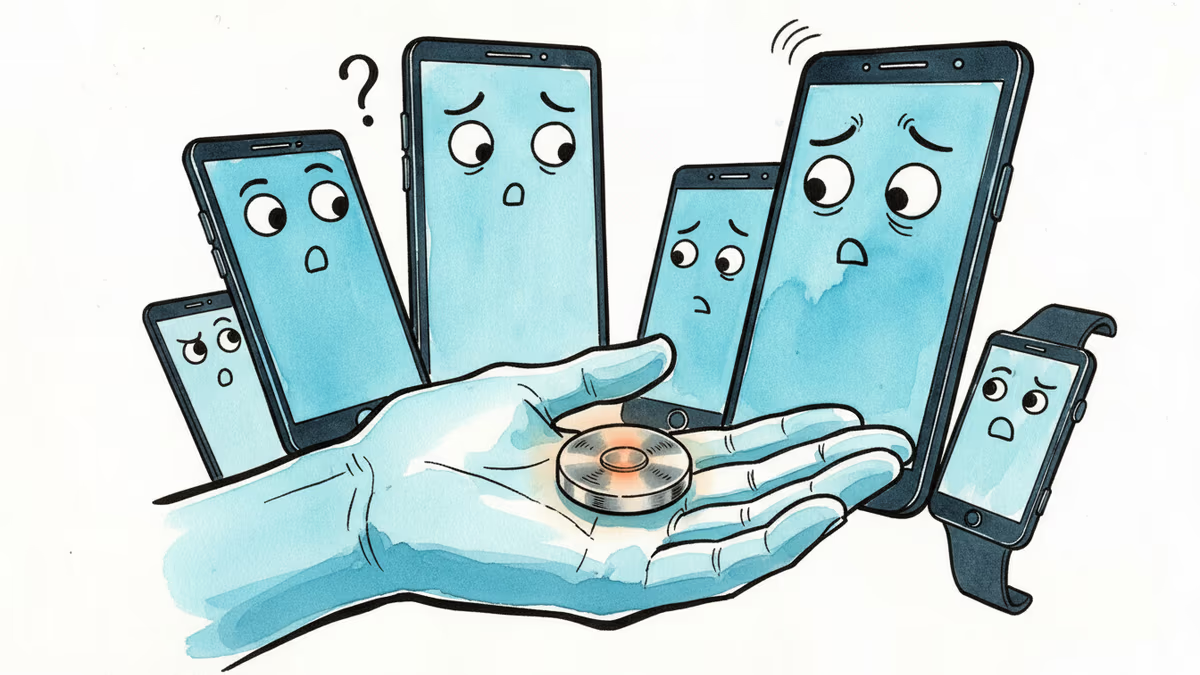
Two ex-Apple engineers built an AI puck that only listens when you press it. At $179, Button is a deliberate bet that dedicated AI hardware beats the Swiss Army knife approach of smartphones.
Suno's AI music platform claims to block copyrighted content, but researchers found its filters can be bypassed with minimal effort and free tools, generating near-identical imitations of Beyoncé, Black Sabbath, and more.
Google's Gmail Live lets you ask your inbox questions out loud. Announced at I/O 2026, it's AI's pitch to skeptics — and a reminder of how much Google already knows about you.
Five major publishers and author Scott Turow have filed a class action lawsuit against Meta, alleging the company used illegal pirate sites like LibGen to train its Llama AI models without permission.
Two ex-Apple engineers built an AI puck that only listens when you press it. At $179, Button is a deliberate bet that dedicated AI hardware beats the Swiss Army knife approach of smartphones.
Suno's AI music platform claims to block copyrighted content, but researchers found its filters can be bypassed with minimal effort and free tools, generating near-identical imitations of Beyoncé, Black Sabbath, and more.
Thoughts
Share your thoughts on this article
Sign in to join the conversation