
Your Phone Calls Just Got an AI Translator That's Always Listening
Deutsche Telekom partners with ElevenLabs to launch app-free AI translation during phone calls. But the convenience comes with privacy trade-offs that could reshape how we communicate.
When "Hey Magenta" Breaks Down Language Barriers
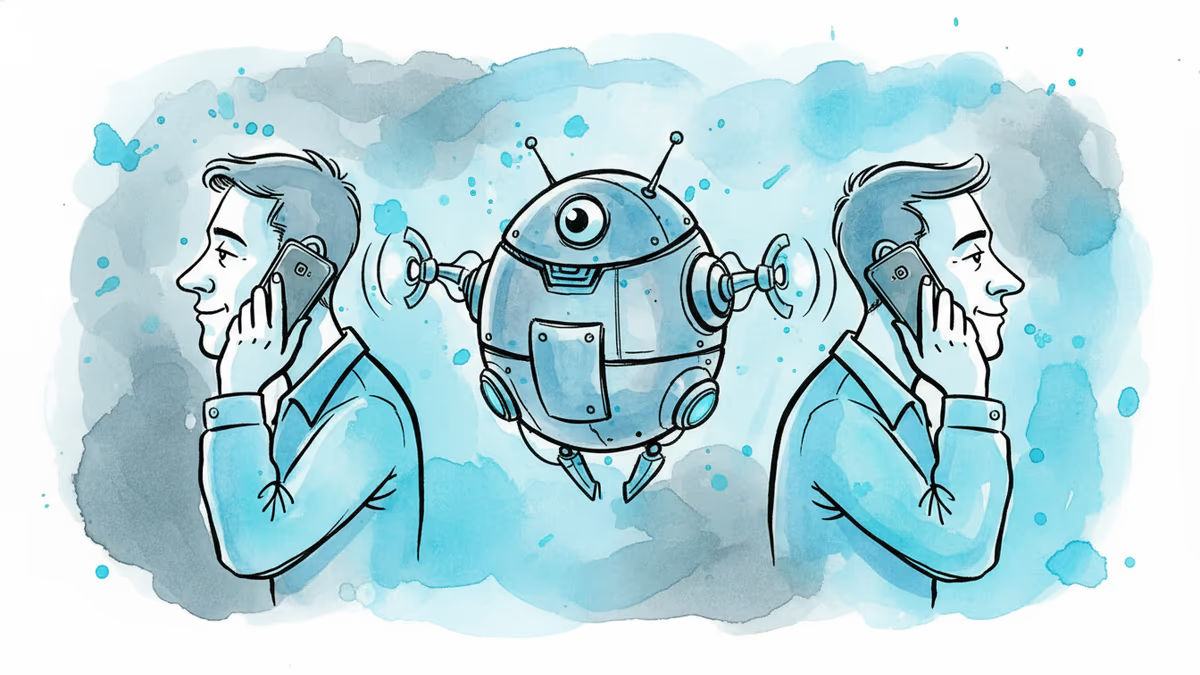
A simple phrase during your phone call could soon eliminate language barriers entirely. Deutsche Telekom, Germany's largest telecom provider, unveiled its Magenta AI Call Assistant at Mobile World Congress 2026 in Barcelona. The twist? No app downloads, no specific smartphone required—just say "Hey Magenta" mid-conversation.
Developed with AI audio company ElevenLabs, the service goes beyond translation. During calls, the AI can check your calendar, suggest meeting times, or find nearby restaurants. It's like having a trilingual assistant join every conversation, whether you're talking to your grandmother in Italy or closing a business deal in Tokyo.
ElevenLabs has made headlines for cloning voices of podcast hosts and even US presidents. Their partnership with Deutsche Telekom focuses on one key promise: universal accessibility without the friction of app installations.
The Privacy Paradox of Always-On AI
Existing translation services from Apple, Samsung, and Google typically require specific devices or apps. Magenta's hardware-agnostic approach sounds revolutionary, but it introduces a fundamental question: Are we comfortable with AI listening to our most private conversations?
Avijit Ghosh, an AI policy researcher at Hugging Face, raises critical concerns about "introducing AI assistants in non-encrypted telephone calls." He questions the user experience too: "Say I'm talking to my mom, and in the middle of the call, I just start talking to an assistant, which is always listening. That's just a very weird experience."

Ghosh's research on accent bias in synthetic voices adds another layer of concern. AI systems from companies like ElevenLabs often struggle with regional accents, particularly from non-native English speakers. "This seems too general to just unleash on a population without safeguards," he warns.
The Consent Conundrum
Deutsche Telekom insists the service is opt-in, requiring both parties to agree before activation. Voice recordings aren't saved, and the company claims full compliance with EU data protection laws. But key details remain murky: Will it work for calls between Deutsche Telekom customers and other networks? What happens when one person forgets they've activated the service?
The company plans to support 50 languages within 12 months of the German launch later this year. Their broader vision includes booking doctor appointments or restaurant reservations mid-conversation—essentially turning every phone call into a potential AI interaction.
One amusing concern: Germans named Magenta (or their pets) might inadvertently trigger the assistant, much like Amazon's Alexa responds to similar-sounding words.
The Telecommunications Arms Race
This launch signals a new battleground for telecom providers worldwide. While tech giants like Apple and Google embed AI into devices, Deutsche Telekom is embedding it into the network itself. This network-level approach could give telecom companies a new competitive edge—or expose them to unprecedented liability.
For consumers, the value proposition is clear: seamless communication across language barriers. For businesses, it could eliminate the need for professional interpreters in many scenarios. But for privacy advocates, it represents another step toward ubiquitous AI surveillance.
Authors
Related Articles

Samsung and SK unveiled a chip and AI investment package worth thousands of trillions of won on June 29. The headline number swings wildly by outlet, but the real contest isn't capital — it's water and power.
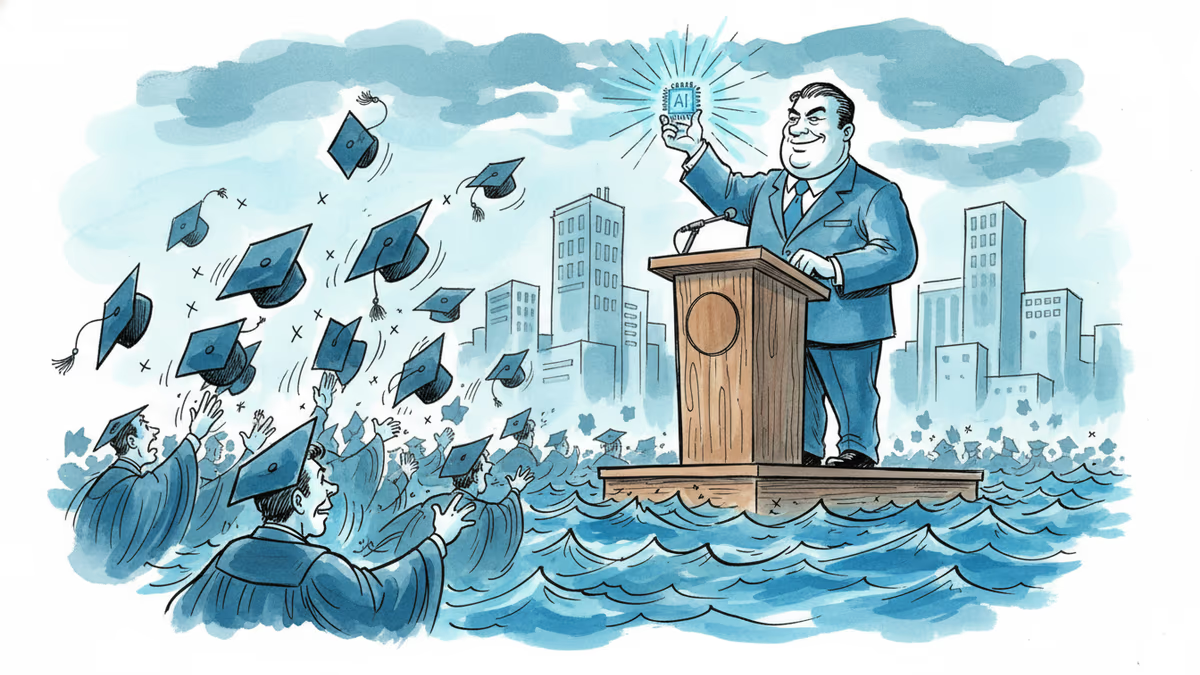
Viral videos show 2026 graduates jeering executives who praise AI at commencement ceremonies. It's not just rudeness — it's a signal about who pays for technological optimism.
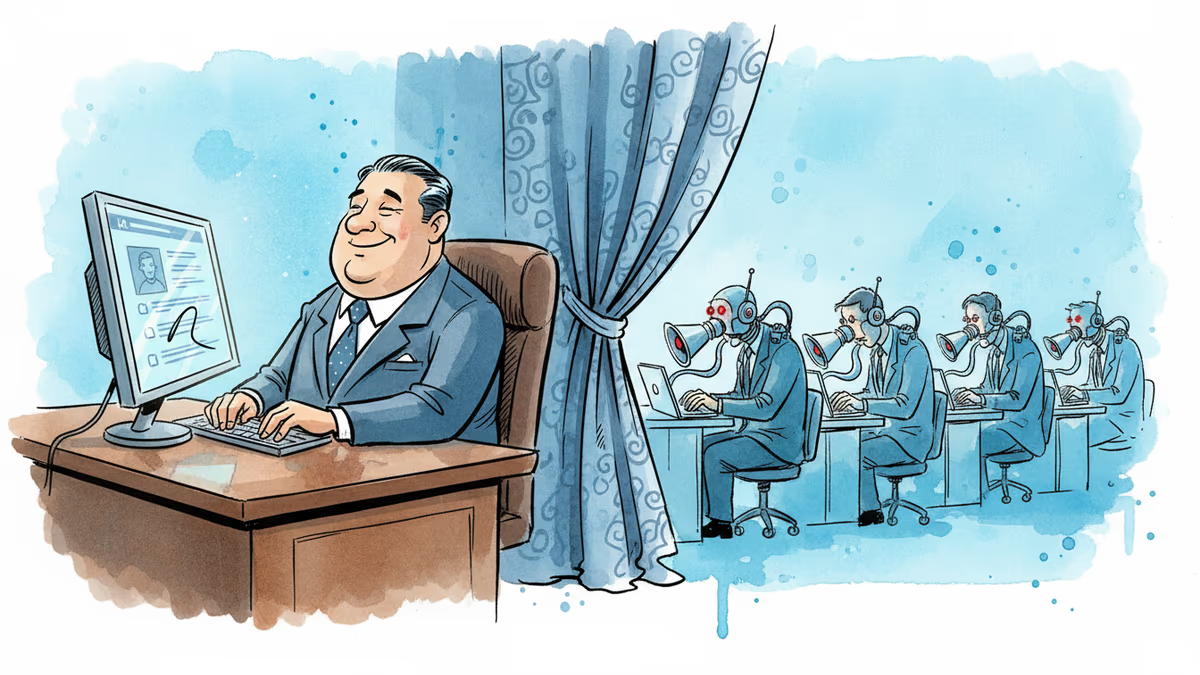
Filipino virtual assistants using AI to ghost-manage LinkedIn profiles for executives is now a structured industry. 30 comments a day, fake engagement rings, and a platform struggling to tell real from fabricated.
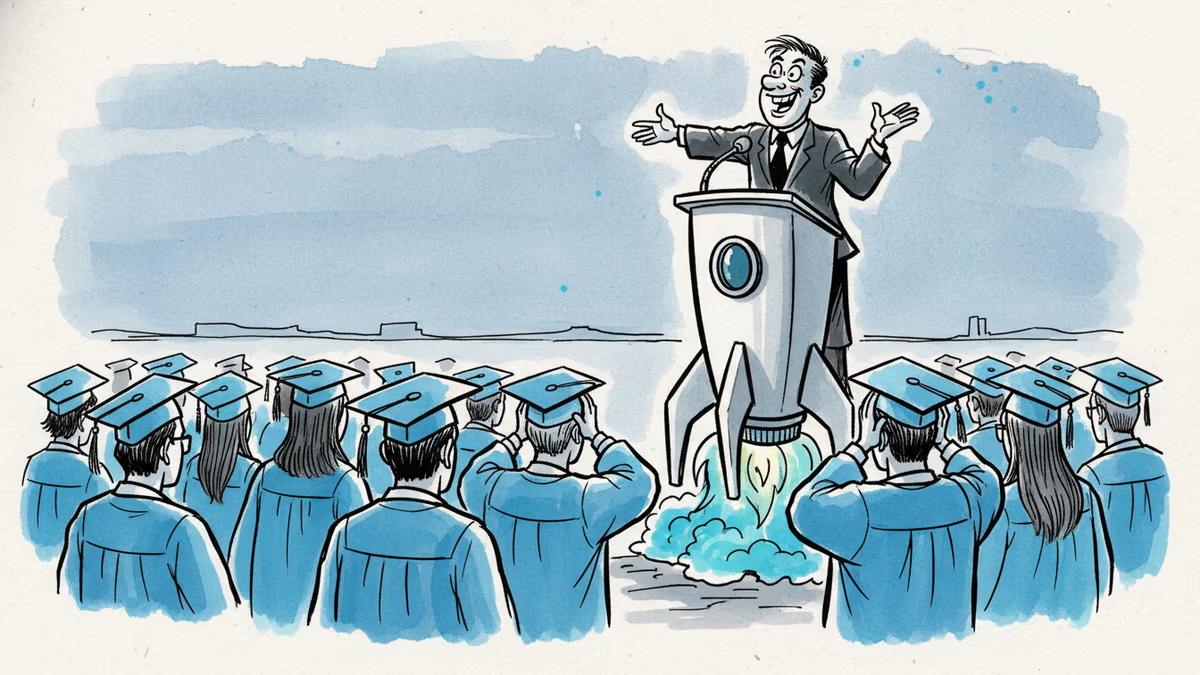
Two commencement speakers learned the hard way that AI enthusiasm doesn't land well with today's graduates. The backlash reveals a widening gap between tech optimism and Gen Z's economic reality.
Samsung and SK unveiled a chip and AI investment package worth thousands of trillions of won on June 29. The headline number swings wildly by outlet, but the real contest isn't capital — it's water and power.
Viral videos show 2026 graduates jeering executives who praise AI at commencement ceremonies. It's not just rudeness — it's a signal about who pays for technological optimism.
Filipino virtual assistants using AI to ghost-manage LinkedIn profiles for executives is now a structured industry. 30 comments a day, fake engagement rings, and a platform struggling to tell real from fabricated.
Two commencement speakers learned the hard way that AI enthusiasm doesn't land well with today's graduates. The backlash reveals a widening gap between tech optimism and Gen Z's economic reality.
Thoughts
Share your thoughts on this article
Sign in to join the conversation