
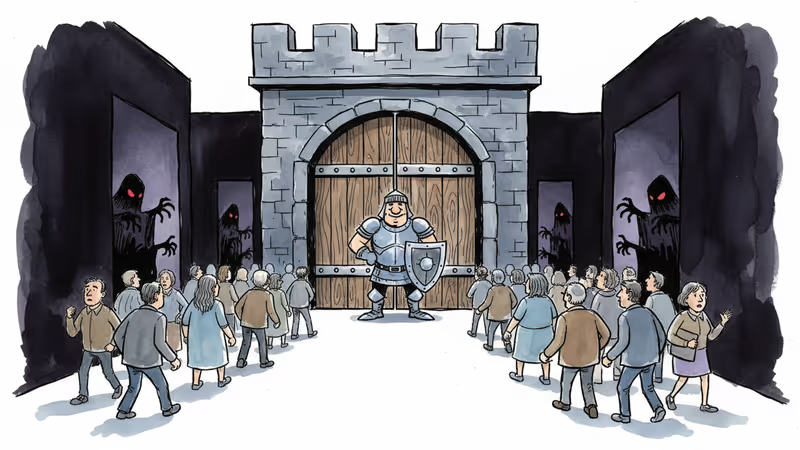
When Big Tech Chooses Exile Over Compliance
Pornhub's UK exit reveals deeper tensions between child safety laws and privacy rights, as major platforms choose withdrawal over age verification compliance.
Starting February 2, millions of UK internet users will find themselves locked out of some of the web's most visited adult content platforms. Aylo, the parent company behind Pornhub and other major tube sites, announced it will block UK access entirely rather than comply with the country's Online Safety Act age verification requirements.
The move marks a significant escalation in the global battle between digital platforms and governments over how to protect children online without compromising adult privacy. But it also raises uncomfortable questions about whether well-intentioned regulations are actually making the internet more dangerous.
The Compliance Standoff
The UK's Online Safety Act, implemented last year, requires websites hosting adult content to verify users' ages before granting access. The law aims to prevent minors from stumbling across inappropriate material—a goal few would argue against. Yet Aylo has chosen the nuclear option: complete withdrawal from the UK market.
"Despite the clear intent of the law to restrict minors' access to adult content, our experience strongly suggests that the OSA has failed to achieve that objective," the company stated. Instead, Aylo argues, the legislation has "diverted traffic to darker, unregulated corners of the internet" while jeopardizing user privacy.
Ofcom, the UK's communications regulator, pushes back on this characterization. The regulator insists it has "taken strong and swift action against non-compliance, launching investigations into more than 80 porn sites and fining a porn provider £1 million." Yet Aylo claims only 4chan has faced penalties so far, suggesting enforcement remains patchy at best.
The Privacy Paradox
At the heart of this dispute lies a fundamental tension between child protection and adult privacy. Age verification systems typically require users to upload government IDs or provide other sensitive personal information—data that becomes a honeypot for hackers and a surveillance tool for governments.

Aylo's concerns aren't theoretical. The company previously suffered a data breach through analytics provider Mixpanel, exposing Pornhub Premium subscribers' email addresses, viewing habits, and usage patterns. Such incidents underscore why many users and platforms remain skeptical of mandatory data collection, even for legitimate safety purposes.
This same dynamic has played out across multiple US states, where Aylo has blocked access rather than implement age verification. The company's consistent stance suggests this isn't merely about compliance costs—it reflects a deeper philosophical disagreement about how to balance competing values in digital spaces.
The Unintended Consequences
Perhaps most troubling is what happens next. When major platforms withdraw from regulated markets, users don't simply stop consuming content—they migrate to alternatives that may be far less scrupulous about safety, moderation, or legal compliance.
Smaller, unregulated sites often lack the resources or incentives to implement robust content policies, age verification, or user protections. They may host more extreme content, employ weaker security measures, or operate from jurisdictions with minimal oversight. If the goal is protecting minors, pushing traffic toward these platforms seems counterproductive.
Ofcom acknowledges this concern but maintains that "there's nothing to stop technology providers from developing solutions which work at the device level." This suggests regulators envision technical solutions that don't require centralized data collection—though such systems remain largely theoretical.
Global Implications
The UK's experience offers a preview of similar battles brewing worldwide. As governments from Australia to France consider their own online safety legislation, they're watching closely to see whether Britain's approach actually works or simply reshuffles the digital deck.
The stakes extend beyond adult content. Age verification requirements could easily expand to social media, gaming platforms, or any service deemed potentially harmful to minors. How this first major test case resolves may set precedents for internet regulation globally.
Authors
Related Articles
Roblox introduces AI-powered real-time chat rephrasing that goes beyond simple filtering, automatically converting inappropriate language into more respectful alternatives while preserving user intent.

Chicago's 45,000-camera surveillance network nabbed a mass shooter in 90 minutes. But at what cost to privacy and civil liberties?
After Super Bowl ad backlash and AI surveillance features, Ring's founder explains himself. But the real issue isn't the ads—it's the technology itself.

Ring's Super Bowl ad sparked fresh privacy debates about AI surveillance. From finding lost dogs to tracking humans - where do we draw the line?
Roblox introduces AI-powered real-time chat rephrasing that goes beyond simple filtering, automatically converting inappropriate language into more respectful alternatives while preserving user intent.
Chicago's 45,000-camera surveillance network nabbed a mass shooter in 90 minutes. But at what cost to privacy and civil liberties?
After Super Bowl ad backlash and AI surveillance features, Ring's founder explains himself. But the real issue isn't the ads—it's the technology itself.
Ring's Super Bowl ad sparked fresh privacy debates about AI surveillance. From finding lost dogs to tracking humans - where do we draw the line?
Thoughts
Share your thoughts on this article
Sign in to join the conversation