
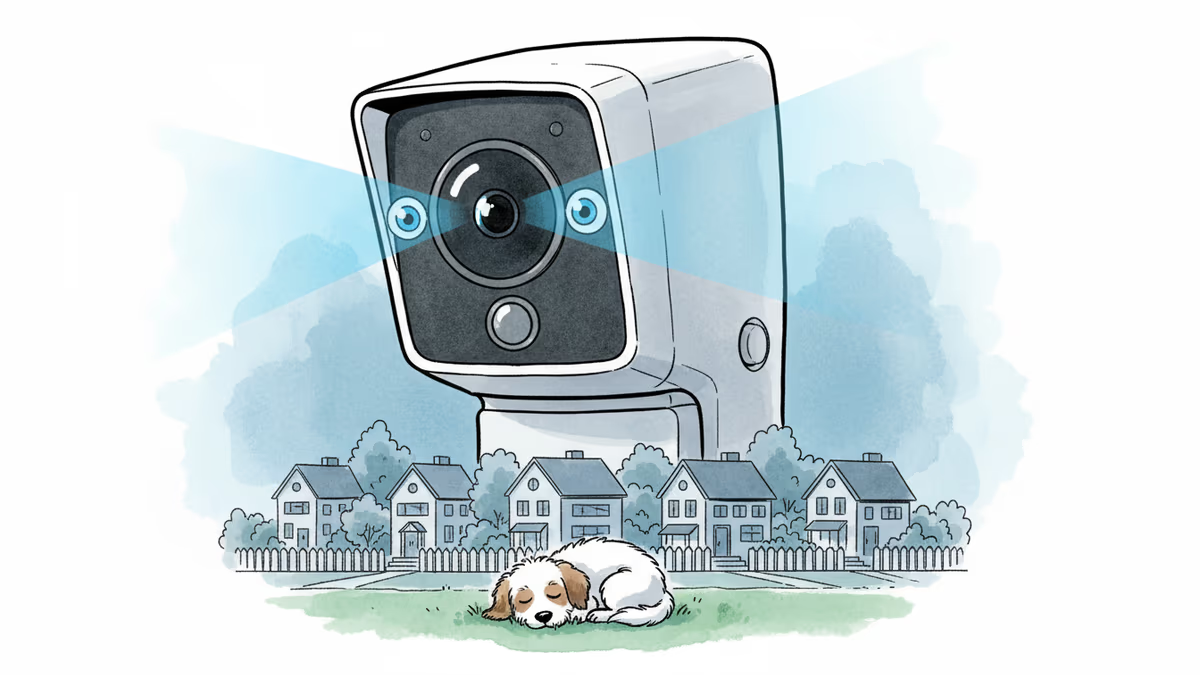
When Pet-Finding Tech Meets Surveillance Fears
Ring's Super Bowl ad sparked fresh privacy debates about AI surveillance. From finding lost dogs to tracking humans - where do we draw the line?
A 30-Second Ad That Sparked a Privacy Firestorm
Super Bowl ads are meant to sell products, not trigger surveillance debates. But Amazon's Ring managed both with a seemingly innocent spot about finding lost pets. The 30-second commercial showed neighborhood cameras working together to locate a missing dog - heartwarming until you think about the implications.
Social media erupted with concerns that felt all too familiar: "Today it's dogs, tomorrow it's dissidents." The technology isn't fictional - Ring's new Search Party feature actually exists, using AI to scan camera networks for specific targets.
The Tech Behind the Controversy
Ring's latest capability isn't just about pets. Combined with recently rolled-out facial recognition features, the system represents a significant leap in consumer surveillance technology. The AI that identifies your Golden Retriever could easily be repurposed to identify humans.
Privacy experts immediately raised red flags. "The infrastructure for neighborhood-wide surveillance is being normalized through cute pet stories," warned digital rights advocates. The concern isn't just theoretical - Ring's parent company Amazon has faced scrutiny for sharing footage with law enforcement without user consent.
The timing couldn't be worse for public perception. With growing awareness of corporate data collection and government surveillance programs, a prime-time ad celebrating neighborhood monitoring struck a nerve.

Convenience vs. Control: The Modern Trade-off
The response revealed America's complicated relationship with surveillance technology. Pet owners who've experienced the heartbreak of losing an animal praised the innovation. Civil liberties groups condemned it as "surveillance capitalism" disguised as helpful technology.
Ring insists the system only activates when users explicitly request searches. But critics point out that infrastructure, once built, tends to expand its purpose. What happens when authorities demand access to these neighborhood networks?
Europe's approach offers a stark contrast. The EU AI Act restricts real-time biometric identification in public spaces, treating such systems as high-risk by default. Several U.S. cities have banned facial recognition technology, but federal regulation remains limited.
The Slippery Slope Question
The debate touches on a fundamental question about modern life: How much surveillance are we willing to accept for convenience? Ring's pet-finding feature might genuinely help reunite families with beloved animals. But it also normalizes the idea of comprehensive neighborhood monitoring.
Consider the precedent: Today's opt-in pet search could become tomorrow's mandatory security requirement. The same cameras watching for lost dogs could monitor everything from package deliveries to political gatherings.
Tech companies often frame these concerns as overblown, pointing to privacy controls and user consent. But history suggests that surveillance capabilities, once deployed, rarely remain limited to their original purpose.
Authors
Related Articles

The Pentagon's clash with AI companies exposes a legal gray area around mass surveillance. OpenAI and Anthropic's opposing choices reveal deeper questions about privacy in the AI age.

Kohler's new recirculating smart shower system promises luxury and water conservation. But the price tag raises questions about who gets access to green tech.

Chicago's 45,000-camera surveillance network nabbed a mass shooter in 90 minutes. But at what cost to privacy and civil liberties?

Consumer advocacy group offers $10,000 to integrate Ring doorbells with local servers, bypassing Amazon's cloud entirely. Can smart home devices escape subscription dependency?
The Pentagon's clash with AI companies exposes a legal gray area around mass surveillance. OpenAI and Anthropic's opposing choices reveal deeper questions about privacy in the AI age.
Kohler's new recirculating smart shower system promises luxury and water conservation. But the price tag raises questions about who gets access to green tech.
Chicago's 45,000-camera surveillance network nabbed a mass shooter in 90 minutes. But at what cost to privacy and civil liberties?
Consumer advocacy group offers $10,000 to integrate Ring doorbells with local servers, bypassing Amazon's cloud entirely. Can smart home devices escape subscription dependency?
Thoughts
Share your thoughts on this article
Sign in to join the conversation