

When Dog-Finding AI Opens the Door to Mass Surveillance
Ring's Super Bowl ad sparked backlash over AI surveillance capabilities. The company canceled its Flock Safety partnership amid concerns about privacy and ICE data sharing.
48 Hours From Super Bowl Ad to Corporate Backtrack
Amazon's Ring thought they had a heartwarming Super Bowl story: AI technology reuniting lost dogs with their families. Instead, they got a masterclass in how quickly the public can connect the dots between "finding Fido" and "tracking citizens."
Within 48 hours of the ad airing, Ring announced it was canceling its partnership with Flock Safety, a surveillance company whose data has been accessed by ICE. The backlash was swift and brutal—even the WeRateDogs account posted videos criticizing the technology.
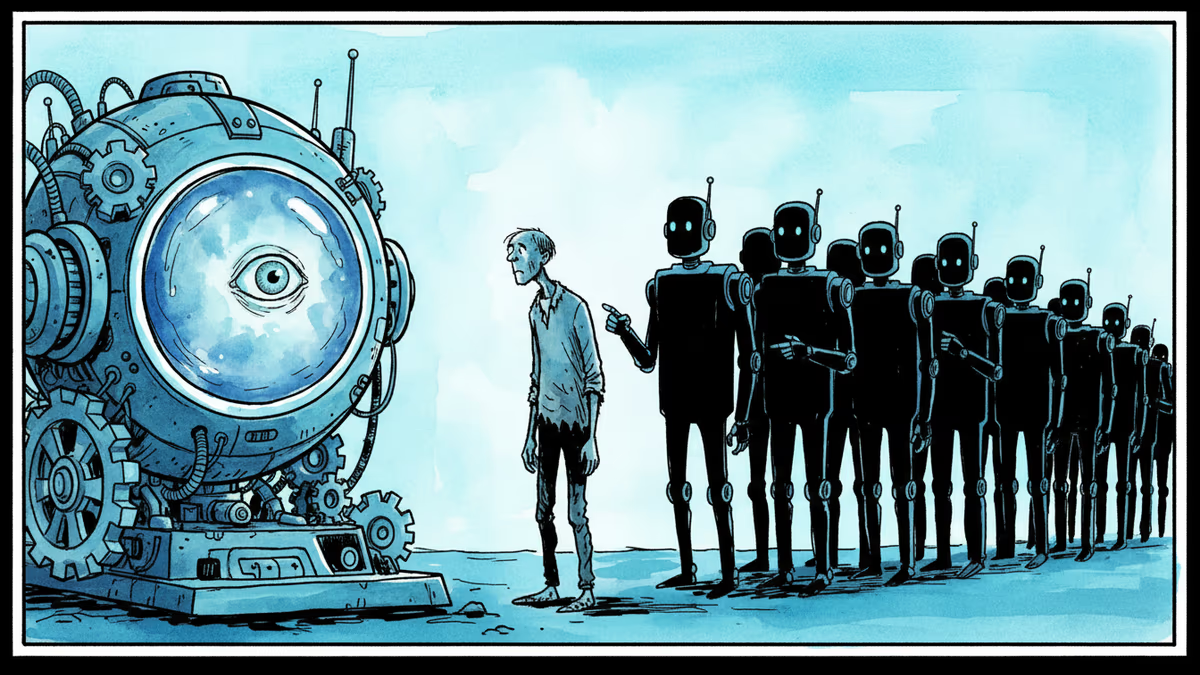
The controversy reveals a fundamental truth: there's no meaningful technical difference between AI that finds lost dogs and AI that tracks people. The only difference is policy—and policies can change.
The Crime-Fighting Vision That Spooked America
Ring founder Jamie Siminoff has never hidden his ambitions. He wants to "eliminate crime" using AI and cameras, bringing neighborhood crime "close to zero." His vision? Every house equipped with what he calls digital "security guards" that know everything about residents and can coordinate responses across entire neighborhoods.
"If someone comes outside because something's an anomaly, that's a big part of it," Siminoff explained in a recent interview. "It doesn't have to be some crazy thing."
But critics see something more dystopian: a world where every doorstep has an all-knowing digital sentinel, and neighborhood watch groups are replaced by AI surveillance networks that never sleep, never forget, and increasingly share data with law enforcement.
The ICE Connection That Changed Everything

Flock Safety primarily serves police departments, operating those solar-powered cameras you see on streetlights and in parking lots. While Flock claims it doesn't work directly with ICE, investigative reporting by 404 Media revealed that local police departments regularly share Flock data with federal immigration authorities—no warrant required.
Ring insisted it had "no partnership with ICE" and that the Flock integration "never launched." But the damage was done. Americans realized they were potentially one policy change away from their doorbell cameras feeding into deportation operations.
Senator Ed Markey called the situation "dystopian" and demanded Amazon cease all facial recognition on Ring devices. "This definitely isn't about dogs—it's about mass surveillance," he said.
When Surveillance Serves Justice
Here's where the story gets complicated. While Ring faced criticism, other surveillance footage was making headlines for different reasons. Minnesota Governor Tim Walz encouraged people to record ICE operations for potential prosecutions. The FBI used Google Nest footage to help identify a kidnapper.
Regular citizens are using phone cameras to document police misconduct, creating accountability that wasn't possible before. The same technology that enables oppressive surveillance also enables transparency and justice.
This duality reflects a broader challenge: in an era where AI can fake videos, having authenticated sources of truth becomes crucial. But those same authentication systems could become tools of control.
The Authentication Dilemma
Siminoff acknowledges this tension. Ring is building "digital fingerprinting" systems to ensure video authenticity—crucial as deepfakes become more sophisticated. But authenticated video systems also mean centralized control over what counts as "truth."
"You're going to have to do that more and more as this world is changing," Siminoff noted. "You're just not going to be able to trust that just because someone sends you a video doesn't mean it's true."
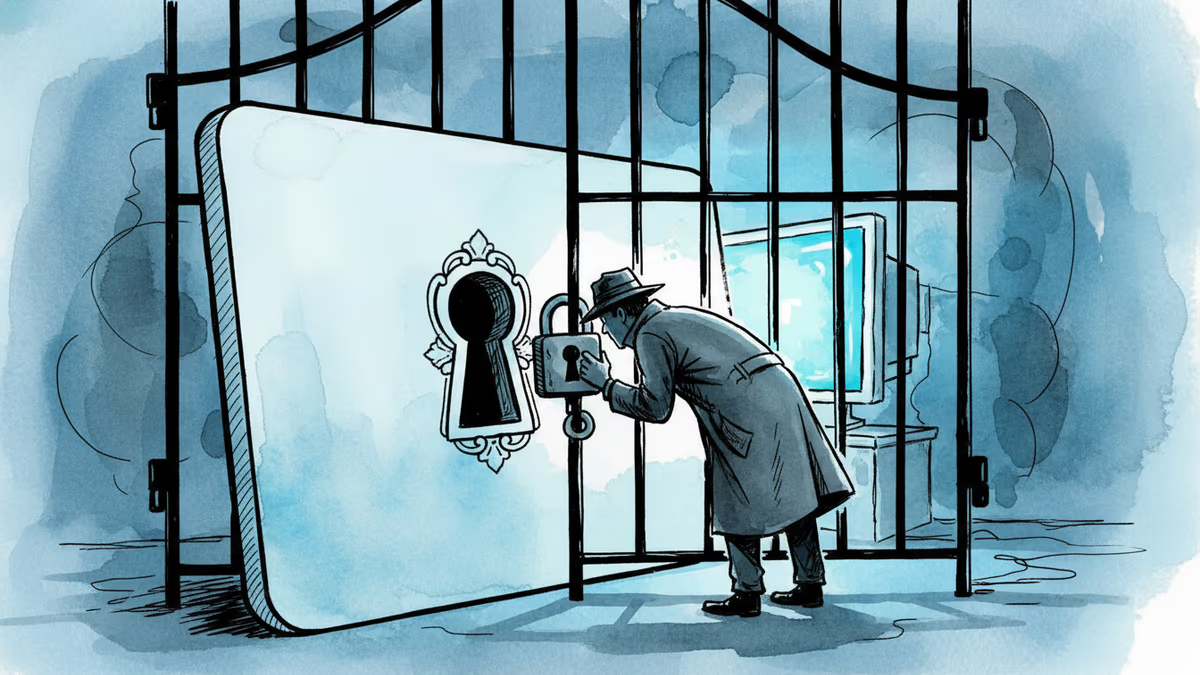
The question becomes: who controls the authentication? If Ring or similar companies become the arbiters of video truth, they also become gatekeepers of evidence.
Authors
Related Articles
Tinder now rewards users who scan their irises at a World orb with free in-app boosts. As AI agents flood dating apps, 'being human' is becoming a verified status — and a business model.
Wisconsin Governor Tony Evers vetoed an age verification bill for adult sites, citing privacy concerns. With 25+ states going the other way, the debate cuts to the heart of online freedom vs. child protection.

CBP admits buying location data from ad industry while Meta contractors watch users in bathrooms through smart glasses. The digital privacy boundary is crumbling.

A security researcher discovered he could access 7,000 DJI robot vacuums and peek into strangers' homes. This Valentine's Day revelation exposes the hidden privacy risks of our smart home obsession.
Tinder now rewards users who scan their irises at a World orb with free in-app boosts. As AI agents flood dating apps, 'being human' is becoming a verified status — and a business model.
Wisconsin Governor Tony Evers vetoed an age verification bill for adult sites, citing privacy concerns. With 25+ states going the other way, the debate cuts to the heart of online freedom vs. child protection.
CBP admits buying location data from ad industry while Meta contractors watch users in bathrooms through smart glasses. The digital privacy boundary is crumbling.
A security researcher discovered he could access 7,000 DJI robot vacuums and peek into strangers' homes. This Valentine's Day revelation exposes the hidden privacy risks of our smart home obsession.
Thoughts
Share your thoughts on this article
Sign in to join the conversation