
A 14-Year-Old Just Passed as 16 – Age Verification's Fatal Flaws
Governments worldwide are mandating social media age checks, but the technology is easily fooled, creating new privacy risks while failing to protect children effectively.
70,000 IDs Exposed, Millions More at Risk
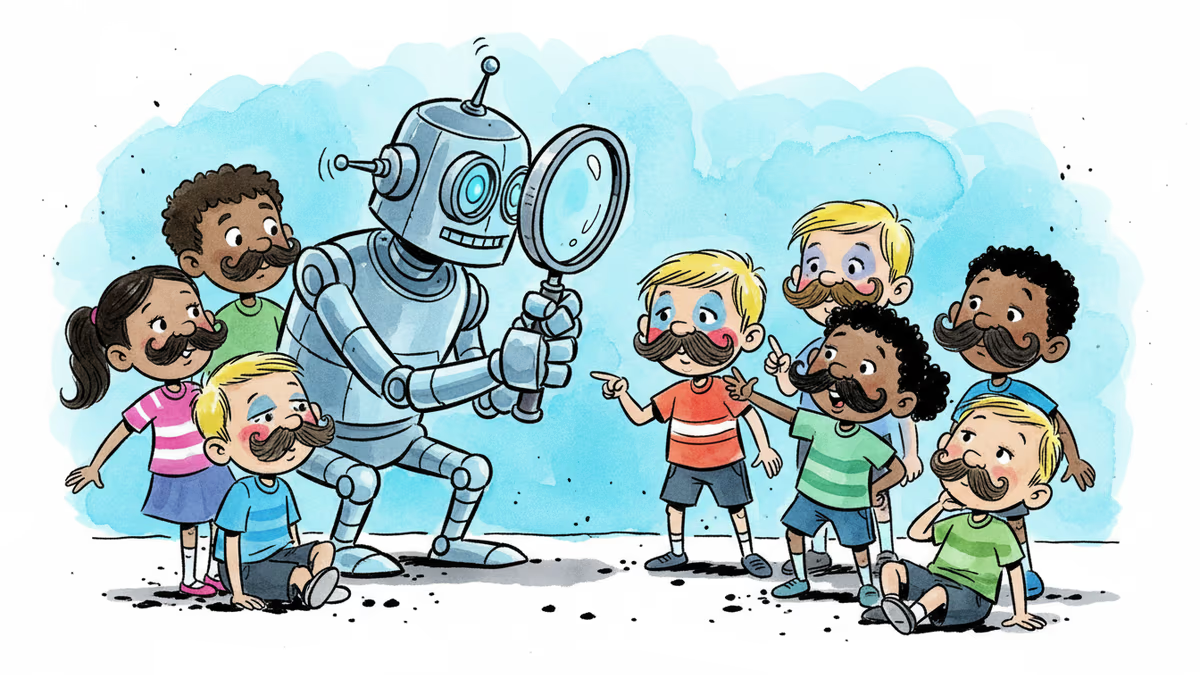
Fourteen-year-old Carolina from São Paulo didn't need to worry about losing access to her Roblox friends when mandatory age checks rolled out. The facial recognition software assessed her as 16-17 years old. "Without any makeup, I did what the app asked: turned my head this way and that," she told Rest of World. "The app said I was 16 to 17 years old."
But this wasn't the intended outcome. The age verification failure meant Carolina gained access to chat with older users, potentially exposing her to harassment and abuse – exactly what the system was designed to prevent.
Stalin's Fake ID Got Approved
As governments worldwide rush to implement age verification – with Australia banning under-16s from social media and 12+ countries planning similar rules – the technology is proving embarrassingly easy to fool. Users on Reddit recommend fake IDs and AI-generated photos to bypass Roblox's checks. "I used a fake ID of Joseph Stalin and it got accepted," one wrote. Another posted a video showing a crude face painted on a thumb passing the age check as 13-15 years old.
The circumvention methods don't require sophisticated hacking. Basic tools like VPNs, fake documents, and AI-generated selfies are enough to fool systems that platforms claim have been "tested and certified by third-party laboratories."
Privacy Advocates Sound the Alarm

Beyond technical failures lies a deeper concern: the erosion of online anonymity. "Age verification would end anonymous accounts and anonymity on the internet as we know it," warns Shivangi Narayan, who teaches sociology at Thapar School of Liberal Arts and Sciences in India. "It's a potent tool to kill dissent and end the last vestige of protection that marginalized identities have online."
The privacy risks are already materializing. Last year, Discord disclosed that government photo IDs of 70,000 users worldwide were exposed through a third-party vendor, including names, email addresses, and payment history. If a platform with over 200 million monthly users can't secure identity documents, what happens when age verification becomes universal?
The Real Problem Isn't Age
"Effective child safety online doesn't require identifying every internet user," argues Apar Gupta, founder-director of Internet Freedom Foundation. "Platform design choices around recommendation algorithms, data harvesting practices, and addictive features cause far more harm than anonymous access to information."
This perspective challenges the entire premise of age verification mandates. Instead of focusing on who's using platforms, critics argue we should examine how platforms are designed to maximize engagement – often through psychological manipulation that affects users of all ages.
A Global Experiment with Unknown Consequences
Countries are taking different approaches. Malaysia is developing its own age verification system rather than relying on US-based Jumio or UK's Yoti. Brazil plans to build its own technology. India's Signzy and Accura Scan are gaining global clients. But each system faces the same fundamental challenges: accuracy, privacy, and circumvention.
Seventeen-year-old Adam in Malaysia, facing incoming age restrictions, captures the dilemma perfectly: "If your face is compromised, you can't replace it. Imagine having your biometric identity exposed forever."
Authors
Related Articles
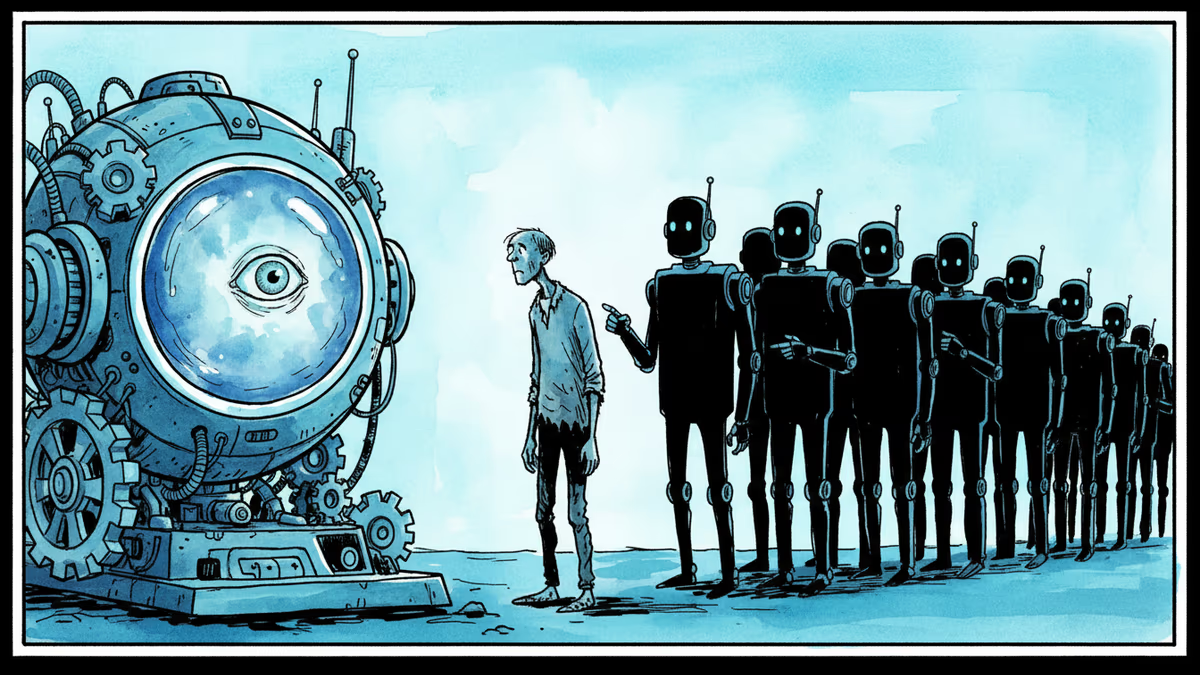
Tinder now rewards users who scan their irises at a World orb with free in-app boosts. As AI agents flood dating apps, 'being human' is becoming a verified status — and a business model.
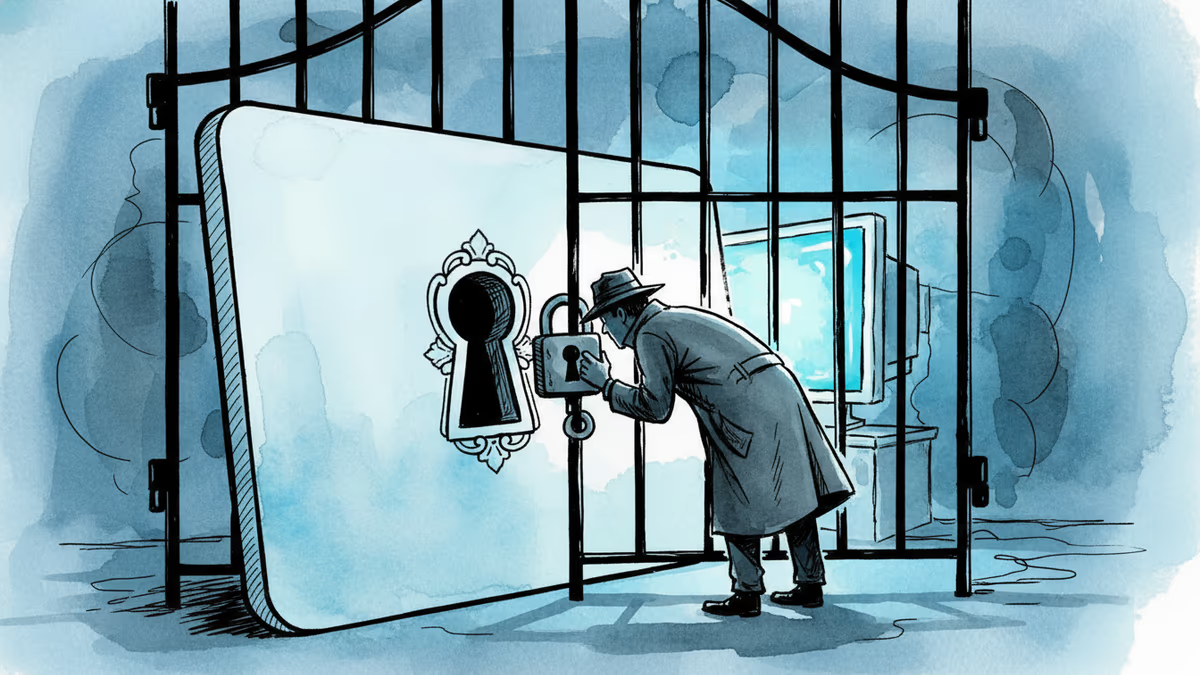
Wisconsin Governor Tony Evers vetoed an age verification bill for adult sites, citing privacy concerns. With 25+ states going the other way, the debate cuts to the heart of online freedom vs. child protection.
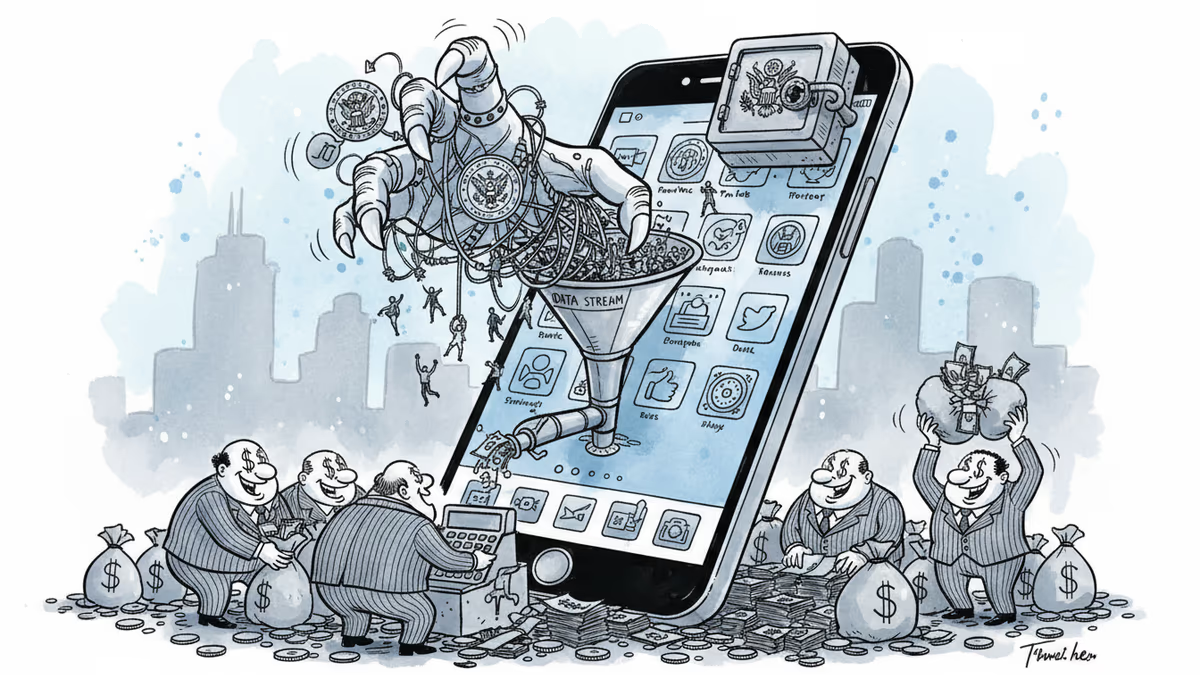
CBP admits buying location data from ad industry while Meta contractors watch users in bathrooms through smart glasses. The digital privacy boundary is crumbling.
A security researcher discovered he could access 7,000 DJI robot vacuums and peek into strangers' homes. This Valentine's Day revelation exposes the hidden privacy risks of our smart home obsession.
Tinder now rewards users who scan their irises at a World orb with free in-app boosts. As AI agents flood dating apps, 'being human' is becoming a verified status — and a business model.
Wisconsin Governor Tony Evers vetoed an age verification bill for adult sites, citing privacy concerns. With 25+ states going the other way, the debate cuts to the heart of online freedom vs. child protection.
CBP admits buying location data from ad industry while Meta contractors watch users in bathrooms through smart glasses. The digital privacy boundary is crumbling.
A security researcher discovered he could access 7,000 DJI robot vacuums and peek into strangers' homes. This Valentine's Day revelation exposes the hidden privacy risks of our smart home obsession.
Thoughts
Share your thoughts on this article
Sign in to join the conversation