
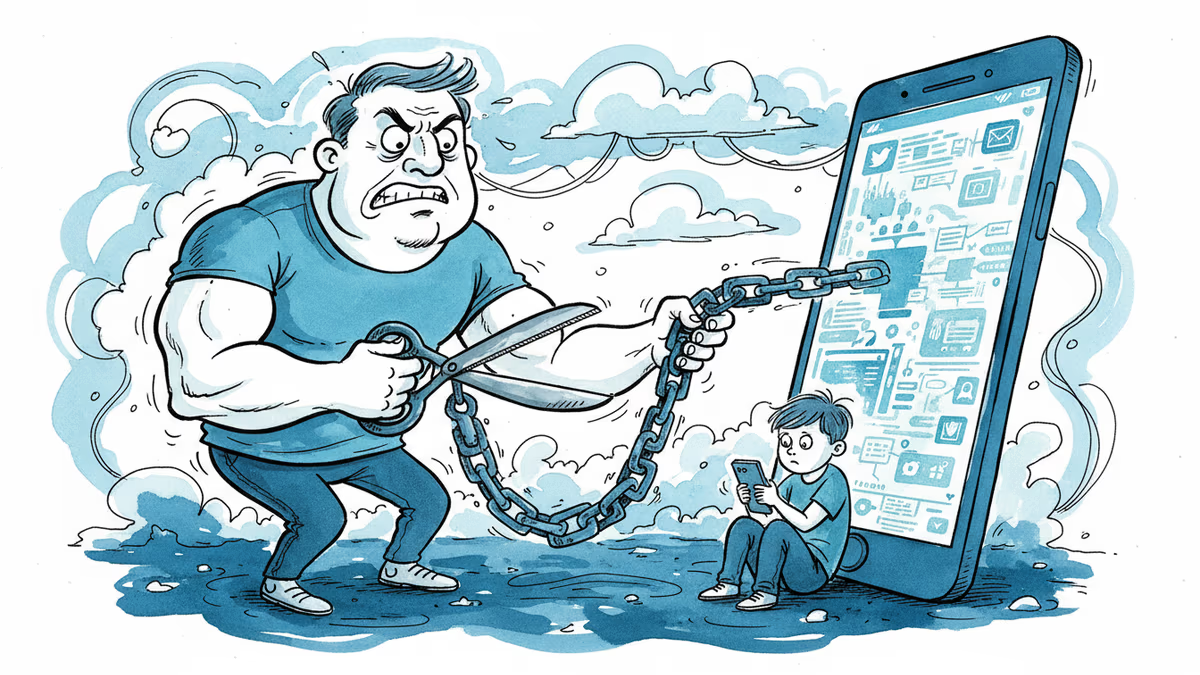
Parental Controls Don't Work" - Meta's Hidden Study Reveals Shocking Truth
Meta's internal Project MYST study found parental supervision and time limits have little impact on teens' compulsive social media use. Kids with trauma are at higher risk, according to testimony in landmark addiction lawsuit.
1,000 Teens Surveyed, One Devastating Truth: Your Parental Controls Are Useless
Everything parents thought they knew about protecting their kids online just got turned upside down. Meta's internal research study "Project MYST," conducted with the University of Chicago, surveyed 1,000 teens and their parents—and the results are damning. Parental supervision, time limits, and household rules have "little association" with teens' compulsive social media use.
This bombshell dropped last week in a Los Angeles courtroom, where a teenager known as "Kaley" is suing major social media companies for creating allegedly addictive products that caused her anxiety, depression, and self-harm. It's one of several landmark trials this year that could reshape how tech giants approach their youngest users.
When Screen Time Limits Meet Reality
The study's conclusion was brutally clear: "Parental and household factors have little association with teens' reported levels of attentiveness to their social media use." Translation? Whether parents use Instagram's built-in parental controls, set smartphone time limits, or hover over their kids' shoulders, it doesn't meaningfully impact compulsive usage.
Both teens and parents agreed on this finding. There was "no association between either parental reports or teen reports of parental supervision, and teens' survey measures of attentiveness or capability."
Instagram head Adam Mosseri claimed not to remember the study during testimony, despite documents showing he'd approved moving forward with the research. "We do a lot of research projects," he said—a response that didn't sit well with the plaintiff's legal team.
The Real Risk Factor Nobody's Talking About
Project MYST uncovered something more troubling: teens with more adverse life experiences showed less ability to moderate their social media use. Kids dealing with alcoholic parents, school harassment, or other trauma were at higher risk of problematic usage.

Mosseri partially acknowledged this finding: "People use Instagram as a way to escape from a more difficult reality." It's a rare moment of candor from a tech executive about social media's role as digital self-medication.
Kaley's story fits this pattern perfectly. Her mother tried everything—taking away phones, setting rules, constant supervision. Nothing worked. Kaley was dealing with divorced parents, an abusive father, and school bullying. The platform became her refuge, then her prison.
The Accountability Question
Here's where it gets legally interesting. If parental controls don't work, who's responsible when kids develop problematic usage patterns? The plaintiff's lawyer argues this shifts accountability from parents to platforms themselves.
Meta's defense team pushed back, focusing on Kaley's family circumstances rather than platform design. They pointed to her traumatic home life as the real culprit behind her mental health struggles—not algorithmic feeds designed to maximize engagement.
Notably, Meta avoids the word "addiction" entirely, preferring "problematic use"—defined as "spending more time on Instagram than they feel good about." It's careful language that could matter in court.
The Cover-Up That Wasn't
Perhaps most damaging: MYST's findings were never published publicly, and no warnings were issued to teens or parents. The research that could have informed millions of families about the limitations of parental controls remained locked away in Meta's internal files.
This pattern of conducting research but not sharing unfavorable results has become a recurring theme in Big Tech litigation. The question isn't whether companies know about potential harms—it's what they do with that knowledge.
The jury's verdict will matter. But the real question extends far beyond one courtroom: If individual and family-level solutions don't work, what does?
Authors
Related Articles
A law firm marketing itself on AI-powered legal success submitted fake citations in a federal appeal. Now its lawyers face sanctions — and the broader AI legal industry faces a credibility crisis.
Five major publishers and author Scott Turow have filed a class action lawsuit against Meta, alleging the company used illegal pirate sites like LibGen to train its Llama AI models without permission.
New Mexico already won $375 million from Meta. Now it wants something harder to give: a court order forcing Facebook, Instagram, and WhatsApp to redesign themselves. A three-week trial starts Monday.
Meta acquired humanoid robotics startup ARI, adding to a Big Tech arms race in physical AI. The real prize isn't a robot product — it's a new way to train intelligence.
A law firm marketing itself on AI-powered legal success submitted fake citations in a federal appeal. Now its lawyers face sanctions — and the broader AI legal industry faces a credibility crisis.
Five major publishers and author Scott Turow have filed a class action lawsuit against Meta, alleging the company used illegal pirate sites like LibGen to train its Llama AI models without permission.
New Mexico already won $375 million from Meta. Now it wants something harder to give: a court order forcing Facebook, Instagram, and WhatsApp to redesign themselves. A three-week trial starts Monday.
Meta acquired humanoid robotics startup ARI, adding to a Big Tech arms race in physical AI. The real prize isn't a robot product — it's a new way to train intelligence.
Thoughts
Share your thoughts on this article
Sign in to join the conversation