
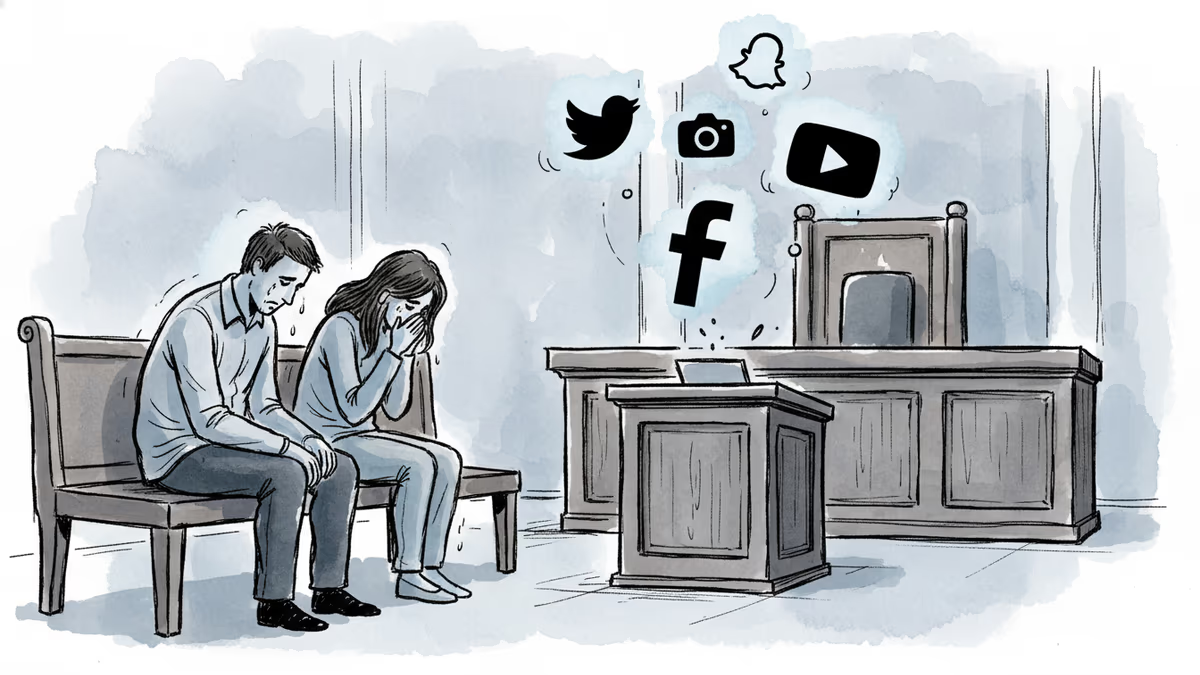
When Mothers Travel Miles to Face Big Tech in Court
Parents who lost children gather in LA courtroom as Meta CEO Zuckerberg prepares to testify in landmark social media mental health lawsuit. A defining moment for tech accountability.
A Mother's 3,000-Mile Journey for Justice
"I don't care if I had to hire a pack mule to get me here, I was going to be here." Lori Schott's words outside the LA courthouse Tuesday carried the weight of a mother's determination. She'd traveled from a small Eastern Colorado town for one reason: to witness Meta CEO Mark Zuckerberg testify Wednesday in a case that could reshape how we think about social media's impact on young minds.
Schott's daughter Annalee died by suicide at 18 in 2020, after struggling with body image issues her mother believes were amplified by social media. The journal entries found after Annalee's death painted a devastating picture: page after page of self-disparagement and comparisons to other girls' profiles.
The Reckoning Big Tech Tried to Avoid
This isn't just another lawsuit. It's the first major case where social media platforms face direct legal accountability for teen mental health outcomes. Hundreds of similar cases are pending nationwide, but this LA courtroom has become ground zero for a question that's haunted parents, educators, and policymakers for years.
The core allegation is explosive: that Meta deliberately designed its algorithms to exploit teenage vulnerabilities, keeping young users scrolling longer by feeding them content that triggers insecurity, comparison, and ultimately, addiction-like behavior.
Meta's defense is equally forceful. The company argues that mental health issues among teens predate social media, that correlation isn't causation, and that they've implemented numerous safety features to protect young users.

Three Sides of a Complex Story
The Parents' Perspective: For families like the Schotts, this trial represents long-overdue accountability. They see years of Big Tech executives deflecting responsibility while teen suicide rates climbed. "We're not anti-technology," one parent told reporters. "We're pro-transparency."
Meta's Position: The company faces an impossible standard, its lawyers argue. With 3.8 billion users globally, holding the platform responsible for individual tragedies would make social media legally unviable. They point to the complexity of mental health issues and question whether courts should determine platform design.
The Researchers' Dilemma: Mental health experts find themselves caught between concerned parents and cautious science. While studies show correlations between social media use and depression, establishing direct causation remains elusive. "We need more research, not more litigation," argues one prominent researcher.
Beyond the Courtroom: A Cultural Inflection Point
This case arrives at a moment when public sentiment toward Big Tech has fundamentally shifted. The same platforms once celebrated for connecting the world now face scrutiny over their role in spreading misinformation, political polarization, and now, teen mental health crises.
European regulators are already moving aggressively with the Digital Services Act. If Meta loses here, expect a cascade of regulatory responses across states and nations. The business model of engagement-driven algorithms could face its first serious legal challenge.
But there's a deeper question lurking beneath the legal arguments: In our rush to digitize human connection, did we adequately consider the psychological toll on those least equipped to handle it?
And perhaps more uncomfortably: If we knew then what we know now, would we have built these platforms differently?
Authors
Related Articles
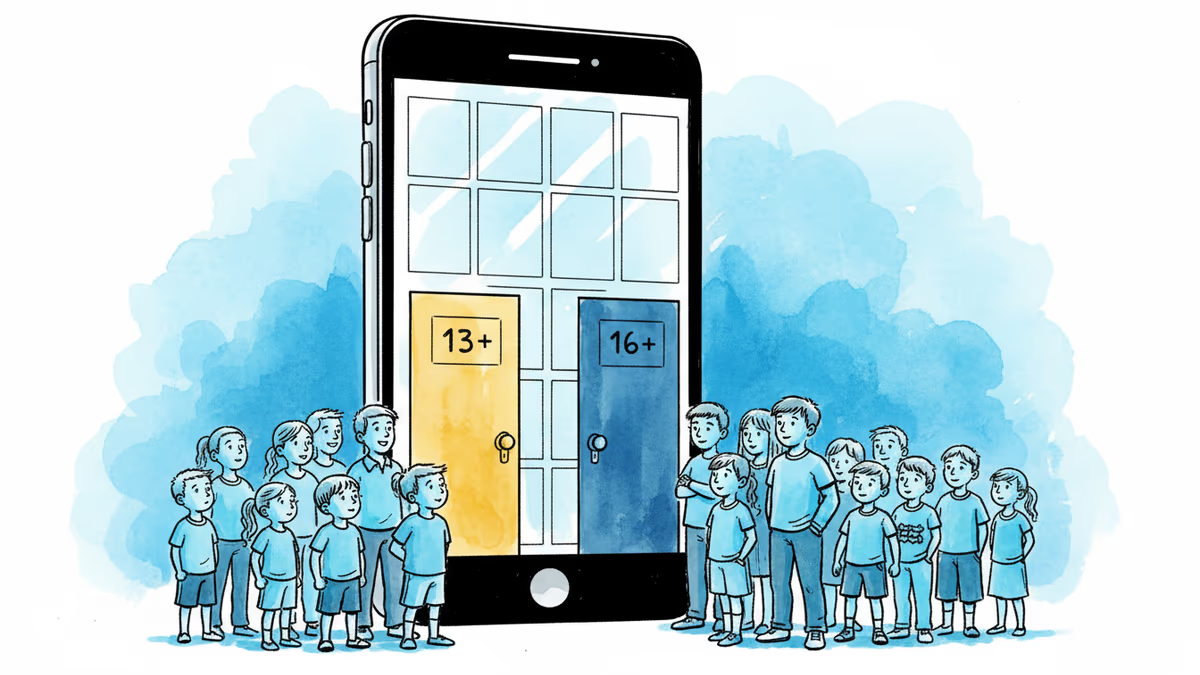
Indonesia introduces age-tiered social media restrictions, allowing 13+ for low-risk platforms and 16+ for high-risk ones. How does this compare to Australia's blanket ban?
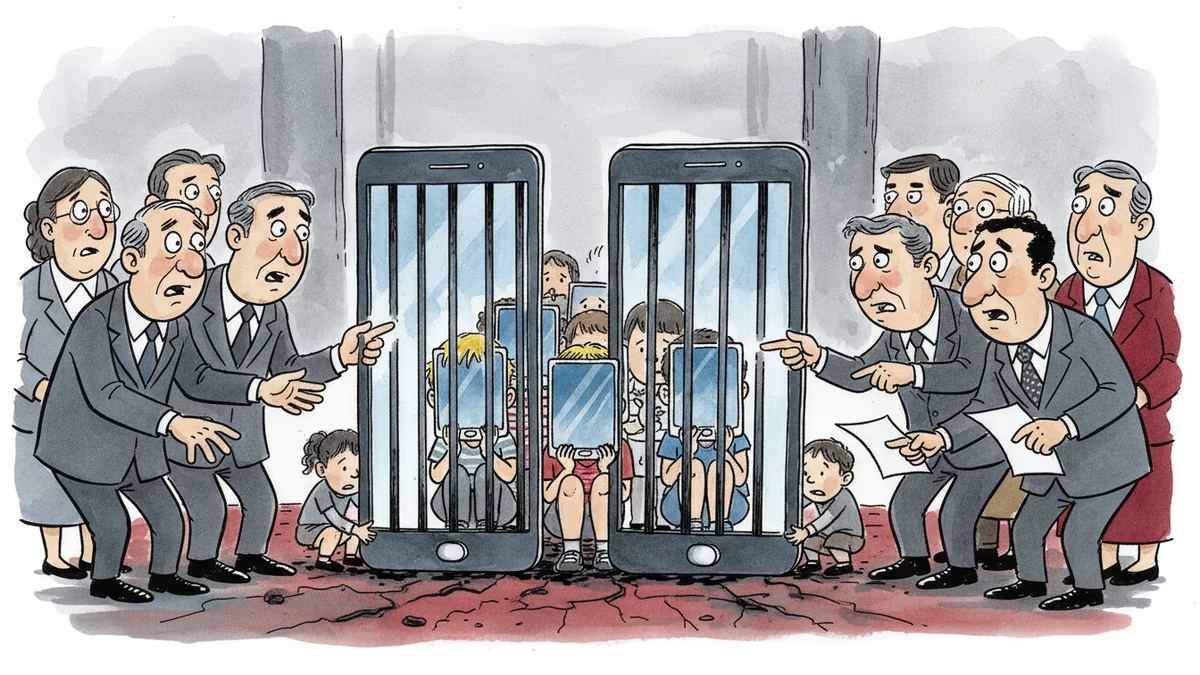
From Australia's $34M fines to France's parliamentary vote, 10 countries are restricting teen social media access. A global experiment in digital parenting begins.
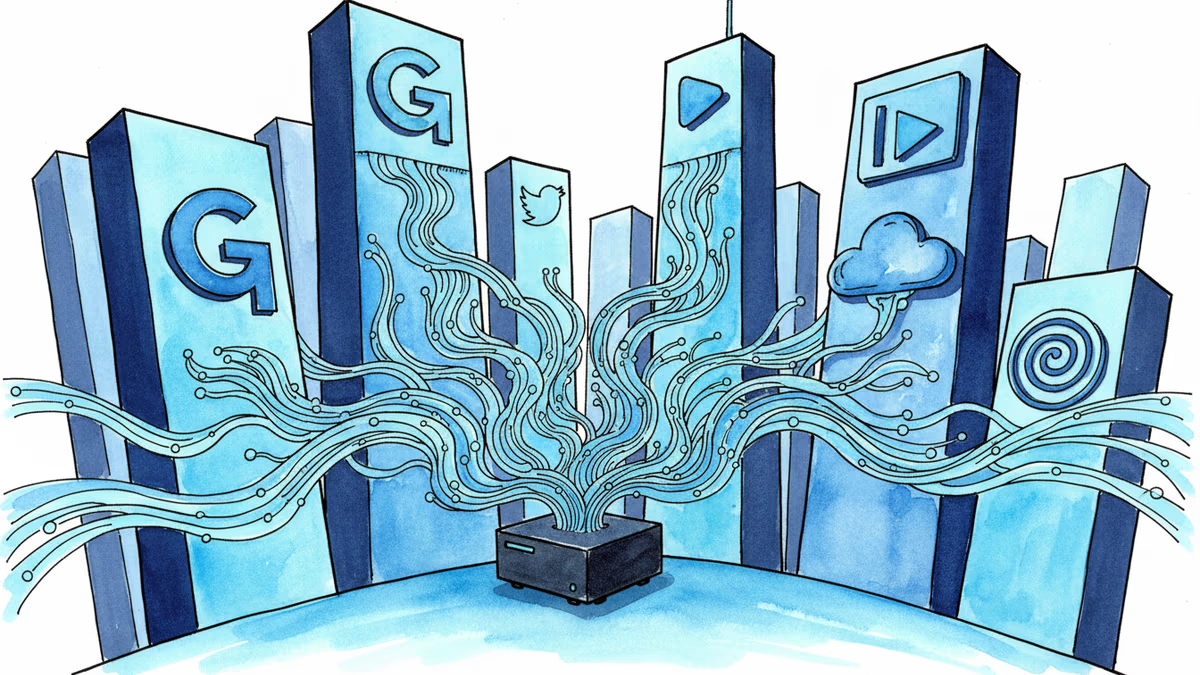
Current AI's open-source device challenges Big Tech's AI monopoly with offline capabilities and 22 Indian languages. Could this spark a new era of decentralized AI?
Middle East missile strikes trigger global doomscrolling epidemic. Neuroscience reveals why we can't stop scrolling through bad news and how to break free.
Indonesia introduces age-tiered social media restrictions, allowing 13+ for low-risk platforms and 16+ for high-risk ones. How does this compare to Australia's blanket ban?
From Australia's $34M fines to France's parliamentary vote, 10 countries are restricting teen social media access. A global experiment in digital parenting begins.
Current AI's open-source device challenges Big Tech's AI monopoly with offline capabilities and 22 Indian languages. Could this spark a new era of decentralized AI?
Middle East missile strikes trigger global doomscrolling epidemic. Neuroscience reveals why we can't stop scrolling through bad news and how to break free.
Thoughts
Share your thoughts on this article
Sign in to join the conversation