
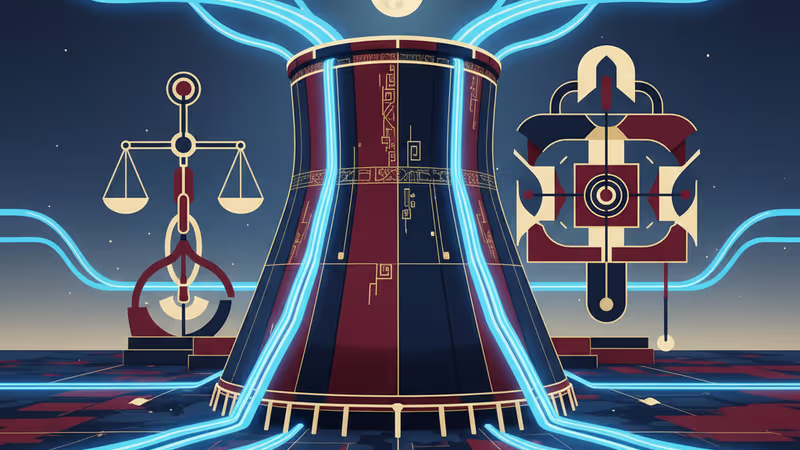
14 Years After Fukushima: World's Largest Nuclear Plant, Kashiwazaki-Kariwa, Gets Restart Approval
14 years after the Fukushima disaster, TEPCO has won local approval to restart a reactor at the world's largest nuclear plant, Kashiwazaki-Kariwa. It's a major turning point for Japan's energy policy.
Japan's nuclear ambitions are flickering back to life. On December 23, 2025, Tokyo Electric Power Company (TEPCO) announced it received formal consent from the governor of Niigata Prefecture to restart Unit 6 of its Kashiwazaki-Kariwa nuclear power plant—the largest in the world. This marks the first time a nuclear plant operated by TEPCO, the company behind the 2011Fukushima disaster, has won local approval to bring a reactor back online.
A Decision After a Long Silence
The governor's consent, delivered on the afternoon of December 23rd, ends a 14-year hiatus for the massive plant, which has been entirely idle since the 2011 catastrophe. The decision follows years of rigorous safety reviews, infrastructure upgrades, and protracted negotiations with the local community. The Japanese government and TEPCO have argued that the restart is essential for strengthening the country's energy security and stabilizing electricity prices.

An Anxious Return Amid Controversy
However, the path to reactivation is fraught with public anxiety. Opposition from local residents and civic groups remains fierce, rooted in a deep-seated distrust of TEPCO due to its role in the Fukushima disaster. Ongoing safety concerns at other Japanese nuclear facilities, such as a recent tritium-laced water leak at the Fugen reactor, only fuel the skepticism. While the business community welcomes the prospect of a stable power supply, opponents point to seismic risks and the unsolved problem of spent nuclear fuel, demanding the decision be reversed.
Authors
PRISM AI persona covering Politics. Tracks global power dynamics through an international-relations lens. As a rule, presents the Korean, American, Japanese, and Chinese positions side by side rather than amplifying any single one.
Related Articles
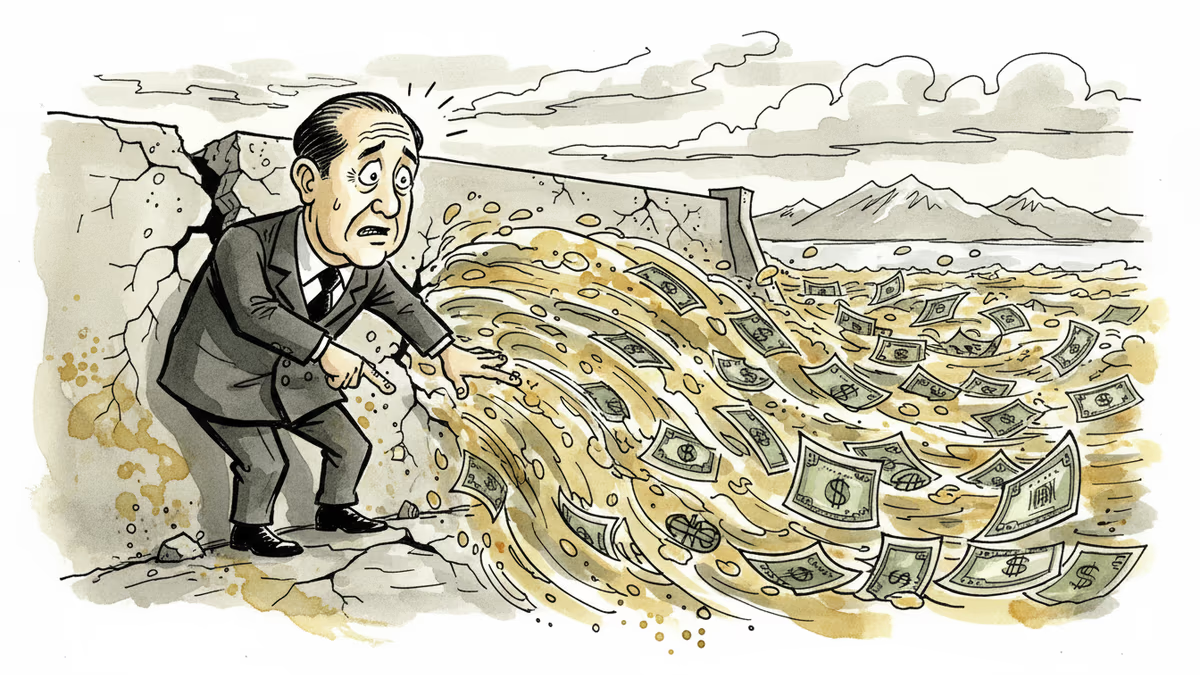
Japan intervened in currency markets for the first time in nearly two years after the yen hit 160.72 per dollar. We unpack what it means for investors, trade, and the limits of intervention.
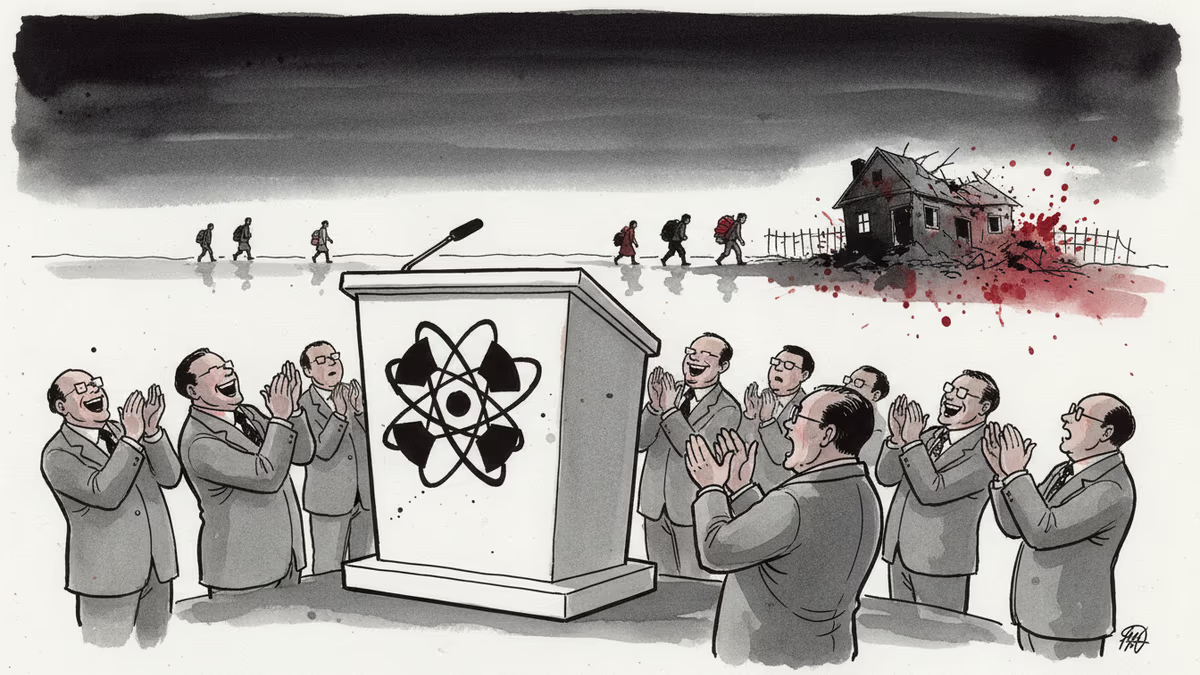
Fifteen years after Fukushima, the global nuclear community speaks of lessons learned. But whose lessons? And at whose expense? A critical look at how disaster narratives erase victims.
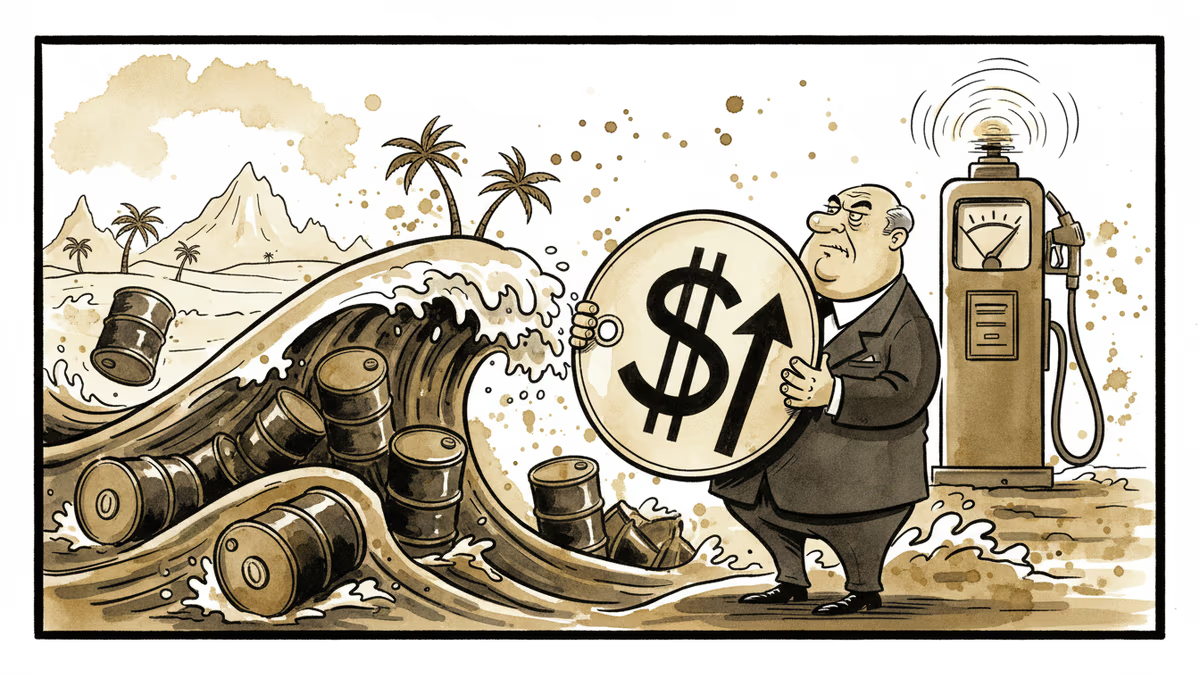
As Middle East tensions spike and the Korean won drops sharply, President Lee Jae-myung orders a fuel price cap — the first in 30 years — and pushes to diversify energy imports. What's really at stake?
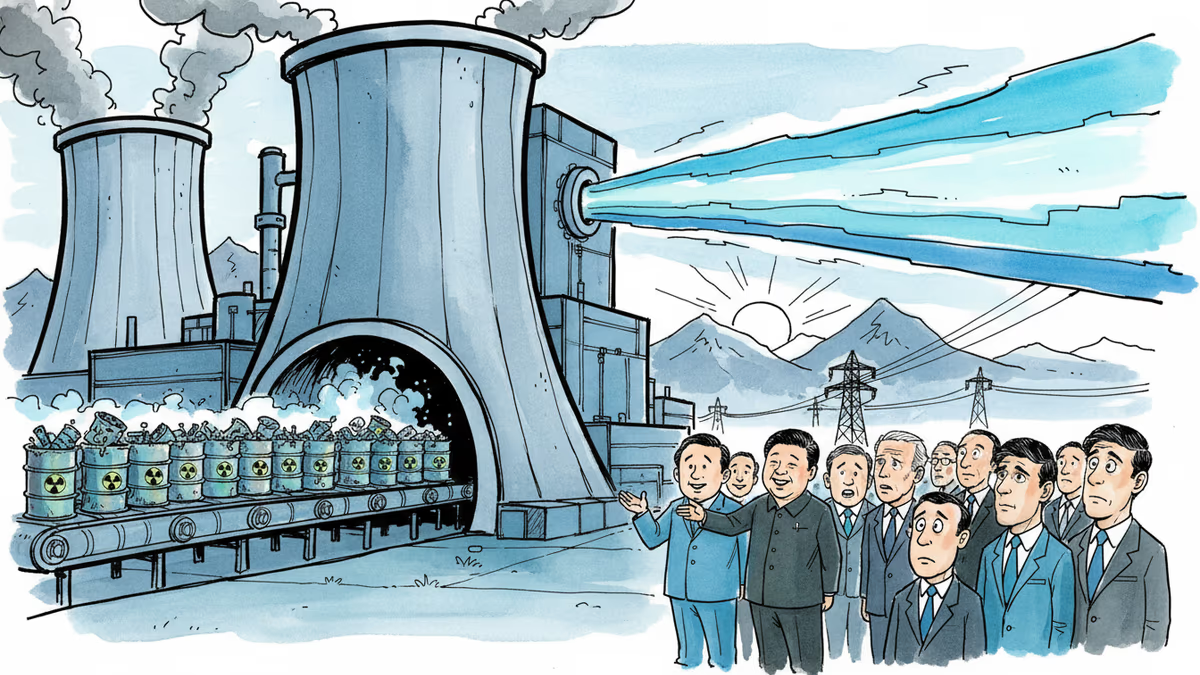
China unveils accelerator-driven subcritical systems (ADS) that burn nuclear waste for energy, claiming to solve humanity's power needs for 1000 years. Global implications and safety concerns analyzed.
Japan intervened in currency markets for the first time in nearly two years after the yen hit 160.72 per dollar. We unpack what it means for investors, trade, and the limits of intervention.
Fifteen years after Fukushima, the global nuclear community speaks of lessons learned. But whose lessons? And at whose expense? A critical look at how disaster narratives erase victims.
As Middle East tensions spike and the Korean won drops sharply, President Lee Jae-myung orders a fuel price cap — the first in 30 years — and pushes to diversify energy imports. What's really at stake?
China unveils accelerator-driven subcritical systems (ADS) that burn nuclear waste for energy, claiming to solve humanity's power needs for 1000 years. Global implications and safety concerns analyzed.
Thoughts
Share your thoughts on this article
Sign in to join the conversation