
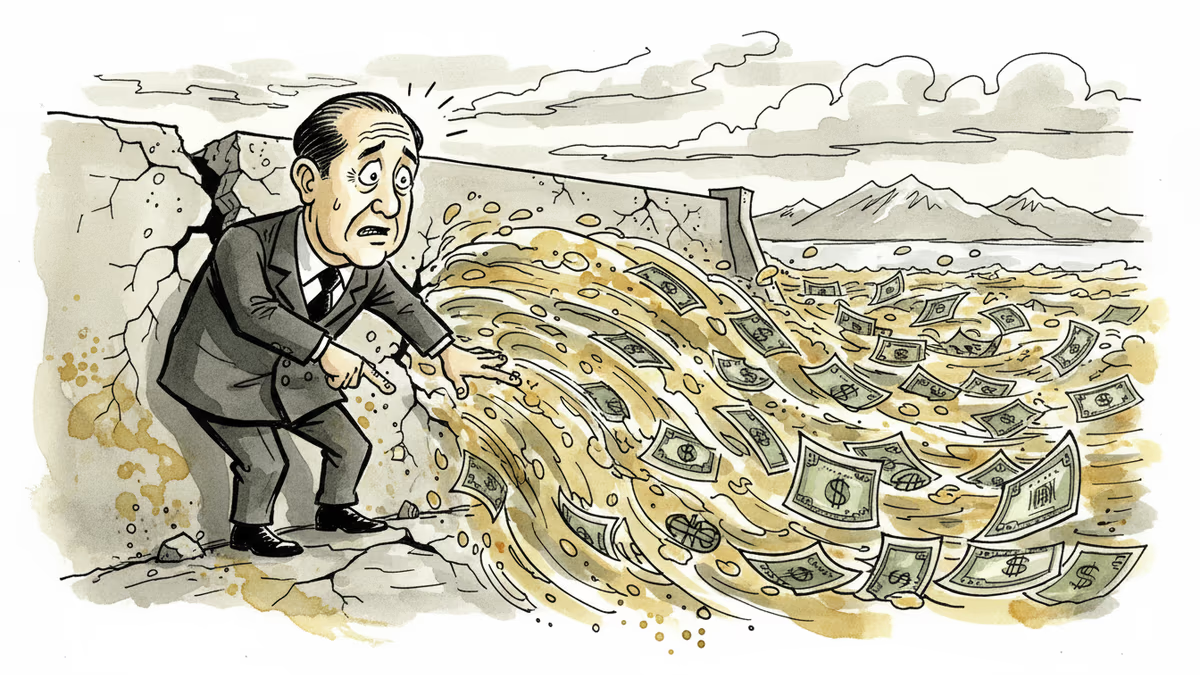
Japan Blinks at 160 Yen — But Can It Hold the Line?
Japan intervened in currency markets for the first time in nearly two years after the yen hit 160.72 per dollar. We unpack what it means for investors, trade, and the limits of intervention.
For a few hours on Thursday, the yen crossed 160 to the dollar — and Tokyo decided it had seen enough.
Japanese authorities stepped into foreign exchange markets, pushing the yen back nearly 5 yen within hours to the 155 zone. It was the first intervention in one year and ten months, and it came with the kind of theatrical buildup that currency markets have learned to read: escalating warnings, a finance minister invoking "decisive action," and a top currency diplomat calling his own statement "the final evacuation advisory." Then the yen moved — fast.
What Actually Happened
The yen had weakened to 160.72 against the dollar in Tokyo trading — its lowest level since July 2024 — before the intervention. Two forces were driving it there. First, the interest rate gap between the U.S. and Japan remains stubbornly wide: both the Federal Reserve and the Bank of Japan held rates steady this week, leaving the carry trade — borrow cheap yen, buy higher-yielding dollars — as attractive as ever. Second, fresh uncertainty in the Middle East pushed investors toward the dollar as a safe haven.
Finance Minister Satsuki Katayama warned Thursday that "the time for decisive action is finally getting closer." Atsushi Mimura, Japan's top currency diplomat, called his warning "the final evacuation advisory" against speculative moves. Hours later, the yen surged. On Friday morning, Mimura declined to confirm or deny any intervention, saying he had "no intention to comment on such matters" — a standard non-answer that markets have come to interpret as confirmation.
Japan last intervened in July 2024, spending a total of ¥5.53 trillion (roughly $35 billion) to defend the yen after it had fallen to near 162 per dollar, a 38-year low.
Why Intervention Is Both Necessary and Insufficient
Here's the uncomfortable truth about currency intervention: it works, until it doesn't.
In the short term, a government can move markets dramatically. A surprise ¥5 swing in a matter of hours is real money for anyone holding yen positions. But intervention doesn't change the underlying economics. The interest rate differential between the U.S. and Japan hasn't narrowed. The carry trade logic hasn't changed. What intervention does is buy time — and signal a pain threshold.

That signal cuts both ways. On one hand, it tells markets that Tokyo will defend against disorderly moves, which can deter pure momentum speculation. On the other hand, it gives sophisticated traders a roadmap: they now know that 160 yen is roughly where Japan blinks. That predictability can actually invite testing of the line rather than discouraging it.
The 2024 intervention is instructive. Japan spent ¥5.53 trillion and the yen did recover — temporarily. But without a structural shift in rate differentials, the pressure resumed. The same dynamic is likely in play now.
The Transparency Problem
One thread worth pulling: Japan doesn't announce interventions in real time. Confirmation typically comes weeks later in monthly financial data. Mimura's non-comment on Friday is the standard playbook.
There's a practical rationale for this opacity. Telegraphing an intervention in advance — or confirming it immediately — would allow traders to position against it, reducing its effectiveness. Surprise is part of the mechanism.
But critics, including some in the comments sections of Japanese financial media, raise a legitimate point: public servants are spending public money to move markets in ways that create winners and losers among private investors. The lack of real-time disclosure creates information asymmetry. Those closest to the decision — or those who can read the signals fastest — have an advantage over ordinary market participants.
There's also a geopolitical dimension. The United States has historically labeled currency management by countries like China as "manipulation" and used it as a trade policy lever. Japan's interventions have rarely attracted that label, partly because Tokyo frames them as smoothing volatility rather than targeting a level, and partly because of the U.S.-Japan alliance. Whether that diplomatic insulation holds as trade tensions remain elevated is an open question.
What Investors and Businesses Should Watch
For anyone with exposure to Japan — equity investors, importers, exporters, or multinationals with yen-denominated costs — the intervention creates a short-term floor but not a long-term ceiling on volatility.
The key variable remains the Fed. If U.S. rate cuts come earlier or faster than expected, the interest rate differential narrows and yen pressure eases organically. If the Fed holds longer — which current market pricing suggests is more likely — Japan faces a recurring choice between burning reserves and tolerating a weaker currency.
For companies competing with Japanese exporters — Korean automakers, Taiwanese chipmakers, European industrials — a structurally weak yen is a persistent competitive headwind. A yen at 155-160 makes Japanese goods cheaper in dollar terms and squeezes rivals' pricing power in shared markets.
For Japan's domestic economy, the calculus is mixed. A weak yen inflates import costs, particularly for energy and food, hitting consumers hard. But it boosts the yen-denominated earnings of exporters like Toyota and Sony. The net effect depends heavily on which sector you're in — and whether you're a company or a household.
This content is AI-generated based on source articles. While we strive for accuracy, errors may occur. We recommend verifying with the original source.
Related Articles
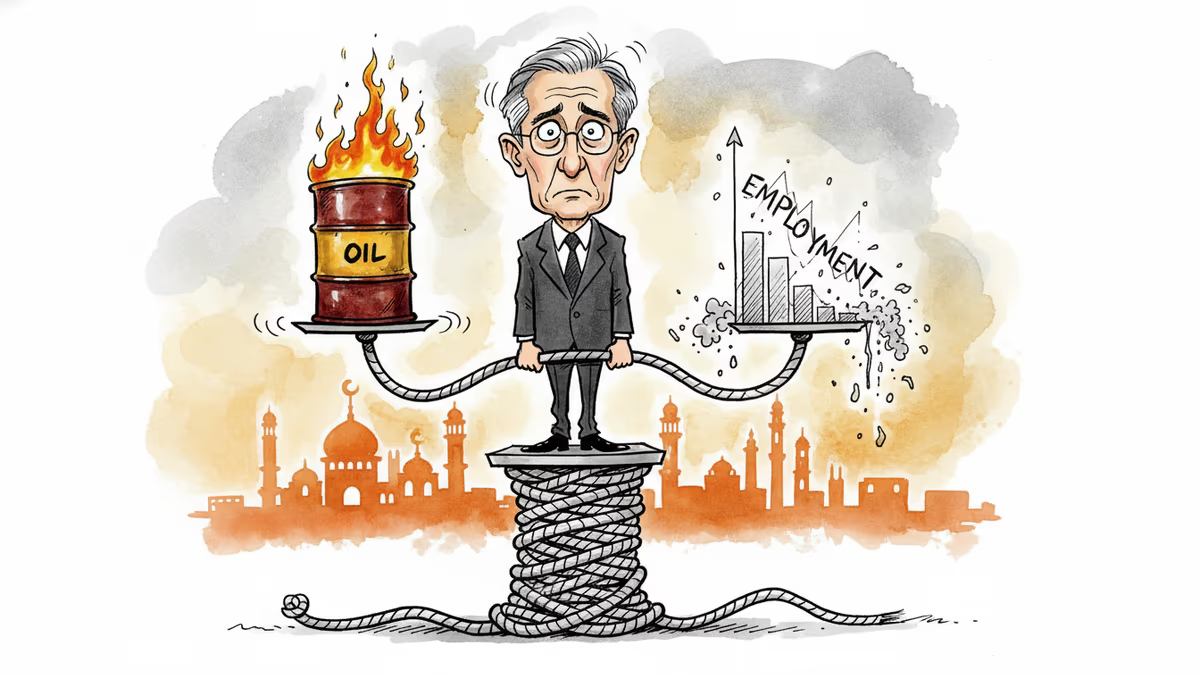
The Federal Reserve held rates steady at 3.5–3.75% for the second straight meeting, projecting just one cut in 2026 as the U.S.-Israeli war against Iran clouds the economic outlook.

Fifteen years after Fukushima, the global nuclear community speaks of lessons learned. But whose lessons? And at whose expense? A critical look at how disaster narratives erase victims.
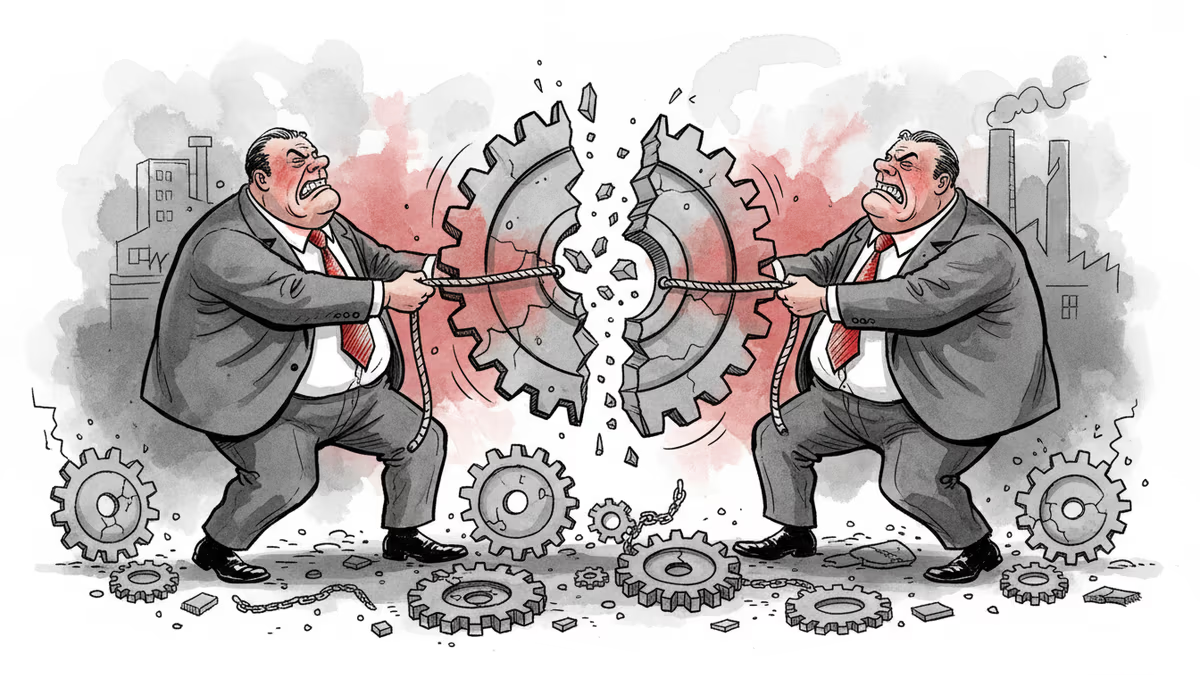
Beijing escalates economic pressure on Japan's defense sector through blacklisting major contractors and tightening dual-use export controls amid Taiwan tensions.
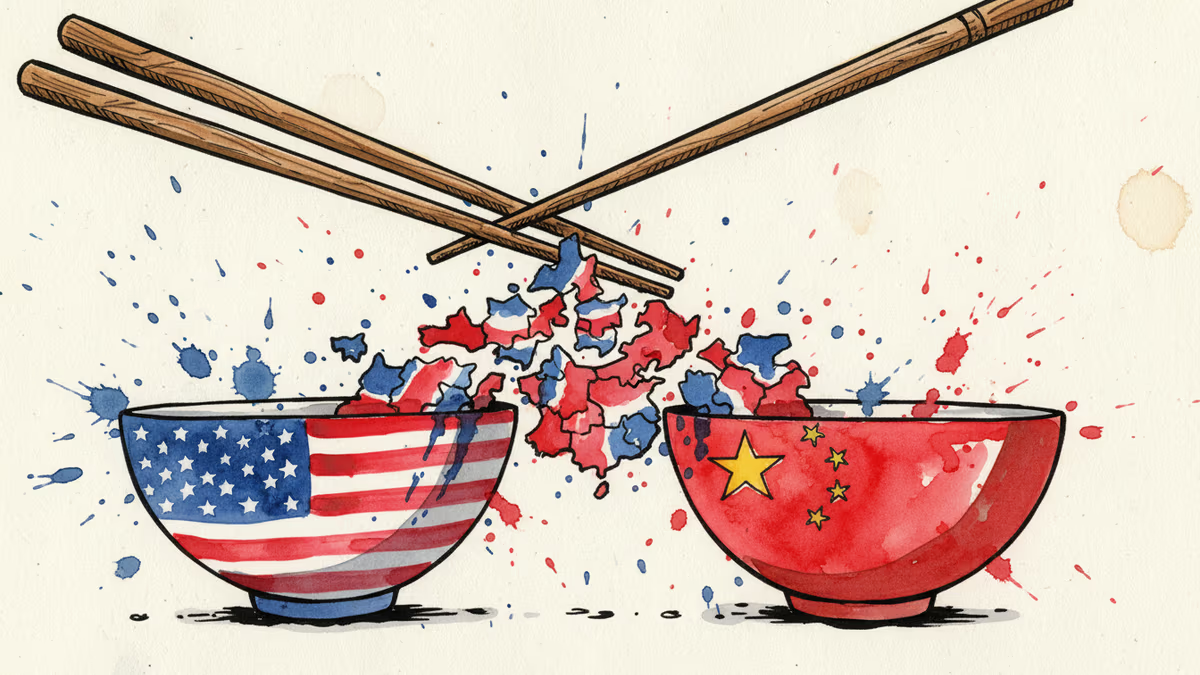
Beijing's escalating restrictions on Japanese defense companies are forcing Southeast Asian nations to choose sides in an increasingly polarized supply chain landscape
The Federal Reserve held rates steady at 3.5–3.75% for the second straight meeting, projecting just one cut in 2026 as the U.S.-Israeli war against Iran clouds the economic outlook.
Fifteen years after Fukushima, the global nuclear community speaks of lessons learned. But whose lessons? And at whose expense? A critical look at how disaster narratives erase victims.
Beijing escalates economic pressure on Japan's defense sector through blacklisting major contractors and tightening dual-use export controls amid Taiwan tensions.
Beijing's escalating restrictions on Japanese defense companies are forcing Southeast Asian nations to choose sides in an increasingly polarized supply chain landscape
Thoughts
Share your thoughts on this article
Sign in to join the conversation