
Big Tech's Day of Reckoning in the Courtroom
Meta, TikTok, and YouTube face thousands of lawsuits over teen mental health. What happens when social media giants must defend their algorithms in court?
This month in California, executives from Meta, TikTok, and YouTube will take the witness stand to answer a question that could reshape the internet: Did your platforms harm our children?
The first trial centers on a teenager who claims social media addiction damaged their mental health. But this case represents something much bigger—it's the opening shot in what could become the most significant legal challenge Big Tech has ever faced. Behind this single lawsuit sit thousands of similar cases, all waiting for their day in court.
The Bellwether Moment
These aren't ordinary trials. They're "bellwether trials"—representative cases whose outcomes will likely determine settlement amounts for thousands of similar lawsuits. Think of them as legal test runs that could cost these companies billions and fundamentally change how social media operates.
The core allegation is damning: that social media companies deliberately designed addictive features knowing they would harm young users' mental health. Plaintiffs point to infinite scroll, push notifications, and algorithmic feeds as evidence of intentional manipulation designed to maximize engagement at any cost.
The Defense Strategy
Big Tech isn't going down without a fight. Their likely defense? These platforms are neutral tools, and mental health issues stem from complex personal and social factors beyond their control. They'll also highlight recent safety features: Meta's "quiet mode" on Instagram, TikTok's default 60-minute daily limit for under-18 users, and YouTube's restrictions on ads targeting minors.
But here's the problem with that defense: internal documents from previous cases have shown these companies conducted extensive research on their platforms' psychological effects. If prosecutors can prove executives knew about potential harm and chose profits over protection, the "neutral tool" argument crumbles.

What's Really at Stake
The financial implications are staggering. Tobacco companies paid over $200 billion in settlements for health damages. Social media platforms, with their global reach and deeper integration into daily life, could face even larger penalties.
But money isn't the only concern. These trials could force fundamental changes to how social media works. Imagine platforms without infinite scroll, with mandatory break reminders, or with algorithms designed for user wellbeing rather than engagement. The internet as we know it could look very different.
The Ripple Effect
Success in these cases would likely trigger similar lawsuits worldwide. European regulators, already aggressive on tech oversight, would have legal precedent to impose even stricter rules. Countries like Australia and Canada, which have been watching these cases closely, might fast-track their own youth protection legislation.
For investors, the implications are clear: social media business models built on maximum engagement may no longer be legally sustainable. Companies that pivot early to healthier engagement models might gain a competitive advantage.
The Broader Questions
These lawsuits raise uncomfortable questions about personal responsibility in the digital age. If algorithms can predict and influence human behavior with increasing precision, where does individual choice end and corporate manipulation begin?
Parents and educators are watching closely too. Schools report increasing attention problems, sleep disorders, and social anxiety among students. If courts establish that social media companies bear legal responsibility for these issues, it could reshape everything from classroom policies to family screen time rules.
Authors
Related Articles
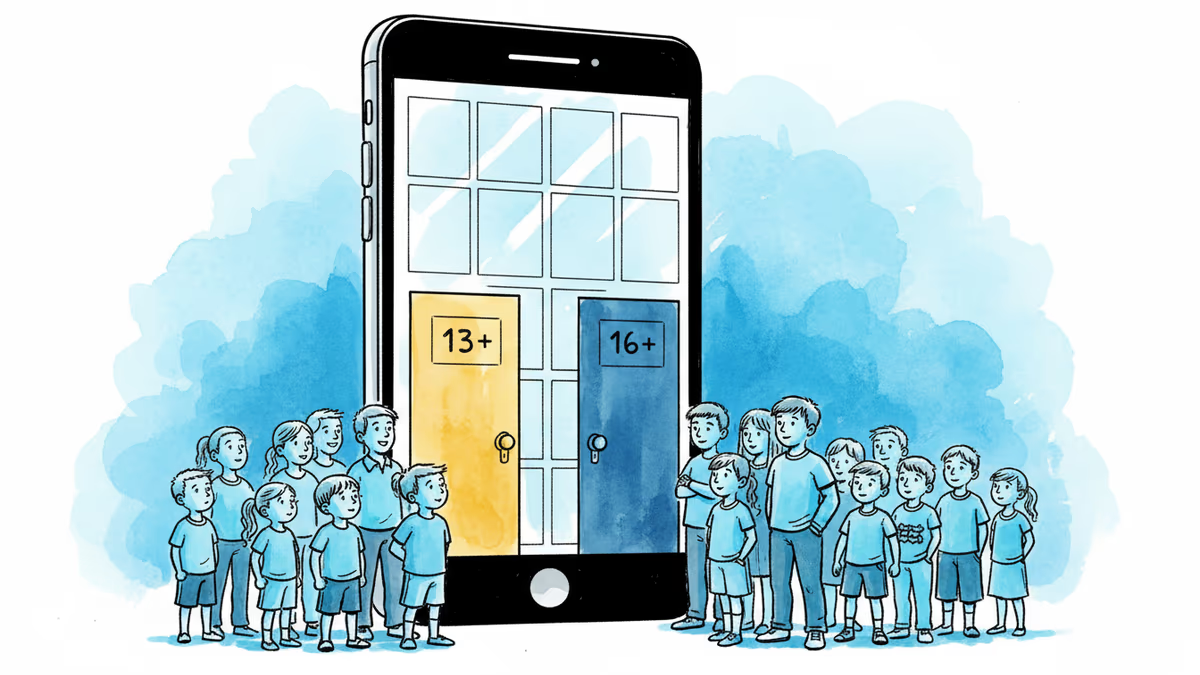
Indonesia introduces age-tiered social media restrictions, allowing 13+ for low-risk platforms and 16+ for high-risk ones. How does this compare to Australia's blanket ban?
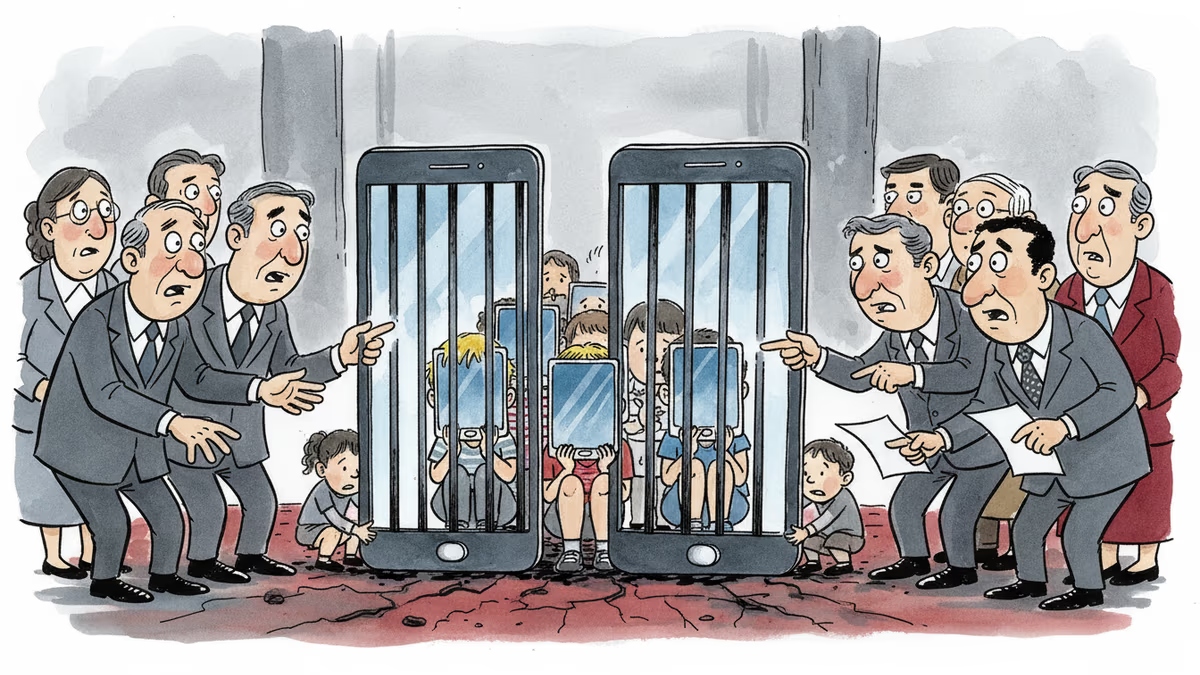
From Australia's $34M fines to France's parliamentary vote, 10 countries are restricting teen social media access. A global experiment in digital parenting begins.
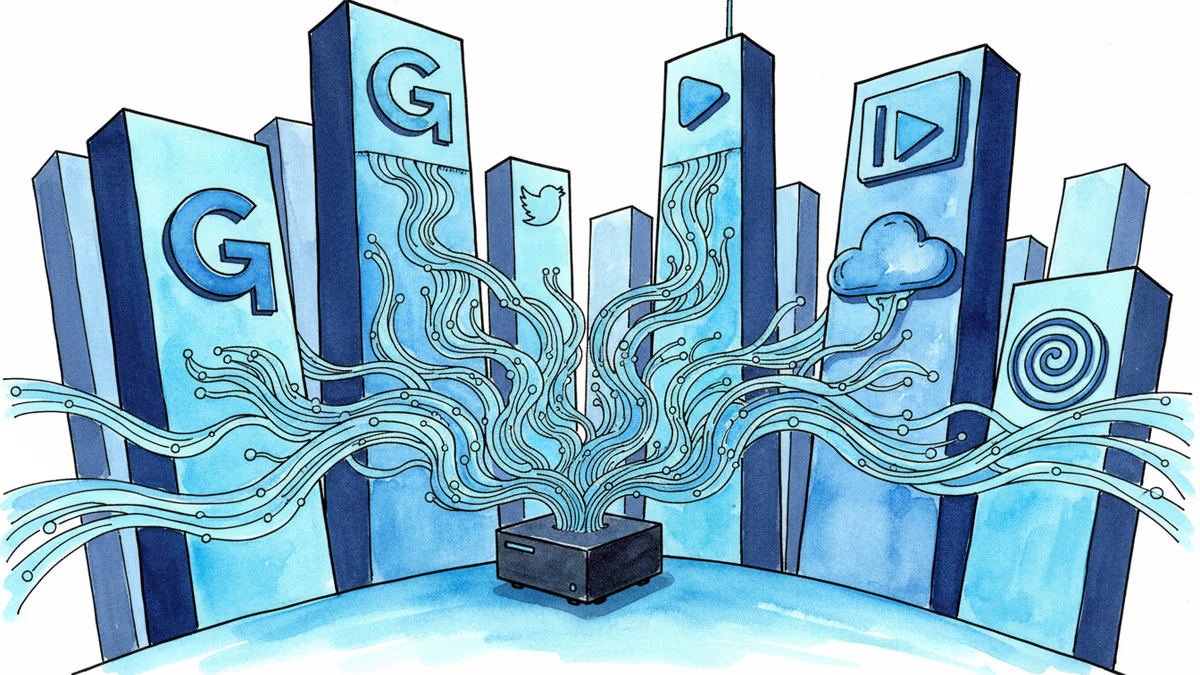
Current AI's open-source device challenges Big Tech's AI monopoly with offline capabilities and 22 Indian languages. Could this spark a new era of decentralized AI?
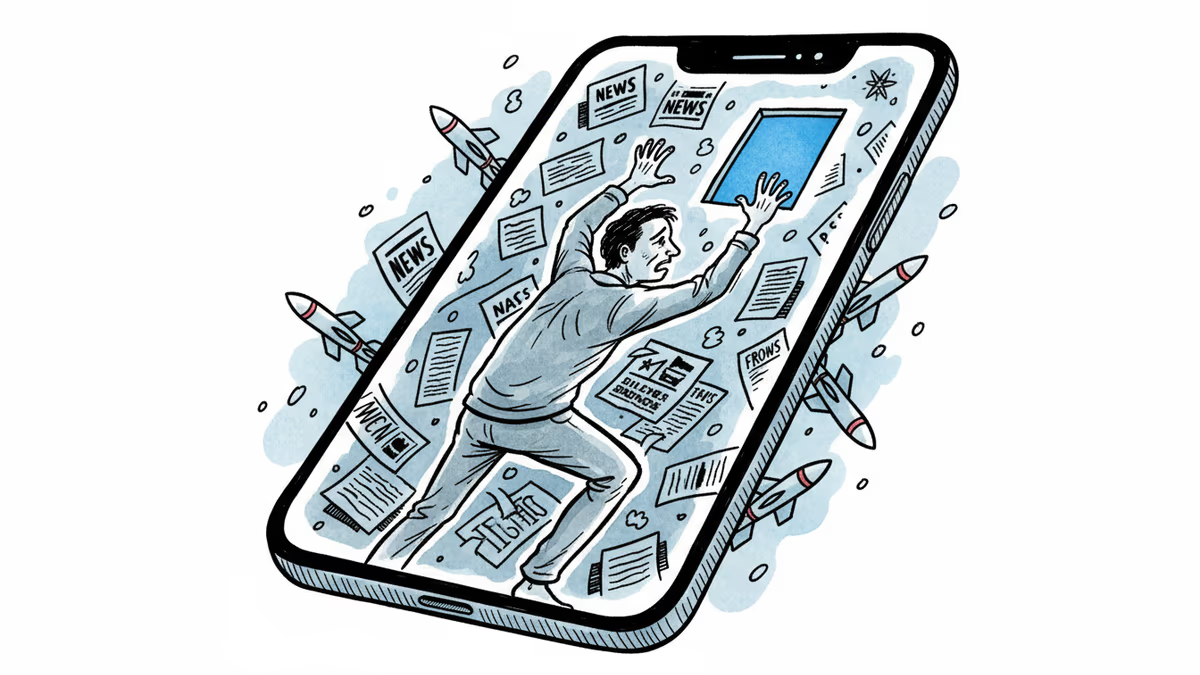
Middle East missile strikes trigger global doomscrolling epidemic. Neuroscience reveals why we can't stop scrolling through bad news and how to break free.
Indonesia introduces age-tiered social media restrictions, allowing 13+ for low-risk platforms and 16+ for high-risk ones. How does this compare to Australia's blanket ban?
From Australia's $34M fines to France's parliamentary vote, 10 countries are restricting teen social media access. A global experiment in digital parenting begins.
Current AI's open-source device challenges Big Tech's AI monopoly with offline capabilities and 22 Indian languages. Could this spark a new era of decentralized AI?
Middle East missile strikes trigger global doomscrolling epidemic. Neuroscience reveals why we can't stop scrolling through bad news and how to break free.
Thoughts
Share your thoughts on this article
Sign in to join the conversation