
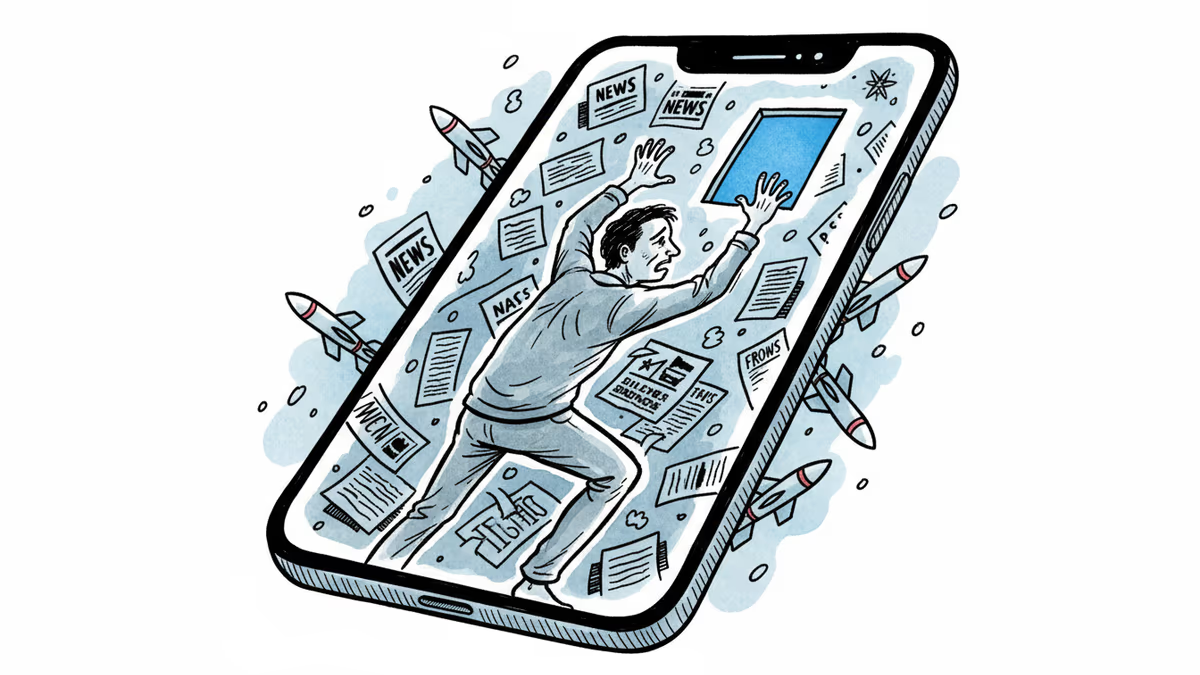
Your Brain on Breaking News: The Science of Doomscrolling
Middle East missile strikes trigger global doomscrolling epidemic. Neuroscience reveals why we can't stop scrolling through bad news and how to break free.
When Missiles Fly, Millions Scroll
As explosions lit up the Persian Gulf this weekend, millions of people worldwide performed the same reflexive action: They grabbed their phones. Within minutes, social media feeds flooded with missile interception videos, breaking news alerts, and speculation about what might happen next.
The strikes—retaliation for US-Israel attacks inside Iran earlier in the week—triggered something beyond geopolitical tension. They unleashed a global wave of doomscrolling: the compulsive consumption of negative news delivered through endless updates and algorithmically amplified crises.
What started as a quick information check spiraled into hours of war footage, political instability reports, and constant crisis coverage. The pattern is so predictable it's almost algorithmic itself.
Your Ancient Brain Meets Modern Feeds
Alexander TR Sharpe from the University of Chichester draws a crucial distinction between doomscrolling and regular social media use. "Doomscrolling refers to repetitive consumption of negative or crisis-related information," he explains. "It's less about stimulation and more about staying locked into threat-related material."
Cognitive scientists say this pattern exploits evolutionary wiring. Humans prioritize threats for survival, making negative news particularly magnetic.
"Human memory is biased towards prioritizing information related to danger, threat and emergencies," says media psychology researcher Reza Shabahang. "Negative information and associated memories tend to be especially salient and enduring."
A 2026 study by Sharpe found direct links between doomscrolling and rumination, emotional exhaustion, and intolerance of uncertainty. Frequent doomscrollers showed higher anxiety, depression, and stress levels alongside lower resilience.
Shabahang describes the behavior as resembling indirect trauma exposure. "Consistent exposure to images or reports of traumatic incidents can elicit acute stress responses and, in some cases, symptoms associated with post-traumatic stress."
The Slot Machine in Your Pocket
Doomscrolling doesn't happen in a vacuum. Social feeds are engineered for engagement, not wellbeing.
At the behavioral level, scrolling operates like a slot machine: unpredictability drives compulsion. Each refresh might reveal breaking news, shocking footage, or crucial updates. That uncertainty keeps users checking repeatedly.

Digital media psychologist Assim Kalouaz calls this emotional conditioning. "Content that reliably triggers fear, anger, or sadness is more likely to be promoted because it drives engagement," he says.
The result: Uncertainty drives scrolling → scrolling increases exposure to emotionally charged content → emotional arousal increases the urge to check again.
A 2024 cross-cultural study led by Shabahang found doomscrolling correlated with higher existential anxiety and more cynical worldviews. While causation isn't established, the findings suggest repeated crisis exposure may subtly reshape how people perceive reality.
The American Anxiety Economy
U.S. users face a perfect storm of factors amplifying doomscrolling behavior. The country's 24/7 news cycle, combined with highly polarized political discourse and frequent mass casualty events, creates constant fodder for crisis consumption.
Twitter/X, Facebook, and TikTok algorithms particularly favor emotionally provocative content. During international crises, American feeds often blend global threats with domestic political interpretations, creating layered anxiety loops.
The economic implications are significant. A workforce caught in chronic stress cycles shows reduced productivity, increased healthcare costs, and higher turnover rates. Some companies are beginning to implement "news detox" policies during major global events.
Breaking the Scroll Cycle
Sharpe cautions against framing doomscrolling as a personal failing. "It's often described as habitual or compulsive, reinforced by platform design. People scroll to manage discomfort—uncertainty, fear, tension—but it doesn't reliably resolve it."
Hamad Almheiri, founder of BrainScroller (an app that substitutes doomscrolling with microlearning), suggests structural interventions work better than willpower.
"Beyond simply logging off, evidence suggests that adding structure, friction and recovery is what actually helps," he says.
Practical strategies include:
- Limiting news consumption to specific times
- Disabling non-essential notifications
- Avoiding infinite scroll formats
- Monitoring sleep disruption as an early warning sign
Kalouaz notes that sleep quality serves as a clear indicator. "When staying informed consistently disrupts sleep or delays bedtime, cognitive fog, irritability, and reduced emotional regulation typically follow the next day."
The Platform Response
Some tech companies are experimenting with friction-based solutions. Instagram introduced "take a break" prompts, while YouTube offers watch-time reminders. However, these features often remain buried in settings menus.
Regulatory pressure is building. The EU's Digital Services Act requires platforms to assess risks from their recommendation systems, while U.S. lawmakers increasingly question algorithmic amplification of crisis content.
But fundamental business model conflicts remain: Platforms profit from attention, while user wellbeing often requires attention limits.
Authors
Related Articles
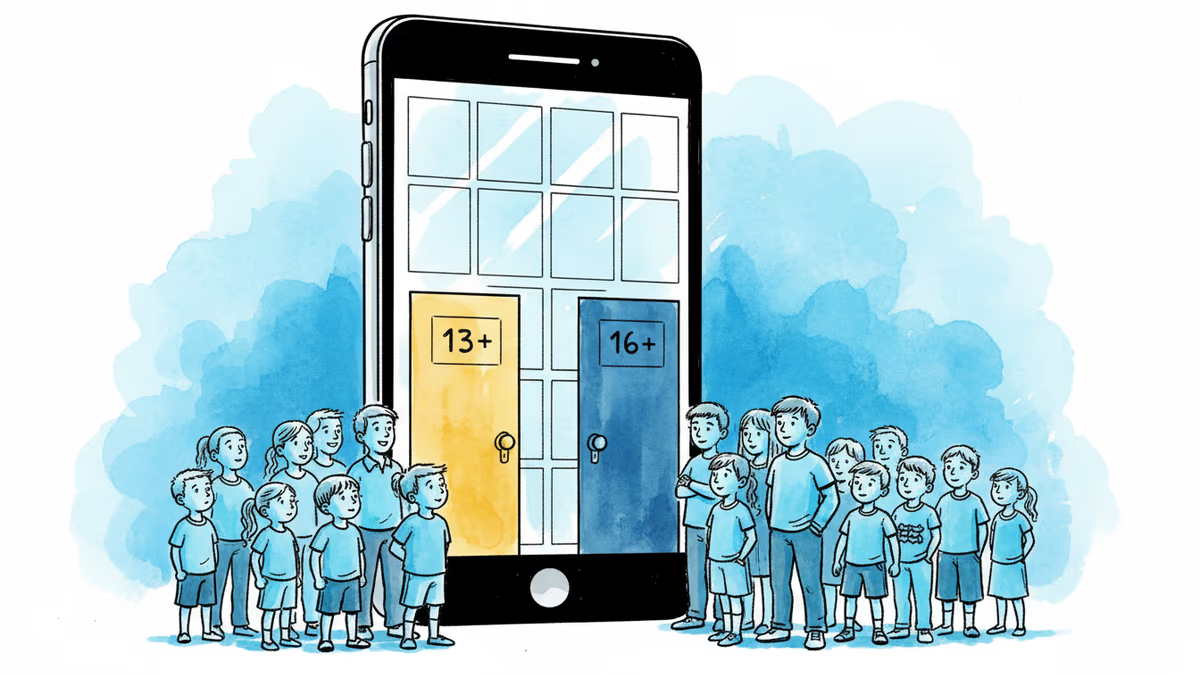
Indonesia introduces age-tiered social media restrictions, allowing 13+ for low-risk platforms and 16+ for high-risk ones. How does this compare to Australia's blanket ban?
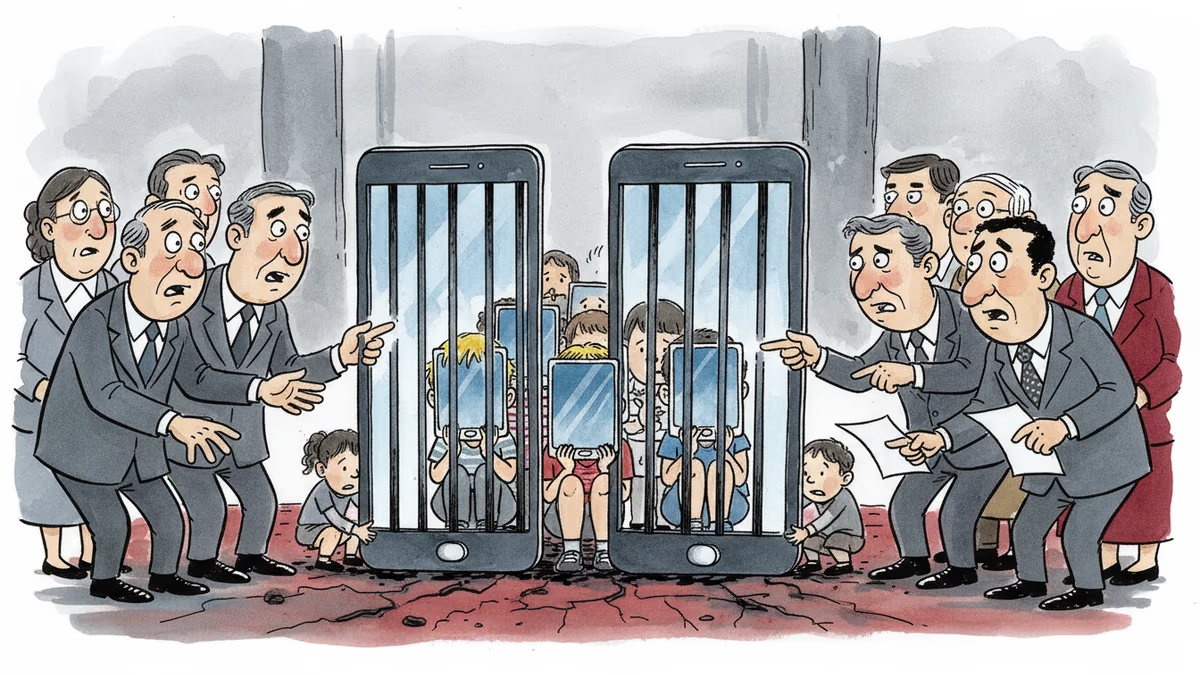
From Australia's $34M fines to France's parliamentary vote, 10 countries are restricting teen social media access. A global experiment in digital parenting begins.
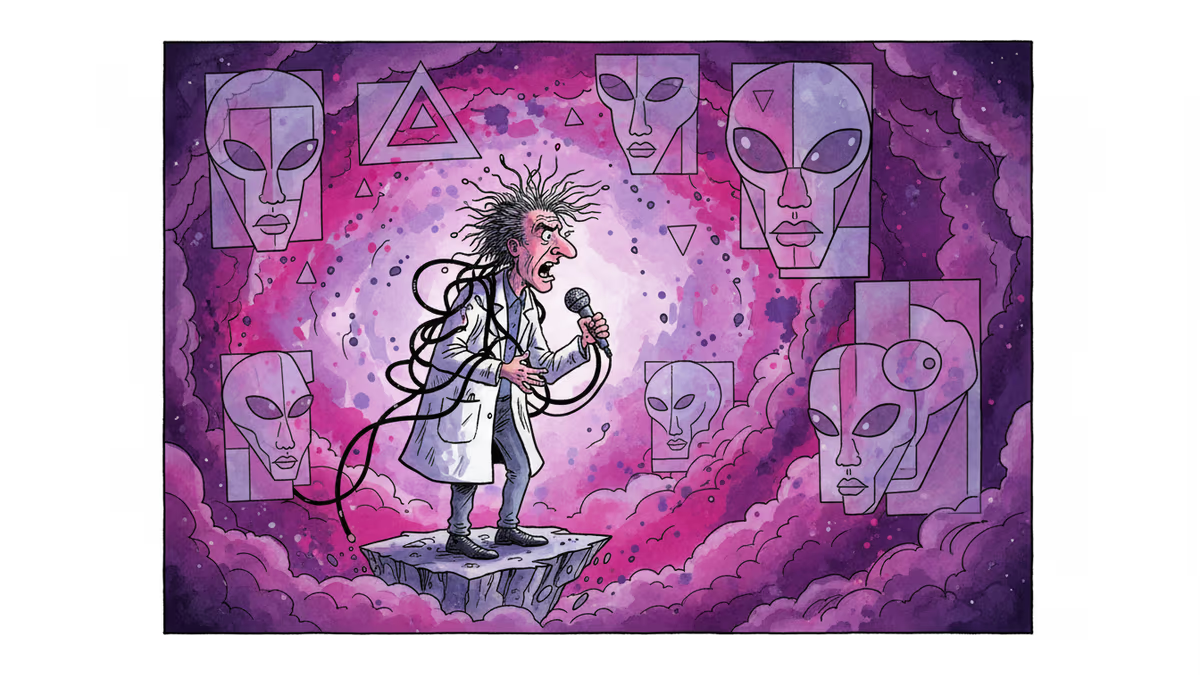
A Caribbean research facility uses extended DMT trips to study encounters with otherworldly entities. Are they hallucinations or something more? The quest to decode consciousness takes a radical turn.
Instagram's new suicide search alerts for parents raise questions about whether surveillance-based solutions truly protect teens or simply push their struggles underground.
Indonesia introduces age-tiered social media restrictions, allowing 13+ for low-risk platforms and 16+ for high-risk ones. How does this compare to Australia's blanket ban?
From Australia's $34M fines to France's parliamentary vote, 10 countries are restricting teen social media access. A global experiment in digital parenting begins.
A Caribbean research facility uses extended DMT trips to study encounters with otherworldly entities. Are they hallucinations or something more? The quest to decode consciousness takes a radical turn.
Instagram's new suicide search alerts for parents raise questions about whether surveillance-based solutions truly protect teens or simply push their struggles underground.
Thoughts
Share your thoughts on this article
Sign in to join the conversation