
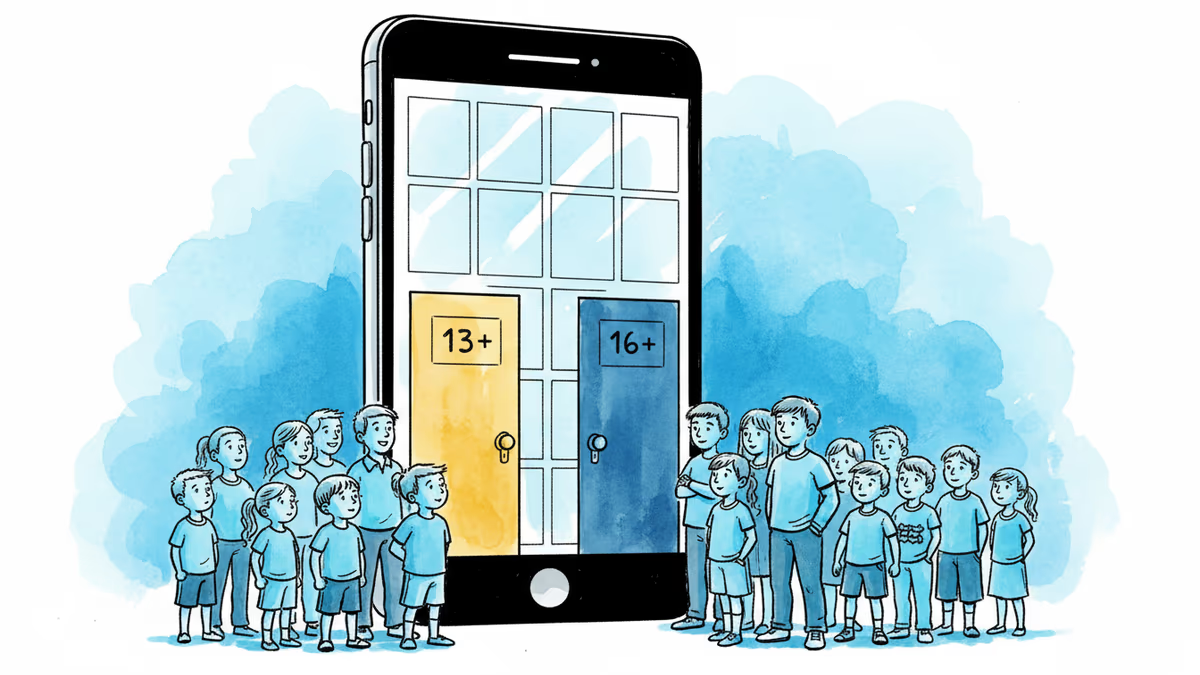
Indonesia's Gradual Social Media Ban: A Different Path from Australia
Indonesia introduces age-tiered social media restrictions, allowing 13+ for low-risk platforms and 16+ for high-risk ones. How does this compare to Australia's blanket ban?
299 Million Internet Users Face New Digital Gates
Indonesia just threw a curveball in the global social media regulation game. While Australia went for the nuclear option—banning everyone under 16—Indonesia's taking a more nuanced approach that might actually work.
The country's communication ministry announced Friday that children will face age-tiered restrictions rather than blanket bans. Kids 13 and older can access "lower-risk" platforms, while "higher-risk" platforms like YouTube, TikTok, Facebook, Instagram, and X remain off-limits until 16.
The policy won't kick in until March 2027, giving platforms a full year to prepare. But here's the kicker: sanctions target the platforms, not kids or parents.
The Numbers Behind the Policy
Indonesia isn't making this up. The statistics are sobering: 50% of Indonesian children have encountered sexual content on social media, and 42% reported feeling frightened or uncomfortable afterward, according to UNICEF data.

With nearly 80% of Indonesia's children actively using online platforms, the government argues it's not about stopping internet use—it's about age-appropriate access. "This regulation does not impose sanctions on children or parents," said Digital Affairs Minister Meutya Hafid. "Instead, sanctions target digital platforms that fail to meet their child protection obligations."
A Global Trend with Local Flavors
Indonesia joins a growing club. Denmark, Spain, France, Malaysia, and the UK are all crafting their own versions of social media restrictions. But each country's approach reflects its unique cultural and political landscape.
Australia's blanket ban feels characteristically direct. Indonesia's graduated system acknowledges that digital literacy isn't binary—it develops over time. The question is whether a three-year gap between 13 and 16 represents meaningful developmental differences in digital maturity.
The Platform Dilemma
For tech companies, this creates a compliance nightmare. Different rules in different countries mean different systems, different age verification processes, and different liability frameworks. Meta already got a warning from Indonesia just yesterday for failing to curb gambling and disinformation.
The real test will be enforcement. Age verification remains notoriously difficult online, and determined teens have historically found workarounds for every digital barrier.
Authors
Related Articles
A class action lawsuit accuses Kalshi of changing payout rules after Iran's Supreme Leader Khamenei was killed. The case cuts to the heart of prediction market credibility.
From Australia's $34M fines to France's parliamentary vote, 10 countries are restricting teen social media access. A global experiment in digital parenting begins.
Middle East missile strikes trigger global doomscrolling epidemic. Neuroscience reveals why we can't stop scrolling through bad news and how to break free.
London's King's Cross saw its largest anti-AI protest yet, targeting OpenAI, Google, and Meta headquarters. What this citizen uprising reveals about AI's democratic deficit.
A class action lawsuit accuses Kalshi of changing payout rules after Iran's Supreme Leader Khamenei was killed. The case cuts to the heart of prediction market credibility.
From Australia's $34M fines to France's parliamentary vote, 10 countries are restricting teen social media access. A global experiment in digital parenting begins.
Middle East missile strikes trigger global doomscrolling epidemic. Neuroscience reveals why we can't stop scrolling through bad news and how to break free.
London's King's Cross saw its largest anti-AI protest yet, targeting OpenAI, Google, and Meta headquarters. What this citizen uprising reveals about AI's democratic deficit.
Thoughts
Share your thoughts on this article
Sign in to join the conversation